

Benefits of Cold Plunge for Immune System: 2026 Guide
Table of Contents
- How Cold Water Immersion Affects White Blood Cells
- Inflammation, Recovery, and the Cytokine Response
- The Vagus Nerve, Norepinephrine, and Mental Health Effects
- Circulatory System Changes: Vasoconstriction to Vasodilation
- Cold Plunge Duration for Immune Health: How Long Is Enough?
- Best Practices for Home Ice Baths: Safety and Setup
- What to Ignore: Scientific Evidence vs. Anecdotal Claims
- Building a Cold Plunge Routine That Lasts
- Frequently Asked Questions
Last Updated: September 24, 2026
How Cold Water Immersion Affects White Blood Cells
Cold water immersion triggers a rapid immune response: as cold receptors fire, the body releases norepinephrine and mobilizes circulating immune cells, including leukocytes, into the bloodstream. This is the core mechanism behind most claimed benefits of cold plunge for immune system support.
The response begins within minutes of entering cold water. Leukocytes are the white blood cells that patrol for pathogens and abnormal cells, and they are the primary immune cells studied in cold exposure research.
Leukocytes, Norepinephrine, and Circulating Immune Cells
The link between cold exposure and leukocyte activity runs through norepinephrine, a hormone and neurotransmitter that rises sharply during cold stress. Norepinephrine helps mobilize immune cells from storage sites so they circulate more actively in the blood.
What Preliminary Research Shows About White Blood Cell Count
Preliminary research on cold water immersion suggests measurable shifts in white blood cell counts after regular exposure, but the results are mixed and the sample sizes are usually small. Some studies report increases in circulating immune cells immediately after cold exposure; others find the effect fades within hours.
Inflammation, Recovery, and the Cytokine Response
Cold exposure moderates systemic inflammation by influencing the cytokine response, the signalling molecules that coordinate immune activity. This is the mechanism most relevant to athletes dealing with post-training soreness.
The Vagus Nerve, Norepinephrine, and Mental Health Effects
The mental health effects of cold plunge are tied to vagus nerve stimulation and the sustained rise in norepinephrine. The vagus nerve is the tenth cranial nerve and the main parasympathetic pathway between the brain and the body. It regulates heart rate, digestion, and the stress response, and it is the channel through which cold exposure appears to influence mood and nervous-system state.
What the Mechanism Actually Does
The vagus nerve governs parasympathetic tone, the body's capacity to return to a calm baseline after stress. Higher vagal tone is associated with better emotional regulation, lower resting heart rate, and faster recovery from stressors. Cold exposure appears to increase vagal tone temporarily, which is why some people report feeling calmer and more focused for hours afterward.
Individualized Protocols Based on Health Status
Most guides give the same advice to everyone. A more useful approach adjusts duration, temperature, and frequency to your health status and fitness level:
- Healthy, fit adults: 2 to 3 minutes at 50°F to 59°F, 3 to 4 times per week.
- Older adults or those new to cold exposure: start at 30 to 60 seconds at 59°F to 64°F, 2 times per week, and extend only when rewarming feels easy.
- People with anxiety or high stress: shorter, more frequent sessions (60 to 90 seconds, 4 to 5 times per week) often work better than long plunges, because the goal is repeated vagal activation rather than endurance.
- Athletes in heavy training: separate cold exposure from strength sessions by several hours to avoid blunting adaptation.
What the Evidence Does and Doesn't Show
The honest position: cold water immersion has well-documented effects on norepinephrine and perceived mood, while its direct impact on clinical anxiety or depression remains an active area of research. Much of the mood-related evidence is anecdotal claims rather than large controlled trials. That doesn't make it wrong, but it does mean you should treat dramatic claims about cold plunge "curing" anxiety or depression with caution.
Contraindications for Specific Health Conditions
Cold plunge is not appropriate for everyone, and the mental-health angle does not change that. People with certain heart conditions, uncontrolled high blood pressure, or Raynaud's phenomenon should consult a physician before starting. Cold water causes a sudden spike in heart rate and blood pressure, which can be dangerous for those with cardiovascular disease. Pregnancy, open wounds, and active infections are also reasons to hold off.
Circulatory System Changes: Vasoconstriction to Vasodilation
Cold water drives vasoconstriction, the narrowing of blood vessels near the skin, then triggers vasodilation as the body rewarms. This cycle is one of the most reliable effects of cold exposure, and it's central to peripheral circulation improvements.
| Phase | What Happens | Primary Effect |
|---|---|---|
| Cold entry | Vasoconstriction | Blood shifts to core organs |
| Cold immersion | Norepinephrine release | Immune cell mobilization |
| Rewarming | Vasodilation | Blood returns to extremities |
| Post-plunge | Homeostasis restored | Mood and alertness lift |
Cold Plunge Duration for Immune Health: How Long Is Enough?
For immune-related goals, most practitioners find that 2 to 3 minutes in water between 50°F and 59°F is enough to trigger the norepinephrine and leukocyte response. Cold plunge duration for immune health matters less than consistency: shorter, regular sessions beat occasional long ones.
A simple progression:
- Week 1-2: 30-60 seconds, 2-3 times per week
- Week 3-4: 90 seconds to 2 minutes, 3 times per week
- Week 5+: 2-3 minutes, 3-4 times per week
- Maintenance: adjust temperature, not just duration
Best Practices for Home Ice Baths: Safety and Setup
Safe best practices for home ice baths start with temperature control, supervision, and a hard time limit. Cold water is a genuine physiological stressor, and the risks are real if you ignore them.
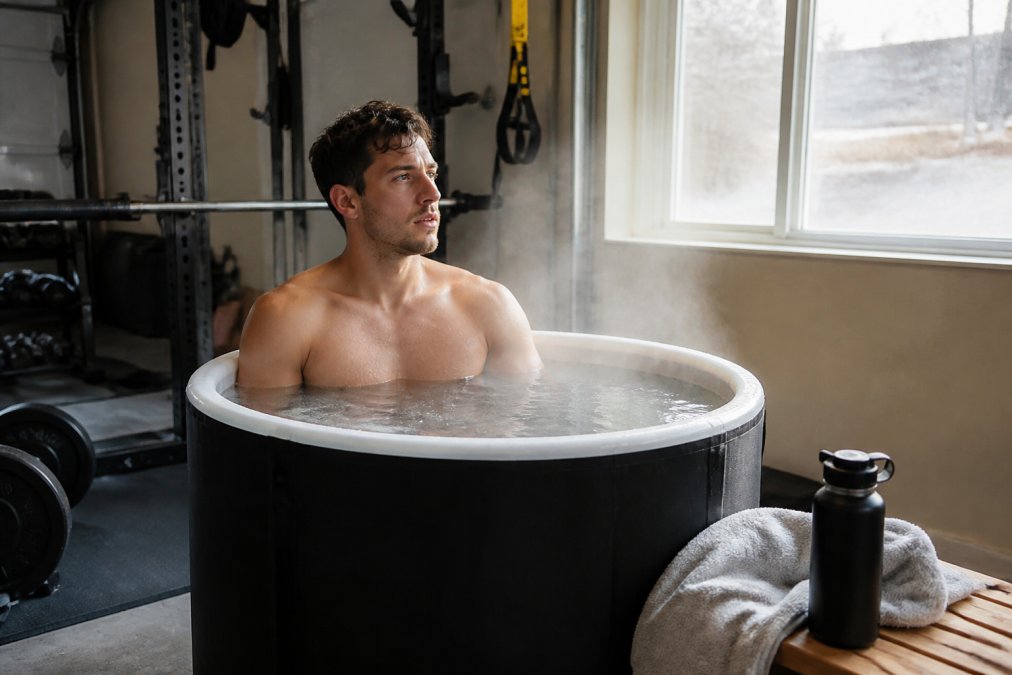
The essentials:
- Never plunge alone, especially as a beginner
- Keep water between 50°F and 59°F to start
- Cap sessions at 10 minutes absolute maximum
- Exit immediately if you feel numb, dizzy, or short of breath
- Warm up gradually afterward, don't jump into a hot shower
Contraindications and Who Should Avoid Cold Plunge
Cold plunge is not appropriate for everyone. People with certain heart conditions, uncontrolled high blood pressure, or Raynaud's phenomenon should consult a physician before starting. Cold water causes a sudden spike in heart rate and blood pressure, which can be dangerous for those with cardiovascular disease.
Post-Plunge Recovery and Warming Techniques
Warming up properly after a plunge is as important as the plunge itself. The goal is to restore homeostasis, your body's baseline temperature and function, gradually rather than abruptly.
Individualized Protocols Based on Health Status
Most guides give the same advice to everyone. A more useful approach adjusts duration, temperature, and frequency to your age, fitness level, and health status:
- Healthy, fit adults: 2 to 3 minutes at 50°F to 59°F, 3 to 4 times per week.
- Older adults or those new to cold exposure: start at 30 to 60 seconds at 59°F to 64°F, 2 times per week, and extend only when rewarming feels easy.
- People with anxiety or high stress: shorter, more frequent sessions (60 to 90 seconds, 4 to 5 times per week) often work better than long plunges, because the goal is repeated vagal activation rather than endurance.
- Athletes in heavy training: separate cold exposure from strength sessions by several hours to avoid blunting adaptation.
What to Ignore: Scientific Evidence vs. Anecdotal Claims
Separating clinical evidence from marketing hype is essential when evaluating cold plunge claims. The honest position: cold water immersion has well-documented effects on circulation, norepinephrine, and perceived recovery, while its direct impact on immune function remains an active area of research.
Claims to treat skeptically:
- Cold plunge "detoxifies" your body (your liver and kidneys do that)
- It prevents colds and infections outright (no strong evidence)
- Longer and colder is always better (false, and risky)
- It replaces sleep, nutrition, or medical care (it doesn't)
Building a Cold Plunge Routine That Lasts
The immune-related benefits of cold plunge for immune system support come from repetition, not intensity. A sustainable routine beats a punishing one every time.
Frequently Asked Questions
Does cold water make your immune system stronger?
Cold water immersion triggers a stress response that increases norepinephrine and mobilizes circulating immune cells, including leukocytes. Some preliminary research suggests regular cold exposure may support immune modulation, but clinical evidence linking cold plunges to fewer illnesses remains limited. Think of it as one supportive habit, not a substitute for sleep, nutrition, and standard preventive care. Many people combine cold plunge immune routines with other healthy practices for the best results.
How many minutes per day should you cold plunge for immune benefits?
Most research on cold water immersion uses sessions of 2 to 10 minutes at temperatures between 50°F and 59°F. Beginners should start with 30 seconds to 2 minutes and build gradually over several weeks. Going longer does not automatically mean better results, and cold adaptation takes time. A consistent routine of shorter sessions several times per week is more sustainable than occasional long plunges.
Are cold plunges safe to use when you are already sick?
Skip the cold plunge when you have a fever, active infection, or feel run down. Cold water is a physiological stressor, and adding that stress while your body fights illness can make things worse. Wait until you are fully recovered before resuming. People with heart conditions, Raynaud's, or circulatory problems should talk to a doctor before starting cold water immersion.
What should I do after a cold plunge to warm up properly?
After you exit, pat yourself dry and put on warm, dry layers right away. Light movement like walking or gentle stretching helps peripheral circulation return to normal gradually. Avoid hot showers immediately after, since rapid temperature swings can be hard on your system. A warm drink and a few minutes of quiet breathing help your body settle back into homeostasis.
Cold plunge isn't a miracle cure, but it is a legitimate tool for recovery, circulation, and stress management when used with consistency and respect for the risks. If you're ready to make cold therapy part of your routine, Thermo Plunge Recovery Systems builds the equipment to do it safely at home, with free shipping, a 30-day guarantee, and 24/7 support backing every order. Shop today and recover smarter.