

Cold Plunge Alternatives for Home Recovery
Table of Contents
- Why Athletes and Wellness Seekers Are Exploring Cold Plunge Alternatives
- Cold Plunge Recovery Benefits: What You Need to Know
- Budget-Friendly Recovery Alternatives to Premium Systems
- Inflatable Ice Bath vs Hard Shell: Which Setup Suits Your Space
- How Long to Stay in a Cold Plunge: Duration, Temperature, and Safety
- Chiller Systems vs Ice Baths: Temperature Control and Long-Term Costs
- DIY vs Commercial Cold Plunge: What Delivers Real Results
- Conclusion: Finding Your Ideal Cold Plunge Alternative
Last Updated: August 10, 2026
Why Athletes and Wellness Seekers Are Exploring Cold Plunge Alternatives
Cold water immersion has become a cornerstone of modern recovery routines, but not everyone needs or wants a premium cold plunge system. Cold plunge alternatives for home recovery come in many forms, each with distinct trade-offs in cost, space, durability, and temperature control. Whether you're an athlete managing post-workout inflammation, a wellness enthusiast seeking better sleep, or someone with limited space and budget, understanding your options matters more than chasing the most expensive equipment.

At Thermo Plunge Recovery Systems, we've worked with athletes across multiple disciplines and seen firsthand that the best recovery tool is the one you'll actually use consistently. We'll walk you through the most practical cold plunge alternatives available today, comparing features, pricing, maintenance demands, installation complexity, and long-term cost of ownership.
Cold Plunge Recovery Benefits: What You Need to Know
Cold water immersion triggers physiological responses that many athletes use for recovery. When you submerge your body in cold water, your circulatory system constricts blood vessels and then dilates them during the warming phase, improving vascular function. This thermal regulation process reduces inflammation markers in muscle tissue and accelerates muscle soreness recovery when done consistently.
Cold plunge recovery benefits extend to sleep quality and mental clarity. The parasympathetic response that follows cold exposure promotes deeper rest cycles. Many athletes report improved sleep onset within 2-3 hours of evening cold immersion sessions.
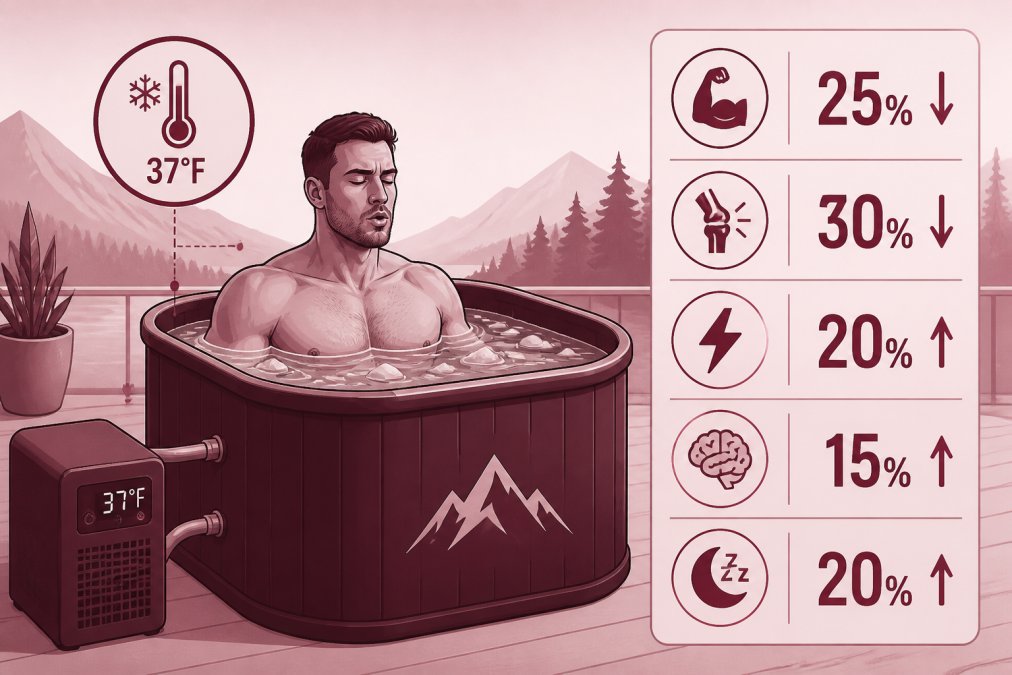
Regular cold water exposure increases brown adipose tissue activation, which burns calories to generate heat. While this isn't a weight-loss tool on its own, it complements training and nutrition strategies for athletes managing body composition.
Cold plunge recovery benefits are real, but they require consistency. Weekly immersion over 4-6 weeks is when most people notice tangible changes in soreness, sleep, and mental resilience.
Budget-Friendly Recovery Alternatives to Premium Systems
Several alternatives deliver meaningful cold therapy benefits without substantial investment, though each comes with trade-offs in convenience or temperature precision.
Ice baths with manual ice addition remain the most affordable entry point. A basic tub, whether a livestock tank, stock pot, or purpose-built inflatable basin, costs between $50-300. The Breg Polar Care Cube system ($145) offers motorised cold therapy with integrated pads, designed primarily for post-surgical recovery but functional for general muscle soreness management. The Aircast Cryo/Cuff IC Cooler System ($116) combines cold and compression, useful for targeted joint recovery.
For athletes wanting full-body cold water immersion without integrated chillers, the Ice Barrel 400 ($1,299) provides a durable rotomolded basin with an insulated lid. You'll need to add ice manually, but the construction quality and compact footprint appeal to those with limited space.
The trade-off with budget alternatives: temperature consistency suffers. Ice melts and water warms. You're managing a moving target rather than maintaining a precise 39-50°F range.
Inflatable Ice Bath vs Hard Shell: Which Setup Suits Your Space
The physical footprint and portability of your cold plunge alternative shapes your long-term commitment.
Inflatable ice baths occupy minimal permanent space. Models like the Thermo Plunge Recovery Systems Portable Cold Plunge ($169.95) or the Upgrade XL Ice Bath Tub ($648.95) deflate and store in a closet or garage corner when not in use. They're lightweight and move between rooms easily. The downside: durability concerns. Repeated inflation-deflation cycles stress seams, and most inflatable models last 2-3 years with regular use before requiring replacement.

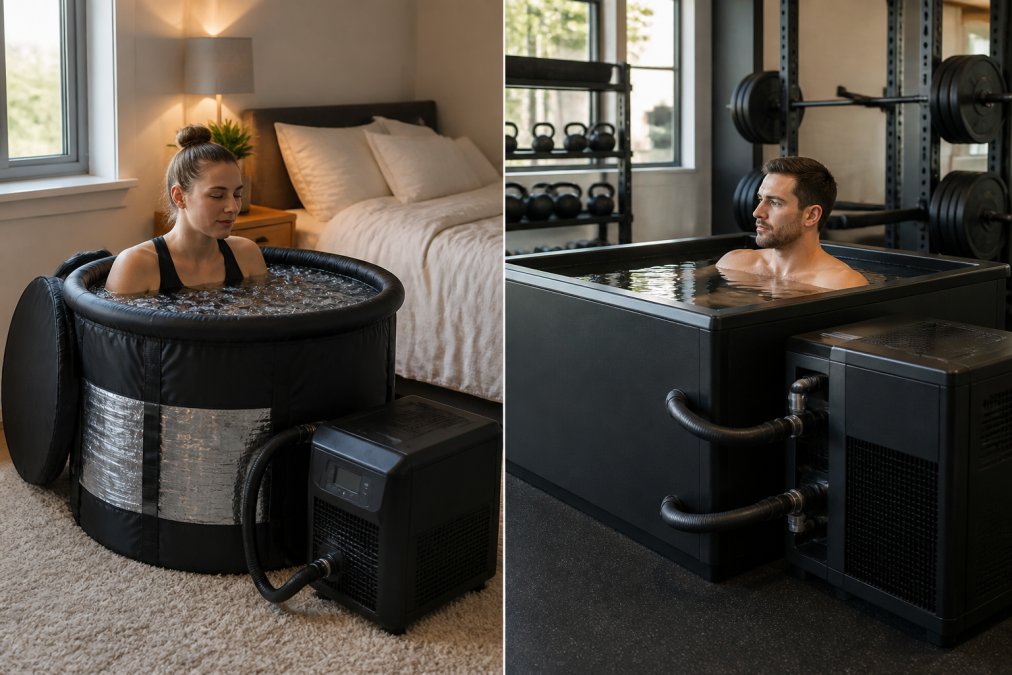
Hard-shell designs (rotomolded plastic or composite construction) occupy permanent floor space but tolerate years of daily use without degradation. The Nordic Wave Viking Premier ($3,500 approx.) and Ice Barrel 400 ($1,299) exemplify this category. They're heavier and require dedicated placement, but won't spring leaks from normal use. Hard shells also integrate better with chiller systems and filtration.
The decision hinges on your living situation. Urban apartment dwellers with no dedicated gym space should consider inflatable options. Homeowners with garage or basement space can commit to hard-shell systems. Renters often prefer inflatables to avoid landlord friction.
How Long to Stay in a Cold Plunge: Duration, Temperature, and Safety
The optimal how long to stay in a cold plunge depends on water temperature, your experience level, and your recovery goals.
Temperature and duration are inversely related. At 39-41°F, 3-5 minutes is effective for experienced users. At 50-55°F, you can safely extend to 10-15 minutes. At 60°F and above, duration becomes less critical as the recovery stimulus diminishes.
Beginners should start conservatively: 30-60 seconds at 55-60°F, once or twice weekly. After 2-3 weeks, extend duration by 30-second increments. Most athletes plateau around 3-5 minutes at their preferred temperature.
Your breathing will feel laboured initially and your heart rate will spike. This is normal. What's dangerous: uncontrolled gasping, chest pain, or dizziness. Exit immediately if you experience these. Cold water can trigger sudden cardiac events in susceptible individuals, which is why medical screening matters before starting.
Post-immersion protocol: Spend 5-10 minutes in normal room temperature, allowing your core temperature to normalise gradually. Your parasympathetic nervous system needs time to recover from the sympathetic shock.
Chiller Systems vs Ice Baths: Temperature Control and Long-Term Costs
This comparison often determines whether someone invests in a premium cold plunge alternative or settles for manual ice management.
Ice baths (manual ice addition) cost $50-300 upfront but demand ongoing ice purchases. Temperature fluctuates constantly. Setup takes 10-15 minutes. Maintenance is minimal: drain, rinse, refill.
Water chiller systems (like the Thermo Plunge Recovery Systems Water Chiller at $999.95) cost significantly more upfront but eliminate ice purchases and deliver precise temperature control. The 1/3 HP chiller cools water to 39°F and maintains it automatically. Setup is one-time: plumb the chiller to your tub, plug in, program.

The long-term cost calculation favours chillers if you're committed to 2+ years of regular use. A $1,000 chiller amortised over 24 months plus electricity costs becomes economical compared to ongoing ice purchases and time investment.
Quality chiller systems last 5-7 years. Thermo Plunge Recovery Systems bundles the Upgrade XL Ice Bath Tub with the Water Chiller in the Ultimate Recovery & Wellness Bundle ($2,199.95), which simplifies the decision for those wanting integrated temperature management.
DIY vs Commercial Cold Plunge: What Delivers Real Results
Building a DIY cold plunge setup appeals to budget-conscious athletes. The question: does DIY deliver equivalent results to commercial systems?
DIY approaches typically involve sourcing a large tub, adding a basic pump or chiller, and managing filtration yourself. Material costs run $300-800. The appeal: you control every component. The drawback: no warranty, no manufacturer support, and time investment in assembly and troubleshooting.
Commercial systems come engineered as integrated units. The Ice Bath Tub - Portable Cold Plunge ($169.95) is purpose-built with multi-layered insulation and drainage. The Upgrade XL Ice Bath Tub ($648.95) includes a thermal lid and water circulation compatibility. These design choices reduce maintenance friction and improve durability.
A DIY ice bath with manual temperature management delivers the same cold-water stimulus as a premium commercial system. Inflammation reduction and recovery benefits depend on temperature and duration, not equipment prestige. Where commercial systems win: consistency, convenience, and longevity.
For serious athletes training 5+ times weekly, commercial systems justify their cost through reduced setup time and dependable temperature control. For casual users or those testing the practice, budget commercial options make sense.
Conclusion: Finding Your Ideal Cold Plunge Alternative
Choosing the right cold plunge alternative for home recovery requires honest assessment of three variables: budget, space, and commitment level.
Athletes and wellness enthusiasts investing in serious recovery infrastructure should explore Thermo Plunge Recovery Systems' integrated solutions. The combination of a quality tub (Upgrade XL at $648.95), a reliable water chiller ($999.95), and optional red light therapy creates a comprehensive recovery environment. The 30-day guarantee and free shipping remove purchase friction. The 24/7 support means you're not troubleshooting alone.
For those just starting, the Portable Cold Plunge ($169.95) paired with ice provides real benefits at minimal cost. Test the practice over 4-6 weeks. Measure your sleep, soreness, and mental clarity improvements. Then decide whether to upgrade to a chiller system or stick with manual ice management.
Recovery results depend on consistency, not equipment cost. A $150 tub used three times weekly outperforms a $5,000 system gathering dust. Start where you are, use what you have, and upgrade when your commitment justifies the investment.
| Alternative Type | Starting Cost | Temperature Control | Best For | Maintenance Level |
|---|---|---|---|---|
| Manual ice bath | $50-300 | Manual (fluctuates) | Budget-conscious beginners | Low |
| Inflatable with chiller | $648-1,200 | Automated (precise) | Renters, limited space | Medium |
| Hard-shell with chiller | $1,500-4,000 | Automated (precise) | Committed athletes, homeowners | Medium |
| Motorised cold therapy system | $116-400 | Targeted, semi-automated | Post-injury, joint-specific recovery | Low |
| Contrast therapy tub | $3,000+ | Dual temperature (hot/cold) | Comprehensive recovery protocol | High |
Frequently Asked Questions
What are the best budget-friendly alternatives to premium cold plunge tubs?
Portable inflatable ice baths like the Thermo Plunge Ice Bath Tub ($169.95) offer effective cold water immersion without premium pricing. Ice Barrel 400 ($1,299) provides durable, simple cold plunge without integrated chillers. For targeted cold therapy, systems like Breg Polar Care Cube ($145) deliver clinical-grade results at lower cost. DIY ice baths using coolers and ice are cheapest but require manual maintenance. Your choice depends on whether you prioritise ease of use, temperature consistency, or upfront savings.
How long should you stay in a cold plunge for maximum recovery benefits?
Most recovery protocols recommend 2-5 minutes of cold water immersion at temperatures between 50-59°F (10-15°C). Beginners should start with 1-2 minutes and gradually increase duration as their nervous system adapts. Cold plunge recovery benefits peak around 3 minutes; staying longer doesn't amplify results and increases stress on your cardiovascular system. Temperature matters more than duration, colder water (39-45°F) requires shorter exposure, typically 1-3 minutes. Always listen to your body and consult a healthcare provider if you have cardiovascular concerns.
Do inflatable ice baths provide the same recovery benefits as hard-shell models?
Yes, inflatable ice bath vs hard shell comes down to durability and consistency rather than recovery efficacy. Both deliver effective cold water immersion and thermal regulation benefits when maintained properly. Inflatable models are portable and space-saving, ideal for apartments, but require careful handling and may need replacement after 2-3 years of heavy use. Hard-shell tubs like Ice Barrel 400 last longer and retain temperature better due to superior insulation. For serious athletes using equipment daily, hard-shell offers better long-term value; for occasional use or limited space, inflatable ice bath models work well.
Is a DIY ice bath as effective as a commercial cold plunge system?
DIY ice baths using coolers and ice deliver real cold water immersion and can support recovery routines. However, they lack consistent temperature control, filtration, and water sanitation, requiring manual ice replacement every 30-45 minutes. Commercial systems like Thermo Plunge's Water Chiller ($999.95) maintain precise temperatures (down to 39°F) with automated filtration and ozone sanitation, reducing bacterial growth and maintenance burden. For occasional use, DIY works; for daily training or clinic settings, commercial systems provide reliability, hygiene, and measurable long-term cost savings despite higher upfront investment.
[EXTERNAL_LINK: American Heart Association guidance on cold water immersion and cardiovascular health | heart.org]
[EXTERNAL_LINK: Journal of Sports Medicine research on cold water immersion for muscle recovery | ncbi.nlm.nih.gov]
[EXTERNAL_LINK: National Institutes of Health study on contrast therapy and athletic recovery | nih.gov]
This article was written using GrandRanker