

Cold Plunge Cost for Home Installation: 2026 Breakdown
Table of Contents
- What Drives Cold Plunge Cost for Home Installation
- Cold Plunge Electricity Usage and Operational Costs
- DIY Ice Bath Setup Cost vs. Pre-Built Systems
- Cold Plunge Maintenance Costs to Budget For
- Installation Requirements: Electrical, Plumbing, and Permits
- Which Home Cold Plunge Setup Fits Your Budget
- Frequently Asked Questions
Last Updated: September 14, 2026
What Drives Cold Plunge Cost for Home Installation
The cold plunge cost for home installation hinges on three variables: tub type, chiller capacity, and how much infrastructure your space already has. Get those wrong and you'll overspend on the wrong system or underbudget on the hidden costs that show up after delivery.
At Thermo Plunge Recovery Systems, we've watched buyers fixate on the tub price while ignoring the chiller, which is the single biggest line item in any serious setup. A tub alone runs a few hundred dollars. A chiller that actually holds 39°F in a warm garage can cost more than the tub itself.
Most guides treat cold plunge cost as a single number. It isn't. It's a stack: tub, chiller, electrical work, filtration, and the monthly cost of running the thing.
Tub Type and Water Capacity
Tub choice sets your floor price and your ceiling for everything else. Inflatable and foldable tubs cost the least and store easily, but they lose cold faster and demand more from your chiller. Rigid, insulated tubs with a built-in shell hold temperature better, which means the chiller cycles less and your electricity bill stays lower.
Water capacity matters more than most buyers expect. A 160-gallon tub takes longer to cool and needs a stronger chiller than a compact 80-gallon model. Larger capacity also means more water to treat, filter, and eventually replace.
Chiller and Temperature Control
The chiller is where serious money goes, and where cheap systems quietly fail. A 1/3 HP unit like our Water Chiller cools water to 39°F and works with any tub. That compatibility matters: you can start with a basic tub and add cooling capacity later instead of replacing the whole setup.

What most guides miss is that cooling capacity and flow rate must match your tub volume. An undersized chiller runs constantly, never quite reaches target temperature, and burns more power than a properly sized unit.
Cold Plunge Electricity Usage and Operational Costs
Cold plunge electricity usage is the cost nobody budgets for, and it's the one that never stops. A chiller's power draw depends on its size, your target temperature, and the ambient temperature where you keep the tub. Unlike purchase price, which you pay once, operational cost compounds month after month and varies wildly based on how you run the system.
How to Calculate Your Monthly Chiller Cost
The math is straightforward once you know three numbers: chiller wattage, daily run time, and your electricity rate. Multiply wattage by hours run, divide by 1,000 to get kilowatt-hours, then multiply by your rate. A 1/3 HP chiller typically draws around 300 watts. If it runs six hours a day in a 70°F space, that's 1.8 kWh daily. At a typical residential rate, that's a modest daily cost that becomes a meaningful annual figure when you plunge year-round.
But run time isn't fixed. It's a function of heat gain, which depends on ambient temperature, tub insulation, and how often you open the lid. In a 95°F garage, the same chiller might run 10 to 12 hours a day to hold 39°F. In a shaded 70°F indoor space, it might cycle only four to five hours. That difference can double or triple your monthly operational cost without any change in equipment.
Insulation and the Cost of Heat Gain
Tub insulation is the single biggest lever you control after purchase. A well-insulated tub with a thermal lid slows heat transfer, so the chiller cycles less. An inflatable tub with a thin wall loses cold rapidly, forcing the chiller to work harder. The upfront savings on a cheap tub often get paid back to the utility company within a year.
A common pattern is that buyers upgrade their tub before their chiller. If you start with an inflatable tub and later move to a rigid insulated model, your chiller's run time drops noticeably, and so does your monthly bill. That's why sizing the chiller for your eventual tub, not just your current one, avoids double spending.
Utility Rates and Time-of-Use Strategies
Electricity rates vary by region, season, and time of day. Many utilities offer time-of-use plans where overnight rates are lower. If your plan includes that, running the chiller primarily at night lets the insulated tub hold temperature through your morning plunge. This single habit can cut your operational cost meaningfully without changing your routine.
What Competitors Miss
Most guides quote a single monthly electricity figure without explaining what drives it. The real cost is a range, not a number. It depends on your climate, your tub's R-value, your chiller's efficiency, and how you schedule run time. Budgeting for the high end of that range, then improving insulation and scheduling to bring it down, is a more honest approach than assuming a best-case scenario.
DIY Ice Bath Setup Cost vs. Pre-Built Systems
DIY ice bath setup cost looks cheapest on paper and rarely stays that way. A stock tank, bags of ice, and a thermometer get you started for very little. Then you add up the ice runs, the inconsistent temperatures, and the time spent hauling bags from the store. The real comparison isn't upfront price versus upfront price. It's total cost of ownership over the first year, including your time.

The Hidden Labor of Ice Runs
A 100-gallon stock tank needs roughly 40 to 60 pounds of ice to drop from tap temperature to plunge temperature, depending on your starting water temperature and target. That's multiple bags per session. If you plunge four times a week, you're buying and hauling hundreds of pounds of ice monthly. Even at a modest price per bag, the recurring cost adds up fast, and it never stops.
Then there's the time. A store run, loading, unloading, and waiting for the ice to melt and equalize can easily consume 30 to 45 minutes per session. Over a year, that's dozens of hours. If you value your time at even a modest hourly rate, the DIY route's true cost climbs well above the sticker price of a chiller.
Temperature Control and Consistency
Ice doesn't hold a steady temperature. It drops fast, then warms as it melts. You're constantly adjusting, adding more ice, or plunging in water that's colder or warmer than intended. For athletes using cold plunge as part of a structured recovery protocol, that inconsistency undermines the purpose. A chiller holds 39°F within a narrow band, session after session, without intervention.
When DIY Makes Sense
DIY works for testing the habit. If you're not sure you'll stick with cold plunging, a stock tank and ice let you try it without committing to a chiller. But once you're plunging several times a week, the math shifts. The ice cost, the time cost, and the inconsistency all point toward a chiller-equipped system.
The Middle Path: Portable Tub Plus Chiller
A portable tub paired with a chiller sits between the two extremes. You get precise temperature control and low ongoing cost, but you keep the flexibility to move or store the setup. Unlike a permanent built-in installation, a portable tub and chiller can be relocated or sold if your circumstances change. That flexibility has real value that a fixed install never recovers.
| Setup Type | Upfront Cost | Ongoing Cost | Temperature Control | Best For |
|---|---|---|---|---|
| DIY stock tank + ice | Lowest | High (ice, labour) | Inconsistent | Testing the habit |
| Portable tub + chiller | Moderate | Low (electricity) | Precise | Daily home use |
| Full pre-built system | Highest | Low (electricity) | Precise, automated | Serious recovery routines |
For athletes plunging daily, the DIY route stops making sense fast. Ice costs and inconsistency wear you down within weeks. The question isn't whether you can afford a chiller. It's whether you can afford to keep buying ice.
Cold Plunge Maintenance Costs to Budget For
Cold plunge maintenance costs are modest but non-negotiable. Skip them and you're plunging into water you shouldn't touch.
Filters need cleaning or replacing on a schedule, and how often depends on how much you use the tub. Sanitation matters just as much: ozone generators and UV sterilization keep water clean between full changes, while a quality filtration system handles debris and oils from your skin.
Water chemistry deserves attention. You're testing and balancing water the same way you would a hot tub, just at a colder temperature. Budget for test strips, sanitizer, and the occasional full drain and refill. Most owners find a simple weekly routine covers it.
Installation Requirements: Electrical, Plumbing, and Permits
Installation requirements trip up more buyers than any other part of the cold plunge cost for home installation. Get these wrong and you're looking at rework, not just extra spend.
Electrical is the first hurdle. A chiller needs a dedicated circuit and a GFCI outlet, which protects against shock in wet environments. Most standard household outlets won't safely carry the electrical load, so factor in an electrician's visit if you don't already have a suitable circuit near your setup.
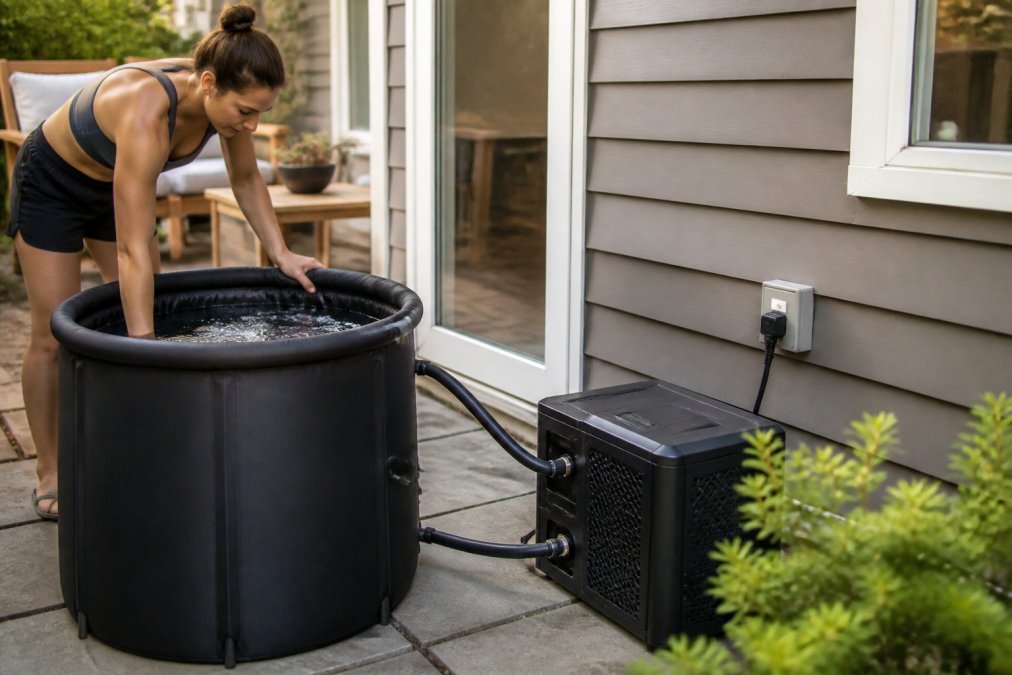
Plumbing and drainage come next. You need a way to fill the tub and a plan for draining it, whether that's a nearby hose bib, a floor drain, or a portable pump. Drainage requirements vary by location, and where you place the tub often determines how easy water changes are.
Permitting and HOA rules are the costs competitors never mention. Some municipalities require permits for outdoor structures or permanent electrical work, and many HOAs restrict what you can install on a patio or in a shared space. Check both before you buy, not after. A quick call to your local building department and a read of your HOA covenants can save you a costly reversal.
Which Home Cold Plunge Setup Fits Your Budget
Matching setup to budget comes down to how often you'll plunge and how much space you have. There's no single best answer, only the right fit for your routine.
For most home users, a portable tub paired with a chiller delivers the best balance of cost, consistency, and longevity. Start with the Upgrade XL Ice Bath Tub at 160 gallons, then add the 1/3 HP chiller when you're ready to stop buying ice. If you want cold therapy and recovery in one purchase, the Ultimate Recovery & Wellness Bundle pairs an XL tub, chiller, and full-body red light therapy pad.

Working with a tighter budget or limited space? The Ice Bath Tub folds flat for storage, and the Portable Bathtub handles both hot soaks and cold plunges in a compact footprint.
One factor buyers overlook entirely: resale value and depreciation. Unlike permanent built-in installations, portable tubs and chillers can be sold, moved, or stored if you relocate. That flexibility has real value that a fixed install never recovers.
The hardest part of planning a home cold plunge isn't the purchase, it's the hidden costs that surface after delivery: electrical work, filtration, and the monthly energy draw. Thermo Plunge Recovery Systems builds equipment that removes most of that guesswork, with chiller-and-tub systems designed to work together, free shipping, a 30-day guarantee, and 24/7 support. Get started with Thermo Plunge Recovery Systems and build a recovery setup that holds its temperature, its value, and your routine.
Frequently Asked Questions
Are cold plunges expensive to run every month?
Monthly operating costs depend on your chiller's power draw, local electricity rates, and ambient temperature. A 1/3 HP chiller like the Thermo Plunge Water Chiller runs continuously to hold water at 39°F, so expect a noticeable bump in your electric bill during summer months. Insulating your tub with a thermal lid and placing it in a shaded area reduces how hard the chiller works, which lowers cold plunge electricity usage over time.
How does DIY ice bath setup cost compare to buying a complete system?
A DIY ice bath setup cost can start lower if you use a stock tank and add ice manually, but the ongoing ice expense adds up fast. A complete system with a chiller eliminates daily ice runs and delivers consistent water temperature regulation. Thermo Plunge offers the Ice Bath Tub at $169.95 for a basic portable cold plunge, while the Water Chiller at $999.95 pairs with any tub for automated cooling. The Ultimate Recovery & Wellness Bundle at $2,199.95 combines both plus red light therapy.
Can I install a cold plunge indoors without structural modifications?
Portable tubs and inflatable models are the easiest option for indoor use because they require no built-in shell or permanent plumbing infrastructure. You will need a GFCI outlet nearby, adequate floor drainage, and enough ventilation to manage humidity. The Upgrade XL Ice Bath Tub holds 160 gallons and fits in most garage or basement spaces. Always check local permitting and HOA requirements before placing a permanent setup indoors.
What are the hidden cold plunge maintenance costs I should plan for?
Beyond the purchase price, budget for filtration system replacements, ozone generator or UV sterilization components, and water chemistry supplies. Cold plunge maintenance costs also include periodic water changes and electricity for the chiller. A built-in filter and timer, like the ones on the Thermo Plunge Water Chiller, reduce how often you need to swap water and clean components, which keeps long-term costs predictable.
Is a home cold plunge worth the investment for recovery?
For athletes dealing with muscle soreness and inflammation, a home cold plunge removes the cost and hassle of visiting a recovery clinic. The total cost of ownership includes the tub, chiller, electricity, and maintenance, but daily access to cold water immersion at home often justifies the spend for frequent users. Thermo Plunge offers a 30-day guarantee and free shipping, so you can test whether cold therapy fits your routine.