

Home Wellness Space Design Ideas: Complete Guide
Table of Contents
- Why a Dedicated Home Wellness Space Matters
- Essential Design Elements for Your Wellness Space
- Incorporating Biophilic Design and Natural Elements
- Home Recovery Room Essentials and Equipment
- Integrating Cold Plunge Therapy at Home
- Wellness Room Layout for Small Spaces
- Smart Home Integration and Maintenance
- Create Your Personal Sanctuary Today
Last Updated: August 27, 2026
Why a Dedicated Home Wellness Space Matters
Creating a dedicated wellness space in your home transforms how you approach recovery and self-care. Unlike visiting external facilities, a personal sanctuary gives you complete control over your environment, timing, and recovery routine without scheduling constraints or travel time.

A home wellness space serves multiple purposes: stress relief, muscle recovery, sleep improvement, and detoxification. Athletes and fitness enthusiasts benefit from having professional-grade recovery tools within arm's reach. The psychological impact matters as much as the physical benefits. Entering a thoughtfully designed wellness room signals to your body that it's time to shift into recovery mode, activating parasympathetic nervous system responses and releasing stress-reducing hormones.
At Thermo Plunge Recovery Systems, we empower athletes and wellness enthusiasts to achieve peak performance and smarter recovery right at home. The most successful setups prioritize both functionality and atmosphere. Whether you have a dedicated room or a corner of your bedroom, thoughtful design creates an environment where recovery happens naturally.
Essential Design Elements for Your Wellness Space
Your wellness space needs foundational elements that work together. The right combination of lighting, colour, materials, and layout creates an environment where your body and mind can genuinely relax.
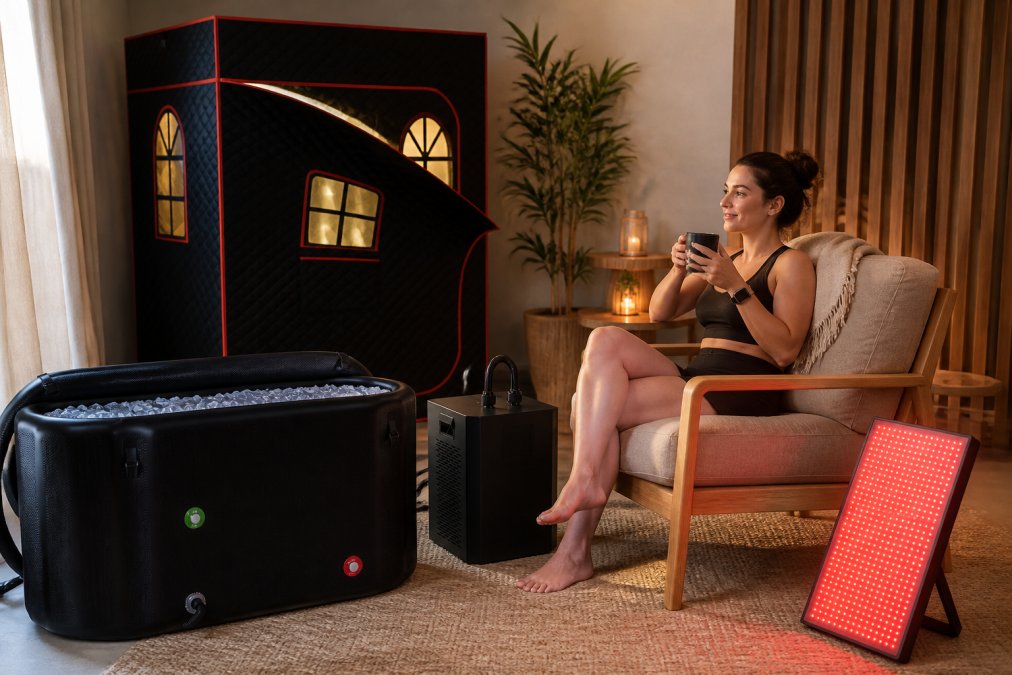
Lighting Strategies for Relaxation
Lighting is the single most powerful tool in wellness space design. The goal isn't brightness, it's creating layered, adjustable illumination that supports different recovery activities.
Start with ambient lighting as your foundation. Warm white bulbs (2700K colour temperature) trigger melatonin production, signalling your body that it's time to wind down (peer-reviewed research). Avoid cool white or blue-tinted lights, which stimulate alertness.
Add task lighting for specific activities like reading or meditation. Wall-mounted sconces or adjustable floor lamps work well. Layer in accent lighting, perhaps from candles or dimmable LED strips, for sensory depth and psychological comfort. Smart lighting systems let you adjust colour temperature and brightness automatically, syncing with circadian rhythms.
Calming Colour Palettes
Colour psychology directly influences your nervous system. Your wellness space should emphasize calming colour schemes that promote relaxation.
Neutral earth tones form the ideal base: soft greys, warm beiges, muted taupes, and pale creams. These colours recede visually, creating spaciousness and calm. Soft greens and blues support a zen atmosphere and can be used as accent colours. Avoid warm reds, bright oranges, and intense yellows, which activate the sympathetic nervous system. Test paint samples at different times before committing, as natural light affects colour perception.
Incorporating Biophilic Design and Natural Elements
Biophilic design, incorporating natural elements into indoor spaces, fundamentally changes how your wellness space feels. Your nervous system responds to natural materials and living plants in measurable ways.
Living plants improve air quality and create visual focal points that calm your mind. Low-maintenance varieties like pothos, snake plants, peace lilies, or ZZ plants tolerate varied light conditions. Natural materials anchor your space in authenticity: cork flooring provides warmth and acoustic comfort, bamboo furniture brings organic texture, and raw wood introduces warmth that synthetic materials can't match.
Water elements create sensory focal points. A small fountain introduces gentle soundbathing, the psychological calming effect of water sounds. Natural light access matters enormously. If your wellness space has windows, use them. If direct sunlight is too intense, filter it through sheer curtains. If your space lacks windows, full-spectrum lighting mimics natural light qualities.
Home Recovery Room Essentials and Equipment
Choosing the Right Recovery Tools
Cold plunge therapy, infrared sauna sessions, and red light therapy each serve distinct recovery purposes. Cold exposure reduces inflammation and accelerates muscle recovery. Heat therapy improves circulation and promotes detoxification. Red light therapy supports cellular energy production and tissue repair.

The Thermo Plunge Recovery Systems Ultimate Recovery & Wellness Bundle combines these modalities in one integrated system, including an XL ice bath tub, a 1/3 HP water chiller for temperature control, and a full-body red light therapy pad. This approach lets you cycle between cold and heat exposure, a contrast therapy strategy that amplifies recovery benefits.

For heat therapy, the Infrared Sauna - 2-Person Premium Home Spa delivers professional-grade benefits in a home-sized footprint. For athletes seeking comprehensive recovery, the Premium Recovery and Wellness Bundle provides everything: a 2-person infrared sauna, XL ice bath, water chiller, and full-body red light therapy pad. If space is limited, the Electric Sauna Blanket provides infrared heat therapy without permanent installation.
Sensory Focal Points: Water, Sound, and Scent
Water features serve dual purposes. A small tabletop fountain provides soundbathing and creates a focal point for meditation. Sound design matters profoundly; gentle water sounds, nature recordings, or soft instrumental music support relaxation. Scent influences mood and memory. Essential oil diffusers introduce calming aromas like lavender for relaxation or eucalyptus for clarity. Start with subtle scents; overpowering aromas create tension rather than relaxation.
Integrating Cold Plunge Therapy at Home
Cold plunge therapy has become central to home recovery routines. The physiological benefits are well-documented: reduced inflammation, accelerated muscle recovery, improved circulation, and enhanced mental resilience.
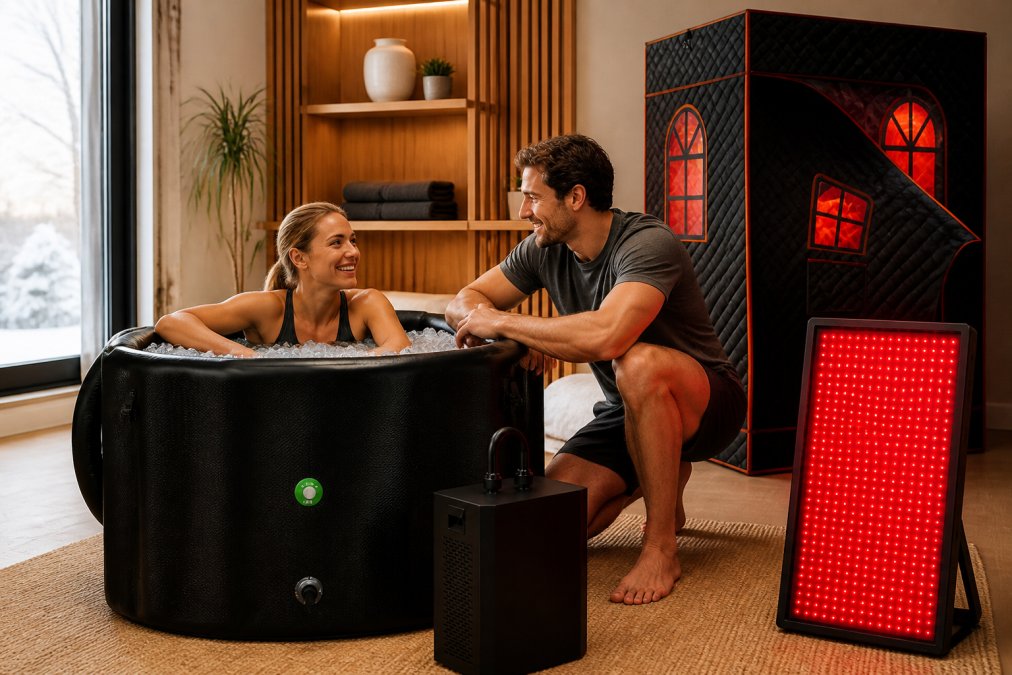
Cold exposure works through hormetic stress, a controlled stressor that triggers adaptation responses. Temperature matters significantly. Most effective cold plunge sessions occur between 50-59°F (10-15°C) (peer-reviewed research). A 1/3 HP water chiller maintains precise temperature control.
Duration follows a progression. Beginners start with 1-2 minutes and gradually extend to 3-5 minutes as adaptation occurs. Cold plunge sessions work best 4-6 hours after intense training, when inflammation peaks (peer-reviewed research). Safety considerations matter. Avoid cold plunge therapy if you have cardiovascular conditions without medical clearance. Never plunge alone your first time. Start with shorter durations and warmer temperatures, gradually progressing as your body adapts.
Wellness Room Layout for Small Spaces
Space constraints don't prevent effective wellness space design. Multi-functional furniture serves double duty: a cushioned bench becomes meditation seating and cold plunge recovery seating. Wall-mounted shelving stores equipment without consuming floor space.
Vertical design uses wall space effectively. Shelving, wall-mounted planters, and hanging storage keep floor area open, creating psychological spaciousness. Equipment placement follows a logical flow: position your cold plunge setup near water access if possible, place your infrared sauna where you can recline comfortably, and arrange red light therapy equipment where it covers your body during sessions.
Decluttering becomes essential in small spaces. Every item should serve a purpose. Lighting placement matters more in compact spaces; strategic lighting creates zones without physical barriers.
Smart Home Integration and Maintenance
Programmable lighting systems adjust automatically based on time of day or activity. Smart temperature controls maintain optimal conditions. App-based controls let you monitor and adjust equipment remotely.
Maintenance keeps your wellness space functioning optimally. Cold plunge systems require regular water filtration to maintain clarity and hygiene. Change filters according to manufacturer guidelines, typically every 3-6 months depending on usage. Infrared saunas need minimal maintenance; wipe down interior surfaces occasionally and check electrical connections. Red light therapy pads require occasional cleaning with a soft, dry cloth. Air quality maintenance supports wellness; plants naturally filter air, but consider adding an air purifier if your space feels stale.
Create Your Personal Sanctuary Today
Your home wellness space design represents an investment in recovery, relaxation, and long-term health. The most effective spaces combine thoughtful design with functional equipment that supports your specific recovery needs.
Whether you're an athlete seeking faster muscle recovery, someone prioritizing better sleep and stress relief, or a wellness enthusiast committed to longevity, your personal sanctuary makes recovery accessible and consistent. Our professional-grade equipment integrates seamlessly into thoughtfully designed spaces.
Start building your wellness space today. Begin with one element, perhaps a cold plunge therapy setup or an infrared sauna blanket, and expand as your space and routine evolve. Each addition strengthens your recovery capabilities and deepens your commitment to health.
Your home wellness space design should support your body's natural recovery processes while creating an environment where relaxation happens effortlessly. Thermo Plunge Recovery Systems provides the professional-grade equipment that transforms design intentions into measurable recovery results. Explore our complete recovery bundles and discover how integrated cold therapy, heat therapy, and red light systems accelerate your progress. Shop now and experience the difference that dedicated home recovery makes.
Frequently Asked Questions
Q: What are the essential elements of a home wellness space design?
A: A functional wellness space combines proper lighting (warm, dimmable options), calming colour schemes (soft blues, greens, neutrals), quality furniture, natural elements like plants, and sensory focal points such as water features or essential oil diffusers. Include recovery equipment suited to your goals, infrared saunas, ice baths, or red light therapy tools, arranged to create flow without clutter. The key is balancing aesthetics with functionality so the space invites regular use.
Q: How do I create a wellness space in a small apartment?
A: Start with multi-functional furniture and vertical storage to maximise floor space. A sauna blanket or compact ice bath takes up far less room than a full sauna cabinet. Use mirrors to create the illusion of space, choose light colours to brighten the area, and add one strong focal point, such as a meditation corner or red light therapy setup, rather than crowding the room. Even a single corner with comfortable seating, soft lighting, and a plant can serve as an effective wellness zone.
Q: What equipment is best for a home recovery room?
A: The best equipment depends on your recovery goals. Infrared saunas support detoxification and muscle relaxation, ice baths reduce inflammation and soreness, and red light therapy promotes circulation and skin health. Many people benefit from combining tools, for example, pairing heat therapy with cold plunge therapy creates a powerful recovery cycle. Start with what addresses your primary concern, then expand. Our Ultimate Recovery & Wellness Bundle combines ice bath, water chiller, and red light therapy for comprehensive home recovery.
Q: How do I maintain a wellness space with recovery equipment?
A: Regular maintenance keeps equipment safe and effective. For ice baths, monitor water quality and filtration systems weekly; most modern systems include built-in chilling and circulation. Infrared saunas need occasional interior wiping and ventilation checks. Red light therapy pads require dust-free storage. Create a simple maintenance log, checking filtration, cleaning surfaces, and inspecting cords monthly prevents breakdowns. Most quality recovery systems are designed for durability and straightforward upkeep, and our 24/7 support team can guide you through any maintenance questions.
This article was written using GrandRanker