

How Infrared Sauna Works for Beginners: 2026 Guide
Table of Contents
- What an Infrared Sauna Actually Does for Beginners
- How Infrared Heat Works vs. Traditional Saunas
- How Long to Stay in an Infrared Sauna for Your First Sessions
- Infrared Sauna Safety Tips Every Beginner Should Know
- What to Wear, Bring, and Do Before Your First Session
- What Beginners Get Wrong About Infrared Sauna Benefits
- After the Session: Recovery, Rehydration, and What Comes Next
- Conclusion
- Frequently Asked Questions
Last Updated: September 21, 2026
What an Infrared Sauna Actually Does for Beginners
An infrared sauna is a heat therapy room that warms your body directly with infrared light instead of heating the air around you. For beginners, that difference changes everything about how a session feels.
At Thermo Plunge Recovery Systems, we hear the same question from first-timers: why does this feel so different from a gym steam room? The answer sits in the light itself.

Invisible Light Waves, Not Steam
Infrared saunas use invisible light waves to create radiant heat. These waves sit just past red on the electromagnetic spectrum, beyond what your eyes can see.
Instead of heating the air, the panels warm your skin and tissue directly. The air around you stays cooler than in a traditional sauna. That is why many beginners find infrared sessions easier to tolerate.
You sweat at lower ambient temperatures. Your core body temperature rises gradually. The result is a gentler, more comfortable first experience.
How Infrared Heat Works vs. Traditional Saunas
Traditional saunas heat the room to 160-190°F, while infrared saunas typically run at 120-140°F. The lower temperature is the single biggest reason beginners last longer in an infrared session.
The difference comes down to how heat reaches you:
- Traditional sauna: heats the air, which then heats you through convection and steam
- Infrared sauna: heats your body directly through radiant energy
- Traditional sauna: high humidity, often 10-20% or higher with steam
- Infrared sauna: dry heat, no steam, humidity stays near ambient
The Three Infrared Bands, Explained for Beginners
Infrared wavelengths fall into three bands, and each one reaches a different depth of tissue:

| Band | Wavelength Range | What It Reaches | Typical Beginner Experience |
|---|---|---|---|
| Near-infrared (NIR) | ~0.75-1.4 micrometers | Skin surface and shallow tissue | Warmth on the skin within minutes |
| Mid-infrared (MIR) | ~1.4-3 micrometers | Deeper skin layers and soft tissue | Gradual warmth that builds |
| Far-infrared (FIR) | ~3-100 micrometers | Deepest tissue penetration | Full-body sweat response |
Most home saunas focus on far-infrared because it produces the deepest, most consistent sweat response. Some premium cabins combine all three bands. For a beginner, the practical takeaway is simple: far-infrared is what you will feel most, and it is the band responsible for the deep, gentle warmth that makes infrared sessions tolerable at lower air temperatures.
What Happens Inside Your Body
When infrared energy reaches your tissue, it triggers vasodilation, which means your blood vessels widen. This is the same response your body produces during exercise, just delivered through radiant heat instead of muscle work.
That wider blood flow does a few things beginners notice quickly:
- Sweat glands activate at lower air temperatures than in a traditional sauna
- Heart rate rises modestly, similar to a light walk
- Muscle tissue warms from the inside out, which many people find soothing for stiff joints
- Core temperature climbs gradually rather than spiking
The cardiovascular load is real but gentler than a traditional sauna. A common pattern reported by practitioners is that beginners can stay in an infrared cabin 10-15 minutes longer than they would in a traditional sauna at the same subjective comfort level.
How Long to Stay in an Infrared Sauna for Your First Sessions
Beginners should start with 10 to 15 minutes per session. Build up slowly over your first few visits.
Infrared Sauna – 2-Person Premium Home →
Your body needs time to acclimatize. Pushing too long on day one is the most common beginner mistake.
Here is a simple ramp-up plan:
| Session | Duration | Temperature | Goal |
|---|---|---|---|
| 1-2 | 10-15 min | 120-130°F | Test your heat tolerance |
| 3-5 | 15-20 min | 130-140°F | Build sweat response |
| 6+ | 20-30 min | 140°F | Full session length |
Stop immediately if you feel dizzy, nauseous, or lightheaded. Listen to your body over any schedule.
Most people settle into a comfortable 20 to 30 minute routine within a few weeks.
Infrared Sauna Safety Tips Every Beginner Should Know
Safety starts before you step in. Hydration levels matter more than most beginners realize.
Drink 16-20 ounces of water in the hour before your session. Sweating pulls water and electrolytes from your body. Replacing them keeps your electrolyte balance steady. A common pattern is to lose 16-32 ounces of sweat in a 30-minute session, so plan to drink at least that much afterward.
A few core safety tips:
- Never drink alcohol before a session
- Keep sessions under 30 minutes until you adapt
- Bring a towel to manage your sweat response
- Step out if your heart rate climbs too high
- Avoid sessions right after a heavy meal
- Never lock yourself in, know where the door handle is before you sit down
Cardiovascular strain is real, even in dry heat. If you have heart conditions or take medication, talk to your doctor first.
What to Do If You Feel Unwell Mid-Session
This is the part most guides skip, and it is the part beginners need most. Feeling lightheaded, dizzy, nauseous, or claustrophobic in an infrared sauna is common in the first few sessions, and it is almost always manageable if you act early.
Here is the step-by-step response:
- Open the door immediately. Do not wait to see if it passes. Fresh air is the fastest reset.
- Sit down or step out. Standing up quickly after heat exposure can drop your blood pressure and make dizziness worse.
- Sip cool water. Small sips, not gulps. Gulping can trigger nausea.
- Cool your wrists and neck. A cool cloth or running water on these pulse points brings core temperature down faster than waiting.
- Rest for 10-15 minutes before driving or showering. Your body needs time to re-regulate.
If symptoms persist after 15 minutes of cooling down, or if you feel chest pain, shortness of breath, or confusion, seek medical attention. Those are not normal beginner discomforts.
Who Should Skip Infrared Sauna Sessions
Some people should avoid infrared saunas or get medical clearance first. Pregnant women, people with low blood pressure, and anyone with heart disease should check with a physician.
Skip sessions if you have open wounds, are dehydrated, or feel unwell. Children should not use infrared saunas without adult supervision.
Infrared Sauna – 2-Person Premium Home →
If you take medications that affect sweating or blood pressure, including diuretics, beta blockers, or antidepressants, ask your doctor before your first session. These medications can change how your body regulates heat and fluid balance.
Claustrophobia: A Beginner-Specific Concern
If you have never been in an enclosed heated space, claustrophobia can show up unexpectedly. A few practical workarounds:
- Choose a sauna with a glass door or large window
- Keep the door slightly ajar for your first few sessions
- Start with 5-10 minute sessions just to build familiarity
- Use a sauna blanket instead of a cabin if enclosed spaces feel overwhelming
There is no rule that says you have to stay in for a set time.
What to Wear, Bring, and Do Before Your First Session
Wear loose, breathable clothing or a towel wrap. Cotton works well. Avoid heavy fabrics that trap heat against your skin.
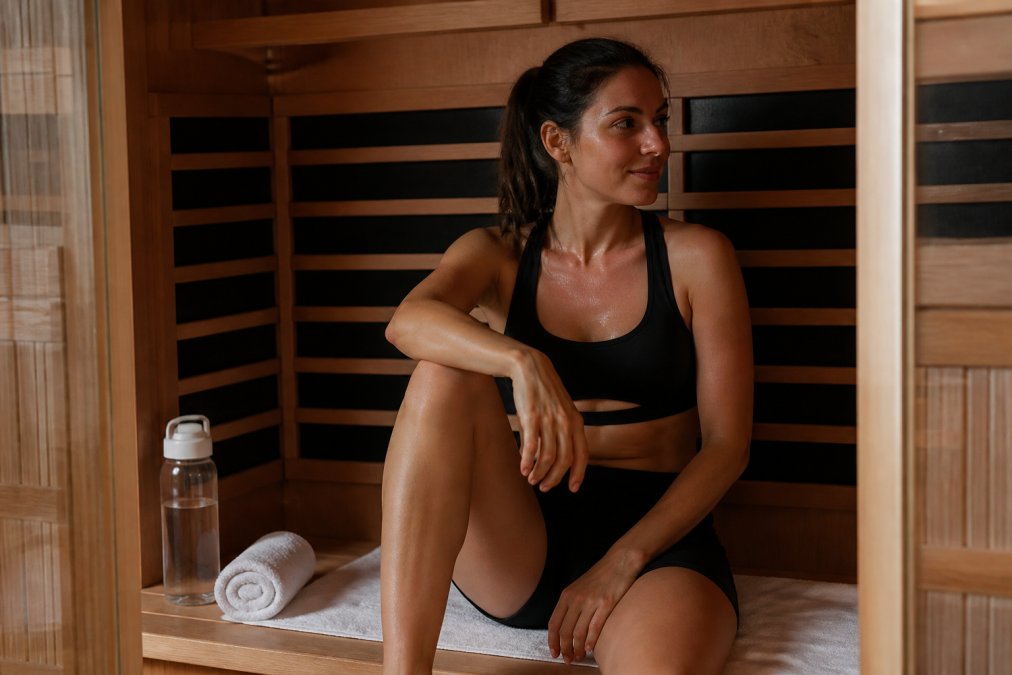
Bring these items to every session:
- A large towel for the bench
- A water bottle
- A small towel for sweat
- Comfortable footwear or bare feet
What Beginners Get Wrong About Infrared Sauna Benefits
The biggest mistake is expecting instant results. Infrared sauna benefits build over consistent use, not one session.
After the Session: Recovery, Rehydration, and What Comes Next
Cool down gradually after you step out. Sudden temperature changes can leave you lightheaded.
Your post-session routine matters:
- Rinse off to clear sweat and reopen pores
- Rest for 10 minutes before intense activity
- Refuel with water and a light snack
- Note how your muscles feel the next day
Conclusion
Starting infrared sauna sessions can feel overwhelming when you are not sure what to expect. The right equipment makes it simple to build a routine you will actually keep. Thermo Plunge Recovery Systems offers professional-grade infrared saunas and portable sauna blankets with free shipping, a 30-day guarantee, and 24/7 support. Shop today and recover smarter at home.
Frequently Asked Questions
What are the downsides of an infrared sauna?
The most common downsides are dehydration, lightheadedness, and skin irritation from heat, especially if you stay too long. Some beginners find the dry heat less satisfying than steam, and infrared sauna benefits build over weeks, not one session. People who are pregnant, take medications that affect sweating, or have heart conditions should check with a doctor first. Start with shorter sessions and cooler temperatures to see how your body responds.
How many days a week should you sit in an infrared sauna?
Most beginners do well with three to four sessions per week, spaced out to give your body time to adapt. Daily use is generally fine once you are acclimated, but start with two or three sessions in your first week and watch how you feel. If you notice poor sleep, dizziness, or unusual fatigue, cut back. Consistency matters more than duration for muscle recovery and stress relief.
Is it better to sit or lay down in an infrared sauna?
Sitting is the safer choice for beginners because it is easier to get up if you feel lightheaded. Laying down can help you relax more deeply and expose more of your body to the infrared panels, but only do it once you know how you handle the heat. Whichever position you choose, keep a towel between you and the bench and shift position every ten minutes or so.
Do you need to shower after an infrared sauna session?
A quick rinse is a good idea after any infrared sauna session. You will have sweat on your skin, and rinsing removes it along with any residue from lotions or oils. Use lukewarm water rather than cold, since your core body temperature is still elevated. Follow with a glass of water or an electrolyte drink to replace what you lost, then let your body cool down before your next activity.