

How to Choose an Infrared Sauna for Chronic Pain in 2026
Table of Contents
- Infrared Sauna Comparison: What Matters for Chronic Pain
- Near vs Far Infrared for Pain Relief: Which Wavelength Works
- How Long to Stay in an Infrared Sauna for Pain
- Heater Types, EMF Levels, and the Specs That Decide Comfort
- Infrared Sauna Safety Precautions and Contraindications
- Matching the Sauna to Your Pain Condition and Budget
- Frequently Asked Questions
Last Updated: September 13, 2026
Infrared Sauna Comparison: What Matters for Chronic Pain
The right infrared sauna for chronic pain is the one whose heater type, wavelength, EMF level, and size match your specific condition and space, not the one with the longest feature list. Many buyers get this backwards constantly: they start with price, then work backwards to justify a model that never suited them.

Chronic pain changes the calculation. A person managing fibromyalgia needs different session parameters than someone rehabbing a knee after surgery. This guide walks through how to choose an infrared sauna for chronic pain in 2026, from wavelength selection to session timing to the safety questions your doctor will ask.
The most common mistake is treating every infrared sauna as interchangeable. They are not. Heater material, wavelength band, and cabinet construction determine whether a session delivers deep tissue heating or just warms the air around you. Below, we break down the five specs that actually decide whether a sauna helps your pain or wastes your money.
| Spec | Why It Matters for Chronic Pain | What to Look For |
|---|---|---|
| Wavelength | Determines penetration depth into muscle and joint tissue | Far-infrared for deep tissue; near-infrared for surface and skin |
| Heater type | Affects heat consistency and warm-up time | Carbon panels for even, gentle heat; ceramic for faster, sharper heat |
| EMF level | Some users with chronic conditions are sensitive to electromagnetic fields | Low-EMF or EMF-shielded heaters |
| Size and layout | Determines whether you can lie down or must sit upright | 2-person models allow reclined postures |
| Wood and ventilation | Affects off-gassing, humidity, and air quality | Hemlock or cedar with active ventilation |
Near vs Far Infrared for Pain Relief: Which Wavelength Works
Far-infrared is the better choice for most chronic pain conditions because it penetrates deeper into muscle and joint tissue. Near-infrared sits closer to the surface and supports skin and superficial tissue. Full-spectrum units combine both, plus mid-infrared, which is why they cost more.
The distinction matters because pain is not one thing. Joint inflammation responds to deeper heat. Muscle tightness responds to sustained, moderate warmth. Surface circulation responds to near-infrared. If your pain is primarily arthritic, far-infrared is the workhorse. If you are managing post-workout soreness alongside a chronic condition, full-spectrum gives you both.
Most buyers assume "more wavelengths" means "better sauna." That is only true if you will actually use the near-infrared setting. A well-built far-infrared unit with carbon heating panels will outperform a cheap full-spectrum model every time.
How Long to Stay in an Infrared Sauna for Pain
Start with 15 to 20 minutes per session and build gradually. For chronic pain, longer is not better; consistency is. Three to four sessions per week at a moderate temperature produces better cumulative results than one long session at maximum heat.
Session duration depends on three variables:
- Your condition: Fibromyalgia and arthritis often respond well to shorter, gentler sessions. Post-injury recovery may tolerate longer sessions.
- The temperature: Lower temperatures support longer sessions; higher temperatures require shorter ones.
- Your experience level: New users should start at 15 minutes and add 5 minutes per week up to a comfortable ceiling.
Pre-heating time matters too. Carbon panel saunas typically need 10 to 15 minutes to reach temperature. Ceramic heaters warm faster but deliver a sharper heat that some chronic pain users find uncomfortable.
Heater Types, EMF Levels, and the Specs That Decide Comfort
Carbon heating panels are the better default for chronic pain because they produce a softer, more even heat. Ceramic heaters warm up faster and reach higher peak temperatures, but the heat is sharper and can feel aggressive on inflamed joints. The heater material also determines how much electromagnetic field (EMF) the unit emits as a byproduct of converting electricity to heat.
EMF is the spec most buyers ignore and later regret. Some users with chronic conditions, particularly those with nervous system sensitivity, report that high-EMF units aggravate symptoms. The challenge is that "low EMF" is often used as a marketing term. Here is how to verify it before you buy:
- Ask for a milligauss (mG) reading at seated distance. Reputable manufacturers publish EMF readings taken at the typical user position, not at the heater surface. A common benchmark is under 2 mG at 6 inches from the heater; some units claim under 1 mG. If a seller cannot provide a number, treat the claim as unverified.
- Look for third-party testing documentation. Independent lab reports from organizations like Intertek or TÜV carry more weight than a spec sheet.
- Check the wiring and shielding. Twisted-pair wiring, grounded metal enclosures, and shielded heater panels reduce EMF. Units that use unshielded ceramic rods tend to emit more than carbon panel designs.
- Measure it yourself if you can. A handheld gauss meter lets you test any floor model before purchase. Measure at the head, chest, and knee positions at your normal seating distance.
- Distinguish EMF from ELF. Extremely low frequency (ELF) fields come from the power supply and wiring, not the heaters. Some buyers are sensitive to one but not the other, so ask for both readings.
Wood quality and ventilation round out the practical picture. Hemlock and cedar are the two common cabinet materials; cedar carries a stronger natural aroma, while hemlock is typically lighter and less expensive. Active ventilation keeps humidity and stale air from building up during longer sessions. If you are sensitive to off-gassing, look for units that use formaldehyde-free adhesives and kiln-dried wood.
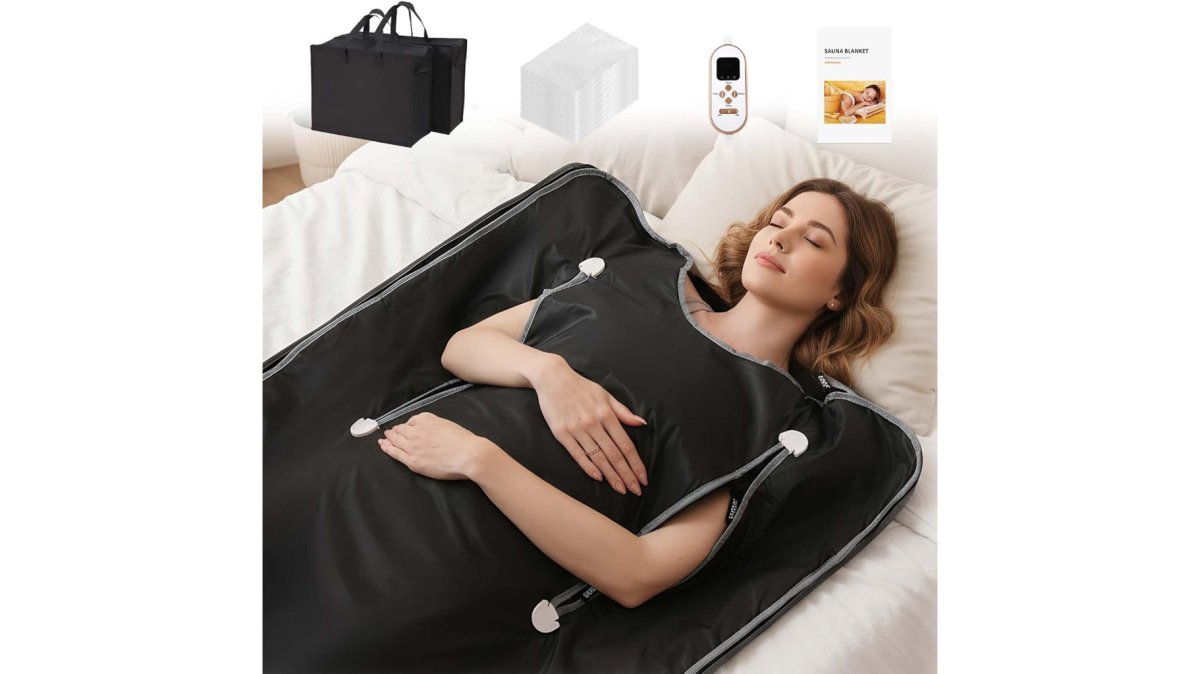
For a compact option that fits smaller spaces, the Infrared Sauna Blanket delivers multi-stage heating from 104°F to 176°F with a 20 to 60 minute timer, which makes it a realistic entry point for anyone testing whether infrared heat helps their condition before committing to a full cabinet.
Infrared Sauna Safety Precautions and Contraindications
Infrared sauna safety precautions start with a conversation with your physician if you have a chronic condition. Heat therapy interacts with medications, cardiovascular conditions, and pregnancy in ways that require medical guidance, not internet research.

Key precautions to review before your first session:
- Medications: Some blood pressure, psychiatric, and diuretic medications affect how your body regulates heat.
- Cardiovascular conditions: Heat stress increases heart rate and dilates blood vessels. Anyone with a heart condition should get clearance first.
- Pregnancy: Most manufacturers and physicians advise against sauna use during pregnancy.
- Neuropathy: Reduced sensation can prevent you from noticing overheating.
- Alcohol and dehydration: Both increase risk of heat stress and should be avoided before sessions.
Matching the Sauna to Your Pain Condition and Budget
Match the sauna to your condition first, then to your space, then to your budget. Reversing that order is why so many buyers end up with a unit that sits unused. The sections below give condition-specific starting protocols; adjust them with your physician or physical therapist based on your response.
Fibromyalgia and widespread pain
Fibromyalgia responds best to gentle, consistent heat rather than aggressive sessions. A common starting protocol is 15 minutes at 120°F to 130°F, three times per week, with a gradual increase to 20 to 30 minutes as tolerance builds. Far-infrared carbon panels are preferred because the heat is diffuse and less likely to trigger a flare. Some patients find that near-infrared alone is too superficial to help, while full-spectrum can be overstimulating. Keep the session below the threshold where you feel drained afterward; post-session fatigue is a sign you went too long or too hot.
Arthritis and joint inflammation
Osteoarthritis and rheumatoid arthritis patients typically benefit from deeper far-infrared penetration. A practical starting point is 20 to 25 minutes at 130°F to 140°F, three to four times per week. For rheumatoid arthritis, timing matters: some rheumatologists suggest using the sauna after medication has taken effect, not before, because heat can increase circulation and temporarily amplify inflammation in actively flaring joints. If a joint is acutely swollen and hot to the touch, skip the session and use cold therapy instead.
Post-surgical or post-injury recovery
After clearance from your surgeon, heat therapy can help with stiffness and scar tissue mobility. Start with 15 minutes at 120°F to 125°F and focus on the affected area. Do not use infrared heat on a site that is still swollen, numb, or has reduced sensation. Pair sessions with the stretching or range-of-motion exercises your physical therapist prescribed; heat before stretching can improve tissue elasticity.
Chronic low back pain
Low back pain often responds to a combination of deep heat and positioning. A two-person sauna that allows reclined or semi-reclined posture is worth the extra footprint because upright benches force your lumbar spine into compression. Start with 20 minutes at 130°F, three times per week, and use the session as a warm-up before core stabilization exercises.
Budget-to-benefit analysis
Budget-to-benefit analysis is where many guides fall short. A unit that runs hot and unevenly may not deliver the consistent, gentle heat that chronic pain responds to. You are paying for heater engineering, EMF shielding, and cabinet quality. A portable sauna blanket can be a reasonable first step to test whether infrared heat helps your specific condition before you commit to a full cabinet. If you already know heat works for you, a low-EMF carbon-panel cabinet is the more durable investment because it delivers consistent sessions with less setup friction.
For a full-cabinet option, the 2-Person Infrared Sauna uses low-EMF 110V hemlock construction with tourmaline foot warmers, 7-colour chromotherapy lighting, and salt crystal bricks. The two-person layout allows reclined postures that single-person upright cabinets do not.
Integration with other pain management therapies matters too. Infrared sessions pair well with physical therapy, red light therapy, and cold exposure, but timing matters. Heat before stretching can improve tissue elasticity; cold after intense activity can reduce inflammation. Many users alternate infrared and cold rather than stacking them back to back.

For targeted relief between sauna sessions, the Red Light Therapy Pad uses 660nm and 850nm wavelengths across a 71" × 31" area, which covers the back, shoulders, waist, and knees without a full sauna session.
Frequently Asked Questions
What are the downsides of using an infrared sauna for pain?
Infrared saunas can cause dehydration, dizziness, and overheating if you stay too long or ignore the temperature. People with low blood pressure, heart conditions, or who are pregnant should talk to a doctor first. Some users also find that heat flares certain inflammatory conditions rather than calming them. Start with short 15-minute sessions at 120°F to 130°F and track how your body responds before extending time or heat.
What temperature range is best for chronic pain management?
Most chronic pain users find 120°F to 140°F works best for deep tissue heating without triggering heat stress. Lower temperatures around 110°F to 120°F suit fibromyalgia and sensitive skin, while arthritis users often tolerate 130°F to 140°F. Pre-heat the sauna for 10 to 15 minutes so the cabin reaches your target before you step in. Adjust in 5-degree steps and log how joints and muscles feel the next morning.
How often should you use an infrared sauna for therapeutic benefits?
Three to four sessions per week is a common starting point for chronic pain management. Some users do daily 20-minute sessions during flare-ups and drop to two or three times weekly for maintenance. Give yourself at least one rest day per week to let your nervous system regulate. Pair sessions with hydration and gentle stretching, and stop if pain worsens instead of improving over a two-week window.
Is red light therapy or an infrared sauna better for inflammation?
They work differently. An infrared sauna heats the whole body and supports vasodilation, circulatory boost, and muscle recovery across large areas. A red light therapy pad delivers targeted 660nm and 850nm wavelengths to specific joints, which suits localized arthritis or post-workout recovery. Many users combine both: sauna for full-body sessions and a red light pad for a knee, shoulder, or lower back between sauna days.