

How Do You Improve HRV for Better Recovery?
Last Updated: October 30, 2026
Quick Summary
To improve heart rate variability, keep your daily measurement consistent, track your seven-day average against a personal baseline, and prioritise steady sleep. Slow breathing and a flexible training plan that reacts to your trend also help. Look at the pattern over several days, not one reading.
- Measure at the same time each day, ideally soon after waking and before caffeine.
- Treat a drop of roughly 10-15 percent below your 30-day baseline as a signal to check in, not an automatic rest day.
- Keep the same bedtime and wake time, even on weekends.
- Breathe in for about five seconds and out for five to six seconds, for five to ten minutes once or twice a day.
- Symptoms always take priority over the number, so take a full rest day and see a doctor if they persist.
Table of Contents
- What Heart Rate Variability Is and What It Tells You About Recovery
- How to Measure HRV Consistently at Home
- Why Your HRV Is Low: Common Causes to Check First
- Improving Your Sleep to Support Higher HRV
- Using Breathing Exercises to Raise Your HRV
- Matching Training Load and Rest to Your HRV Trends
- Building Your Next Recovery Routine and Tracking Progress
- Frequently Asked Questions
What Heart Rate Variability Is and What It Tells You About Recovery
Heart rate variability, or HRV, is the amount of time that passes between one heartbeat and the next, and understanding it is the first step to learning how to improve heart rate variability. It changes from beat to beat, and that variation reflects how your autonomic nervous system is balancing its two sides. The sympathetic side speeds you up for effort and stress. The parasympathetic side helps you slow down and recover.
Here is the simple idea. When your body is well recovered, HRV tends to be higher. When you are stressed, sick, or under-rested, HRV often drops. That makes it a useful signal for recovery, though it is never a perfect one.
Your readings are most useful as a trend. A single number means little on its own. Your personal baseline, and how far today's reading sits from it, tells you far more.
How to Measure HRV Consistently at Home
Consistency matters more than the device you choose. Most people measure HRV with a chest strap, a ring, or a watch, and each one works best when you use it the same way every time. The goal is not a perfect reading, it is a reading you can compare to yesterday's and last week's.
Follow these habits to get readings you can compare:
- Measure at the same time each day, ideally soon after waking and before caffeine
- Sit or lie still for two to five minutes before you start
- Breathe normally and avoid talking during the reading
- Use the same device and the same app every time
- Take readings in a similar setting, not after a hard workout or a late drink
- Note your sleep position and room temperature, since both can shift readings
Why Your Personal Baseline Matters More Than the Number
A single HRV reading is close to meaningless without context. What matters is how today's number sits relative to your own baseline, the rolling average of your readings over the past two to four weeks. Comparing a seven-day rolling average to a 30- or 60-day baseline is a common way to avoid reacting to any one day.
A practical way to use this:
- Record daily readings in the same app or a simple spreadsheet
- Calculate a seven-day rolling average each week
- Treat a drop of roughly 10-15 percent below your 30-day baseline as a signal to check in with how you feel, not an automatic rest day
- Treat a sustained drop across several days, especially with symptoms, as a reason to ease off
This approach keeps normal day-to-day noise from dictating your training. A common pattern is for readings to dip after a hard session and rebound within a day or two; that is expected, not a problem.
Device and Timing Limitations to Know
Wearable devices have real limits. Motion, poor skin contact, loose straps, cold hands, and even the position you slept in can distort a reading. Optical sensors on watches and rings are convenient but generally less precise than a chest strap, especially during movement. If a number looks strange, check the fit and the timing before you trust it.
Measurement timing also matters. Readings taken after a hard workout, a late meal, or a night of drinking will not reflect your true recovery state. For a comparable trend, keep the measurement window fixed and avoid stacking it after known stressors.
You can read more about getting reliable data from your wearable device recovery tracking guide and by using a tracker that fits your routine.
Why Your HRV Is Low: Common Causes to Check First
A low reading is common and rarely means something is seriously wrong. The usual culprits are simple.
- Poor or short sleep
- Heavy training without enough rest days
- Illness or a fever coming on
- Alcohol, especially the night before
- Emotional stress, travel, or a disrupted schedule
- Dehydration or skipping meals
A common mistake is reacting to one low day with extreme changes, when the real goal is to improve heart rate variability gradually over several weeks. Look at the pattern over several days first. If your HRV stays low for more than a week, talk to a doctor. Persistent changes can have medical causes that no wearable can diagnose.
Improving Your Sleep to Support Higher HRV
Sleep is the most powerful lever most people have. Your body does much of its repair during deep sleep, and HRV usually rises when sleep is long enough and steady.
Start with the basics:
- Keep the same bedtime and wake time, even on weekends
- Keep the bedroom cool, dark, and quiet
- Stop heavy meals and alcohol a few hours before bed
- Put screens away at least 30 minutes before sleep
Consistency beats perfection here. A regular schedule usually helps more than one long night of sleep after several short ones.
Ice Bath Tub – Portable Cold Plunge for Recovery →
Using Breathing Exercises to Raise Your HRV
Slow, controlled breathing can shift your nervous system toward the calmer parasympathetic side. Many people find it one of the quickest tools to try.
A simple method is to breathe in for about five seconds and out for about five to six seconds. Do this for five to ten minutes once or twice a day. Longer exhales tend to feel the most calming.
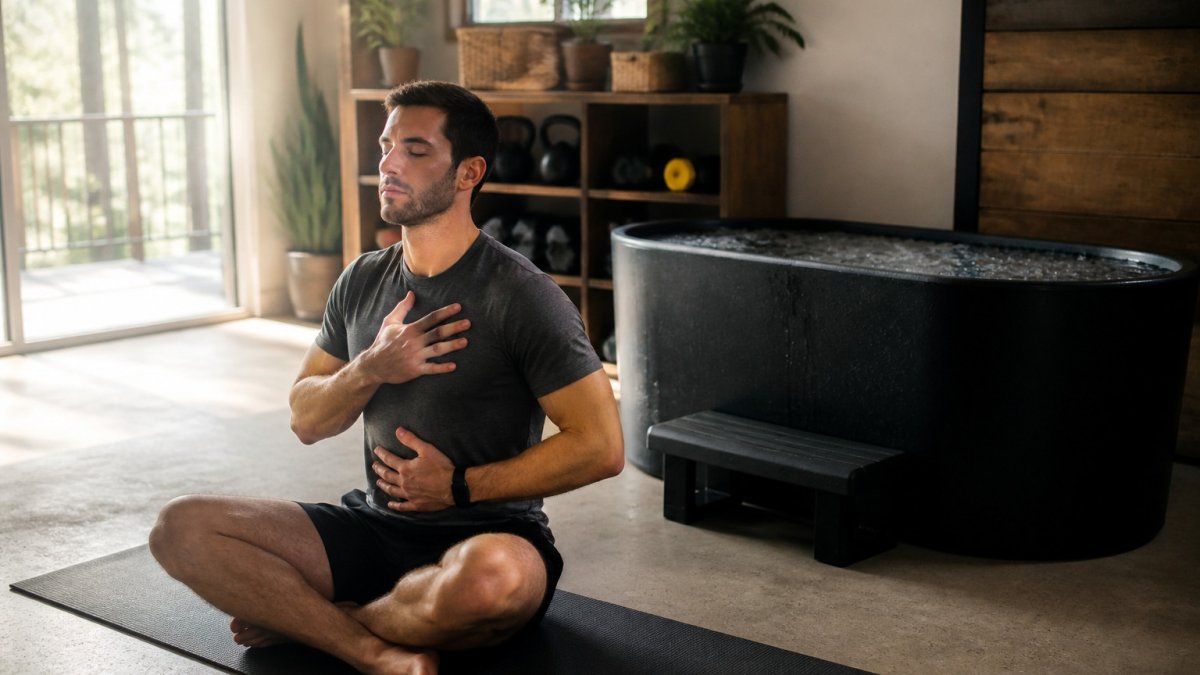
Breathwork is not a replacement for sleep or rest. It works best as one part of a bigger routine.
Matching Training Load and Rest to Your HRV Trends
Your HRV trend can guide your training, but it should never be the only input. The most useful approach combines your rolling HRV average with how you feel, your sleep, and your recent training load. A clear decision framework can help you act on your readings, so here is one you can use.
A Simple Decision Framework
Start with your seven-day rolling average compared to your 30-day baseline, then check your symptoms and perceived exertion:
- Trend stable or rising, feeling good: Proceed with your planned workout, including hard sessions.
- Trend slightly below baseline (roughly 10-15 percent), no symptoms: Keep the session but reduce intensity or volume by about one step, for example, swap intervals for tempo work.
- Trend well below baseline for two or more days, or you feel run down: Choose active recovery or a rest day. Gentle movement such as walking or easy cycling is usually fine.
- Trend low plus symptoms (sore throat, elevated resting heart rate, poor sleep): Take a full rest day and monitor. Persistent symptoms warrant a conversation with a doctor.
A common mistake is treating one low reading as a mandate to cancel training. Normal fluctuations happen, and a single day rarely tells you anything useful. Look at the pattern across several days before changing your plan.
Balancing Hard Sessions and Recovery
Hard training is a stressor, and recovery is when adaptation happens. A practical weekly rhythm for many people looks like this:
- Two to three harder sessions spaced across the week
- Easy or active recovery days between hard sessions
- At least one full rest day, more after a heavy block
- A lighter week roughly every third or fourth week to consolidate gains
When your HRV trend stays stable through a hard block, that is a good sign you are absorbing the work. When it drifts down for a week or more, that is a signal to back off before you dig a deeper hole.
Recovery Tools That Fit the Plan
Gentle recovery sessions can help you feel ready without adding stress. A warm shower, light mobility work, or a short cold plunge are common options. Cold plunges are one tool many athletes use to support recovery.
The table below summarises the decision framework for acting on your HRV trend, so you can match training intensity to how your readings and symptoms look.
| Situation | Trend vs baseline | Suggested action |
|---|---|---|
| Stable or rising, feeling good | At or above baseline | Proceed with planned workout, including hard sessions |
| Slightly below baseline, no symptoms | Roughly 10-15% below | Keep session but reduce intensity or volume by one step |
| Well below baseline | Low for two or more days, or feeling run down | Choose active recovery or a rest day |
| Low with symptoms | Low plus sore throat, raised resting heart rate or poor sleep | Take a full rest day and monitor; see a doctor if persistent |
Building Your Next Recovery Routine and Tracking Progress
Start small. Pick two or three habits from this guide, such as a steady bedtime, a daily breathing practice, and one rest day each week. Track your HRV trend for a few weeks before you add more.
Keep a simple log of sleep, training, and how you feel. Over time, you will see which habits move your numbers.
Thermo Plunge Recovery Systems offers home recovery tools to support your routine, including the Ice Bath Tub - Portable Cold Plunge for Recovery | $169.95 and the Portable Bathtub - Foldable Adult Spa & Ice Bath | $118.95. Free shipping and a 30-day guarantee are included.


Frequently Asked Questions
Why is my HRV always low?
A consistently low HRV usually reflects accumulated strain rather than a single cause. Common contributors include poor or short sleep, high training volume without enough rest days, ongoing psychological stress, alcohol intake, illness, and dehydration. Look at your readings over two to three weeks rather than a single morning. If low readings persist alongside unusual fatigue, dizziness or other symptoms, speak with a healthcare professional, because HRV is a trend indicator and not a diagnostic test.
How long does it take to improve HRV?
Most people need several weeks of consistent habits before their HRV trend shifts, and daily readings will still fluctuate. Sleep timing, regular aerobic training, controlled breathing and managing stress tend to produce the clearest changes when they are maintained over time. Judge progress by your weekly average and baseline trend, not by one good or bad morning, and expect slower gains if you are recovering from a heavy training block or illness.
Should I train when my HRV is low?
A low reading is a signal to reduce load, not an automatic reason to skip training. Many people choose easier aerobic work, mobility or a shorter session on low-HRV days, and hold harder sessions for days when readings return to their usual range. If your HRV stays well below baseline for several days, or you feel unusually fatigued, add a rest day and review sleep, stress and nutrition before resuming hard training.
How should I measure HRV consistently?
Measure at the same time each day, ideally after waking and before getting out of bed or drinking coffee. Stay still and seated or lying for a few minutes, use the same device and method every time, and avoid measuring right after alcohol, a heavy meal or intense exercise. Consistency matters more than the exact device, since different wearables and chest straps can produce different values. Record readings alongside notes on sleep, training and stress so you can spot patterns.
Ready to build a steadier recovery routine at home? Shop Thermo Plunge Recovery Systems today and start with equipment designed for consistent, everyday use.
