

How to Maintain Home Ice Bath Water: Complete Guide
Table of Contents
- Why Proper Ice Bath Water Maintenance Matters
- Understanding Cold Plunge Water Sanitation Essentials
- Setting Up Ice Bath Water Filtration Systems
- How Often to Change Ice Bath Water
- Daily Cleaning and Chemical Balance Steps
- Troubleshooting Cloudy or Smelly Water
- Preventing Biofilm and Algae Growth
- Draining and Refilling Your Ice Bath Properly
Last Updated: August 14, 2026
Why Proper Ice Bath Water Maintenance Matters
Maintaining your ice bath water protects your recovery investment and ensures every plunge delivers therapeutic benefits. Water that isn't properly maintained becomes a breeding ground for bacteria, algae, and biofilm, which compromise both safety and effectiveness.

At Thermo Plunge Recovery Systems, we've seen countless athletes invest in professional-grade equipment only to struggle with maintenance. The difference between a system that performs flawlessly for years and one that deteriorates quickly comes down to consistent water care. Poor water quality reduces recovery effectiveness and creates health risks. Cloudy water, unpleasant odours, and visible growth are all signs that your water chemistry has fallen out of balance.
Understanding Cold Plunge Water Sanitation Essentials
Cold plunge water sanitation is the process of controlling bacterial growth, removing contaminants, and maintaining chemical balance in your ice bath to ensure safe, clean water for recovery sessions. Effective sanitation combines three mechanisms: physical filtration to remove debris, chemical disinfection to kill pathogens, and regular testing to monitor water quality.
Your ice bath water is exposed to multiple contamination sources every time someone uses it. Skin cells, sweat, oils, dust, and organic matter all enter the water during immersion. Without active sanitation, these contaminants accumulate rapidly, creating an environment where bacteria and algae thrive.
Many people assume that cold water alone prevents bacterial growth. While cold temperatures do slow microbial reproduction, they don't stop it. Bacteria can survive and multiply even in ice-cold water, particularly in biofilm, a sticky coating that protects microorganisms from chemical treatment. This is why active sanitation is non-negotiable for any regularly used ice bath.
Setting Up Ice Bath Water Filtration Systems
Choosing the Right Filtration Setup for Your Tub
A proper filtration system removes suspended particles, debris, and organic matter before chemical disinfectants can work effectively. Without filtration, your chemicals work harder and become less efficient, requiring more frequent dosing and water changes.
There are two main filtration approaches: standalone portable filters and integrated chiller systems. Portable filters sit beside your tub and circulate water through a cartridge filter. They're flexible, work with any tub size, and are relatively affordable. Integrated systems like the Water Chiller - 1/3 HP Ice Bath Cold Plunge combine cooling, filtration, and circulation in one unit, eliminating the need for separate equipment and providing superior water management.

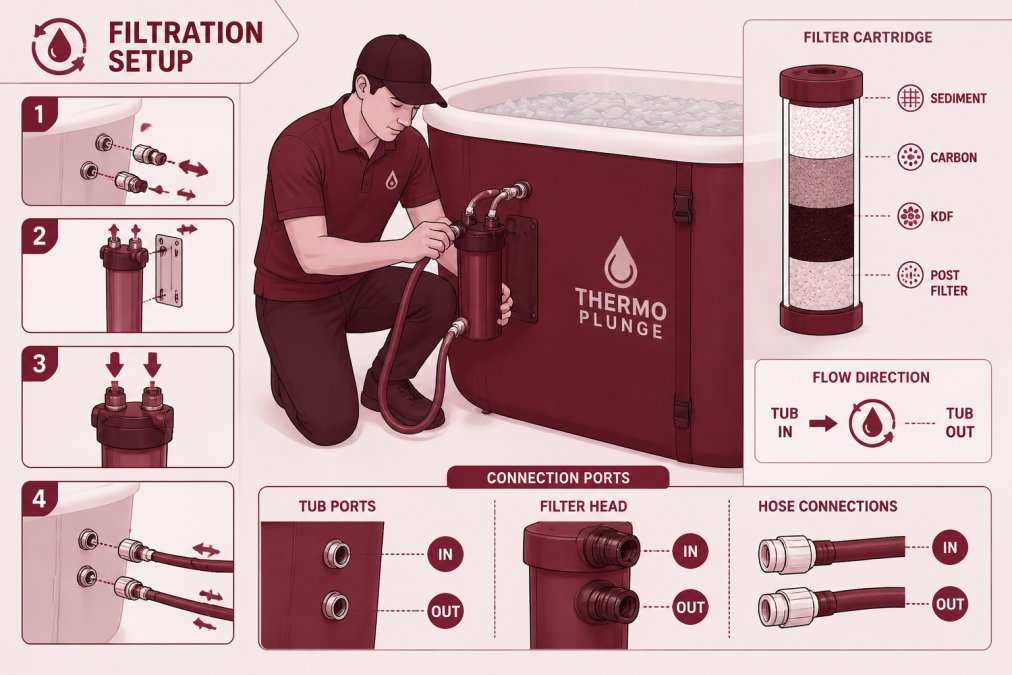
When choosing a filtration setup, consider your tub size and usage frequency. For serious athletes or multi-user facilities, an integrated chiller with built-in filtration is the more reliable choice, handling the complete water management cycle without requiring manual intervention between sessions.
The filtration cartridge itself matters significantly. Most ice bath applications work well with 10-micron cartridges, which balance debris removal with reasonable maintenance intervals. Check your filter cartridge every two weeks. A clean cartridge should feel slightly damp but not clogged. Most cartridges last 3-6 months depending on water quality and usage frequency.
Running Your Filtration System Daily
Your filtration system should run for at least 2-4 hours daily, even on days you're not using the ice bath. This continuous circulation prevents stagnation and keeps contaminants in suspension where chemical disinfectants can reach them. The ideal approach is to run your filtration system immediately after each ice bath session, allowing it to cycle the water for several hours.
How Often to Change Ice Bath Water
The frequency of water changes depends on your usage pattern, filtration system quality, and chemical maintenance consistency. With proper filtration and chemical balance, you can extend water change intervals significantly. For a well-maintained system with daily filtration and proper chemical balance, most ice bath owners change water every 4-8 weeks. High-usage systems may need changes every 2-4 weeks.
The real indicator isn't the calendar, it's your water quality. If your water remains clear, odour-free, and tests within proper chemical ranges, you can extend the interval. Signs that it's time for a water change include persistent cloudiness despite filtration, a musty or unpleasant odour, visible growth or discolouration, or inability to maintain proper chemical levels.
Daily Cleaning and Chemical Balance Steps
Testing Water Quality with PPM Strips
PPM (parts per million) is the measurement standard for chemical concentration in water. Testing strips change colour based on the chemical levels present, allowing you to compare against reference cards to determine whether your water is in the safe and effective range.
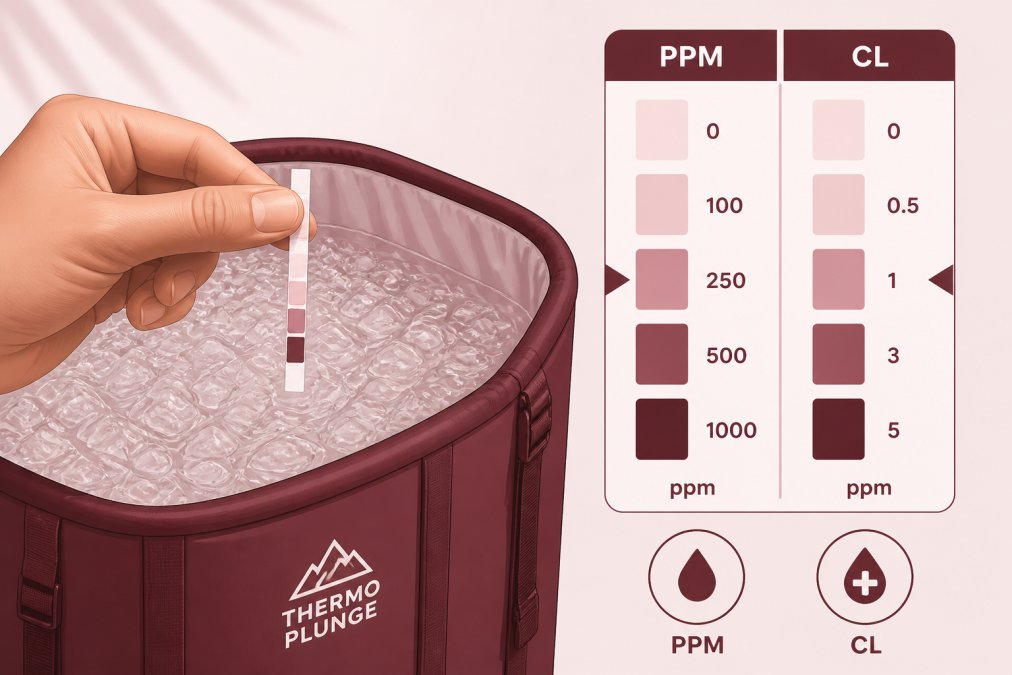
You should test your water every 2-3 days at minimum, and daily if you're using your ice bath frequently. Most test strips measure multiple parameters: chlorine or bromine levels, pH, and alkalinity. Your disinfectant level should typically fall within 1-3 PPM for chlorine or 2-4 PPM for bromine. pH should be between 7.2 and 7.8. Alkalinity should be 80-120 PPM. These ranges ensure effective disinfection without chemical imbalances that can cause cloudiness or corrosion.
Keep a simple log of your test results. Over time, you'll notice patterns in how quickly levels change based on usage and environmental factors.
Adjusting pH and Alkalinity Levels
pH measures how acidic or basic your water is on a scale of 0-14, with 7 being neutral. Ice bath water should stay slightly alkaline (7.2-7.8) to prevent corrosion and ensure chemical effectiveness. When pH drifts outside this range, your disinfectant becomes less effective and your water chemistry becomes unstable.
If your pH is too low (acidic), add an alkalinity increaser, a powder you dissolve in the water according to package instructions. If pH is too high (basic), add a pH decreaser. Changes take several hours to fully take effect, so test again the next day before making additional adjustments.
Alkalinity acts as a buffer that prevents rapid pH swings. Maintaining proper alkalinity (80-120 PPM) is more important than perfect pH because it keeps the system stable. Start with small doses, wait several hours, test again, and adjust. It's much easier to add more chemical than to remove excess.
Troubleshooting Cloudy or Smelly Water
Cloudy water typically indicates inadequate filtration, insufficient disinfectant, or imbalanced pH. If your filter is clean and running properly, the issue is usually chemical. Test your disinfectant level first; if it's below the minimum range, add the appropriate chemical and run your filter for several hours. Cloudy water often clears within 24 hours once chemical balance is restored.
If cloudiness persists despite proper chemical levels, your pH might be out of range. Check pH and adjust to 7.2-7.8. If cloudiness persists after 48 hours of proper chemical balance and filtration, do a partial water change (25-50% of the water) to reset the system.
Unpleasant odours don't come from chlorine or bromine; they come from insufficient disinfection. A musty, earthy, or foul smell indicates bacterial growth or biofilm. If you notice odour, immediately test your disinfectant level and increase it to the upper end of the recommended range. Run your filtration system continuously for 24-48 hours. If the odour persists, do a partial water change and thoroughly clean the tub surface with a soft brush to remove any biofilm starting to form.
Preventing Biofilm and Algae Growth
Biofilm is a sticky, slimy coating that forms on tub surfaces and inside pipes when bacteria colonise and protect themselves with a polysaccharide matrix. Once biofilm establishes, it's extremely difficult to kill because the coating shields bacteria from chemical disinfectants. Prevention is far more effective than trying to remove established biofilm.
The best biofilm prevention strategy is consistent water circulation. Running your filtration system daily prevents water stagnation where biofilm begins. Chemical disinfectants also inhibit biofilm formation; maintaining proper chlorine or bromine levels keeps bacterial populations low enough that biofilm can't establish.
Algae growth in ice baths is less common than in warm pools because cold temperatures slow algae reproduction, but it can still occur if light exposure is high and nutrient levels are elevated. Keep your ice bath covered when not in use to reduce light exposure. Weekly surface cleaning prevents biofilm before it becomes a problem. Use a soft brush or cloth with a dilute vinegar solution (one part vinegar to three parts water) to gently clean the tub interior.
Draining and Refilling Your Ice Bath Properly
When it's time to drain your ice bath, do it slowly and carefully to avoid damaging the tub or plumbing connections. Most portable tubs have a drain valve at the lowest point. Open it fully and let gravity do the work.

Before refilling, inspect the tub interior for any debris, biofilm, or discolouration. If you see buildup, clean the tub with a soft brush and water, or use a dilute vinegar solution for stubborn deposits. Rinse thoroughly to remove any cleaning residue.
Fill your tub with fresh water from your household supply. As you fill, check all connections and seals for leaks. Once full, add your initial chemical dose according to product instructions. Run your filtration system for at least 4 hours after refilling before using the ice bath. Test your water chemistry before your first session to confirm levels are in range.
Maintaining your ice bath water properly isn't complicated, but it does require consistency. The athletes and wellness enthusiasts who get the best results from their cold plunge systems are the ones who treat water maintenance as a non-negotiable part of their recovery protocol. Thermo Plunge Recovery Systems provides the equipment and support you need to make maintenance straightforward, from integrated filtration systems that automate water management to 24/7 support when questions arise. Start with the Upgrade XL Ice Bath Tub - Portable Cold Plunge for Athletes paired with proper filtration, commit to the maintenance routine outlined above, and you'll have a system that delivers clean, therapeutic cold exposure for years to come. Get started with Thermo Plunge Recovery Systems and recover smarter.
Frequently Asked Questions
How often should I change the water in my home ice bath?
Water change frequency depends on usage and filtration. With a quality filtration system running daily, you can maintain the same water for 2-4 weeks. Without filtration, change water every 3-7 days. Test PPM levels weekly; if sanitiser levels drop below safe thresholds or water becomes cloudy, drain and refill immediately. Regular testing helps you extend water life while keeping it safe.
What PPM levels should my ice bath water maintain?
Chlorine should stay between 2-4 PPM (parts per million); bromine between 2-6 PPM. Alkalinity should be 80-120 PPM, and pH between 7.2-7.6. Test strips make checking these levels simple. If chlorine drops below 2 PPM, bacterial growth accelerates. If it exceeds 4 PPM, it can irritate skin. Keep test strips on hand and check at least twice weekly, especially with frequent use.
Can I use a filtration system to reduce how often I change ice bath water?
Yes. A quality filtration system removes debris, dead skin cells, and contaminants that cloud water and promote biofilm. Running filtration for 2-4 hours daily can extend water life significantly, sometimes to a month or longer with proper chemical balance. However, filtration alone doesn't replace water changes; it reduces frequency. Even with filtration, plan a complete drain and refill every 3-4 weeks to remove dissolved contaminants that filters cannot catch.
What's the best way to prevent algae and bacterial growth between water changes?
Use a combination of chlorine or bromine tablets, a cover when not in use, and daily filtration. Bromine is more stable in cold temperatures than chlorine, making it ideal for ice baths. Always maintain proper PPM levels and keep pH balanced. Store your tub in a shaded area if possible, sunlight accelerates algae growth. Empty and wipe the tub's surface weekly, and use a skimmer to remove surface debris before it sinks and decomposes.
This article was written using GrandRanker