

How to Maintain Ice Bath Water Hygiene: A Complete Guide
Table of Contents
- Why Ice Bath Water Hygiene Matters
- How Often to Change Ice Bath Water
- Best Water Treatment for Ice Baths
- Cold Plunge Water Maintenance Routines
- Water Filtration and Circulation Systems
- Testing and Monitoring Water Quality
- Seasonal Maintenance and Drainage Procedures
- Post-Plunge Hygiene and Safety Protocols
Last Updated: August 8, 2026
Why Ice Bath Water Hygiene Matters
Maintaining proper ice bath water hygiene is foundational to safe, effective cold plunge recovery. Your water quality directly impacts both the benefits you receive and the risks you face. Poor water sanitation creates an environment where bacterial growth thrives, potentially leading to skin infections, respiratory issues, and other health complications that undermine your recovery goals.
Athletes and wellness enthusiasts invest in cold plunge therapy because of its proven benefits for muscle soreness, inflammation reduction, and recovery acceleration. Yet these benefits vanish if you're exposing yourself to contaminated water. At Thermo Plunge Recovery Systems, we are committed to your well-being, ensuring you can achieve peak performance and smarter recovery right at home.
Neglect water quality, and you're not just wasting your investment in equipment, you're potentially compromising your health. This guide walks you through every aspect of ice bath water hygiene, from daily maintenance routines to seasonal deep cleaning.
How Often to Change Ice Bath Water
You should completely drain and replace your ice bath water every 7-14 days under normal use conditions. This prevents the accumulation of dead skin cells, sweat, bacteria, and organic matter that degrades water quality and promotes biofilm formation on tub surfaces.
The exact interval depends on usage patterns:
High-use scenarios (daily plunges, multiple users, or competitive athletes) require changes every 5-7 days. Each immersion introduces new contaminants, and frequent exposure accelerates water degradation.
Moderate use (3-5 times per week, single user) typically calls for 7-10 day intervals.
Light use (1-2 times weekly) can extend to 10-14 days, though water clarity and smell should guide your decision regardless of schedule.
Don't rely solely on the calendar. If your water becomes cloudy, develops an odour, or shows visible debris despite filtration, drain and replace it immediately. Water quality deterioration accelerates once it begins, and pushing past warning signs invites bacterial proliferation and biofilm buildup.
Best Water Treatment for Ice Baths
Effective water treatment combines mechanical filtration with chemical disinfection. Neither approach alone is sufficient; you need both working together to maintain sanitation and water clarity.
Natural Cleaning Agents
Natural alternatives offer a gentler approach to water sanitation, particularly valuable if you have sensitive skin or prefer to minimise chemical exposure.
Vinegar solution works effectively for routine maintenance and biofilm prevention. Mix one part white vinegar with three parts water to create a cleaning spray for tub surfaces and circulation components. Vinegar's acidity inhibits bacterial growth and breaks down mineral deposits. Apply it weekly during your maintenance routine, letting it sit for 10-15 minutes before rinsing thoroughly.
Baking soda serves as a gentle abrasive and deodoriser. Sprinkle it on damp tub surfaces and scrub with a soft brush to remove light biofilm and eliminate odours without scratching the tub material. Use it during weekly deep cleaning sessions.
Hydrogen peroxide (3% food-grade) is a non-toxic disinfectant that breaks down into water and oxygen, leaving no harmful residue. Add 2-3 cups per 100 gallons of water to boost disinfection between full water changes. Test a small area first if your tub has any special coating or finish.
Natural agents work best as supplementary treatments alongside mechanical filtration. They're excellent for weekly maintenance but shouldn't replace complete water changes or primary disinfection methods.
Chemical Disinfectants
Chemical disinfectants provide reliable, fast-acting sanitation when used correctly. The most common options for ice baths are bromine tablets and chlorine-based products.
Bromine tablets dissolve slowly and maintain consistent disinfection over several days. Bromine remains effective across a wider pH range than chlorine, making it more forgiving if your water chemistry drifts. A typical dosing rate is 1-2 tablets per 100 gallons, adjusted based on water testing results. Bromine produces fewer irritating byproducts than chlorine, making it gentler on skin and respiratory systems during immersion.
Chlorine (as tablets, powder, or liquid) acts quickly and is widely available. Pool-grade chlorine products work well for ice baths, though you'll need to monitor dosage carefully. Too much chlorine causes skin irritation and respiratory discomfort, while too little fails to eliminate pathogens. Aim for 1-3 parts per million (ppm) residual chlorine.
Hydrogen peroxide-based disinfectants offer a middle ground between natural and traditional chemical approaches. These products oxidise contaminants without leaving chlorine or bromine residues, making them suitable for athletes with sensitive skin or respiratory sensitivities.
Always follow product instructions carefully. Over-treating creates uncomfortable conditions and can damage tub materials. Under-treating leaves pathogens unchecked.
Cold Plunge Water Maintenance Routines
Consistent maintenance prevents problems rather than solving them after they've developed. A structured routine keeps your water clean, your equipment functioning, and your recovery experience safe.
Daily Maintenance Steps
Spend 5-10 minutes each day on basic upkeep.
Skim the surface for floating debris, leaves, dust, or skin cells. Use a fine mesh skimmer net, working across the entire water surface. This prevents debris from sinking and decomposing, which accelerates bacterial growth.
Check water clarity by looking through the water toward the bottom of the tub. You should see clearly to the floor. Cloudiness indicates suspended particles or microbial growth requiring immediate attention.
Inspect the tub exterior for cracks, leaks, or damage. Address any issues immediately to prevent water loss and equipment failure.
Monitor water temperature if using a chiller. Verify that your system is maintaining your target temperature (typically 50-59°F for most athletes).
Rinse and dry the tub rim where water has splashed. This prevents algae growth and mineral buildup on non-submerged surfaces.
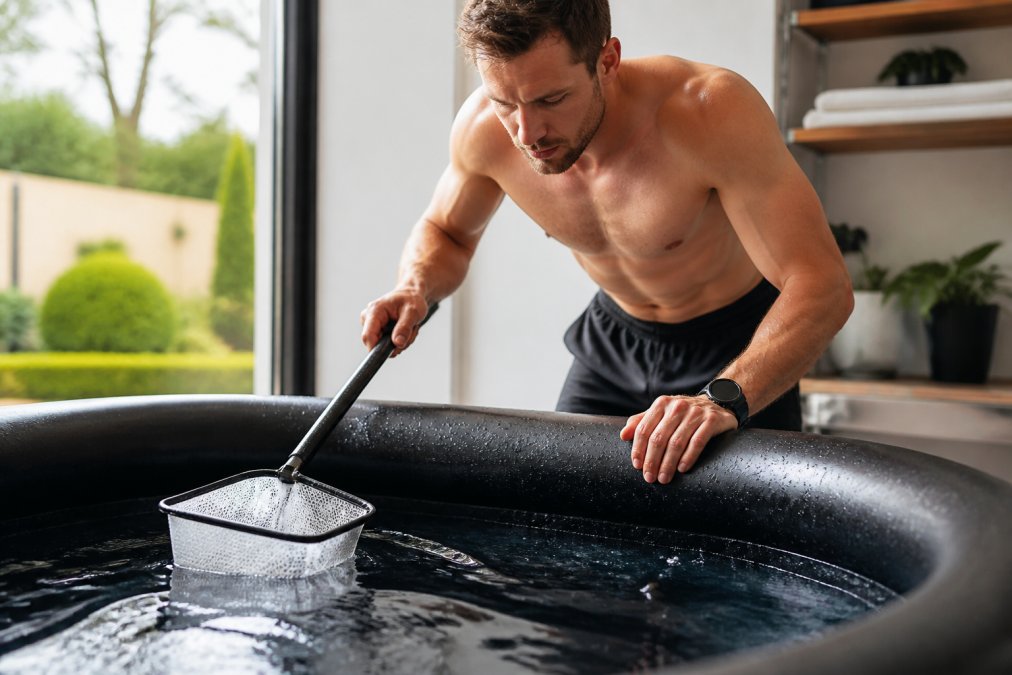
Weekly Deep Cleaning Protocol
Dedicate 20-30 minutes once per week to thorough cleaning.
Drain the tub completely if you're not using a filtration system, or partially drain (to 50% capacity) if you are. This allows you to access and clean submerged surfaces.
Scrub all interior surfaces with a soft-bristled brush and your chosen cleaning agent (vinegar solution, baking soda paste, or diluted hydrogen peroxide). Pay special attention to corners, seams, and the waterline where biofilm accumulates most readily.
Clean the filtration system by backflushing or replacing filters according to manufacturer specifications. Clogged filters reduce water circulation, creating stagnant zones where bacteria thrive.
Wipe down circulation pump intake and outlet with a damp cloth to remove mineral deposits and debris that restrict water flow.
Refill with fresh water if you've drained the tub, or top up if you've only partially drained. Add your chosen disinfectant according to product instructions.
Test water chemistry (pH, chlorine or bromine residual, alkalinity) using a test kit. Adjust as needed to maintain safe parameters.
Water Filtration and Circulation Systems
A quality filtration and circulation system is the backbone of maintaining ice bath water hygiene. It removes suspended particles, prevents stagnation, and supports chemical disinfectants in keeping water clean.
Mechanical filtration captures particles, dead skin cells, debris, and algae spores that would otherwise accumulate and degrade water quality. Cartridge filters trap particles as water passes through, with finer cartridges capturing smaller contaminants.
Circulation prevents water stagnation by keeping water moving through the filtration system continuously. Stagnant water creates ideal conditions for bacterial colonies and biofilm formation. A good circulation pump should move the entire tub volume through the filter at least once every 4-6 hours. For a 160-gallon tub, this means a pump rated for 25-40 gallons per minute.
Integrated chiller systems like the Water Chiller - 1/3 HP Ice Bath Cold Plunge combine cooling, circulation, and filtration in one unit. These systems maintain water temperature while simultaneously filtering and circulating, eliminating the need for separate equipment. The built-in timer allows you to schedule circulation cycles, ensuring water is processed regularly even when you're not actively using the tub.

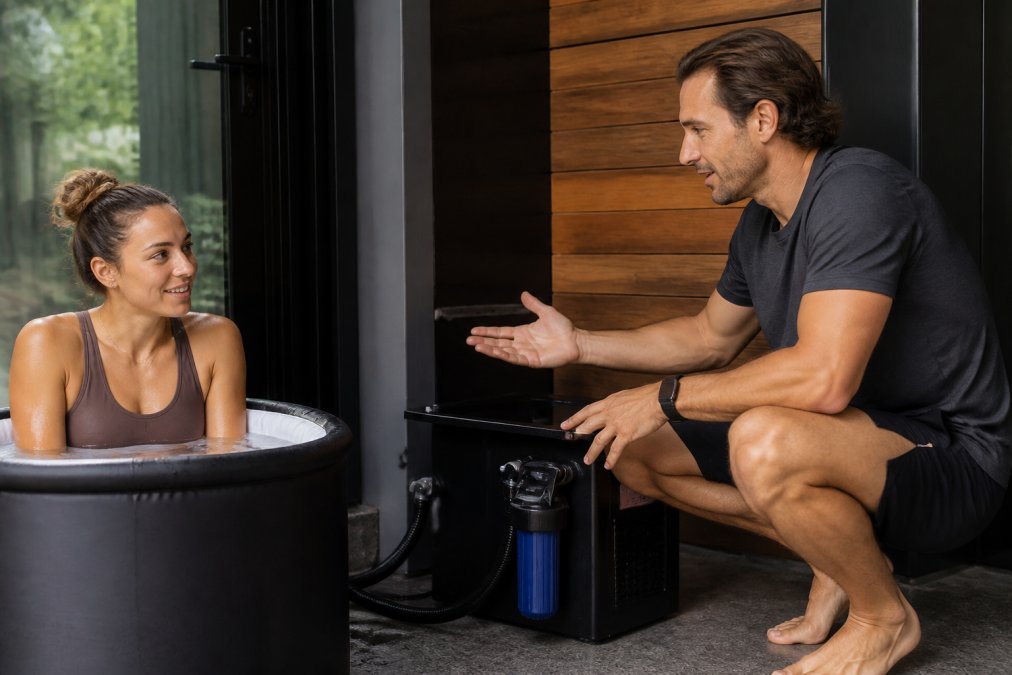
Maintain your filtration system by replacing cartridges every 3-6 months depending on use intensity, cleaning the pump intake monthly, and checking hoses for leaks or cracks.
Testing and Monitoring Water Quality
Regular testing ensures your water chemistry remains within safe parameters. Don't guess about water quality; test kits provide objective data that guides your treatment decisions.
pH balance affects both disinfectant effectiveness and user comfort. Most ice baths should maintain a pH between 7.0 and 7.6. Below 7.0, the water becomes acidic, potentially irritating skin and corroding metal components. Above 7.6, disinfectants become less effective and mineral deposits accumulate faster. Test pH weekly using a simple test strip or digital meter.
Disinfectant residual (chlorine or bromine concentration) prevents pathogenic bacteria from multiplying. Maintain 1-3 ppm for chlorine or 2-4 ppm for bromine. Test residual 2-3 times per week, more frequently during warm months or high-use periods. If residual is low, add disinfectant according to product instructions.
Alkalinity (measured in ppm) stabilises pH and supports disinfectant performance. Ideal alkalinity ranges from 80-120 ppm. Test alkalinity monthly and adjust using alkalinity increaser or decreaser products as needed.
Water clarity is your first line of defence against problems. If water becomes cloudy despite proper filtration and disinfection, it signals either filter failure or rapid bacterial growth. Address cloudiness immediately by running filtration longer, replacing filters, or performing an early water change.
Calcium hardness accumulates over time and causes mineral scaling on surfaces. Test every 2-3 months and consider using a water softener if hardness exceeds 300 ppm.
Most test kits are affordable and last for dozens of tests. They're an essential investment that prevents expensive problems and protects your health.
Seasonal Maintenance and Drainage Procedures
Water maintenance demands shift with temperature and humidity changes across seasons.
Spring and summer bring warmer ambient temperatures that accelerate bacterial growth and algae formation. Increase testing frequency to 2-3 times weekly, shorten water change intervals to 5-7 days, and run your filtration system longer each day. Monitor for biofilm more carefully as it develops faster in warm conditions.
Fall and winter slow bacterial growth but introduce new challenges. Leaves and debris fall into outdoor tubs more frequently, requiring more frequent skimming. If your tub is outdoors and you live in a freezing climate, drain it completely before winter unless you're using a chiller system with freeze protection.
Complete seasonal drainage (recommended annually, typically in late fall) involves:
- Turn off your chiller and circulation system
- Drain the tub completely using the drain valve
- Scrub all interior surfaces thoroughly with a brush and vinegar solution
- Rinse multiple times until no vinegar odour remains
- Leave the tub open to air dry for 24-48 hours
- Inspect for cracks, damage, or wear before refilling
- Clean all hoses, pump components, and filter housings
- Replace any worn seals or gaskets
- Refill slowly, checking for leaks as water rises
- Run the system for 30 minutes before using the tub
This annual deep clean removes accumulated mineral deposits, eliminates stubborn biofilm, and gives you a chance to inspect equipment for damage.
Post-Plunge Hygiene and Safety Protocols
Your responsibility for water hygiene extends beyond the tub itself. Post-plunge hygiene protects both you and your water quality.
Shower immediately after exiting the tub using warm water and soap. This removes chlorine or bromine residue, prevents skin irritation, and eliminates bacteria and biofilm particles from your skin before they contaminate your clothes or home surfaces.
Don't enter the tub with lotions, sunscreen, or cosmetics on your skin. These products dissolve into water, creating organic matter that feeds bacterial growth and clouds water clarity.
Wear clean clothes and footwear when approaching the tub. Dirty clothes and shoes introduce soil bacteria and contaminants.
Limit tub access to authorised users if you're sharing equipment. Brief anyone who uses your tub on basic maintenance expectations and safety precautions.
Watch for warning signs of water problems: persistent cloudiness despite filtration, foul odours, visible slime or discolouration, skin irritation after use, or respiratory discomfort. Any of these signals warrant immediate water replacement and system inspection.
Document your maintenance in a simple log: dates of water changes, disinfectant additions, filter replacements, and test results. This record helps you identify patterns and troubleshoot problems.
Maintaining ice bath water hygiene isn't complicated, but it demands consistency. A structured routine, daily skimming, weekly testing and cleaning, regular filter maintenance, and seasonal deep cleaning, keeps your water safe and your equipment functioning reliably. The Ultimate Recovery & Wellness Bundle from Thermo Plunge Recovery Systems includes an integrated filtration and circulation system that simplifies maintenance considerably, handling mechanical filtration and water movement automatically while you focus on chemical balance and surface cleaning. With proper care, your cold plunge becomes a dependable recovery tool that delivers consistent benefits without health risks.

Frequently Asked Questions
How can I keep ice bath water clean naturally without chemicals?
Use vinegar solutions (1 part white vinegar to 10 parts water) and baking soda paste for scrubbing surfaces. Change water every 3-5 days, skim debris daily with a net, and use a tub cover when not in use to prevent contamination. These methods reduce bacterial growth and biofilm formation without chemical disinfectants, though they require more frequent water replacement than chemical treatment.
How often should I change ice bath water?
Change water every 3-5 days for natural cleaning methods, or every 7-10 days if using chlorine or bromine tablets. Factors affecting frequency include usage frequency, water clarity, pH balance, and whether you have a filtration system. High-traffic facilities or systems without active filtration should change water more often to prevent microbiological risks and skin irritation.
What's the best water treatment for ice baths?
The best approach combines filtration, sanitisation, and pH monitoring. Use a water chiller with built-in filtration (like the Water Chiller - 1/3 HP Ice Bath Cold Plunge) to remove debris continuously, add bromine tablets or chlorine for disinfection, and test pH balance weekly using a pool-grade testing kit. This combination prevents algae, controls bacterial growth, and maintains water clarity while minimising skin irritation.
Can I get sick from an unclean ice bath?
Yes. Contaminated water can harbour bacteria, algae, and biofilm, leading to skin infections, respiratory issues, and gastrointestinal problems. Post-plunge shower protocols (showering within 15 minutes of exiting) reduce infection risk significantly. Proper water sanitation, regular drainage, scrubbing, and maintaining pH balance (7.2-7.6) are essential to prevent microbiological risks and ensure safe cold plunge sessions.
This article was written using GrandRanker