

How to Maximize Infrared Sauna Benefits for Recovery
Table of Contents
- What You'll Need Before Your First Recovery Session
- Step 1: Set Your Infrared Sauna Session Duration for Recovery
- Step 2: Follow Infrared Sauna Hydration Tips Before and After
- Step 3: Build Post-Exercise Recovery Protocols Around Heat Therapy
- How Infrared Sauna Benefits Support DOMS and Muscle Soreness
- Individualizing Infrared Sauna Benefits by Training Intensity
- Common Mistakes That Limit Infrared Sauna Benefits
- Frequently Asked Questions
Last Updated: September 16, 2026
What You'll Need Before Your First Recovery Session
Recovery is where adaptation happens, and heat works on the whole system at once: circulation, nervous system, and tissue repair. Maximizing infrared sauna benefits for recovery comes down to four variables most people never adjust: session length, temperature, hydration, and timing relative to training. Maximizing infrared sauna benefits for recovery comes down to four variables most people never adjust: session length, temperature, hydration, and timing relative to training.

Before your first session, gather four things:
- A water bottle with electrolytes, not just plain water
- A towel to manage sweat and keep the session comfortable
- A timer so you don't guess at duration
- A cool-down plan, whether that's a cool shower or a few minutes at room temperature
Infrared sauna benefits are the physiological improvements that follow repeated exposure to infrared radiation, including improved blood flow, reduced muscle soreness, and better parasympathetic recovery. The equipment matters less than the protocol you follow with it. A Cleveland Clinic overview of sauna safety is worth reading before your first session if you have any cardiovascular condition.
Step 1: Set Your Infrared Sauna Session Duration for Recovery
For recovery, most people do best with 20 to 30 minutes per session, three to four times per week. Past 40 minutes, dehydration risk climbs faster than any additional benefit. Start at 20 minutes for two weeks, then add five minutes weekly until sessions leave you relaxed rather than drained. Lightheadedness, dizziness, or unusual fatigue means you went too long.
Temperature Ranges That Support Muscle Repair
Infrared saunas run cooler than traditional saunas, and that's a feature. A range of 120°F to 150°F suits most recovery work; beginners should start near the lower end and acclimatize gradually.
The heat drives vasodilation, widening blood vessels to increase blood flow to working tissue, which helps clear metabolic waste and deliver oxygen and nutrients to damaged muscle fibres. Higher isn't automatically better, thermal stress that's too intense pushes you into cardiovascular strain rather than recovery.
Step 2: Follow Infrared Sauna Hydration Tips Before and After
Hydration is the most overlooked variable in sauna recovery, and getting it wrong undoes most of the benefit. Drink 16 to 20 ounces of water in the hour before your session, sip steadily during it, and replace losses afterward.
Sweat rate varies widely, so weighing yourself before and after is the most reliable way to estimate fluid loss. For every pound lost, drink roughly 16 to 24 ounces of fluid.
Electrolytes and Sweat Rate: What to Replace
Sweat carries sodium, potassium, and magnesium, so replacing fluid without electrolytes can leave you feeling worse. An electrolyte drink or a pinch of sea salt in water covers most of what you lose in a 20 to 30-minute session.
Step 3: Build Post-Exercise Recovery Protocols Around Heat Therapy
Timing matters as much as the heat itself. The best window is 30 to 90 minutes after training, once core body temperature and heart rate have settled toward baseline. Going in immediately after a hard session stacks thermal stress on top of cardiovascular strain.
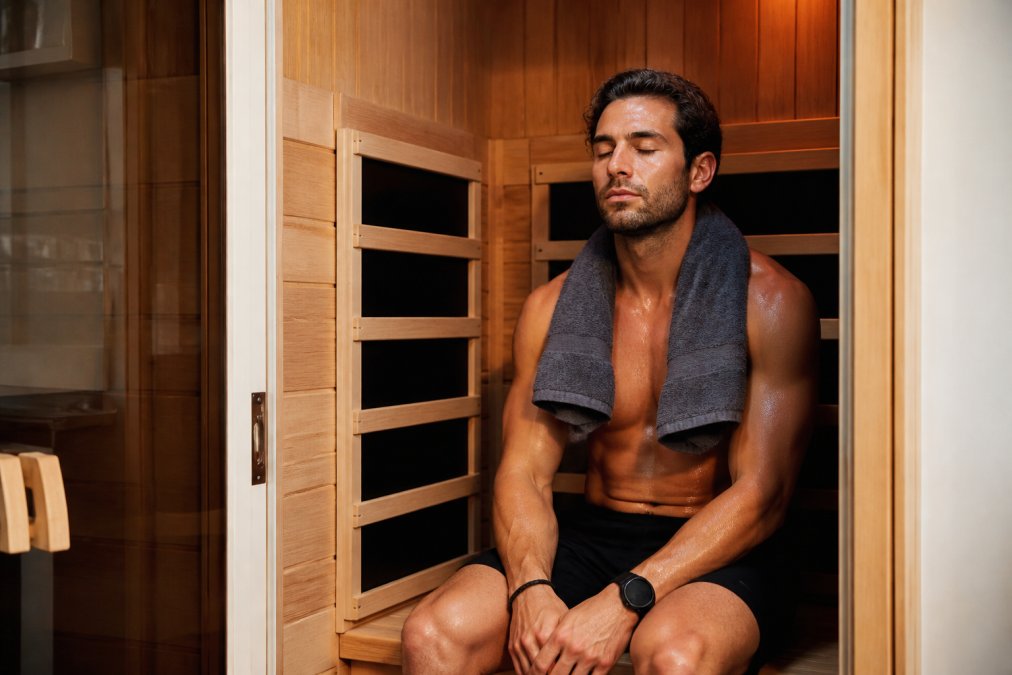
A simple weekly structure works well for most people:
| Training Day | Sauna Timing | Session Length |
|---|---|---|
| Heavy strength session | 60-90 min post-workout | 25-30 min |
| Moderate cardio | 30-60 min post-workout | 20-25 min |
| Rest day | Any time | 20-30 min |
| Competition day | Skip or delay to evening | 15-20 min |
Match the Protocol to Your Training Intensity
Adjust frequency, duration, and temperature based on the dominant stress of your block.
High-intensity interval training (HIIT). HIIT drives large sympathetic output. Frame sauna use as a parasympathetic downshift: 20 to 25 minutes, three to four times per week, at 120°F to 130°F. The goal is nervous system recovery, not extra thermal load.
Endurance training. Long-duration work creates cumulative fluid and electrolyte losses. Sessions of 25 to 30 minutes at 130°F to 140°F, three to five times per week, pair well, but only after you have rehydrated and refuelled. Going in under-fuelled compounds the deficit.
Strength and power training. Mechanical tension and muscle damage dominate, so the sauna's role is circulatory. Sessions of 20 to 30 minutes at 130°F to 150°F, two to four times per week, work well. Avoid a session within a few hours before a heavy lifting day if you notice next-day performance dips.
Deload or recovery weeks. Drop to two or three sessions; less thermal stress is needed when training stress is already low.
Competition prep. Keep sessions shorter and earlier in the day so they don't interfere with sleep or next-day performance.
Post-Sauna Cooling Protocols
What you do in the 10 minutes after you step out shapes how much of the benefit you keep.
Cool down gradually: a cool shower, a few minutes in a cooler room, or seated breathing lets heart rate and core temperature descend smoothly. Jumping straight into cold water is a bigger shock than most people need, though contrast therapy has its place once you have adapted. If you do integrate cold exposure, finish the sauna, cool gradually for five to ten minutes, then take a cold plunge or shower of one to three minutes. Skip the cold phase on days when you feel run down or sleep-deprived.
Finish with light movement: five minutes of easy walking or hip, hamstring, and thoracic stretches while tissue is still warm leaves you feeling loose rather than heavy.
Nutrient Timing Synergy
Pair your session with a protein-and-carbohydrate meal within an hour. Increased blood flow from heat therapy helps deliver those nutrients to recovering tissue more efficiently, so the meal you were going to eat anyway does more work.
A practical target is 20 to 40 grams of protein plus 30 to 60 grams of carbohydrate, adjusted to body size and training load. Add sodium and fluid to match sweat losses; if your session was long or you are a salty sweater, an electrolyte drink covers the gap plain water leaves.
Track Whether the Protocol Is Working
Tracking resting heart rate and heart rate variability (HRV) gives objective feedback on whether your protocol is helping or adding stress. Rising HRV and stable resting heart rate suggest good autonomic recovery; falling HRV alongside poor sleep is a signal to shorten the session, lower the temperature, or skip it.
A simple log works: date, training load, sauna duration and temperature, sleep quality, and next-morning HRV or resting heart rate. After two to three weeks you will see which combinations leave you recovered and which leave you flat.
How Infrared Sauna Benefits Support DOMS and Muscle Soreness
Delayed onset muscle soreness, or DOMS, is the muscle pain and stiffness that peaks 24 to 72 hours after unfamiliar or intense exercise.
A Practical DOMS Protocol
Work from the soreness timeline.
What Heat Can and Cannot Do for Soreness
Heat is a comfort and circulation tool, not a repair switch.
Measure It Instead of Guessing
The difference between a protocol that works and one that just feels good is whether you can see it in your data.
Individualizing Infrared Sauna Benefits by Training Intensity
A generic protocol is a starting point, not a prescription.
Common Mistakes That Limit Infrared Sauna Benefits
For a home setup that supports consistent recovery work, the Infrared Sauna - 2-Person Premium Home Spa uses low-EMF Hemlock wood with tourmaline foot warmers and chromotherapy lighting. If space is tight, the Infrared Sauna Blanket offers multi-stage heating from 104°F to 176°F with a 20 to 60-minute timer. For targeted tissue work between sessions, the Red Light Therapy Pad combines 660nm and 850nm wavelengths across a 71" × 31" area.


Frequently Asked Questions
How long should you stay in an infrared sauna for maximum benefit?
Most recovery-focused sessions run 20 to 40 minutes at 120°F to 140°F. Start with 15 to 20 minutes to gauge how your body responds, then extend gradually. Your infrared sauna session duration should scale with training load: shorter sessions after light days, longer ones after intense workouts. Stop immediately if you feel dizzy or overheated, and always hydrate before and after.
Can infrared saunas help with delayed onset muscle soreness (DOMS)?
Infrared heat promotes vasodilation and blood flow to taxed tissues, which supports the circulatory system in clearing metabolic waste and reducing inflammation. Many athletes report less muscle soreness when they pair consistent infrared sauna benefits with proper hydration and post-exercise recovery protocols. Results vary by individual, training intensity, and how regularly you use the sauna.
What should you do immediately after an infrared sauna session?
Cool down gradually rather than jumping into cold water right away. Rinse off sweat, drink 16 to 24 ounces of water with electrolytes to replace what you lost, and eat a protein-and-carbohydrate snack within 30 to 60 minutes to support tissue repair. A short walk or light stretching helps your body transition out of thermal stress and back into parasympathetic activation.
Is an infrared sauna better for recovery than a traditional sauna?
Infrared saunas operate at lower temperatures (120°F to 150°F) than traditional saunas, which makes longer sessions more tolerable for some athletes. The far-infrared wavelengths penetrate deeper into tissue, and many users find the experience more comfortable for post-workout recovery. Both styles raise core body temperature and support circulation, so the best choice depends on your tolerance and recovery goals.
Recovery equipment only works if you actually use it, consistently, with a protocol built around your training load. Thermo Plunge Recovery Systems builds professional-grade infrared saunas, sauna blankets, and red light therapy tools designed for daily home use, backed by free shipping, a 30-day guarantee, and 24/7 support. Get started with Thermo Plunge Recovery Systems and turn recovery into the part of your training you no longer skip.