

How to Recover Faster from Workouts: A Complete Guide
Table of Contents
- Why Workout Recovery Determines How Fast You Progress
- Post-Workout Nutrition for Muscle Growth and Glycogen Replenishment
- How Much Sleep Do Athletes Need to Recover Faster from Workouts
- The Real Benefits of Active Recovery Between Training Sessions
- Cold Therapy, Contrast Water Therapy, and Infrared Tools That Speed Recovery
- Signs of Overtraining Syndrome and How to Avoid It
- How to Recover Faster from Workouts Based on Age and Training Type
- Tracking Recovery: Heart Rate Variability, Wearables, and Psychological Readiness
Last Updated: August 4, 2026
Most athletes know that training hard is only half the equation. The real challenge is recovering faster from workouts so each session builds on the last instead of accumulating fatigue. At Thermo Plunge Recovery Systems, we work with competitive athletes, CrossFit enthusiasts, and everyday wellness seekers who share the same frustration: they're putting in the work, but soreness, fatigue, and sluggish recovery hold them back. Below, we'll walk through every major recovery lever, from nutrition timing and sleep hygiene to cold therapy and age-specific protocols, so you can train harder and bounce back faster.
Here's what most guides get wrong: they treat recovery as passive. Rest is not recovery. Deliberate, structured recovery drives muscle protein synthesis, clears metabolic waste, and restores central nervous system function between sessions.
Why Workout Recovery Determines How Fast You Progress
Recovery is not a break from training. Recovery is training.
Every time you lift, sprint, or push through a high-intensity circuit, you create microscopic muscle damage, deplete glycogen stores, and elevate cortisol. The adaptation you're chasing, whether muscle hypertrophy, endurance, or strength, happens during the repair window after the session ends. If that window is compressed by poor sleep, inadequate nutrition, or chronic overreaching, you're accumulating fatigue rather than building on your previous session.
According to National Strength and Conditioning Association's position on recovery, inadequate recovery is one of the primary contributors to overtraining syndrome and performance plateau. The athletes who progress fastest are rarely those training the most hours. They're the ones who recover with the same intentionality they bring to their programming.
| Recovery Factor | Primary Benefit | Timing |
|---|---|---|
| Post-workout nutrition | Glycogen replenishment, muscle protein synthesis | Within 30-60 min post-session |
| Sleep (7-9 hours) | Tissue repair, hormone regulation | Nightly |
| Active recovery | Blood flow, metabolic waste clearance | 24-48 hrs after intense session |
| Cold therapy / contrast water therapy | Inflammation reduction, circulation | Within 1-2 hrs post-session |
| Foam rolling / myofascial release | Mobility, reduced DOMS | Pre/post session or rest day |
| Rest days | CNS recovery, injury prevention | 1-2 days per week |
Post-Workout Nutrition for Muscle Growth and Glycogen Replenishment
Nutrition is the most underestimated recovery tool in most athletes' arsenals. The 30-to-60-minute window after training is when your muscles are primed to absorb nutrients, and what you consume directly determines how quickly you recover.
The goal is twofold: replenish glycogen stores depleted during training and initiate muscle protein synthesis through adequate amino acid availability. Carbohydrates drive glycogen replenishment. Protein provides the amino acids needed for tissue repair. Both macronutrients are non-negotiable.
Skipping post-workout nutrition blunts the anabolic response and extends the time your body spends in a catabolic state, meaning more soreness, slower repair, and less adaptation per training hour.
Protein and Amino Acids: Timing and Targets
Protein intake is the primary driver of muscle protein synthesis after training. Consume a complete protein source containing essential amino acids as soon as practical after a session. Leucine acts as a key trigger for the muscle protein synthesis pathway. Whole food sources like eggs, chicken, Greek yogurt, and cottage cheese deliver it effectively. Whey protein is absorbed rapidly, making it practical when whole food isn't accessible.
Total daily protein intake matters more than the exact post-workout window. If you're consistently hitting daily protein targets, a 30-minute delay post-session won't derail recovery. Timing becomes critical for athletes training twice daily or in a significant caloric deficit.
Hydration and Electrolytes After Training
Dehydration impairs muscle function, slows tissue repair, and increases perceived soreness. Rehydrating after training requires more than water volume, it requires restoring electrolyte balance, specifically sodium, potassium, and magnesium, which are lost through sweat and play direct roles in muscle contraction and nerve signaling.
Drink enough fluid to replace sweat losses and include a sodium source in your post-workout meal. Athletes training in heat or for extended durations should consider electrolyte supplements or sports drinks with meaningful sodium content rather than plain water alone.
How Much Sleep Do Athletes Need to Recover Faster from Workouts
The single most effective recovery tool available to any athlete is free, requires no equipment, and most people chronically shortchange it. Sleep is where the majority of tissue repair, hormone secretion, and central nervous system recovery happens.
Adults generally need seven to nine hours of sleep per night. For athletes in heavy training blocks, the upper end of that range, or even slightly beyond, is often warranted. Growth hormone secretion, which directly supports tissue repair and muscle hypertrophy, peaks during slow-wave sleep. Cutting sleep short actively suppresses the physiological processes that make training adaptations possible.
According to American Academy of Sleep Medicine's guidelines for sleep duration, adults who consistently sleep fewer than seven hours per night show measurable declines in reaction time, mood, and physical performance. For athletes, those deficits translate directly to slower recovery and higher injury risk.
Sleep Hygiene Habits That Protect Your Circadian Rhythm
Your circadian rhythm governs when your body releases cortisol, melatonin, and growth hormone. Disrupting it through inconsistent sleep schedules, late-night screen exposure, or irregular meal timing undermines recovery even when total sleep hours look adequate.
Practical sleep hygiene habits include:
- Maintain a consistent sleep and wake time, including weekends
- Keep your bedroom cool, dark, and quiet
- Avoid screens for at least 60 minutes before bed
- Limit caffeine after early afternoon
- Avoid intense training within two to three hours of bedtime
The Real Benefits of Active Recovery Between Training Sessions
Light movement on recovery days, called active recovery, accelerates the clearance of metabolic waste products like lactate, increases blood flow to damaged tissue, and reduces the severity of delayed onset muscle soreness. Gentle movement drives circulation without adding meaningful mechanical stress to already-fatigued muscles.
A 20-minute walk, light swim, or low-intensity cycling session at well below your anaerobic threshold qualifies. A moderate-intensity conditioning workout does not. The benefits are most pronounced in the 24-to-48-hour window after a high-intensity session. Athletes who incorporate structured active recovery days consistently report less stiffness, better mobility, and improved readiness for the next hard session.
Foam Rolling, Myofascial Release, and Mobility Work
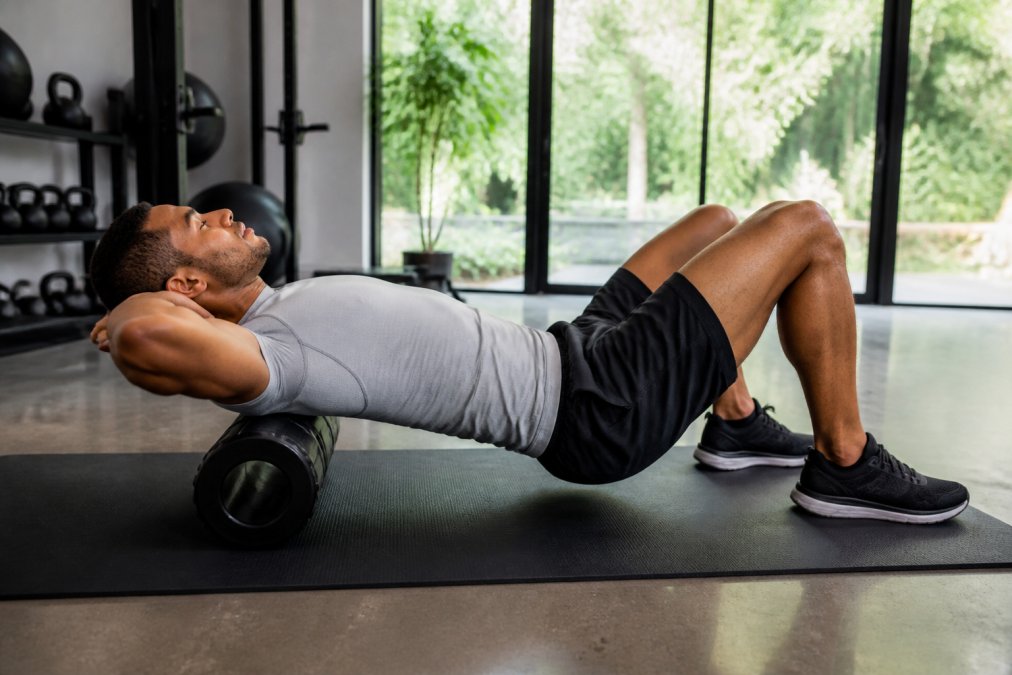
Foam rolling and myofascial release tools address the connective tissue layer surrounding muscle groups. Sustained pressure on trigger points increases local blood flow, reduces tissue adhesion, and improves range of motion, all supporting faster recovery and reduced injury risk.
The real value is in systematic, deliberate work on chronically tight areas, particularly the thoracic spine, hip flexors, and posterior chain for most strength and CrossFit athletes. Mobility work, distinct from static stretching, involves moving joints through their full functional range under control. Incorporating five to ten minutes of targeted mobility work on recovery days maintains flexibility and addresses movement restrictions that accumulate over weeks of heavy loading.
Cold Therapy, Contrast Water Therapy, and Infrared Tools That Speed Recovery
Cold therapy is one of the most researched and widely adopted recovery modalities in competitive sport. Cold water immersion reduces acute inflammation, constricts blood vessels to limit swelling, and activates the parasympathetic nervous system, shifting the body from a stress state toward repair mode.
Contrast water therapy, alternating between cold and warm immersion, creates a pumping effect in the vasculature. Cold constricts blood vessels; heat dilates them. That alternating pressure drives circulation through muscle tissue, accelerating removal of inflammatory byproducts and delivering fresh oxygen and nutrients to recovering fibers.
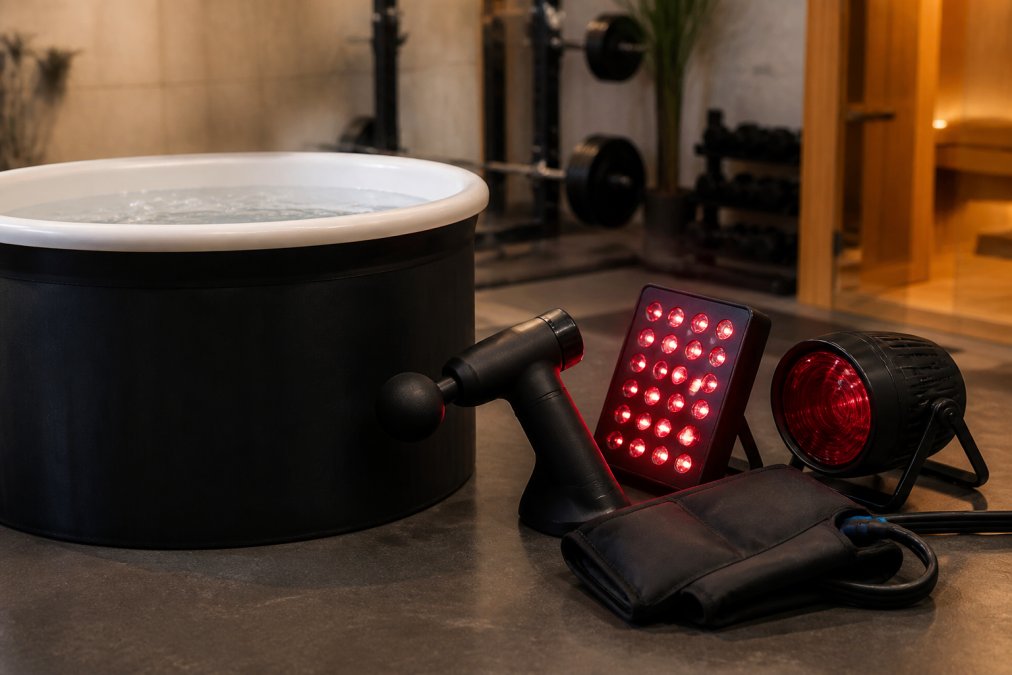
Infrared saunas and sauna blankets complement cold therapy by penetrating deeper into tissue than conventional dry heat, raising core temperature, and promoting the release of heat shock proteins that support cellular repair. The combination of cold plunge and infrared heat, used in sequence, is favored by many high-level athletes for its effect on both physical recovery and sleep quality.
Thermo Plunge Recovery Systems offers professional-grade ice baths, infrared saunas, and sauna blankets designed for home use, with the build quality typically reserved for performance centers.
Signs of Overtraining Syndrome and How to Avoid It
Overtraining syndrome occurs when accumulated training stress exceeds the body's capacity to recover. Signs include persistent fatigue that doesn't resolve with rest, declining performance despite continued training, elevated resting heart rate, disrupted sleep, increased irritability, and higher frequency of minor illness.
Avoiding overtraining syndrome requires periodization: the deliberate structuring of training load and recovery across weeks and months. Deload weeks, where volume and intensity are reduced, allow the body to consolidate adaptations and restore systemic readiness. Most athletes who hit overtraining syndrome skipped deloads or ignored early warning signs.
If your performance is declining over two consecutive weeks without an obvious explanation, reduce training load immediately rather than pushing through.
How to Recover Faster from Workouts Based on Age and Training Type
Recovery is not one-size-fits-all. The protocols that work for a 24-year-old CrossFit competitor differ from what a 52-year-old recreational lifter needs. Age, training modality, and individual physiology all shape recovery strategy.
Recovery Protocols for CrossFit, Strength Training, and Endurance Athletes
CrossFit and high-intensity interval training combine metabolic conditioning with significant mechanical load. Recovery priorities are glycogen replenishment, protein intake, and managing systemic inflammation. Cold therapy and contrast water therapy are particularly well-matched to the inflammatory response these sessions generate.
Strength training creates high mechanical stress with lower cardiovascular demand. Recovery emphasis shifts toward protein intake, sleep quality, and myofascial release for loaded muscle groups. Central nervous system fatigue is a greater concern in heavy powerlifting or Olympic lifting blocks.
Endurance athletes deplete glycogen stores more extensively and accumulate significant oxidative stress. Carbohydrate replenishment takes priority alongside antioxidant-rich foods. Omega-3 fatty acids help manage the chronic low-grade inflammation accompanying high training volume. Compression garments worn post-session support venous return and reduce swelling in the lower limbs.
Age-Specific Adjustments: What Changes After 35 and 50
After 35, recovery generally slows. Muscle protein synthesis rates decline, sleep architecture shifts toward lighter stages, and the inflammatory response to training becomes more prolonged. This doesn't mean training hard is off the table, it means recovery needs more deliberate management.
Practical adjustments for athletes over 35 include:
- Increase protein intake relative to body weight, as anabolic sensitivity to dietary protein decreases with age
- Prioritize sleep duration and quality more aggressively
- Add an extra rest or active recovery day per week during hard training blocks
- Incorporate more mobility work to offset connective tissue stiffness
After 50, hormonal changes, particularly declining testosterone and estrogen, further slow tissue repair and increase recovery time. Cold therapy and infrared tools become more valuable at this stage because they support circulation and tissue repair through mechanisms that don't depend on hormonal signaling. According to National Institute on Aging's research on exercise recovery in older adults, older adults benefit significantly from structured recovery protocols and are more susceptible to overreaching when recovery is neglected.
Tracking Recovery: Heart Rate Variability, Wearables, and Psychological Readiness
Heart rate variability measures the variation in time between consecutive heartbeats. Higher variability generally indicates that the autonomic nervous system is well-recovered and the body is ready for high-intensity work. Suppressed heart rate variability signals accumulated fatigue or stress, whether from training, poor sleep, or life demands.
Wearable devices now track heart rate variability continuously and provide daily readiness scores based on sleep, resting heart rate, and activity trends. These scores provide a consistent, objective data point that helps athletes make better decisions about when to push and when to pull back.
Psychological recovery is equally important. Training readiness isn't purely physiological. Motivation, mood, and perceived effort are legitimate recovery indicators. An athlete who dreads training, feels mentally flat, or notices unusually high perceived exertion at submaximal loads is likely under-recovered regardless of heart rate variability scores.
A practical tracking protocol:
- Measure resting heart rate and heart rate variability each morning before getting out of bed
- Log sleep duration and subjective sleep quality on a 1-5 scale
- Rate perceived motivation and energy before each session on a 1-5 scale
- Review trends weekly to identify patterns rather than reacting to single-day noise
- Adjust training intensity or volume when multiple indicators simultaneously trend negative
Thermo Plunge Recovery Systems customers who pair professional-grade cold plunge and infrared tools with consistent recovery tracking often report measurable improvements in both heart rate variability trends and subjective readiness within the first few weeks of structured use.
Frequently Asked Questions
Can muscles fully recover in 24 hours?
For light to moderate training, 24 hours is often enough for muscle tissue to begin meaningful repair. However, after high-intensity or heavy resistance sessions, full recovery of muscle protein synthesis and glycogen replenishment typically takes 48 to 72 hours. Factors like sleep quality, post-workout nutrition, hydration, and your training age all affect how quickly you bounce back. Trying to train the same muscle group before it has recovered increases injury risk and limits muscle hypertrophy over time.
What are the clearest signs of overtraining syndrome?
Overtraining syndrome shows up as persistent fatigue that sleep does not fix, declining performance despite consistent training, elevated resting heart rate, disrupted sleep, mood changes like irritability or low motivation, and frequent illness from suppressed immunity. Central nervous system fatigue is a key marker: you feel mentally flat even on rest days. If heart rate variability scores drop consistently on a wearable device over one to two weeks, that is a reliable early signal to reduce training load before symptoms worsen.
Does active recovery actually work, or is complete rest better?
Active recovery genuinely works for most athletes. Low-intensity movement like walking, cycling, or swimming increases blood flow to fatigued muscles, helping clear metabolic waste and reduce delayed onset muscle soreness faster than complete rest. The key is keeping intensity well below your anaerobic threshold, typically under 60% of maximum heart rate. Complete rest still has a place after particularly brutal sessions or when injury is present, but on standard recovery days, light movement outperforms doing nothing for both physical and psychological recovery.
How much sleep do athletes need to recover faster from workouts?
Most sports science guidance recommends athletes aim for eight to ten hours of sleep per night, compared to the seven to nine hours advised for the general adult population. During deep sleep, the body releases growth hormone, drives muscle protein synthesis, and manages cortisol levels. Even one night of poor sleep measurably impairs reaction time, strength output, and mood the next day. Protecting your circadian rhythm with consistent bed and wake times is one of the most cost-free ways to accelerate workout recovery.
What foods support the fastest post-workout muscle recovery?
Prioritize a combination of fast-digesting protein and carbohydrates within 30 to 60 minutes after training. Protein supplies the amino acids needed for muscle repair, while carbohydrates restore muscle glycogen. Foods like eggs, Greek yogurt, chicken, rice, and fruit are practical choices. Omega-3 fatty acids found in fatty fish and walnuts help manage post-exercise inflammation. Antioxidant-rich foods like berries and leafy greens also support tissue repair. Hydration with electrolytes rounds out the post-workout nutrition picture for faster recovery.
What is the 3-3-3 rule for working out?
The 3-3-3 rule is an informal training structure where an athlete trains for three days, rests for three days, and repeats in a three-week cycle before a deload week. It is designed to balance training stimulus with adequate rest days, reducing the risk of overtraining syndrome. While not a universally standardized protocol, the principle behind it aligns with periodization: structured variation in training load and recovery gives the central nervous system and musculoskeletal system time to adapt and rebuild before the next training block.
Do compression garments actually help with workout recovery?
Compression garments show consistent support in research for reducing perceived muscle soreness and swelling after intense training. They work by applying graduated pressure that promotes blood flow and helps limit fluid buildup in fatigued tissues. They are particularly popular among endurance athletes and CrossFit enthusiasts for post-workout wear. While they will not replace sleep, nutrition, or cold therapy, wearing compression sleeves or tights for several hours after a hard session is a low-effort addition to a broader workout recovery routine.
Most athletes know they should recover better but lack the tools or structure to make it consistent. Thermo Plunge Recovery Systems offers professional-grade ice baths, infrared saunas, sauna blankets, and red light therapy tools, all backed by free shipping, a 30-day guarantee, and 24/7 support, so there's no friction between knowing what works and actually doing it. Shop Thermo Plunge Recovery Systems and start recovering smarter from every session.
This article was written using GrandRanker