

Infrared Sauna vs Traditional Sauna for Detoxification
Table of Contents
- Infrared vs Traditional Sauna: How Each One Heats You
- Does Sweating Remove Toxins? What the Evidence Says
- Infrared Sauna vs Traditional Sauna for Detoxification: A Side-by-Side Comparison
- Infrared Sauna Temperature and Duration: Building a Session That Works
- Infrared Sauna Benefits Beyond Detox Claims
- Sauna Safety and Hydration: Who Should Skip the Heat
- Cost, Installation, and Choosing a Home Sauna
- Frequently Asked Questions
Last Updated: October 17, 2026
Infrared vs Traditional Sauna: How Each One Heats You
The main difference between an infrared sauna and a traditional sauna comes down to how heat reaches your body. A traditional sauna heats the air around you to a high temperature, while an infrared sauna warms your body directly with radiant heat at a lower air temperature. At Thermo Plunge Recovery Systems, we explain the distinction honestly rather than overselling one side.

This matters for the infrared sauna vs traditional sauna for detoxification question because the two types produce very different sweat responses, comfort levels, and session routines. Below, we break down the mechanics, the evidence on sweating and toxins, and how to choose a setup that fits your space and goals.
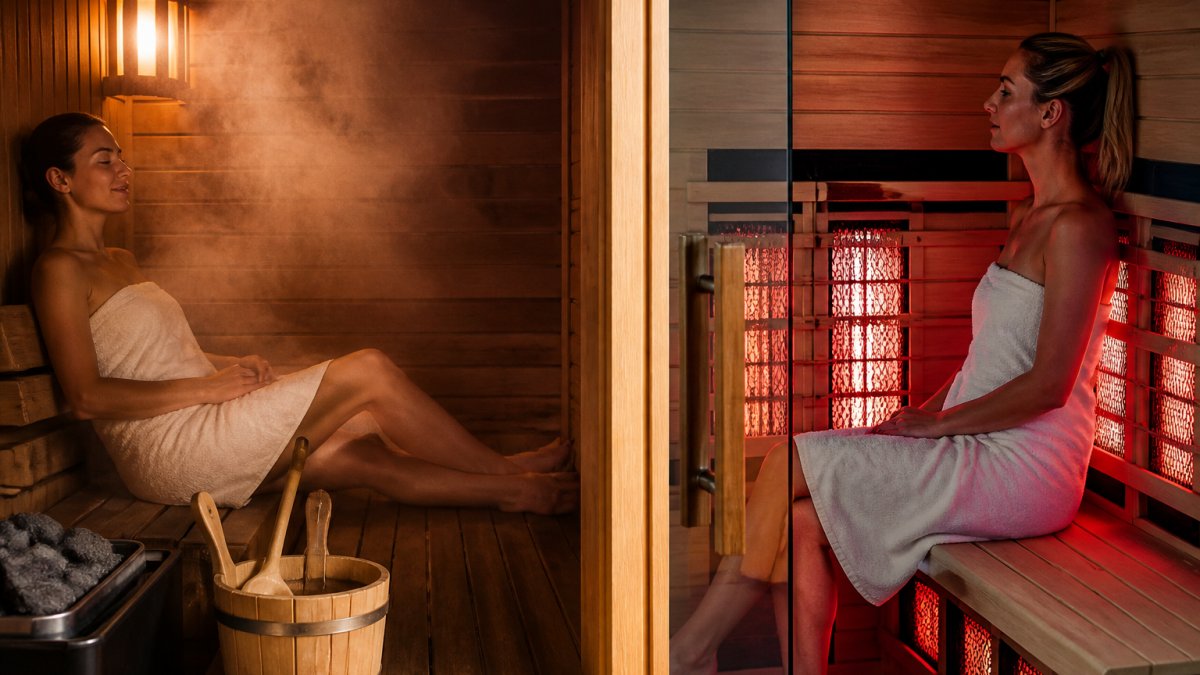
Heat Source and Heating Mechanism
A traditional sauna (often called a Finnish sauna) uses a heater, usually electric or wood-fired, to warm the room itself. Some bathers pour water on heated rocks to create a steam sauna effect and raise humidity. The air gets hot, and your body absorbs that heat through the surrounding environment.
An infrared sauna uses carbon or ceramic panels, or heating elements, that emit infrared heat. This energy warms surfaces and your skin directly, which is why it is described as direct body heating. The ambient temperature stays lower, so the room feels less suffocating even while you sweat.
Operating Temperature and Perceived Heat
Traditional saunas typically run at high heat, and the ambient temperature is the main driver of the experience. Infrared saunas operate at a lower temperature range, yet many users perceive the warmth as intense because it reaches the body directly. That gap between measured temperature and perceived heat is one of the most misunderstood parts of this comparison.
Does Sweating Remove Toxins? What the Evidence Says
Sweating is mostly water and salt, and it is a minor route for clearing most substances compared with the liver and kidneys. The idea that a sauna "flushes toxins" is oversold. The body's main detoxification organs handle the bulk of the work, and no sauna, infrared or traditional, replaces them.
That said, sweating does have real value: it supports thermoregulation, cools you during heat exposure, and contributes to the relaxation people associate with sauna bathing. Public health agencies such as the CDC overview of heat and health emphasize hydration and heat caution over any detox promise. If a brand tells you a specific session "removes impurities" on a schedule, treat that claim with skepticism.
What Sweat Testing Can and Cannot Establish
Sweat tests can measure what is present in your sweat, including water, electrolytes, and trace amounts of certain chemicals. What they cannot do is prove that sweating meaningfully lowers your body's overall toxic burden or improves health outcomes. A detectable substance in sweat is not the same as a clinically important removal of it.
- Can show: sodium and electrolyte loss, which matters for hydration planning
- Cannot show: that sauna sessions detoxify your organs or cure anything
- Cannot prove: a cause-and-effect link between sweating and disease prevention
Use sweat testing as a hydration and electrolyte guide, not as a detox scorecard.
Infrared Sauna vs Traditional Sauna for Detoxification: A Side-by-Side Comparison
Neither type "detoxifies" you in the marketing sense. The meaningful differences are heat delivery, session length, heat tolerance, electrical requirements, and total cost of ownership. Here is how the two compare on the factors that actually shape your routine, with the caveat that most sauna research studies sauna bathing generally rather than isolating infrared versus traditional types.
Infrared Sauna – 2-Person Premium Home Spa →
| Factor | Traditional Sauna | Infrared Sauna |
|---|---|---|
| Heat delivery | Heated air and rocks; high ambient heat | Radiant panels or elements; direct body heating at lower air temp |
| Typical ambient temperature | Often 160°F to 190°F near the ceiling, cooler at bench level | Commonly 110°F to 150°F depending on model and setting |
| Humidity | Dry heat by default; steam raised by pouring water on rocks | Usually dry; some models offer a humidifier accessory |
| Typical session | 10 to 20 minutes, shorter at higher heat | 20 to 45 minutes, longer at lower heat |
| Perceived intensity | Intense, especially with steam | Warm and gradual; easier for beginners to tolerate |
| Electrical requirements | Often 240V dedicated circuit for a room heater; wood-fired units need venting | Many home cabins run on 110V or 120V; larger units may need 240V |
| Ventilation | Requires ventilation for steam and moisture control | Lower moisture load; still needs airflow for comfort |
| Maintenance | Rock replacement, heater inspection, wood care | Panel inspection, surface cleaning, occasional element replacement |
| Energy profile | Heater warms the whole room; higher draw during heat-up | Panels heat targeted areas; lower draw but longer sessions |
| Best for | Bathers who love high heat and steam | Those who want lower-temperature, longer sessions |
The infrared sauna vs traditional sauna for detoxification choice really comes down to which heat you will actually use consistently. Consistency beats intensity, and neither type substitutes for the liver and kidneys.
Infrared Sauna Temperature and Duration: Building a Session That Works
A practical infrared session usually runs longer than a traditional one because the air is cooler. Many people start with a shorter session and build up as heat tolerance improves. Watch how you feel rather than chasing a fixed number.
- Hydrate before and after with water and electrolytes
- Start with a shorter session and increase gradually
- Exit immediately if you feel dizzy, nauseated, or faint
- Cool down and rest before returning to activity
- Track how you feel to find your comfortable duration
Our Infrared Sauna Blanket offers multi-stage heating from 104°F to 176°F with a 20 to 60 minute timer, which makes it easy to control session duration at home.
Infrared Sauna Benefits Beyond Detox Claims
Strip away the detox hype and infrared saunas still offer legitimate wellness benefits. Relaxation and stress relief are the most reliable, and many users report better sleep and a calmer mood after regular sessions. Circulation and cardiovascular response also change during heat exposure, similar to moderate exercise stress on the body.
Muscle soreness and recovery are where infrared heat earns its keep for athletes. Gentle, sustained warmth can help muscles feel looser after training. A Cleveland Clinic primer on sauna health effects notes that sauna use can support relaxation and cardiovascular health for many people, while flagging who should avoid it.
Weight loss and calorie burn claims deserve caution. You do lose water weight through sweating, but that is not fat loss, and it returns once you rehydrate. Treat calorie-burn figures as minor and never as a weight-loss strategy.
Sauna Safety and Hydration: Who Should Skip the Heat
Sauna bathing is safe for most healthy adults, but heat stress is real and some people should talk to a doctor first. This is the section most sauna articles skip, and it matters more than any detox claim.
Talk to a clinician before regular use if you:
- Have heart disease, an irregular heartbeat, or uncontrolled high blood pressure
- Have low or unstable blood pressure, or a history of fainting
- Are pregnant
- Take medications that affect sweating, blood pressure, or heart rate, including diuretics, beta blockers, and some antidepressants
- Have impaired sweating ability or a history of heat illness
- Use alcohol or recreational drugs, which raise the risk of overheating and fainting
Hydration is the non-negotiable. Replace fluids and electrolytes before and after sessions, keep sessions reasonable, and never use a sauna while under the influence of alcohol. A common pattern is to drink water with a pinch of salt or an electrolyte beverage rather than plain water alone during long sessions.
Infrared Sauna – 2-Person Premium Home Spa →
Stop the session immediately and cool down if you notice:
- Dizziness, lightheadedness, or a spinning sensation
- Nausea or vomiting
- A pounding headache
- Confusion or disorientation
- Chills or goosebumps in a hot room
- A racing or irregular heartbeat
These are signs of heat exhaustion, and continuing risks heat stroke. Move to a cool area, sip fluids, and seek medical help if symptoms do not resolve quickly. For anyone managing a condition, the American Heart Association guidance on heat and heart health is a sensible starting point before you build a routine.
Cost, Installation, and Choosing a Home Sauna
Home sauna cost and installation depend heavily on the type. A traditional Finnish sauna usually needs dedicated space, ventilation, and often electrical work to handle a room heater. Infrared cabins are frequently designed for easier home installation, and portable options need almost no build-out at all. Operating cost tracks energy consumption: heating a whole room generally uses more than warming targeted panels, though session length and frequency matter too.
For a full-size home setup, our 2-Person Infrared Sauna is built from low-EMF 110V Hemlock wood at $3,999.95, with tourmaline foot warmers, 7-color chromotherapy, and salt crystal bricks. If space or budget is tight, our Portable Sauna Tent at $359.95 and our Sauna Box at $215.95 give you steam-style heat without a build-out. Our Electric Sauna Blanket at $461.95 rounds out the compact options.


The infrared sauna vs traditional sauna for detoxification debate gets simpler once you drop the detox fantasy and focus on what heat actually does for recovery, relaxation, and circulation. Whichever type you choose, the goal is a routine you will keep. Thermo Plunge Recovery Systems builds home sauna and recovery gear for exactly that, backed by free shipping, a 30-day guarantee, and 24/7 support.
Frequently Asked Questions
Do infrared saunas remove toxins from the body?
Sweat carries small amounts of water, salt, and trace metabolic waste, but the liver and kidneys do the heavy lifting for detoxification. Infrared saunas make you sweat at lower ambient temperatures, so you may perspire more comfortably, yet no controlled study shows infrared heat clearing toxins better than a traditional sauna. Treat sauna detox as a supporting wellness habit, not a medical cleanse, and talk to a doctor if you are targeting a specific exposure concern.
What is the best sauna for detox: infrared or traditional?
Neither type has been proven superior for detoxification. Traditional saunas heat the air to roughly 160-190°F and drive heavy sweating through ambient heat, while infrared saunas warm your body directly at lower air temperatures. The better choice comes down to heat tolerance, space, budget, and how often you will actually use it. Consistency matters more than the label on the box for any sauna detox routine.
How long should you stay in an infrared sauna?
Most infrared sauna temperature and duration guidance lands at 20-40 minutes per session at 120-150°F, two to four times per week. Start with 15 minutes to gauge your heat tolerance, drink water before and after, and step out immediately if you feel dizzy or nauseous. Traditional saunas usually run shorter, around 10-20 minutes, because the ambient heat is more intense.
What are the sauna safety and hydration rules I should follow?
Drink 16-24 ounces of water before a session and more afterward, since a single sauna visit can sweat out a litre or more of fluid. Skip alcohol, avoid sauna use when you are dehydrated or sick, and never exceed the manufacturer's time limits. People with heart conditions, low blood pressure, or pregnancy should get medical clearance first. Cool down gradually and stop if you feel lightheaded.
Are sauna detox claims supported by scientific evidence?
The evidence is thin. Research confirms sauna bathing raises heart rate, improves circulation, and supports relaxation, but claims that either sauna type flushes heavy metals or chemicals from the body outpace the data. Sweat testing shows trace elements in perspiration, not clinical detoxification. Use sauna sessions for stress relief, recovery, and cardiovascular support, and rely on medical guidance for genuine detox needs.