

Recovery Tools for Physical Therapy Clinics: 2026 Guide
Table of Contents
- Why Recovery Tools Matter in Physical Therapy Practice
- Cold Plunge Therapy: Professional Ice Bath Systems for Clinics
- Red Light Therapy in Rehabilitation: Accelerating Tissue Healing
- Myofascial Release and Soft Tissue Mobilisation Equipment
- How to Integrate Recovery Technology in PT Clinics
- Safety Protocols and Contraindications
- Building a Complete Recovery System for Your Clinic
- Conclusion
Why Recovery Tools Matter in Physical Therapy Practice
Recovery tools for physical therapy clinics have become essential infrastructure for modern rehabilitation programs. At Thermo Plunge Recovery Systems, we've observed that clinics integrating professional-grade recovery modalities see better patient outcomes and faster return-to-function timelines. The shift from traditional passive recovery to evidence-based active recovery and therapeutic technologies reflects a fundamental change in how practitioners approach tissue healing and pain management.
Physical therapy clinics that invest in recovery tools report improved patient compliance, reduced inflammation markers, and accelerated rehabilitation timelines. The difference between a clinic offering basic manual therapy and one equipped with cold plunge systems, red light therapy, and myofascial release equipment is significant, both in clinical efficacy and in competitive positioning within the wellness market.

This guide covers the recovery tools transforming clinic operations: cold plunge therapy systems, red light therapy for tissue healing, myofascial release equipment, and integration strategies that turn recovery technology into a functional part of your rehab workflow. We'll address the clinical applications, safety protocols, budgeting considerations, and patient compliance factors that determine whether these tools deliver real results or become expensive equipment gathering dust in a corner.
Cold Plunge Therapy: Professional Ice Bath Systems for Clinics
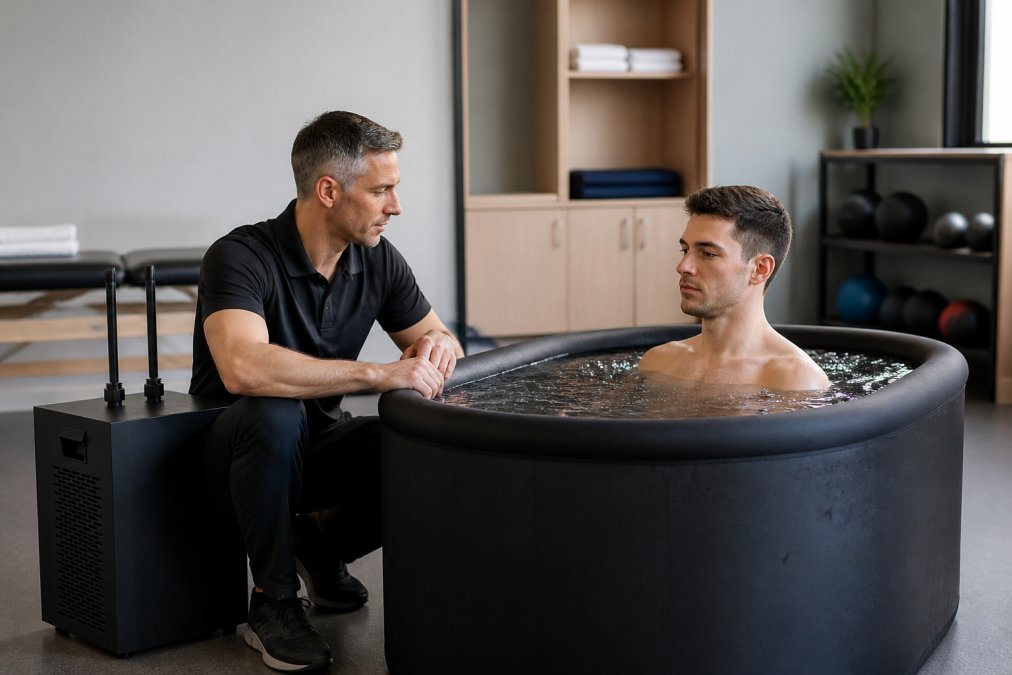
Cold plunge therapy delivers measurable benefits for post-operative recovery, acute inflammation reduction, and neuromuscular facilitation. The science is straightforward: cold water immersion triggers vasoconstriction followed by vasodilation, reducing swelling and activating the parasympathetic nervous system. For clinics, professional ice bath systems eliminate the logistics of manual ice management while maintaining precise temperature control essential for clinical efficacy.
Temperature Control and Clinical Efficacy
Therapeutic cold plunge protocols require water temperatures between 50-59°F for optimal results (peer-reviewed research). Manual ice management makes consistent temperature control nearly impossible, ice melts at variable rates, water temperature fluctuates, and staff spend time on maintenance rather than patient care. A water chiller system maintains precise temperatures automatically, ensuring every patient receives the same therapeutic dose.
The Upgrade XL Ice Bath Tub paired with a 1/3 HP Water Chiller (capable of cooling to 39°F) represents the professional standard for clinic settings. This combination handles multiple daily sessions without temperature drift, critical for high-volume practices. Temperature consistency matters because cold immersion protocols are dose-dependent: too warm and you lose the anti-inflammatory benefit; too cold and you risk tissue damage or excessive parasympathetic activation.

Space and Budget Considerations
A portable ice bath tub occupies roughly 6 feet by 4 feet of floor space, manageable in most clinic layouts. The Portable Bathtub option offers a more compact footprint (25.9 × 31.5 inches) for smaller practices or multi-purpose spaces. The water chiller unit requires nearby electrical access and drainage capability, but doesn't demand dedicated plumbing.
Budget considerations span equipment cost, water treatment, electricity, and staff training. Entry-level systems start at accessible price points, while professional-grade setups represent a larger capital investment. The return comes through faster patient progression, reduced reliance on pharmaceutical interventions, and the ability to market cold therapy as a differentiator in competitive markets.
Red Light Therapy in Rehabilitation: Accelerating Tissue Healing
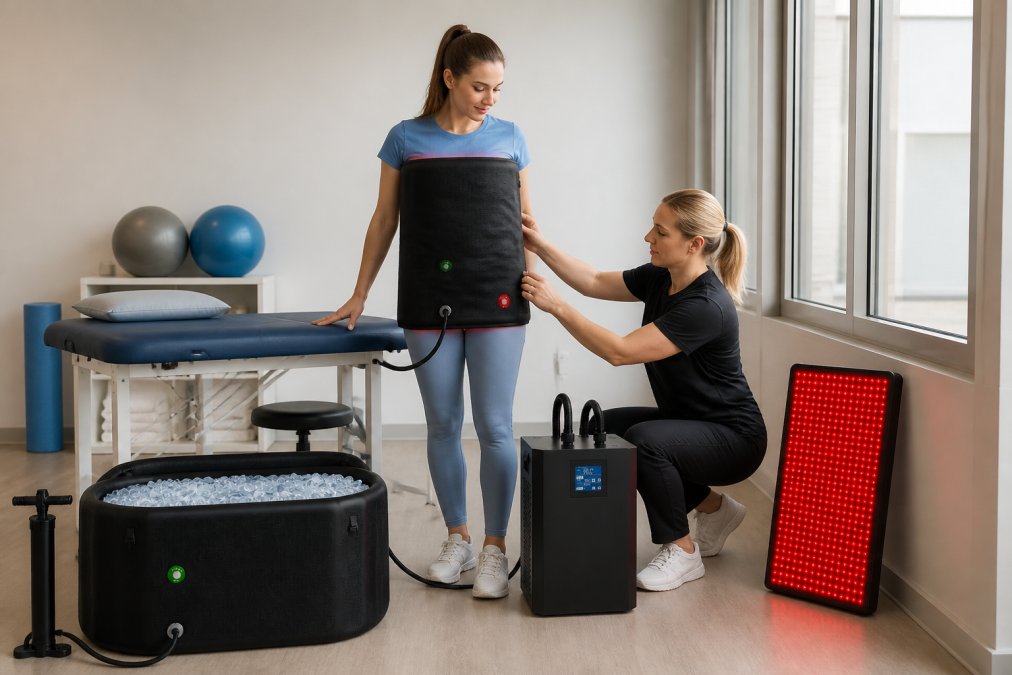
Red light therapy (wavelengths 600-700nm) and near-infrared therapy (700-1100nm) penetrate tissue at different depths, making dual-wavelength systems clinically superior for comprehensive rehabilitation. The mechanisms are well-established: photons stimulate mitochondrial ATP production, reduce inflammatory cytokines, and accelerate collagen remodeling, all critical for tissue healing and pain management.
Wavelengths and Penetration Depth
Red light (660nm) penetrates approximately 8-10mm into tissue, making it effective for superficial muscle, skin, and joint structures (peer-reviewed research). Near-infrared (850nm) reaches 20-30mm, targeting deeper muscle groups and connective tissue. A full-body red light therapy pad using dual wavelengths addresses both layers simultaneously, maximizing therapeutic benefit across diverse injury types.
The Red Light Therapy Pad featuring 660nm and 850nm wavelengths offers 71" × 31" coverage, sufficient for treating large muscle groups, back, shoulders, quadriceps, hamstrings. The adjustable timer and remote control allow clinicians to standardize treatment protocols, ensuring reproducible outcomes across patient populations.
Clinical Applications for Pain Management
Red light therapy excels for post-operative pain management, chronic inflammation, and delayed-onset muscle soreness. Clinics using red light therapy report reduced analgesic requirements and faster progression through rehabilitation phases. The modality integrates seamlessly with manual therapy, therapeutic exercise, and other recovery technologies.
Treatment protocols typically span 10-20 minutes at therapeutic distances (4-6 inches from tissue). Multiple daily sessions accelerate healing during acute phases, tapering to maintenance frequencies as tissue remodels. Unlike pharmaceutical interventions, red light therapy carries minimal contraindications and side effects, making it suitable for diverse patient populations.
Myofascial Release and Soft Tissue Mobilisation Equipment
Myofascial release addresses fascial restrictions, muscle trigger points, and proprioceptive deficits that manual therapy alone cannot fully resolve. Equipment-based myofascial release, percussion massagers, foam rollers, vibration devices, extends clinician reach and allows patient self-management between sessions, critical for compliance in busy rehabilitation schedules.
The distinction between manual therapy and mechanical tools is functional: manual therapy builds therapeutic relationship and allows real-time assessment; mechanical tools deliver consistent force, frequency, and duration that human hands cannot sustain. Effective clinics use both, integrating equipment into comprehensive treatment plans rather than replacing skilled manual work.
Soft tissue mobilisation equipment serves multiple functions: reducing muscle guarding, improving range of motion, enhancing proprioceptive feedback, and accelerating recovery between therapeutic sessions. Patients using myofascial release equipment report improved functional outcomes and higher satisfaction with rehabilitation programs.
How to Integrate Recovery Technology in PT Clinics
Successful recovery technology integration requires deliberate workflow redesign, not equipment installation followed by ad-hoc use. The difference between clinics seeing measurable outcomes and those with underutilised equipment lies in protocol standardisation, staff role clarity, and documented patient progression tracking.
Session Sequencing and Timing Protocols
Recovery tools deliver maximum benefit when sequenced strategically within a 45-minute treatment window. A proven integration model follows this structure:
Minutes 0-10: Manual Assessment and Soft Tissue Mobilisation Clinician performs manual palpation, identifies restrictions, and applies targeted soft tissue work. This establishes baseline tissue quality and informs equipment selection for the session.
Minutes 10-20: Therapeutic Exercise and Movement Retraining Patient performs prescribed exercises addressing primary dysfunction. Recovery tools haven't been introduced yet; neuromuscular patterns are established first.
Minutes 20-30: Modality Application (Red Light or Cold Plunge) Red light therapy is applied during or immediately after exercise to capitalise on increased blood flow and metabolic demand. Alternatively, cold plunge therapy is used post-exercise to manage inflammation and facilitate parasympathetic recovery. Clinician documents wavelength settings, duration, and patient response.
Minutes 30-40: Myofascial Release and Proprioceptive Work Patient uses percussion massagers or foam rollers under clinician guidance, or clinician applies mechanical myofascial release. This phase reinforces tissue quality gains from earlier work and teaches self-management techniques.
Minutes 40-45: Patient Education and Home Protocol Assignment Clinician explains physiological mechanisms ("cold immersion reduces inflammatory cytokines; red light stimulates ATP production in mitochondria"), assigns home recovery tools if appropriate, and documents compliance expectations.
This sequencing ensures recovery tools amplify rather than replace skilled manual work. Clinicians who reverse this order, starting with equipment and ending with exercise, report lower compliance and weaker outcomes because patients don't understand the mechanistic rationale.
Documentation and Outcome Tracking
Recovery tool efficacy depends on systematic documentation. Minimum data points for each session:
- Modality used (cold plunge, red light, percussion device)
- Specific parameters (water temperature and duration; wavelength and treatment time; device intensity and duration)
- Patient response (pain rating before/after, range of motion change, functional improvement, adverse reactions)
- Clinician assessment (did patient tolerate protocol; should parameters adjust next session)
This creates a longitudinal record that reveals which protocols drive fastest progression for specific diagnoses. A clinic treating rotator cuff repairs might discover that red light therapy + therapeutic exercise reduces pain more effectively than cold plunge + exercise for that population. Another clinic treating acute ankle sprains might find cold plunge + myofascial release produces faster swelling reduction. Data-driven protocol refinement is impossible without systematic documentation.
Many clinics use simple paper checklists; others integrate recovery parameters into electronic health records. The method matters less than consistency. Clinicians who document rigorously can justify equipment investment to stakeholders, identify which tools drive fastest ROI, and refine protocols based on real outcomes rather than assumption.
Staff Training and Role Clarity
Recovery tools require staff competency beyond equipment operation. Physical therapists must understand contraindications and screening protocols. Clinic assistants must master equipment setup, temperature/wavelength verification, and safety monitoring. Front desk staff must educate patients about why recovery tools are clinical interventions, not amenities.
A single training session is insufficient. Effective clinics conduct quarterly competency reviews, rotate staff through equipment operation, and establish peer accountability for protocol adherence. When staff understand why sequencing matters and how to recognise adverse responses, equipment utilisation increases and patient outcomes improve.
Patient Compliance and Gamification
Patients comply with recovery protocols when they understand mechanisms and see measurable progress.
Simple tracking methods include:
- Session counter cards: Patient receives a physical card stamped after each recovery session; 10 stamps earns a progress reassessment or home equipment recommendation.
- Mobile app logging: Patient logs home recovery tool use (foam rolling duration, compression therapy time) between clinic visits; clinician reviews trends at follow-up appointments.
- Functional milestone markers: "After 8 cold plunge sessions, most patients in your diagnosis category regain 15 degrees shoulder abduction. You're at session 6, let's track your progress."
When patients see their own data improving, pain decreasing, range of motion increasing, functional capacity expanding, compliance with recovery protocols becomes self-reinforcing. Clinics that combine systematic documentation with patient-visible progress tracking see higher adherence to home-based recovery tool use compared to clinics offering equipment without tracking infrastructure.
Safety Protocols and Contraindications
Recovery tools are clinical modalities, not consumer wellness devices. Improper application risks patient harm and clinic liability. Effective safety protocols require pre-treatment screening, real-time monitoring, and documented adverse event procedures.
Cold Plunge Therapy: Screening and Monitoring
Cold water immersion triggers profound physiological responses, initial gasping, heart rate elevation, blood pressure spike, followed by parasympathetic activation. Patients with cardiovascular compromise may experience dangerous arrhythmias or myocardial ischaemia.
Absolute contraindications (do not use cold plunge):
- Uncontrolled hypertension (systolic >160 mmHg or diastolic >100 mmHg) (the CDC)
- Recent myocardial infarction (within 6 months)
- Unstable angina or active chest pain
- Severe Raynaud's phenomenon or secondary Raynaud's with tissue ulceration
- Acute deep vein thrombosis or pulmonary embolism
- Uncontrolled arrhythmias
- Severe peripheral vascular disease
Relative contraindications (use with caution; requires clinician judgment and informed consent):
- Controlled hypertension (requires baseline vitals; monitor during first 2-3 sessions)
- Diabetes with neuropathy (cold sensation may be impaired; risk of unrecognised tissue damage)
- Pregnancy (not contraindicated, but requires obstetric clearance and conservative protocols)
- History of cold-induced urticaria or cold agglutinin disease
- Active infection or fever (cold immersion may impair immune response)
Pre-treatment screening protocol:
- Obtain baseline blood pressure and heart rate in seated position; repeat standing.
- Ask screening questions: "Do you have heart disease, high blood pressure, or irregular heartbeat? Have you had a heart attack or stroke? Do your fingers or toes turn white or numb in cold weather?"
- If any red flags, obtain physician clearance before proceeding.
- For first-time users, start with shorter duration (60-90 seconds) at warmer temperature (59-61°F) to assess tolerance.
- Monitor heart rate and blood pressure during immersion if patient has any cardiovascular risk factors.
- Educate patient: "You'll feel an initial gasp and cold shock; this is normal. If you experience chest pain, severe shortness of breath, or dizziness, signal immediately and we'll end the session."
Immersion duration and temperature parameters:
Therapeutic cold plunge protocols use 50-59°F water for 2-3 minutes. Longer immersion (>5 minutes) increases risk of cold-induced vasodilation, a paradoxical warming response that can cause tissue damage if immersion continues. Colder temperatures (<50°F) accelerate cold shock response and increase cardiovascular stress; they're rarely justified for clinical rehabilitation.
Do not allow patients to self-regulate immersion duration. Clinician-supervised timing with audible timer ensures protocol adherence and prevents excessive exposure.
Red Light Therapy: Photosensitivity and Medication Interactions
Red and near-infrared light therapy carries minimal contraindications but requires awareness of photosensitising medications and active malignancy.
Contraindications and cautions:
- Photosensitising medications: Certain antibiotics (tetracyclines, fluoroquinolones), NSAIDs, retinoids (isotretinoin, tretinoin), and some antifungals increase skin photosensitivity. Patients on these medications may experience excessive erythema, burning, or blistering. Obtain medication history before treatment.
- Active malignancy in treatment area: Red light therapy stimulates cellular metabolism and ATP production. Applying therapy directly over active tumours is contraindicated; treat adjacent healthy tissue only if oncology clearance obtained.
- Thyroid conditions: Some practitioners avoid direct thyroid irradiation; current evidence is limited. Conservative approach: avoid direct neck treatment in patients with hyperthyroidism or thyroid nodules unless endocrinology clearance obtained.
- Pregnancy: Not contraindicated, but obtain obstetric clearance and avoid abdominal treatment in first trimester.
- Photoepilepsy: Rare; red light wavelengths (600-1100nm) are lower risk than visible blue light, but clinician should ask screening question: "Do flashing or flickering lights trigger seizures?"
Treatment parameters for safety:
- Maintain 4-6 inches distance from skin; closer distances increase intensity and risk of thermal injury.
- Limit initial sessions to 10-15 minutes; extend to 20 minutes only after tolerance established.
- Use protective eyewear if patient's eyes are in direct line of therapy (though red/near-infrared wavelengths are lower risk than blue light).
- Document treatment distance, duration, and wavelength settings in patient chart.
Myofascial Release Equipment: Intensity and Tissue Damage Risk
Percussion massagers and mechanical myofascial release devices deliver high-frequency force that can cause bruising, exacerbate inflammation, or damage fragile tissue if applied incorrectly.
Contraindications:
- Active fractures or stress fractures (percussion can disrupt healing callus)
- Acute inflammation or cellulitis (mechanical force worsens swelling and infection risk)
- Severe osteoporosis or bone metastases (risk of pathological fracture)
- Open wounds or skin breakdown
- Thrombophlebitis or active DVT (mechanical pressure increases clot dislodgement risk)
- Over bony prominences (spinous processes, greater trochanter, lateral epicondyle), percussion over bone causes pain and bruising without therapeutic benefit
Safe application parameters:
- Apply percussion devices only to muscle belly, never bone or joint.
- Start at lowest intensity setting; increase only if patient tolerates without pain.
- Limit duration to 60-90 seconds per muscle group; longer application increases bruising risk.
- Avoid treating same area on consecutive days during acute inflammation phase.
- Educate patient: "You should feel vibration and mild pressure, not pain. If it hurts, we'll reduce intensity."
Documentation and Liability Protection
Systematic documentation protects both patient safety and clinic liability:
- Pre-treatment screening form: Document cardiovascular history, medications, contraindications screening, baseline vitals if applicable.
- Informed consent: Patient acknowledges understanding of procedure, risks, and benefits; signs before first treatment.
- Treatment record: Document modality, parameters (temperature, wavelength, intensity, duration), patient response, any adverse events.
- Adverse event protocol: If patient experiences chest pain, severe shortness of breath, excessive bruising, or other unexpected response, stop treatment immediately, document incident, notify supervising clinician, and contact physician if indicated.
Clinics that maintain rigorous documentation demonstrate standard-of-care adherence and reduce liability exposure if adverse events occur. Clinics that skip screening or documentation face significantly higher risk.
Building a Complete Recovery System for Your Clinic
A comprehensive recovery system combines multiple modalities addressing different physiological mechanisms. Cold therapy manages inflammation and supports parasympathetic activation. Red light therapy accelerates tissue healing and reduces pain. Myofascial release addresses fascial restrictions and proprioceptive deficits. Therapeutic exercise builds strength and functional capacity. Together, these elements create a synergistic effect that exceeds what any single modality delivers.
The Premium Recovery & Wellness Bundle integrates a 2-person infrared sauna, XL ice bath tub, 1/3 HP water chiller, and full-body red light therapy pad, essentially a complete recovery ecosystem in one system. For clinics with space and budget constraints, the Ultimate Recovery & Wellness Bundle combines cold plunge and red light therapy, covering the two highest-impact modalities.

Starting smaller is reasonable: many clinics begin with a single modality (cold plunge or red light therapy), document outcomes, and expand based on results. This phased approach reduces upfront risk and allows staff to master one system before adding complexity.
Patient education transforms recovery tools from mysterious devices into understood interventions. Explaining that cold plunge therapy reduces inflammation through vasodilation, that red light therapy stimulates mitochondrial ATP production, and that myofascial release addresses fascial restrictions helps patients understand why these tools matter. When patients understand the mechanisms, compliance improves and outcomes follow.
Recovery tools for physical therapy clinics represent a fundamental shift toward evidence-based, technology-integrated rehabilitation. The clinics leading this transition aren't replacing skilled manual therapy, they're amplifying it with modalities that address specific physiological mechanisms manual work alone cannot fully resolve. Thermo Plunge Recovery Systems provides the professional-grade equipment that makes this integration practical and effective, backed by free shipping, a 30-day guarantee, and 24/7 support ensuring your clinic gets the outcomes you're investing in. Start by identifying your highest-impact patient population, select the recovery modalities addressing their primary barriers to healing, and measure outcomes rigorously. The data will guide your next expansion decisions.
Frequently Asked Questions
What are the most effective recovery tools for physical therapy clinics?
The most effective recovery tools combine multiple therapeutic modalities. Cold plunge therapy reduces inflammation and muscle fatigue, red light therapy accelerates tissue healing and improves circulation, and myofascial release equipment addresses soft tissue restrictions. A complete system incorporating cold therapy, red light, and manual mobilisation tools provides comprehensive coverage for various patient conditions and rehabilitation phases. The combination addresses pain management, range of motion improvement, and functional recovery simultaneously.
How do the benefits of red light therapy in rehabilitation compare to traditional methods?
Red light therapy penetrates deep tissue using specific wavelengths (660nm and 850nm) to stimulate cellular energy production and reduce inflammation. Unlike surface-level treatments, this infrared approach accelerates tissue healing, improves circulation, and supports neuromuscular recovery. Many clinics report faster patient outcomes when red light therapy is combined with active recovery protocols. The non-invasive nature makes it suitable for acute and chronic conditions without the risks associated with pharmaceutical interventions.
How much space and budget should a clinic allocate for professional ice bath systems?
Professional ice bath systems for clinics range significantly in footprint and investment. A basic portable ice bath tub requires minimal space and lower upfront costs, while a system with integrated water chiller technology demands dedicated room but provides superior temperature control for clinical consistency. Budget considerations include equipment purchase, installation, maintenance, filtration, and energy costs. Many clinics find that investing in a complete system with temperature control yields better patient compliance and clinical outcomes, justifying the higher initial expense through improved recovery results.
What safety protocols should clinics follow when using recovery technology?
Clinics must establish clear contraindications screening before cold or red light therapy. Cold plunge sessions should be limited to 3-5 minutes for most patients, with temperature monitoring and supervision. Red light therapy requires eye protection and should avoid direct exposure to certain medications or conditions. All equipment must undergo regular maintenance and safety inspections. Staff training on proper patient positioning, duration, and intensity is essential. Documentation of patient responses and adverse reactions helps refine protocols and ensures compliance with clinical standards.
This article was written using GrandRanker