

7 Steps to Safe Red Light Therapy for Sensitive Skin
Last Updated: October 27, 2026
Quick Summary
Red light therapy is generally considered low risk for sensitive skin when used as directed, since it does not involve UV light. Start with a patch test on the inner forearm, begin with the shortest session your device allows, and watch your skin for 24 to 48 hours before increasing time.
- Patch test a small area such as the inner forearm and check it at 24 and 48 hours.
- Start with sessions of about 5 minutes, two or three times a week.
- Increase session length slowly, only after several sessions with no reaction.
- Stop and assess if redness lasts beyond 24 hours, or if you notice burning, blistering or swelling.
- Consult a dermatologist before use if you have rosacea, eczema or photosensitizing medications.
Table of Contents
- How Red Light Therapy Works on the Skin
- Is Red Light Therapy Safe for Sensitive Skin?
- Red Light Therapy Patch Test: How to Check Your Skin First
- Red Light Therapy Session Length for a Gradual Start
- Red Light Therapy Side Effects and How to Tell a Normal Response from a Reaction
- Red Light Therapy Contraindications and Conditions That Need Professional Advice
- Building a Sensitive-Skin Red Light Routine Around Your Skincare
- Booking Your First Session Safely With a Pad You Can Trust
- Frequently Asked Questions
How Red Light Therapy Works on the Skin
Red light therapy is a non-invasive treatment that uses low-level red and near-infrared light to reach the skin's cells. Most devices use wavelengths in the 630nm to 850nm range, which pass through the outer layers of the skin.
Once the light reaches the cells, it is thought to affect the mitochondria, the parts of a cell that make energy. The science is still developing, so treat it as promising rather than settled.
Red light therapy is also heat-free in most home devices, unlike some other light-based treatments that work by heating the skin. Still, a device can warm the skin a little, and that matters when your skin is sensitive.
Is Red Light Therapy Safe for Sensitive Skin?
For most people, red light therapy is considered low risk when used as directed. It does not involve UV light, the main cause of sun damage.
Sensitive skin is a different story. Redness, itching, or a warm, tight feeling can show up after a session, even with a gentle device. These reactions are usually mild and fade within a day or so.
Keep these points in mind:
- Start with the shortest session the device allows
- Watch how your skin looks and feels for the next 24 to 48 hours
- Stop and check in with a dermatologist if a reaction lasts or gets worse
- Do not assume a device is safe for your skin just because it is popular
Evidence on sensitive skin specifically is limited, so your own careful observation matters most.
Red Light Therapy Patch Test: How to Check Your Skin First
A patch test is the simplest way to see how your skin handles red light. Pick a small, unbroken area such as the inner forearm.
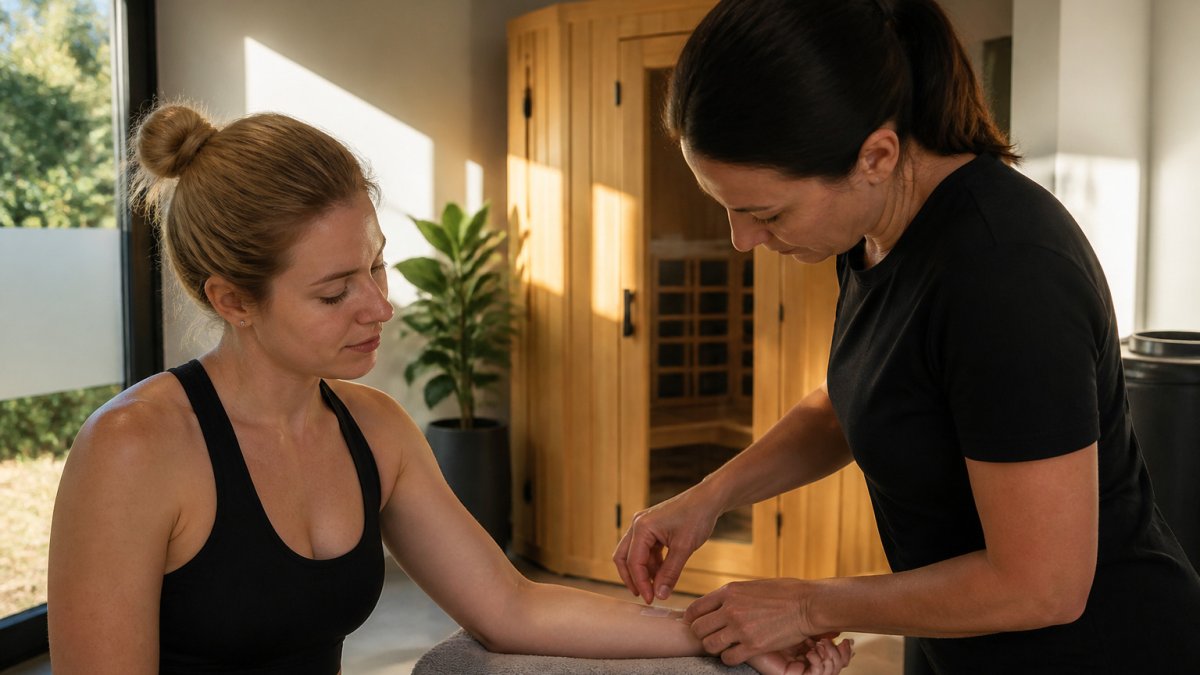
Here is a simple approach:
- Clean the test area with a mild, fragrance-free cleanser and pat it dry.
- Use the device on that small spot for the shortest session time.
- Note the skin's color, texture, and feel right after the session.
- Check the same spot at 24 hours and again at 48 hours.
- Wait at least 48 hours before using the device on a larger area.
If you see redness that spreads, blistering, or swelling, do not continue. A patch test that goes well is your signal to move on slowly, not to jump to full use.
Red Light Therapy Session Length for a Gradual Start
Session length is one of the most important controls you have. Many people with sensitive skin do best starting well below the maximum time the device allows.
A cautious approach looks like this:
- Week 1: Short sessions, about 5 minutes, two or three times a week
- Week 2: Keep the same length if your skin is calm
- Week 3 onward: Increase slowly, only if you have had no reaction
The Red Light Therapy Pad - Full-Body Infrared Healing Wrap has an adjustable timer and remote control.
Red Light Therapy Pad – Full-Body Infrared Healing Wrap →

Stop increasing time the moment you notice persistent redness or irritation. Going back to a shorter session is often the right fix.
Here is how the gradual start schedule breaks down week by week.
| Week | Session length | Frequency |
|---|---|---|
| Week 1 | About 5 minutes | Two or three times a week |
| Week 2 | Same length if skin is calm | Two or three times a week |
| Week 3 onward | Increase slowly, only with no reaction | Two or three times a week |
Red Light Therapy Side Effects and How to Tell a Normal Response from a Reaction
Sensitive skin can react in ways that are easy to misinterpret. The key is knowing which sensations are signals to stop.
What causes the redness you see
Red light therapy increases blood flow in the treated area. That extra circulation is part of why the treatment is thought to support healing, but it also means a temporary pink or flushed look is common, especially in fair skin. This is not damage; it is a vascular response that typically fades within 30 to 90 minutes.
Normal, temporary responses (continue with caution)
These responses are not a reason to stop, but they are a reason to hold your session length steady rather than increase it.
Reactions that warrant stopping and assessing
- Redness that persists beyond 24 hours or deepens in color
- Burning, stinging, or pain during or after the session, not just warmth
- Raised bumps, hives, or blistering in the treated area
- Swelling that was not present before the session
- A flare-up of an existing condition (for example, a rosacea flare or an eczema patch that becomes angrier)
- Increased sensitivity to touch that lasts more than a day
If the reaction does not resolve or worsens, contact a dermatologist.
The 48-hour rule
A single session's effects can take up to 48 hours to fully declare themselves, which is why a patch test should be checked at both the 24-hour and 48-hour marks. If you increase session length, treat the new length as a fresh test and wait 48 hours before increasing again. This slow cadence is the only reliable way to isolate what your skin tolerates.
When to pause rather than stop
If a mild flush fades within a few hours but your skin feels more reactive to your usual skincare products the next day, pause for a few days and resume at a shorter session length. Persistent low-grade irritation means the current dose is too high, not that the therapy is off-limits.
What not to mistake for a reaction
Keeping a simple log, date, session length, and skin appearance, can help you track your observations.
Red Light Therapy Contraindications and Conditions That Need Professional Advice
"Sensitive skin" is not one thing. A person with rosacea has a different risk profile from someone with eczema, contact dermatitis, or a temporarily compromised barrier after an exfoliating treatment. Treating them the same is where problems start.
Rosacea
What to do: Start with the lowest setting and the greatest distance the device allows. Keep sessions short, 5 minutes or less, and avoid treating during an active flare. If your skin flushes and stays flushed for more than a few hours, stop and consult a dermatologist before resuming.
Eczema and atopic dermatitis
What to do: Do not treat over active, broken, or weeping eczema. Wait until the skin is calm and intact. Use the device at a distance rather than in direct contact with a pad, and keep sessions brief. If itching increases after a session, stop and let the skin settle.
Contact dermatitis
What to do: Patch test on the forearm first. If you react, do not use the device on the face or neck. If you do not react, still keep the first few facial sessions short and monitor for delayed reactions.
Compromised skin barrier
What to do: Wait until your skin feels normal to the touch and looks calm before starting or resuming therapy. Skip sessions on days you have used strong actives or exfoliants.
Photosensitizing medications and skincare ingredients
What to do: Review your medications with a pharmacist or dermatologist before starting. If you use prescription retinoids or exfoliating acids, skip the device on the days you apply them, or apply them after your session and only if your skin is calm.
History of skin cancer or unusual moles
Red light therapy does not use UV light and is not considered a skin cancer risk the way tanning beds are. However, if you have a history of skin cancer or atypical moles, discuss any light-based treatment in the affected area with your dermatologist first. This is a precaution, not a known hazard.
Red Light Therapy Pad – Full-Body Infrared Healing Wrap →
Eye safety
Red and near-infrared light can be intense to look at directly. Most devices include eye protection or instruct you to keep your eyes closed. If you are treating the face, use the provided goggles or keep your eyes closed for the duration. If you have any eye condition, consult an eye care professional before facial use.
Pregnancy and medical conditions
If you are pregnant or managing a medical condition, consult your healthcare provider.
Bringing your device details to a professional
If you consult a dermatologist, bring the device's wavelength range, irradiance (if listed), recommended session time, and your patch-test notes. That helps them give specific guidance rather than a generic "be careful."
Building a Sensitive-Skin Red Light Routine Around Your Skincare
Keeping the routine simple makes it easier to tell which change caused a reaction. Add one new step at a time.
Booking Your First Session Safely With a Pad You Can Trust
Before your first full session, go through a short checklist:
- Any medical concerns discussed with a healthcare professional
Thermo Plunge Recovery Systems offers a Red Light Therapy Pad - Full-Body Infrared Healing Wrap with dual wavelengths, a large treatment area, and a remote.
Frequently Asked Questions
Is red light therapy safe for sensitive skin? Many people with sensitive skin use it without problems, especially with short sessions and a patch test first. Stop if you notice lasting redness, itching, or swelling, and check with a dermatologist if you have a skin condition.
How long should a first red light therapy session last? Start with the shortest session your device allows, often around 5 minutes. Increase time only after several sessions with no reaction.
Can red light therapy cause side effects? Mild, temporary warmth or pinkness is common. Persistent redness, blistering, or swelling are signs to stop and get advice.
Who should avoid red light therapy without professional advice? People with eczema, rosacea, active acne, photosensitizing medications, or a history of skin cancer should speak with a healthcare professional first.
Frequently Asked Questions
When should you not use red light therapy?
If you have questions about whether red light therapy is appropriate for you, consult a healthcare professional.
Can red light therapy irritate sensitive skin?
If you have concerns about using red light therapy on sensitive skin, consult a healthcare professional.
Does red light therapy have to touch bare skin?
The product listing does not specify whether the Red Light Therapy Pad - Full-Body Infrared Healing Wrap should be used on bare skin or over clothing. Check the product instructions for use guidance.
How should you patch test red light therapy on sensitive skin?
For advice about patch testing red light therapy on sensitive skin, consult a healthcare professional.
