

Sauna Alternatives for Athletes: 2026 Recovery Guide
Table of Contents
- Why Athletes Need More Than Just Sauna Alternatives
- Cold Plunge Therapy: The Fastest Sauna Alternative for Muscle Recovery
- How to Recover Faster From Workouts With Infrared Heat
- Infrared Sauna Session Duration for Athletes: Optimal Timing and Protocol
- Red Light Therapy for Muscle Soreness: Combining Heat and Light Recovery
- Space-Saving Recovery Solutions for Apartments and Small Spaces
- Long-Term Maintenance Costs: What You'll Actually Spend on Home Recovery Equipment
- Conclusion: Building Your At-Home Recovery System
- Frequently Asked Questions
Last Updated: September 2, 2026
Why Athletes Need More Than Just Sauna Alternatives
Most athletes rely on a single recovery method and expect results. The problem is that sauna alternatives for athletes have evolved dramatically. Elite competitors now layer multiple recovery modalities, cold plunge therapy, infrared heat, and red light therapy, to address inflammation, muscle soreness, and cardiovascular adaptation simultaneously.
At Thermo Plunge Recovery Systems, recovery isn't passive rest anymore. It's an active, engineered process that combines cold therapy for acute inflammation, infrared heat for deep muscle penetration, and red light therapy for cellular repair.
Cold Plunge Therapy: The Fastest Sauna Alternative for Muscle Recovery
Cold plunge therapy stands as the fastest sauna alternative for muscle recovery, delivering results within minutes. Immersion in cold water triggers vasoconstriction, reducing inflammation in stressed muscle tissue. Upon exit, vasodilation floods the area with oxygenated blood, accelerating nutrient delivery and waste removal.
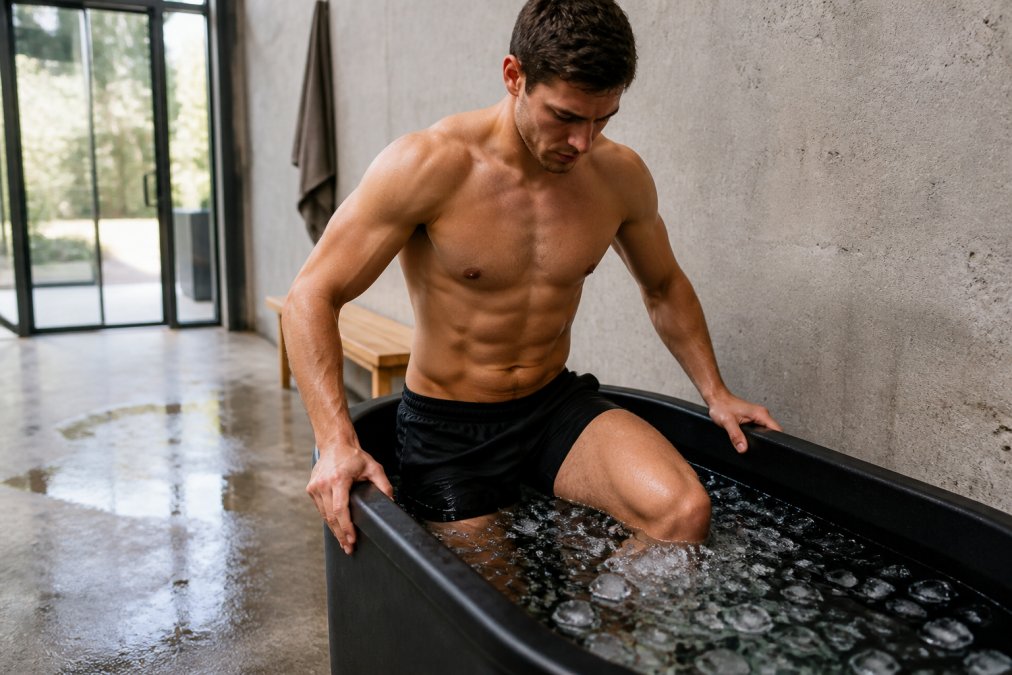
While infrared saunas penetrate tissue through warmth, cold water creates acute stress that trains your cardiovascular system.
Temperature control is non-negotiable. Most athletes start at 50-59°F for 3-5 minutes. The Upgrade XL Ice Bath Tub from Thermo Plunge Recovery Systems ($648.95) solves consistency with water chiller compatibility, maintaining precise temperature across sessions without ice management or bacterial growth concerns.

For apartment dwellers, the portable Ice Bath Tub from Thermo Plunge Recovery Systems ($169.95) delivers physiological benefits without permanent installation. It folds flat for storage and sets up in minutes, though you'll manage ice manually.
How to Recover Faster From Workouts With Infrared Heat
Infrared heat penetrates deeper than traditional saunas, reaching muscle tissue 1.5 inches below the skin surface. This depth matters because inflammation and metabolic waste accumulate in deep fascia, not just the epidermis. Infrared technology addresses the actual problem site.
Infrared wavelengths (700-1000 nanometres) trigger heat shock proteins, cellular repair molecules that accelerate recovery and build resilience.
Optimal results come from 30-40 minute sessions, 3-5 times weekly. Longer sessions don't improve outcomes and increase dehydration risk. Consistency matters more than duration.
The Infrared Sauna from Thermo Plunge Recovery Systems ($3,999.95) features low-EMF construction (below 2 milligauss), hemlock wood for durability, and a tourmaline foot warmer extending heat therapy to plantar fascia and ankle mobility.
The Electric Sauna Blanket from Thermo Plunge Recovery Systems ($461.95) delivers infrared benefits portably, wrapping your torso and legs to concentrate heat on major muscle groups. Setup takes 30 seconds, and storage requires a closet shelf.
Infrared Sauna Session Duration for Athletes: Optimal Timing and Protocol
The optimal infrared sauna session duration for athletes is 30-40 minutes, performed 3-4 times weekly. This window maximises heat shock protein activation without excessive electrolyte loss or cardiovascular strain.
Session Protocol for Recovery Athletes:
| Phase | Duration | Temperature | Purpose |
|---|---|---|---|
| Acclimation | 5 minutes | 110-120°F | Allow core temperature to rise gradually |
| Active Heat | 25-30 minutes | 140-160°F | Trigger heat shock proteins and vasodilation |
| Cool-down | 5 minutes | Ambient | Stabilise heart rate before exiting |
Post-workout infrared sessions (within 4 hours) accelerate inflammation resolution. Pre-workout sessions (12-24 hours after previous training) improve mobility and blood flow without suppressing strength adaptation.
Hydration protocol determines recovery success. Drink 16 ounces of water with electrolytes 30 minutes before entering. Consume another 8-12 ounces during the session if possible. Exit immediately if you feel dizzy, nauseous, or experience chest discomfort.
Red Light Therapy for Muscle Soreness: Combining Heat and Light Recovery
Red light therapy addresses muscle soreness through cellular mechanisms. Wavelengths in the 600-700 nanometre range penetrate tissue and stimulate mitochondrial function, increasing ATP production. This cellular energy boost accelerates protein synthesis and reduces inflammatory markers causing delayed-onset muscle soreness.
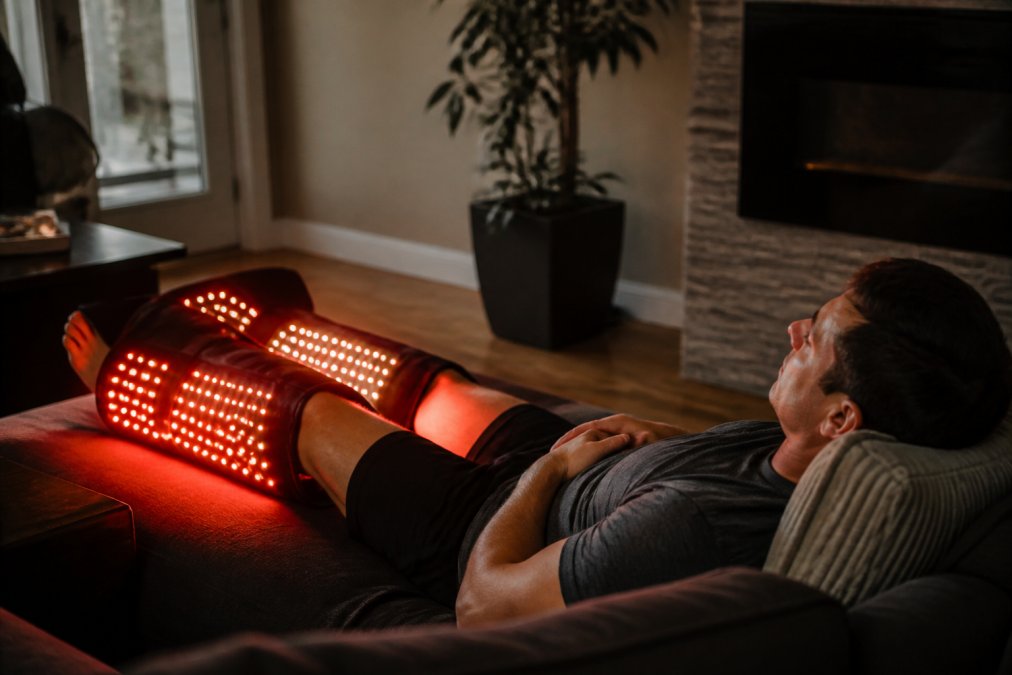
Red light therapy's advantage as a sauna alternative is specificity. While infrared saunas heat your entire body, red light targets specific muscle groups. You can apply it to sore quads, hamstrings, shoulders, or lower back without raising core temperature.
Most athletes see results with 10-20 minute sessions, 4-5 times weekly. Position the light source 6-12 inches from skin, perpendicular to the muscle group. Closer placement reaches shallow tissue; farther placement penetrates deeper.
The Ultimate Recovery & Wellness Bundle from Thermo Plunge Recovery Systems ($2,199.95) integrates red light therapy with cold plunge and water chiller technology.

Combining red light therapy with infrared heat amplifies results. Perform red light therapy first (10-15 minutes) to stimulate cellular repair, then follow with infrared sauna (30-40 minutes) to drive systemic circulation. The heat accelerates ATP production that red light initiated.
Space-Saving Recovery Solutions for Apartments and Small Spaces
Apartment living doesn't mean sacrificing serious recovery. Space constraints demand strategic equipment selection, but physiological benefits remain identical.
The portable Ice Bath Tub from Thermo Plunge Recovery Systems ($169.95) occupies roughly 4 feet by 3 feet when inflated. When deflated, it stores in a closet or under a bed, making cold plunge therapy accessible to urban athletes.

The Electric Sauna Blanket ($461.95) requires zero permanent space. Lay it flat on your bed, use it, and roll it up for storage. This approach sacrifices full-body immersion but delivers equivalent infrared benefits to the torso and legs.
Red light therapy pads scale to apartment constraints. Full-body panels mount on walls or stand on tripods, occupying minimal floor space. Smaller targeted pads fit on shelves or hang on hooks.
Cold plunge therapy produces minimal noise. Red light therapy is silent. Infrared saunas generate no sound but produce steam and humidity that can damage walls. The Electric Sauna Blanket eliminates this concern entirely.
Long-Term Maintenance Costs: What You'll Actually Spend on Home Recovery Equipment
Initial purchase price tells only half the story. Long-term maintenance costs separate realistic investments from financial traps.
Cold plunge systems require water filtration and chiller maintenance. Annual maintenance includes filter replacement, seasonal cleaning, and electricity costs. Over five years, expect total ownership costs.
Infrared saunas require less active maintenance. Annual costs include electrical operation, occasional wood treatment, and component replacement. Over five years, an infrared sauna incurs operational and maintenance costs.
Red light therapy pads have the lowest maintenance burden. LEDs rarely fail. Annual costs are essentially electricity only. Over five years, you'll spend total.
Portable alternatives eliminate major maintenance. The ice bath tub requires cleaning between uses (10 minutes, no cost). The sauna blanket needs occasional washing and replacement after 3-5 years. Total five-year cost for portable tools.
| Equipment | Initial Cost | Annual Maintenance | 5-Year Total | Cost Per Session |
|---|---|---|---|---|
| Cold Plunge (XL + Chiller) | $1,448.95 | |||
| Infrared Sauna | $3,999.95 | |||
| Red Light Therapy Pad | ||||
| Sauna Blanket | $461.95 | |||
| Portable Ice Bath Tub | $169.95 |
Portable ice bath tubs and red light therapy pads deliver the lowest per-use cost because they require minimal maintenance and operate for years without major repairs. For athletes training 5-6 days weekly, the Ultimate Recovery & Wellness Bundle ($2,199.95) combines cold plunge, water chiller, and red light therapy.
Conclusion: Building Your At-Home Recovery System
Building an effective at-home recovery system means matching equipment to your training intensity, available space, and long-term commitment. Athletes who train 5+ days weekly justify premium investments in cold plunge systems with water chillers and full-size infrared saunas. Those training 3-4 days weekly see excellent results with portable alternatives and red light therapy.
The sauna alternatives for athletes that actually work combine multiple modalities. Cold plunge addresses acute inflammation. Infrared heat drives systemic circulation and cellular repair. Red light therapy accelerates mitochondrial function. Layering these tools creates synergistic recovery that single-method approaches can't match.
Thermo Plunge Recovery Systems offers the complete recovery toolkit with equipment designed for durability, ease of use, and measurable results. The Upgrade XL Ice Bath Tub, Infrared Sauna, and Ultimate Recovery & Wellness Bundle deliver professional-grade recovery without the gym membership. Free shipping, a 30-day guarantee, and 24/7 support ensure you recover smarter and train harder. Shop recovery solutions and experience the difference serious athletes demand.
Frequently Asked Questions
What's the most effective sauna alternative for athletes who want faster muscle recovery?
Cold plunge therapy and infrared heat work best when combined. Cold water immersion reduces inflammation immediately after workouts, while infrared sauna sessions promote blood circulation and muscle repair. Many athletes use both: ice bath on training days, infrared sauna on recovery days. The Upgrade XL Ice Bath Tub ($648.95) paired with an infrared sauna creates a complete recovery protocol that addresses both acute soreness and long-term muscle adaptation.
How long should an infrared sauna session duration for athletes typically be?
Most athletes benefit from 20-30 minute sessions at 140-160°F. Beginners should start at 15 minutes and gradually increase as their body adapts to the heat. Sessions longer than 40 minutes provide diminishing returns and increase dehydration risk. For optimal recovery, use infrared sauna on non-training days or at least 4-6 hours after intense workouts. This timing allows your body to cool naturally before heat exposure, preventing thermal stress during the recovery window.
Can red light therapy for muscle soreness actually replace traditional sauna recovery?
Red light therapy complements sauna recovery but doesn't fully replace it. Red light penetrates 1-2 millimetres into muscle tissue, stimulating mitochondrial function and reducing inflammation at the cellular level. Infrared sauna delivers deeper heat penetration and systemic cardiovascular benefits. The Ultimate Recovery & Wellness Bundle ($2,199.95) combines both technologies with cold plunge therapy, giving you three distinct recovery mechanisms: cold for acute inflammation, infrared for circulation, and red light for cellular repair.
Is a sauna blanket effective for athletes, or do I need a full infrared sauna?
Sauna blankets work well for convenience and space constraints, but they deliver less consistent heat penetration than cabinet saunas. The Electric Sauna Blanket ($461.95) is ideal for athletes in apartments or with limited space, it provides localized heat therapy for legs, back, and core. However, full-body infrared saunas like the 2-Person Premium Home Spa ($3,999.95) offer superior thermal regulation, longer session times, and better heat distribution for post-workout recovery protocols. Choose based on your space and budget: blankets for portability, cabinets for comprehensive recovery.
This article was written using GrandRanker