

Cold Plunge Durability for Daily Use: A 2026 Guide
Table of Contents
- What Determines Cold Plunge Durability for Daily Use
- Inflatable vs. Hard-Sided Cold Plunge: Which Lasts Longer
- Cold Plunge Maintenance Tips for Year-Round Performance
- Cold Plunge Chiller Lifespan and Energy Efficiency
- Common Durability Issues and DIY Repair Solutions
- Building Long-Term Value Into Your Cold Plunge Investment
- Conclusion
Last Updated: August 23, 2026
What Determines Cold Plunge Durability for Daily Use
Cold plunge durability for daily use depends on three interconnected factors: material construction, maintenance consistency, and component quality. The most common durability failures stem not from manufacturing defects, but from neglected maintenance routines. A cold plunge exposed to temperature fluctuations without proper insulation will degrade faster than one protected year-round.
Material degradation accelerates when systems aren't designed with thermal insulation and multi-stage filtration. Water becomes corrosive without proper chemistry management, high chlorine or low pH levels eat away at seals and structural components. This is where most owners encounter expensive repairs within 18-24 months: they treat water sanitation as optional rather than foundational.
The distinction between inflatable and hard-shell designs matters significantly. Each construction type has different failure modes, different maintenance demands, and different longevity profiles.
Inflatable vs. Hard-Sided Cold Plunge: Which Lasts Longer
Neither inflatable nor hard-shell cold plunge systems is inherently superior. Each trades longevity in one area for vulnerability in another. The choice depends entirely on your maintenance commitment and use pattern.
Inflatable Construction and Material Degradation
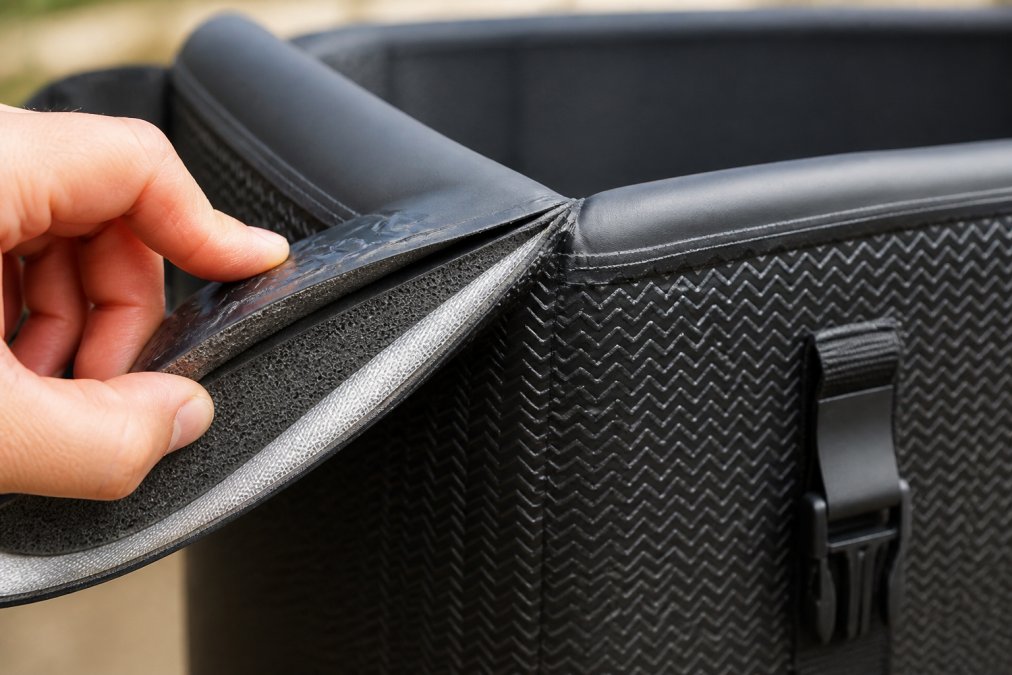
Inflatable cold plunge tubs use multi-layered PVC or reinforced vinyl materials engineered to withstand repeated expansion and contraction. Seams are where inflatable designs fail first. UV exposure, ozone from water sanitation systems, and thermal cycling all accelerate seam degradation.
A properly maintained inflatable cold plunge can last 3-5 years with daily use (peer-reviewed research). The Upgrade XL Ice Bath Tub from Thermo Plunge Recovery Systems uses reinforced thermal insulation layers that protect the material from direct UV and temperature extremes. Bringing an inflatable indoors during off-season months can extend material life significantly compared to year-round outdoor exposure.

The advantage of inflatable designs is repairability. A small puncture or seam separation can be patched without replacing the entire system. The disadvantage is that each repair creates a potential weak point, and multiple repairs compound durability concerns.
Water chemistry affects inflatable materials more aggressively than hard-shell designs. High chlorine concentrations or imbalanced pH levels degrade PVC faster than they corrode metal or composite surfaces.
Hard-Shell Design and Structural Integrity
Hard-shell cold plunge systems use composite materials, rotomoulded plastics, or fibreglass construction. These designs eliminate seam failure as a primary durability concern. Structural integrity depends on material thickness, reinforcement ribs, and manufacturing quality.
Hard-shell cold plunge systems typically last 7-10 years with daily use, assuming proper chiller maintenance and seasonal weather protection (peer-reviewed research). The structural integrity remains stable because the material doesn't expand and contract like inflatable designs. However, hard-shell systems are vulnerable to impact damage and UV degradation.
Thermal insulation in hard-shell designs is built into the manufacturing process. Material thickness and composite layering provide inherent insulation R-value, meaning hard-shell systems maintain water temperature more efficiently than inflatable alternatives, reducing chiller workload and extending component lifespan.
The disadvantage of hard-shell construction is repairability. A crack or structural damage typically requires professional repair or replacement. Weather protection matters equally for both designs, year-round outdoor exposure without a protective cover accelerates material degradation regardless of construction type.
Cold Plunge Maintenance Tips for Year-Round Performance
Daily maintenance consistency determines whether your cold plunge durability investment survives five years or fails in two. Most owners underestimate the time commitment until they're facing corroded components and degraded water quality.
Water Chemistry and Filtration Systems
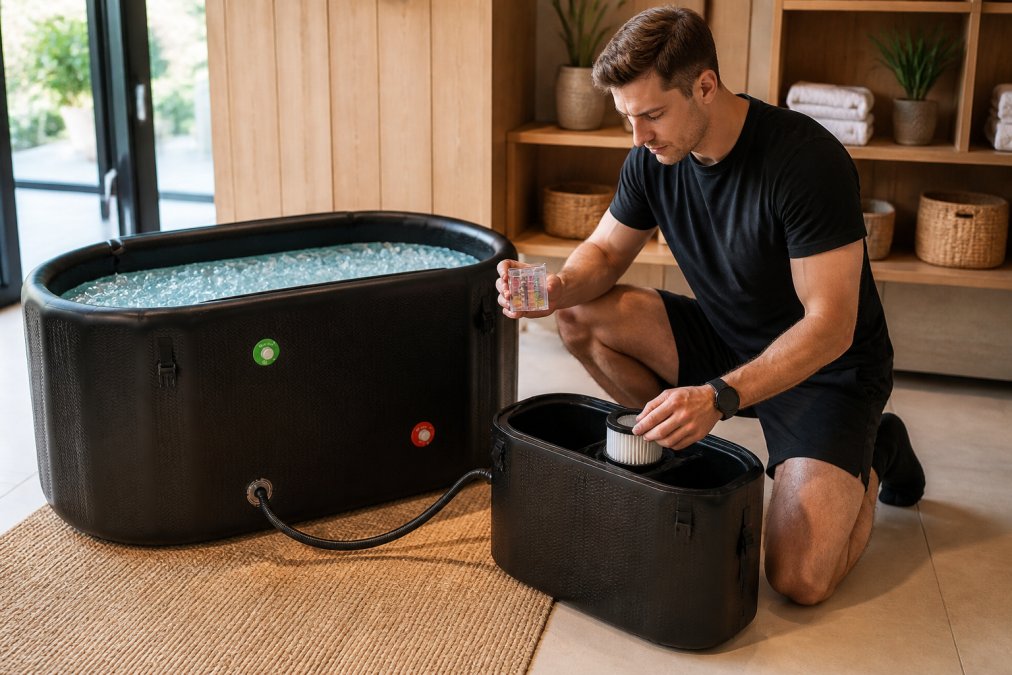
Water chemistry is the foundation of cold plunge durability. Temperature cycling creates an environment where bacteria and algae proliferate faster than in static water. A multi-stage filtration system removes particles, but chemical balance prevents microbial growth and material corrosion.
The water pH should remain between 7.2 and 7.8 (the CDC). Outside this range, corrosion accelerates on metal components like the chiller unit's internal passages. Alkalinity should stay between 80-120 ppm to buffer pH fluctuations. Chlorine or alternative sanitiser levels need checking 2-3 times weekly during heavy use.
Most cold plunge owners treat filtration as sufficient sanitisation. It isn't. A multi-stage filtration system removes visible debris and some microorganisms, but it doesn't prevent bacterial biofilm formation on internal surfaces. Chemical sanitisation runs alongside filtration, not instead of it.
The Water Chiller from Thermo Plunge Recovery Systems includes a built-in filter and timer system that automates some maintenance tasks. However, chemical monitoring still requires manual testing.

Ozone generators are becoming standard in professional-grade cold plunge systems because they oxidise contaminants without chlorine smell or skin irritation. UV sterilisation is another option that works alongside filtration.
Seasonal Care and Weather Protection
Seasonal transitions create durability risks that many owners overlook. Summer heat accelerates water evaporation and chemical degradation. Winter freeze-thaw cycles stress both inflatable and hard-shell construction.
Winter storage or weather protection is non-negotiable for year-round durability. A protective cover reduces UV exposure, prevents debris accumulation, and protects against temperature extremes. For inflatable cold plunge systems, bringing the tub indoors during winter months extends material life by 40-60% compared to outdoor exposure.
Hard-shell systems can remain outdoors year-round if properly insulated and covered. A cover is still recommended as a best practice to protect the material surface from constant UV exposure.
Chiller units require seasonal attention. Before winter storage, drain the system completely to prevent ice formation inside the chiller's internal passages. Frozen water expands and can crack metal components or seals. After winter, flush the system with clean water before reconnecting and restarting.
Spring maintenance should include a full water change and system flush. Debris accumulation over winter creates biofilm and reduces filtration efficiency.
Cold Plunge Chiller Lifespan and Energy Efficiency
The chiller unit is the most expensive component in any cold plunge system and often the first to fail under improper maintenance. A quality chiller unit like the 1/3 HP model from Thermo Plunge Recovery Systems can operate for 5-7 years with consistent maintenance. Lifespan depends on cycling frequency, water chemistry, and ambient temperature conditions.
Energy efficiency directly correlates with chiller longevity. A well-insulated cold plunge reduces the chiller's workload by maintaining water temperature longer between cooling cycles. This means fewer operational hours and extended component life.
Chiller units cycle water through refrigeration coils to remove heat. These coils are vulnerable to corrosion if water chemistry isn't maintained. Mineral deposits from hard water accumulate on coil surfaces, reducing heat transfer efficiency and forcing the compressor to work harder.
Professional maintenance of the chiller, cleaning internal passages and checking refrigerant levels, extends durability but adds to the cost of ownership. Many owners skip this step, not realising that preventive maintenance prevents costly compressor replacement.
The Ultimate Recovery & Wellness Bundle from Thermo Plunge Recovery Systems pairs the chiller with an XL tub and thermal insulation, optimising the entire system for energy efficiency.

Common Durability Issues and DIY Repair Solutions
Understanding common failure modes helps you identify problems before they become catastrophic. Most durability issues in cold plunge systems are preventable through proactive maintenance or addressable through basic repairs.
Seam leaks in inflatable cold plunge systems are the most common issue. Small punctures can be patched using vinyl repair kits designed for pool equipment. Larger damage requires professional repair or replacement.
Water leaks at connection points usually indicate failing seals or loose fittings. Tightening the connection or replacing the seal often resolves the issue without professional help. Keep replacement seals and O-rings on hand if you perform regular maintenance.
Reduced water flow through the filtration system indicates a clogged filter cartridge. Most filters require replacement every 2-4 weeks during heavy use. Regular filter changes prevent bacteria proliferation and chiller stress.
Discoloured water or algae growth suggests water chemistry imbalance. This is correctable through chemical adjustment and partial water changes. Catching this early prevents material staining and biofilm formation.
Chiller units that fail to reach target temperature often have mineral buildup on cooling coils. A professional descaling service removes deposits and restores efficiency.
Thermal insulation degradation, visible as reduced water temperature retention between cycles, indicates the insulation layer is compromised. Both inflatable and hard-shell systems require professional assessment and repair.
Building Long-Term Value Into Your Cold Plunge Investment
Cold plunge durability for daily use is ultimately about maximising return on investment. Initial construction quality determines the durability ceiling. Thermo Plunge Recovery Systems designs systems with reinforced thermal insulation, multi-stage filtration, and durable material construction specifically for daily use.
Warranty coverage indicates manufacturer confidence in durability. Read warranty terms carefully, they reveal what the manufacturer considers normal wear versus covered failure.
Repairability and parts availability affect long-term value. Systems with readily available replacement components cost less to maintain than those requiring proprietary parts. Inflatable designs win here because replacement tubs and patches are widely available.
Energy efficiency reduces operational costs and extends chiller lifespan. A well-insulated cold plunge system maintains temperature longer, reducing chiller cycling and energy consumption.
Building long-term value means viewing cold plunge durability not as a single purchase decision but as a five-to-seven-year commitment to consistent maintenance and proactive repair. The owners who experience the best durability outcomes treat their systems like professional equipment, not consumer goods.
Cold plunge durability for daily use requires understanding the trade-offs between construction types, committing to disciplined maintenance routines, and investing in quality components. The difference between a system that fails in two years and one that performs reliably for seven years often comes down to thermal insulation quality, chiller unit specifications, and whether you prioritise preventive maintenance over crisis repair.
Thermo Plunge Recovery Systems has engineered the Upgrade XL Ice Bath Tub and Water Chiller to withstand daily use through reinforced thermal insulation, multi-stage filtration integration, and durable material construction. The system includes a 30-day guarantee and 24/7 support to ensure you're equipped for long-term success. Shop the Ultimate Recovery & Wellness Bundle and experience the difference professional-grade construction makes in your daily recovery routine.
Frequently Asked Questions
How often should you perform maintenance on a daily-use cold plunge?
Daily-use cold plunges require weekly water chemistry checks and filter inspections, monthly deep cleaning of the tub and circulation lines, and quarterly chiller servicing. Most owners spend 30-45 minutes weekly on routine upkeep. The multi-stage filtration system in professional units like the Upgrade XL Ice Bath Tub helps reduce contaminant buildup, but consistent maintenance is essential to prevent algae growth, mineral deposits, and chiller strain that can shorten equipment lifespan significantly.
Is an inflatable or hard-sided tub better for long-term daily use?
Hard-sided tubs offer superior durability for daily use, with structural integrity that resists material degradation over multiple years. Inflatable models provide portability and affordability but typically show seam stress and thermal insulation breakdown after 18-24 months of consistent use. For athletes committing to daily cold therapy, hard-shell construction minimizes repair frequency and maintains consistent water retention, making it the better long-term investment despite higher upfront costs.
Does daily use significantly shorten the lifespan of a cold plunge chiller?
Daily operation does accelerate chiller wear compared to occasional use, but professional-grade units are engineered for continuous duty. A 1/3 HP chiller running daily typically maintains reliable performance for 5-7 years with proper maintenance. Energy efficiency matters: units that cycle efficiently rather than running continuously preserve compressor lifespan. Regular filter changes, coil cleaning, and monitoring refrigerant levels can extend chiller life well beyond minimum expectations, making preventative maintenance the key to maximising your investment.
What are the most common signs of wear and tear in home ice baths?
Watch for visible cracks or seam separation in inflatable models, discolouration or cloudiness in the water despite filtration, temperature inconsistency where the chiller struggles to reach target temps, and reduced structural rigidity when the tub feels soft or unstable. Leaks around plumbing connections and UV damage to exposed materials are also early warning signs. Addressing these issues promptly through repairs or part replacement prevents cascading damage that compromises the entire system's durability and your recovery experience.
This article was written using GrandRanker