

Essential Recovery Gear for Home Wellness Setups
Table of Contents
- Why Essential Recovery Gear Matters for Home Wellness
- Cold Therapy: Building Your Home Cold Plunge Setup
- Heat Therapy: Infrared Saunas and Sauna Blankets
- Red Light Therapy Devices for Home Recovery
- Home Recovery Room Equipment: Choosing What You Need
- Recovery Routines and Equipment Sequencing
- Safety, Maintenance, and Realistic Expectations
- Choosing Your Path Forward
- Frequently Asked Questions
Last Updated: October 20, 2026
Why Essential Recovery Gear Matters for Home Wellness
A home recovery setup transforms how you bounce back from training, manage stress, and support long-term wellness. The right tools address inflammation, muscle soreness, and circulation in complementary ways.
At Thermo Plunge Recovery Systems, we empower athletes and wellness enthusiasts to achieve peak performance and smarter recovery right at home.
This guide covers the essential recovery gear for home wellness setups that actually deliver results, from cold and heat therapy to red light devices, and how to sequence them into a working routine.
Cold Therapy: Building Your Home Cold Plunge Setup
Cold therapy reduces inflammation and accelerates muscle recovery when applied correctly. Effectiveness depends on water temperature, duration, and consistency, not just owning the equipment. A cold plunge at home removes the travel barrier, making regular use realistic.
Portable Ice Bath Options
For most home users, a portable ice bath tub offers the best balance of accessibility and cost. The Ice Bath Tub - Portable Cold Plunge for Recovery ($169.95) delivers multi-layered insulation while remaining foldable for storage, and its lightweight design suits indoor use, patios, or travel.

The Portable Bathtub - Foldable Adult Spa & Ice Bath ($118.95) serves double duty as hot spa and cold plunge.

For more capacity and shared sessions, the Upgrade XL Ice Bath Tub - Portable Cold Plunge for Athletes ($648.95) holds 160 gallons, pairs with water chillers for precise temperature control, and its insulated thermal lid reduces heat loss.
Water Chillers for Precision Temperature Control
Without a chiller, maintaining cold water requires frequent, expensive, inconsistent ice additions. The Water Chiller - 1/3 HP Ice Bath Cold Plunge ($999.95) cools water to 39°F, works with any tub, and its built-in filter and timer simplify maintenance and session tracking.

A chiller transforms a portable tub into a professional-grade recovery tool. If you're testing cold plunges for the first time, start with a portable tub and ice, then upgrade once the habit sticks.
Heat Therapy: Infrared Saunas and Sauna Blankets
Heat therapy promotes circulation, reduces muscle tension, and supports detoxification through sweating. Infrared saunas penetrate deeper into tissues than traditional steam, while sauna blankets offer portability and lower upfront cost. The choice depends on your space and budget.
Infrared Sauna Session Length for Beginners
Start with 15-20 minute sessions at lower temperatures, then gradually increase to 30-45 minutes as tolerance builds. Most people find 3-4 sessions weekly effective; excessive heat stress is counterproductive.
The Infrared Sauna - 2-Person Premium Home Spa ($3,999.95) is a significant investment but delivers permanent, premium recovery.
Portable Sauna Solutions for Smaller Spaces
Portable options deliver results without the footprint or installation of a permanent sauna.
The Infrared Sauna Blanket - Portable Home Spa Blanket ($226.95) heats from 104°F to 176°F with adjustable timers.
The Electric Sauna Blanket - Waterproof Portable Home Sauna ($461.95) offers waterproof construction, adjustable heat, a zipper design that contains heat, and foldable storage for apartments.
For a full-body steam experience, the Portable Sauna Tent - Home SPA Steam Sauna Box ($359.95) accommodates two people with 9 heat levels, a 3L steamer, and remote control. The Sauna Box - Portable Home Steam Sauna Tent ($215.95) offers similar functionality at a lower price point.
Ice Bath Tub – Portable Cold Plunge for Recovery →
Red Light Therapy Devices for Home Recovery
Red light therapy (photobiomodulation) uses red (around 630-660 nm) and near-infrared (around 810-850 nm) wavelengths to stimulate mitochondrial function and reduce inflammation. Photons are absorbed by cytochrome c oxidase in mitochondria, which can increase ATP production and modulate oxidative stress. Results build over weeks, not sessions, and the evidence is promising but mixed depending on the condition and device quality.
What the evidence supports (and what it doesn't)
Most practitioners find red light therapy useful for localized joint pain, muscle soreness, and skin healing. Treat red light as a supportive tool, not a replacement for sleep, nutrition, or active recovery.
Dosing and session guidance
The key variables are wavelength, power density, and treatment time. For home devices, a common pattern is 10-20 minutes per area, 3-5 times weekly, with the device within a few inches of the skin.
Device types and practical trade-offs
Pads and wraps are flexible and cover larger areas like the back, shoulder, or knee. Panels suit the face or a specific joint. Handheld devices are useful for targeted spots but require more session time.
The Red Light Therapy Pad - Full-Body Infrared Healing Wrap ($799.95) uses dual wavelengths (660nm and 850nm) to target deep tissues.
Safety and eye protection
Red and near-infrared light devices are low-risk for most people, but eye protection is recommended, especially for panels and pads used near the face. People with photosensitivity conditions or who take photosensitizing medications should consult a clinician, and light therapy should not be used over suspicious skin lesions.
Home Recovery Room Equipment: Choosing What You Need
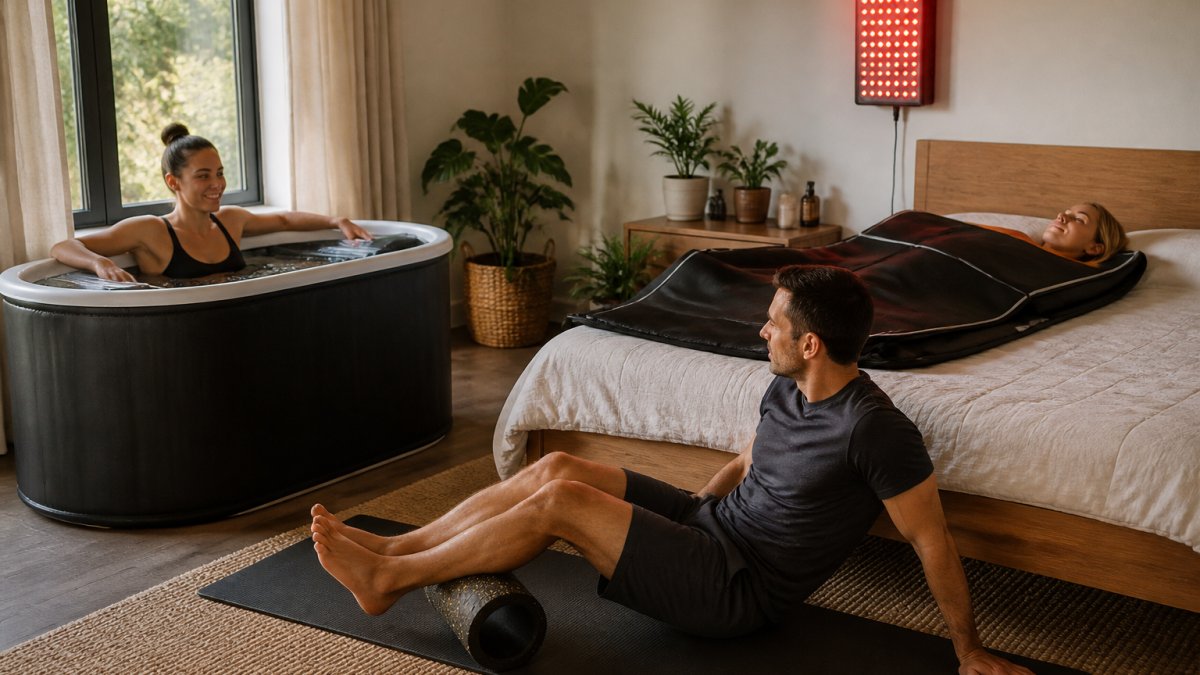
A functional recovery space doesn't require a dedicated room. A corner of a bedroom, garage, or living space works if you prioritise tools that match your actual recovery needs.
Budget-First Starter Kit
Start here if you're testing recovery as a habit. Total investment: roughly $400-$500.
- Portable Bathtub - Foldable Adult Spa & Ice Bath ($118.95): Cold and heat therapy in one compact tool
- Infrared Sauna Blanket - Portable Home Spa Blanket ($226.95): Infrared therapy without space demands
This combination addresses cold therapy and heat therapy, the essentials. Use it for 4-6 weeks, then upgrade selectively based on what you actually use.
Complete Recovery Setup
For serious athletes and wellness enthusiasts: roughly $2,000-$2,500.
- Upgrade XL Ice Bath Tub - Portable Cold Plunge for Athletes ($648.95): Larger capacity, chiller-compatible
- Water Chiller - 1/3 HP Ice Bath Cold Plunge ($999.95): Precision temperature control
- Portable Sauna Tent - Home SPA Steam Sauna Box ($359.95): Full-body heat therapy with shared sessions
- Red Light Therapy Pad - Full-Body Infrared Healing Wrap ($799.95): Targeted tissue recovery
This setup covers all major recovery modalities and requires a dedicated corner or room, making daily use feasible.
Professional-Grade System
For dedicated recovery spaces and multi-person use: $5,000+.
- Upgrade XL Ice Bath Tub - Portable Cold Plunge for Athletes ($648.95)
- Water Chiller - 1/3 HP Ice Bath Cold Plunge ($999.95)
- Infrared Sauna - 2-Person Premium Home Spa ($3,999.95): Permanent, high-end heat therapy
- Red Light Therapy Pad - Full-Body Infrared Healing Wrap ($799.95)
This system suits boutique gyms, sports performance centres, and households where recovery is the lifestyle cornerstone.
| Setup Level | Key Equipment | Investment Range | Best For |
|---|---|---|---|
| Budget Starter | Portable tub, sauna blanket | $400-$500 | Testing recovery habits |
| Complete | XL tub, chiller, sauna tent, red light pad | $2,000-$2,500 | Serious athletes, dedicated corner |
| Professional-Grade | Permanent sauna, chiller, large tub, red light | $5,000+ | Gyms, clinics, recovery-focused homes |
Recovery Routines and Equipment Sequencing
Effective recovery sequences temperature and modality strategically: cold therapy first, then heat.
A typical routine:
- Cold plunge (10-15 minutes): Reduce inflammation immediately post-workout
- Rest period (10-15 minutes): Allow core temperature to stabilise
- Heat therapy (20-30 minutes): Promote circulation and relaxation
- Red light therapy (15-20 minutes): Accelerate tissue repair
- Stretching or mobility work (10-15 minutes): Improve range of motion
This sequence takes roughly 90 minutes and most people use it 2-3 times weekly. Shorter versions work too, a 20-minute cold plunge alone still delivers benefits.
Ice Bath Tub – Portable Cold Plunge for Recovery →
Filter your chiller monthly, clean sauna tents after each use, and inspect portable tubs for wear.
Safety, Maintenance, and Realistic Expectations
Recovery gear is generally low-risk, but each modality has specific contraindications. The guidance below is practical, not medical advice, and anyone with a diagnosed condition, who is pregnant, or who takes prescription medication should clear cold, heat, compression, and light therapy with a clinician first.
Cold exposure: who should be cautious
Cold immersion temporarily raises blood pressure and heart rate. People with uncontrolled hypertension, cardiac arrhythmias, or a history of stroke should avoid cold plunges unless a clinician approves.
Start with 30-60 seconds and build gradually. If you feel numbness, confusion, or shivering that doesn't stop within a few minutes of exiting, end the session and warm up slowly.
Heat therapy: hydration, duration, and contraindications
Saunas and sauna blankets raise core temperature and cause fluid loss. Never sleep in a sauna blanket or use one while impaired by alcohol or sedatives.
Keep sessions to 15-20 minutes at lower temperatures when starting, and exit immediately if you feel dizzy, nauseated, or develop a headache.
Compression and percussive devices
Compression boots and sleeves are generally safe but should not be used by people with deep vein thrombosis, active infection, or severe peripheral artery disease without medical clearance. Percussive massage guns should be avoided over the spine, neck, fractures, varicose veins, or areas of active inflammation.
Red light therapy: eye protection and skin cautions
Red and near-infrared light devices are low-risk for most people, but eye protection is recommended, especially for panels and pads used near the face. People with photosensitivity conditions or who take photosensitizing medications should consult a clinician. Do not use light therapy over suspicious skin lesions without a dermatologist's assessment.
Maintenance that prevents premature failure
Portable tubs need draining, cleaning, and occasional disinfection. Chillers require filter checks monthly and replacement every 2-3 months. Sauna tents and blankets need ventilation and drying after each session. Plan 30-60 minutes monthly for upkeep, and inspect seams, zippers, and electrical cords for wear.
Realistic expectations
Recovery gear can reduce soreness and support relaxation, but it does not replace sleep, nutrition, or training consistency. Most people notice differences within 2-4 weeks of regular use: better sleep, reduced soreness, improved mood. Cold plunge and heat therapy have reasonable evidence for symptom relief, and red light therapy evidence is promising.
Choosing Your Path Forward
Building essential recovery gear for home wellness setups requires matching equipment to your goals, space, and budget. Start with what addresses your biggest recovery need, whether that's inflammation, stress, or mobility. Expand as your habits solidify.
Thermo Plunge Recovery Systems offers free shipping on all orders, a 30-day guarantee, and 24/7 support.
Frequently Asked Questions
What equipment do you need to start a basic home recovery setup?
Start with one or two pieces of essential recovery gear that match your primary need. A portable cold plunge or ice bath ($119-$649) addresses muscle soreness and inflammation. Alternatively, a sauna blanket ($227-$462) supports relaxation and circulation. Add a red light therapy pad ($800) if targeting specific muscle groups. Most people begin with cold or heat therapy, then layer in red light once they establish a routine. Your choice depends on your recovery goals, available space, and budget.
How long should a beginner stay in an infrared sauna session?
Beginners should start with 15-20 minute sessions at lower temperatures to allow your body to adapt. As you become comfortable, gradually increase to 30-45 minutes over several weeks. Listen to your body; if you feel lightheaded or uncomfortable, exit early. Most wellness experts suggest 3-4 sessions per week for consistent benefits. Always stay hydrated before, during, and after your session.
Is a home cold plunge setup worth the investment?
A home cold plunge setup is worthwhile if you use it consistently. Portable options start at $170 and deliver immediate benefits for muscle soreness and recovery. If you commit to 2-3 sessions weekly, the cost per use drops significantly over time. The convenience of at-home cold therapy eliminates travel time and removes barriers to regular use. However, realistic expectations matter: cold plunges work best as part of a broader recovery routine, not as a standalone solution.
Can red light therapy devices actually improve recovery at home?
Red light therapy devices can support recovery when used consistently. The dual wavelengths (660nm and 850nm) penetrate tissue to reduce inflammation and promote circulation. Results typically appear after 4-6 weeks of regular use. Red light therapy works best alongside other recovery methods like cold therapy, heat therapy, and proper sleep. It's particularly effective for targeted areas like shoulders, knees, and lower back. Combine it with movement and stretching for optimal outcomes.