

Combining Cold Plunge and Infrared Sauna for Recovery
Table of Contents
- Why Combining Cold Plunge and Infrared Sauna Works for Recovery
- Understanding Contrast Therapy Protocol for Maximum Results
- Sauna and Cold Plunge Timing: The Optimal Sequence
- Cold Plunge Duration for Recovery: Finding Your Sweet Spot
- Step-by-Step Protocol for Beginners and Advanced Users
- Post-Session Nutrition and Hydration for Enhanced Recovery
- Common Mistakes to Avoid When Using Contrast Therapy
- Setting Up Your Home Recovery Space
- Frequently Asked Questions
Last Updated: October 3, 2026
Why Combining Cold Plunge and Infrared Sauna Works for Recovery
Combining cold plunge and infrared sauna for recovery creates a powerful synergy your body can't achieve with either therapy alone. This contrast therapy approach, alternating between heat and cold, triggers multiple physiological responses that accelerate muscle repair, reduce inflammation, and enhance overall recovery.

The science is straightforward. When you expose your body to heat, blood vessels dilate and blood flow increases. When you shift to cold, vessels constrict and redirect circulation. This cycle of vasodilation and vasoconstriction acts like a pump for your circulatory system, flushing out metabolic waste and delivering fresh oxygen and nutrients to damaged muscle tissue.
Athletes and fitness enthusiasts have used contrast therapy for decades. What's changed is access. You no longer need a high-end sports facility to harness these benefits. With the right home setup, you can build a recovery protocol that rivals professional training centres.
Understanding Contrast Therapy Protocol for Maximum Results
Contrast therapy is the practice of alternating between heat and cold exposure to trigger adaptive stress responses that enhance recovery and performance. This isn't random temperature switching, it's a structured protocol designed to maximize vasodilation, vasoconstriction, and the cascade of cellular repairs that follow.
The protocol works because your body adapts to thermal stress. Each exposure triggers heat shock proteins and cold shock proteins, which repair damaged cells and reduce inflammation. Over time, repeated contrast sessions improve your cardiovascular resilience and recovery capacity.
The key is consistency and proper sequencing. Random hot-cold switches won't deliver the same results as a deliberate protocol. You need to understand the timing, duration, and temperature ranges that match your recovery goals.
How Vasodilation and Vasoconstriction Enhance Recovery
When you enter an infrared sauna, your core body temperature rises. Blood vessels dilate to increase blood flow to the skin, helping dissipate heat. This vasodilation floods muscles with oxygen and nutrient-rich blood. It's why your skin flushes and you feel the warmth penetrate.
The moment you transition to a cold plunge, the opposite happens. Vasoconstriction kicks in as your body conserves heat. Blood is redirected from the skin to your core and vital organs. This rapid shift creates a powerful circulatory stimulus.

Repeat this cycle, and something important occurs: improved endothelial function. Your blood vessels become more responsive and efficient at regulating blood flow. This enhanced cardiovascular adaptation translates to better oxygen delivery during training and faster nutrient transport to recovering muscles.
The Role of Heat Shock and Cold Shock Proteins
Heat shock proteins activate when your body temperature rises above its normal set point. These molecular chaperones repair misfolded proteins, reduce inflammation, and protect cells from damage. Cold exposure triggers cold shock proteins, which have similar protective and repair functions.
When you combine both therapies, you activate both protein systems in sequence. Your muscles get a double dose of cellular repair machinery. This is why contrast therapy often produces better recovery outcomes than heat or cold alone.
The adaptation happens at the mitochondrial level too. Your cells' energy factories become more efficient, improving your metabolic rate and endurance capacity over time.
Sauna and Cold Plunge Timing: The Optimal Sequence
The order matters. Always start with heat, then move to cold. This sequence prepares your cardiovascular system for the cold shock and maximizes the benefits of both therapies.
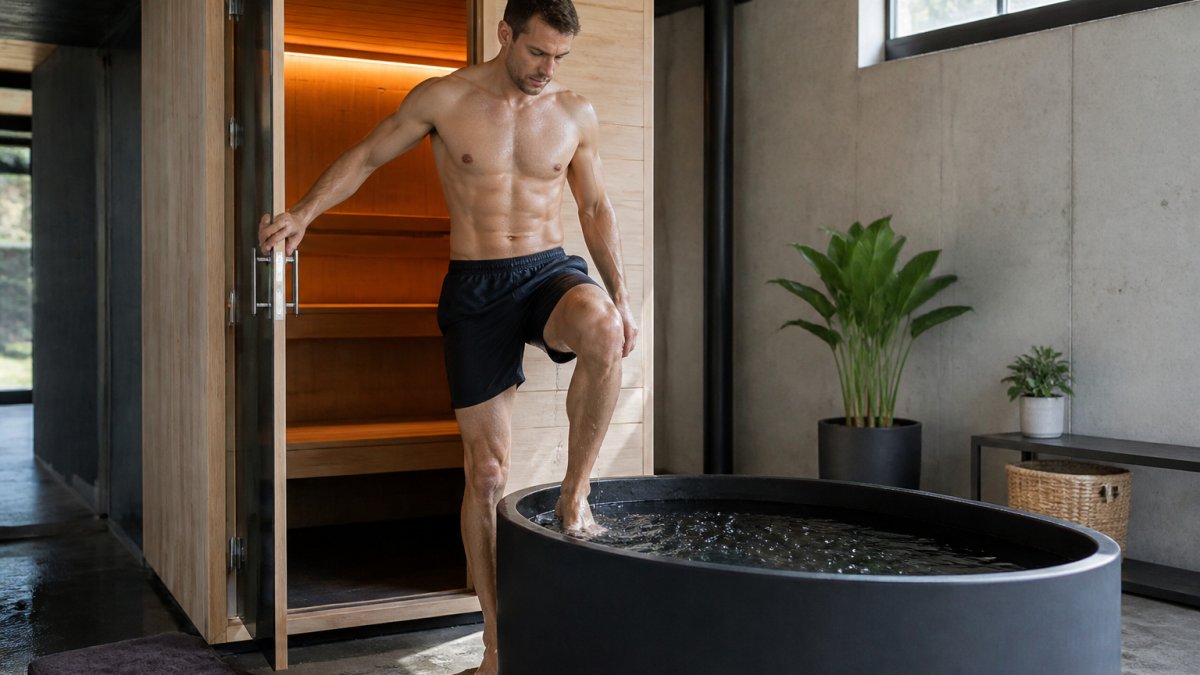
Begin in the infrared sauna for 15-20 minutes. Your core temperature rises, blood vessels dilate, and heat shock proteins activate. You'll feel relaxed and your muscles warm. This is the preparation phase.
Then transition to the cold plunge. The contrast triggers immediate vasoconstriction and activates cold shock proteins. Your nervous system experiences a controlled stress response that strengthens your stress resilience over time.

Wait 5-10 minutes between sessions if you're repeating the cycle. This recovery window allows your heart rate to stabilize and your body to process the thermal stress. Most people complete 2-3 cycles per session.
Timing matters for your circadian rhythm too. Contrast therapy in the morning boosts alertness and metabolic rate. Evening sessions promote relaxation and deeper sleep. Choose the timing that matches your recovery goals.
Cold Plunge Duration for Recovery: Finding Your Sweet Spot
The ideal cold plunge duration is 2-4 minutes for most people. This window is long enough to trigger vasodilation and activate cold shock proteins without excessive stress on your nervous system.
Beginners should start at 1-2 minutes. Your body needs time to adapt to cold exposure. Pushing too hard too fast can activate your sympathetic nervous system excessively, which defeats the recovery goal.
Advanced users can extend to 4-5 minutes if they've built cold tolerance over weeks. The key is gradual progression. Add 30 seconds every week or two until you reach your target duration.
Temperature matters as much as duration. Most recovery protocols use water between 50-59°F. This range triggers the parasympathetic response, relaxation and recovery, rather than pure survival mode. If your water is colder than 39°F, reduce your duration to 1-2 minutes.
Listen to your body. If you're shivering uncontrollably or feeling panicked, exit early. Effective cold exposure should feel challenging but manageable. Over time, your breathing steadies and your nervous system adapts.
Infrared Sauna – 2-Person Premium Home Spa →
Step-by-Step Protocol for Beginners and Advanced Users
Beginner Protocol: Starting Your Recovery Journey
Week 1-2: Foundation Building
Start with just the infrared sauna. Spend 15 minutes at a comfortable temperature. Your body needs to acclimate to heat therapy before adding cold contrast.
Once you're comfortable with sauna sessions, introduce the cold plunge. Begin with 30-60 seconds in 59°F water. This short exposure lets your nervous system adjust without overwhelming stress.
Complete one full cycle per session: 15 minutes sauna, rest 5 minutes, then 1 minute cold plunge.
Week 3-4: Building Tolerance
Extend sauna time to 20 minutes. Increase cold plunge duration to 2 minutes. Your body is now adapting to the thermal contrast.
Perform 2 cycles per session if you're recovering well. Rest 10 minutes between cycles. Pay attention to how you feel the next day, soreness should decrease noticeably.
Week 5+: Establishing Rhythm
Increase cold plunge time to 3 minutes. Maintain sauna time at 20 minutes. You can now handle 2-3 full cycles per session.
Use this protocol 2-3 times per week for optimal recovery without overtraining your nervous system.
Advanced Protocol: Maximizing Adaptation and Results
For experienced users, the contrast therapy protocol looks different.
Perform 3-4 cycles per session. Spend 20 minutes in the infrared sauna, followed by 3-4 minutes in cold water between 50-59°F. Rest 10 minutes between cycles.
Vary your sauna temperature slightly across cycles. Start at 140°F, increase to 160°F for the second cycle, then drop back to 140°F. This variation prevents adaptation plateau and keeps your body responding.
On heavy training days, prioritize contrast therapy. It accelerates lactic acid clearance and reduces delayed-onset muscle soreness (DOMS) more effectively than passive recovery alone.
Advanced users can also experiment with timing. Morning sessions boost metabolic rate and alertness. Evening sessions enhance sleep quality and parasympathetic activation.
Post-Session Nutrition and Hydration for Enhanced Recovery
Contrast therapy creates a recovery window. What you consume in the 30-60 minutes after your session significantly impacts how effectively your body repairs muscle tissue.
Drink water immediately after your session. Contrast therapy increases core body temperature and causes fluid loss through sweating. Rehydrate with plain water or electrolyte-enhanced water to restore hydration status.
Within 30 minutes, consume a meal or snack containing protein and carbohydrates. Protein provides amino acids for muscle repair. Carbohydrates replenish glycogen depleted during training. A simple chicken and rice meal, Greek yoghurt with fruit, or a protein smoothie all work well.
Avoid alcohol and excessive caffeine in the hours following contrast therapy. Both interfere with your parasympathetic nervous system's recovery response. Your body needs calm activation to maximize the benefits of your session.
Some athletes add collagen or amino acid supplements post-session. These provide direct building blocks for muscle repair. If you're already consuming adequate protein through whole foods, supplementation is optional.
Hydration continues beyond the first 30 minutes. Drink water throughout the rest of your day. Proper hydration supports cellular repair and metabolic function.
Common Mistakes to Avoid When Using Contrast Therapy
Starting too cold. Many people begin their first cold plunge at water temperatures below 50°F. This creates excessive sympathetic activation and can trigger panic responses.
Infrared Sauna – 2-Person Premium Home Spa →
Skipping the sauna warm-up. Jumping directly into cold water without prior heat exposure limits the vasodilation benefit and increases shock to your system. Always heat first.
Staying in cold water too long. Extended cold exposure (beyond 5 minutes) doesn't provide additional recovery benefits. It just increases stress on your nervous system. More time doesn't equal better results.
Neglecting hydration. Contrast therapy causes significant fluid loss. Dehydration reduces the effectiveness of your recovery session and can leave you fatigued. Drink water before, during, and after.
Performing contrast therapy on rest days only. Timing matters. Use contrast therapy within 2 hours of training when your muscles are primed for recovery.
Ignoring circadian rhythm. Evening contrast sessions can overstimulate your nervous system and disrupt sleep. Morning sessions align better with your natural cortisol rhythm and boost daytime alertness.
Not allowing adequate rest between cycles. Rushing through multiple cycles without recovery windows prevents your nervous system from processing the thermal stress. Rest 10 minutes between cycles minimum.
Setting Up Your Home Recovery Space
Creating a dedicated recovery space transforms contrast therapy from occasional gym visit to consistent daily practice.
The infrared sauna is the foundation. Our Infrared Sauna - 2-Person Premium Home Spa provides professional-grade heat therapy with low-EMF technology and therapeutic features like tourmaline foot warmers and chromotherapy lighting.
For the cold plunge, you have two options depending on your space and budget. The Ice Bath Tub - Portable Cold Plunge for Recovery is compact, foldable, and affordable. If you want a larger capacity, the Upgrade XL Ice Bath Tub - Portable Cold Plunge for Athletes provides 160 gallons of water and works with a chiller system.
Temperature control is essential. The Water Chiller - 1/3 HP Ice Bath Cold Plunge maintains precise water temperature down to 39°F and works with any tub.
Position your sauna and cold plunge with 5-10 feet of space between them. This allows you to cool down slightly between transitions and prevents accidental splashing.
Install a timer or clock where you can see it during sessions. Tracking duration helps you progress safely and consistently.
Add towels and a robe within arm's reach. After exiting the cold plunge, you'll want to dry off and warm up gradually.
Consider flooring. Both sauna and cold plunge sessions involve water and moisture. Sealed concrete, tile, or waterproof vinyl flooring works better than carpet.
Lighting matters for your evening sessions. Soft, warm lighting promotes relaxation and supports your circadian rhythm. Harsh overhead lights can trigger alertness when you're trying to wind down.
Contrast therapy delivers measurable recovery benefits when you follow a structured protocol.
Building a home recovery space gives you consistency. You're more likely to complete contrast therapy sessions when your equipment is steps away.
Frequently Asked Questions
Should I take a cold plunge before or after an infrared sauna?
Start with the infrared sauna first, then move to the cold plunge. The sauna increases core body temperature and promotes vasodilation, preparing your cardiovascular system for the cold shock. This sequence maximises blood flow stimulation and enhances the contrast therapy effect. Reversing the order reduces the benefits and may strain your system unnecessarily.
What is the recommended cold plunge duration for recovery?
Beginners should aim for 1-2 minutes in water temperatures between 50-59°F. Advanced users can work up to 3-5 minutes at 39-50°F. Duration depends on your cold tolerance and recovery goals. Start conservatively and increase gradually over weeks. Never exceed 5 minutes.
How many rounds of sauna and cold plunge should I do in one session?
Most effective protocols involve 2-3 rounds of alternating heat and cold. Each round includes 15-20 minutes in the infrared sauna followed by 1-3 minutes in the cold plunge. After your final cold plunge, rest for 10-15 minutes. Focus on consistency and proper technique rather than volume.
What should I eat and drink after a contrast therapy session?
Rehydrate immediately with electrolyte-rich fluids or water. Within 30-60 minutes, consume protein and carbohydrates to support muscle repair and glycogen replenishment. A protein shake, chicken with rice, or Greek yoghurt with berries work well. This post-session nutrition window maximises the recovery benefits of your contrast therapy protocol and supports cellular repair processes.