

Home Cold Plunge and Sauna: 2026 Buyer's Guide
Table of Contents
- Why Athletes Are Building Cold Plunge and Sauna Setups at Home
- The Contrast Therapy Benefits That Justify the Investment
- Cold Plunge and Sauna Options Compared: Bundles, Tubs, and Saunas
- How Long to Stay in a Cold Plunge (and Sauna)
- How to Recover Faster from Workouts with a Home Setup
- Infrastructure, Space, and Long-Term Operating Costs
- Conclusion
- Frequently Asked Questions
Last Updated: September 30, 2026
Why Athletes Are Building Cold Plunge and Sauna Setups at Home
Home cold plunge and sauna setups have moved from professional locker rooms into garages, basements, and spare bedrooms. At Thermo Plunge Recovery Systems, we've watched athletes choose recovery on their own schedule over a 25-minute drive to a facility.
The Contrast Therapy Benefits That Justify the Investment
Contrast therapy benefits come from alternating heat and cold, which drives blood flow in two directions. Heat opens blood vessels (vasodilation); cold narrows them (vasoconstriction). Cycling between the two creates a pumping effect that moves fluid through tired tissue.
How Heat and Cold Work Together for Recovery
The sauna raises your core temperature and produces a deep sweat; the cold plunge then forces a sharp vasoconstriction response. Many athletes find this sequence reduces lingering soreness after heavy training days.
Cold Plunge and Sauna Options Compared: Bundles, Tubs, and Saunas
The right setup depends on your space and how much of the routine you want covered. Three paths make sense for most homes: an all-in-one bundle, a standalone tub, or a sauna on its own.
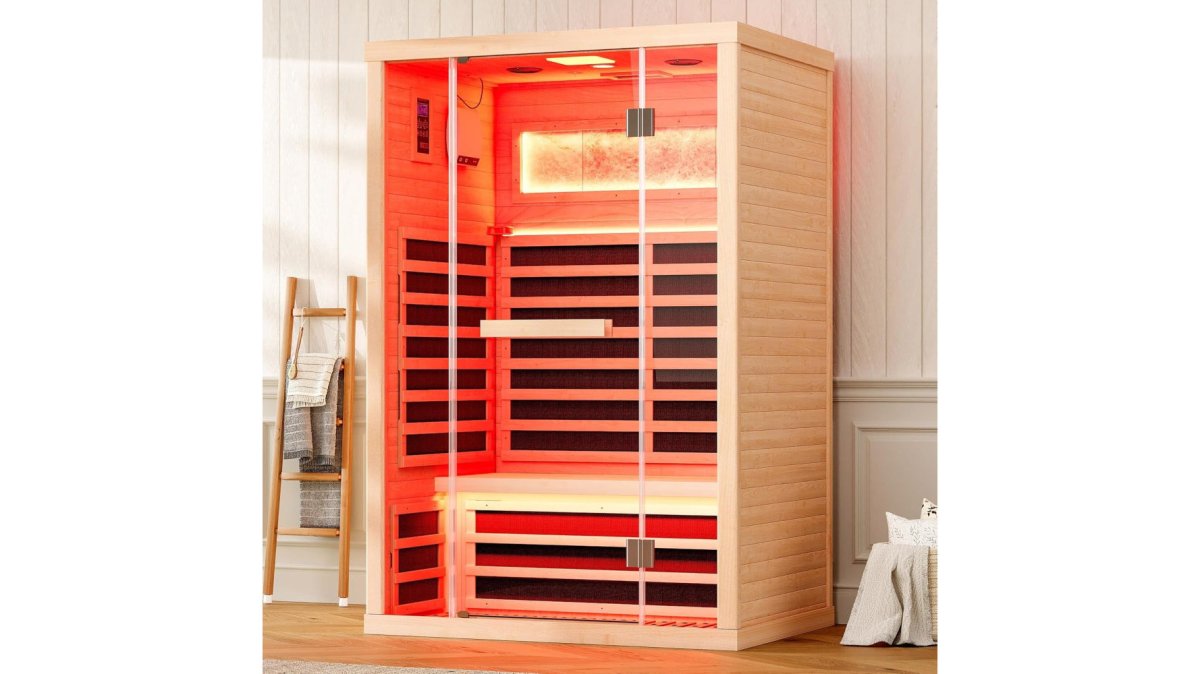
Quick Comparison: Specs and Pricing
| Product | What's Included | Best For | Price |
|---|---|---|---|
| Premium Recovery and Wellness Bundle | Sauna, XL tub, chiller, red light pad | Complete home setup | $5,799.95 |
| Ultimate Recovery & Wellness Bundle | XL tub, chiller, red light pad | Adding cold to an existing sauna | $2,199.95 |
| Infrared Sauna (2-Person) | Hemlock sauna, foot warmers, chromotherapy | Heat therapy only | $3,999.95 |
| Upgrade XL Ice Bath Tub | 160-gal tub, thermal lid, chiller-compatible | Serious athletes, shared use | $648.95 |
| Portable Ice Bath Tub | Foldable multi-layer tub | Renters, travel, tight spaces | $169.95 |
How Long to Stay in a Cold Plunge (and Sauna)
How long to stay in a cold plunge depends on water temperature, experience, and your goal. Most practitioners find a workable range is 2 to 5 minutes at 50-59°F for cold immersion, and 15 to 20 minutes per sauna round at 150-180°F (infrared cabins often run cooler, around 120-140°F, since the heat is radiant rather than ambient).

Cold Plunge Duration by Water Temperature
Colder water means shorter sessions. A rough framework:
| Water Temp | Beginner | Intermediate | Advanced |
|---|---|---|---|
| 60-68°F | 3-5 min | 5-8 min | 8-10 min |
| 50-59°F | 1-2 min | 3-5 min | 5-8 min |
| 45-49°F | 30-60 sec | 1-3 min | 3-5 min |
| Below 45°F | Not recommended | 30-90 sec | 1-3 min |
A 1/3 HP chiller typically holds a 160-gallon tub in the 45-55°F range depending on ambient temperature and insulation. That repeatability lets you progress, you can't build tolerance if the water temperature swings every session.
Sauna Duration and Rounds
Cap sauna sessions at roughly 15 to 20 minutes per round. First-timers should start at 10 minutes and add 2 to 3 minutes per session over the first two weeks. Hydrate before, during, and after, a 15-minute session can produce 16 to 32 ounces of sweat loss.
Contrast Therapy Protocol
A common pattern is three to four rounds of roughly 15 minutes hot followed by 2 to 3 minutes cold, totalling around 60 to 75 minutes including transitions. If you're short on time, two rounds still deliver most of the circulatory benefit.
Premium Recovery and Wellness Bundle →
When to Stop Immediately
- Dizziness, lightheadedness, or visual disturbances
- Numbness in fingers, toes, or lips that doesn't resolve within a minute of exiting
- Shortness of breath or chest tightness
- Shivering you can't control, this is a sign of core temperature dropping too far
- Any tingling or pain in extremities that persists
Never combine cold immersion with alcohol. Alcohol impairs thermoregulation and dulls the warning signs your body uses to tell you to get out.
Contraindications Beyond "Ask Your Doctor"
Most guides stop at "consult a physician." Here's the detail that matters:
Cold plunge, avoid or get explicit clearance if you have:
- Raynaud's phenomenon or any cold-agglutinin disorder
- Uncontrolled hypertension or a history of cardiac arrhythmia
- A pacemaker or implanted cardiac device (cold shock can alter rhythm)
- Open wounds, recent surgery, or active infection
- Pregnancy, cold immersion can trigger uterine contractions
Sauna, avoid or get explicit clearance if you have:
- Unstable angina or recent heart attack (within 6 months)
- Severe aortic stenosis or other structural heart disease
- Multiple sclerosis or conditions where heat worsens symptoms
- Pregnancy, core temperature elevation is a known risk in the first trimester
- Medications that impair sweating (anticholinergics, some antidepressants, diuretics)
Both, use caution if you have:
- Diabetes with peripheral neuropathy (reduced sensation means you may not feel tissue damage)
- Beta-blockers or other blood pressure medications (blunted heart-rate response)
- A history of fainting or vasovagal syncope
How to Recover Faster from Workouts with a Home Setup
Learning how to recover faster from workouts comes down to timing and sequence: heat first, cold second, then rest.
A simple weekly structure:
- Train as normal, then refuel with protein and fluids
- Sauna for 15 to 20 minutes to promote blood flow
- Cold plunge for 2 to 5 minutes to drive vasoconstriction
- Repeat the heat-cold cycle 2 to 3 times if you have time
- Finish cold, then hydrate and sleep well
Infrastructure, Space, and Long-Term Operating Costs
The part most buying guides gloss over is infrastructure. Before you order anything, check three things: power, drainage, and floor space. Get these wrong and the equipment sits unused.
Electrical Requirements: What Your Home Actually Needs
Sauna circuits. A 2-person infrared sauna drawing 1,750-2,000 watts on 110V pulls roughly 16-18 amps. The National Electrical Code (NEC) requires a dedicated 20-amp circuit for a load this size, you cannot share it with a garage freezer or basement dehumidifier without tripping the breaker. If your panel is full or the run exceeds 50 feet, an electrician may need to pull a new circuit.
Plumbing and Drainage
A 160-gallon tub holds roughly 1,335 pounds of water. You need a way to drain and refill it, plus a plan for splashing.
Premium Recovery and Wellness Bundle →
- Floor drain, ideal, but installing one in a finished basement means breaking concrete. Budget accordingly.
- Submersible pump, a 1/4 HP pump moves 1,500-2,000 gallons per hour, so a 160-gallon tub empties in 5-7 minutes. Route the hose to a utility sink, floor drain, or outside.
- Refill, a standard garden hose delivers 8-12 gallons per minute, so a full refill takes 13-20 minutes.
- Splash management, a rubber mat or containment tray under the tub protects flooring. Water + finished basement = expensive repair.
Space and Dimensions
A 2-person infrared sauna footprint is roughly 47 by 34 inches, but you need 6-12 inches of clearance on the door side and ventilation space behind. A 160-gallon tub plus chiller needs a similar footprint again, plan for roughly 4 by 6 feet for the cold side alone. Measure twice, and remember you need room to step in and out safely.
Long-Term Operating Costs: The Numbers Most Guides Skip
This is where the real cost lives. Here's a realistic monthly breakdown for a typical setup used 3-4 times per week:
| Item | Monthly Cost | Notes |
|---|---|---|
| Chiller electricity | $15-$30 | Runs continuously; higher in warm climates or uninsulated garages |
| Sauna electricity | $10-$25 | 1,750-2,000W for ~15 min per session |
| Water filtration/sanitizer | $10-$20 | Ozone or UV consumables, plus test strips |
| Water replacement | $5-$15 | Full change every 4-6 weeks depending on use |
| Total | $40-$90 | Varies with climate, insulation, and usage |
Maintenance and Water Filtration
A cold plunge needs filtration and sanitation to stay clean. Ozone sanitation and UV sterilization are the two common approaches, and both cut how often you change the water. Expect to test and treat the water weekly, do a fuller clean monthly, and replace filter cartridges every 2-3 months depending on use.
Conclusion
Building a home cold plunge and sauna setup is a real investment in time, space, and infrastructure, not just a purchase. Get the power, drainage, and maintenance plan right, and the routine becomes effortless. Skip them, and the equipment becomes an expensive shelf.
Frequently Asked Questions
Can I do both sauna and cold plunge in the same session?
Yes, and doing them back-to-back is the core of contrast therapy. A common approach is 10 to 15 minutes in the sauna, followed by 2 to 3 minutes in a cold plunge, repeated for 2 to 3 rounds. The heat opens blood vessels while the cold constricts them, which supports circulation and can ease muscle soreness. Start with one round and build up as your tolerance improves.
How long should I stay in a cold plunge?
Most people aim for 2 to 5 minutes per session at temperatures between 50 and 59 degrees Fahrenheit. Beginners should start with 30 to 60 seconds and add time gradually. The goal is not to endure the longest possible plunge; it is consistent exposure that supports recovery. If you shiver uncontrollably or feel numb, get out. A chiller unit helps maintain steady temperatures so every session is predictable.
Is a home cold plunge and sauna setup effective for muscle recovery?
Cold water immersion narrows blood vessels, which can reduce inflammation and swelling after intense training. Heat therapy from a sauna increases blood flow and helps relax tight muscles. Used together in a contrast routine, they support circulatory health and can help you recover faster from workouts. Consistency matters more than intensity, so a setup you can use daily at home tends to deliver better results than occasional spa visits.
How much space do I need for a home sauna and cold plunge?
A 2-person infrared sauna typically needs a footprint around 47 inches by 34 inches and stands about 71 inches tall. A portable cold plunge tub can fit in a similar area, and foldable models collapse for storage. If space is tight, a sauna blanket paired with a compact tub works well. Measure your intended room and leave at least 2 feet of clearance around each unit for safe entry and airflow.
What are the safety considerations for home contrast therapy?
Check with your doctor before starting if you have heart conditions, high blood pressure, or circulation problems. Avoid alcohol before either therapy, stay hydrated, and never use a sauna alone without a way to call for help. Keep sauna sessions under 20 minutes and cold plunges under 5 minutes. If you feel dizzy, lightheaded, or short of breath, stop immediately and cool down or warm up gradually.