

How to Return Home Recovery Equipment: Step-by-Step
Table of Contents
- Why You Might Need to Return Home Recovery Equipment
- Understanding Your Home Recovery Equipment Return Policy
- Step 1: Initiate Your Return and Get Return Authorization
- Step 2: How to Pack Recovery Gear for Shipping
- Step 3: Sanitisation and Documentation Before Shipment
- Step 4: Ship Your Equipment and Track Your Return
- How to Recover Faster From Workouts While Awaiting Your Refund
- Common Mistakes to Avoid When Returning Recovery Equipment
Last Updated: August 25, 2026
Why You Might Need to Return Home Recovery Equipment
Purchasing professional-grade recovery equipment is a significant investment. Whether you've invested in an ice bath, infrared sauna, or compression therapy system, circumstances change. Athletic goals shift, living situations evolve, or the equipment simply doesn't integrate into your routine as anticipated.

The decision to return home recovery equipment isn't a failure, it's a practical adjustment. Understanding your return options removes anxiety from this decision. At Thermo Plunge Recovery Systems, we've designed our return process to be straightforward and customer-focused, recognising that your satisfaction matters more than keeping equipment that doesn't serve your goals.
Understanding Your Home Recovery Equipment Return Policy
Before initiating a return, understand exactly what your warranty or guarantee covers. Most reputable recovery equipment providers offer protection periods during which returns are permitted under specific conditions.
What the 30-Day Guarantee Covers
A 30-day guarantee protects you against equipment that fails to meet your expectations immediately after purchase. This window gives you time to integrate the recovery tool into your routine, test its effectiveness, and determine whether it aligns with your recovery protocols.
The guarantee usually covers equipment that arrives in good condition but simply isn't the right fit for your needs. If you've used an ice bath for two weeks and realised that cold therapy doesn't suit your post-workout recovery strategy, the 30-day window allows you to return it without penalty.
Most guarantees do not cover damage resulting from misuse, improper installation, or neglect. They typically exclude equipment showing signs of heavy use beyond normal testing. Understanding these boundaries helps you approach your trial period thoughtfully while maintaining the equipment as though it's still the seller's property.
Return Eligibility and Conditions
Return eligibility hinges on several factors. The equipment must be in resaleable condition, showing minimal signs of use. Excessive wear, damage, or missing components typically disqualify a return.
Documentation matters significantly. Retain your proof of purchase, original packaging, and any included accessories throughout your trial period. Most providers require that you initiate the return within 30 days of delivery.
Certain items may be non-returnable due to hygiene considerations. Equipment designed for direct skin contact, such as sauna blankets or compression therapy wraps, often cannot be returned once opened. Always verify this before purchasing items intended for direct contact with your body.
Step 1: Initiate Your Return and Get Return Authorization
Starting the return process correctly sets the tone for everything that follows. Contact the provider's customer support team to formally request a return.
Prepare your proof of purchase before reaching out: your order number, invoice, receipt, or account confirmation. When you contact support, clearly state that you wish to return your equipment within the guarantee period.
The provider will verify your eligibility by checking your purchase date and confirming that your request falls within the return window. If you qualify, they'll issue a return authorisation number. This number tracks your specific return through their system and prevents your package from being misrouted.
Request written confirmation of your return authorisation, including the authorisation number, shipping address, packing instructions, and expected refund timeline. Keep this confirmation until your refund has been processed. Ask about prepaid shipping labels, many providers include these, eliminating shipping costs from your pocket.
Step 2: How to Pack Recovery Gear for Shipping
Proper packing protects the equipment during transit and demonstrates that you've treated it with care. Poor packing can result in damage that makes the equipment non-returnable.
Packing Ice Baths and Large Equipment
Ensure the equipment is completely dry before packing. If your ice bath contains residual water, drain it thoroughly and allow it to air dry for several hours.
Gather protective materials: bubble wrap, foam sheets, packing paper, and sturdy cardboard boxes. Wrap the ice bath in bubble wrap, paying special attention to the thermal lid and temperature control components. If your system includes a water chiller, wrap it separately with additional padding.
Use foam sheets to create a cushioning layer inside the box. Place 3-4 inches of foam on the bottom, position the wrapped ice bath in the centre, and surround it with additional foam on all sides. Fill any gaps with packing paper to prevent shifting during transport.
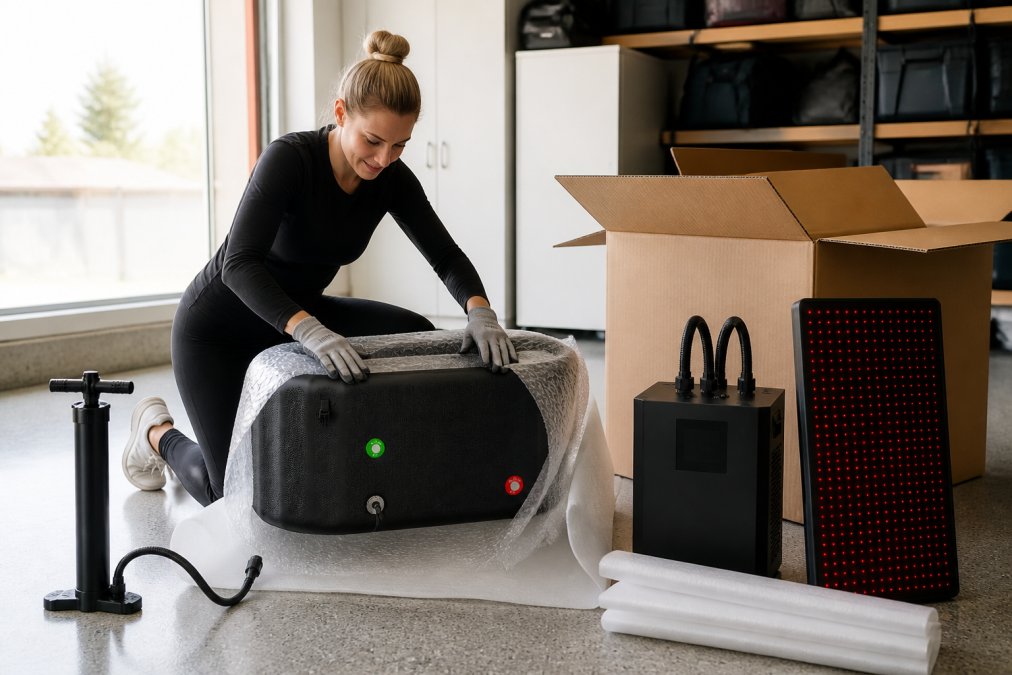
Seal the box securely with heavy-duty packing tape, reinforcing all seams. Apply the prepaid shipping label clearly to the top of the box.
Preparing Smaller Recovery Tools
Smaller items like massage guns, red light therapy pads, or compression devices require less elaborate packing but shouldn't be overlooked. Place each item in its original packaging if available. If original packaging is unavailable, wrap each tool individually in bubble wrap.
Group smaller items together in a single medium-sized box rather than shipping multiple small packages. Use packing paper or foam peanuts to fill gaps and prevent items from shifting. Ensure that any batteries or power cords are included and secured within the package.
Step 3: Sanitisation and Documentation Before Shipment
Before your package leaves your home, take steps to demonstrate that you've maintained the equipment to a reasonable standard. This documentation protects your refund eligibility.
Clean all surfaces of the equipment with appropriate disinfectant wipes or a microfibre cloth slightly dampened with a mild cleaning solution. For electronic components, use a dry cloth to avoid moisture damage.
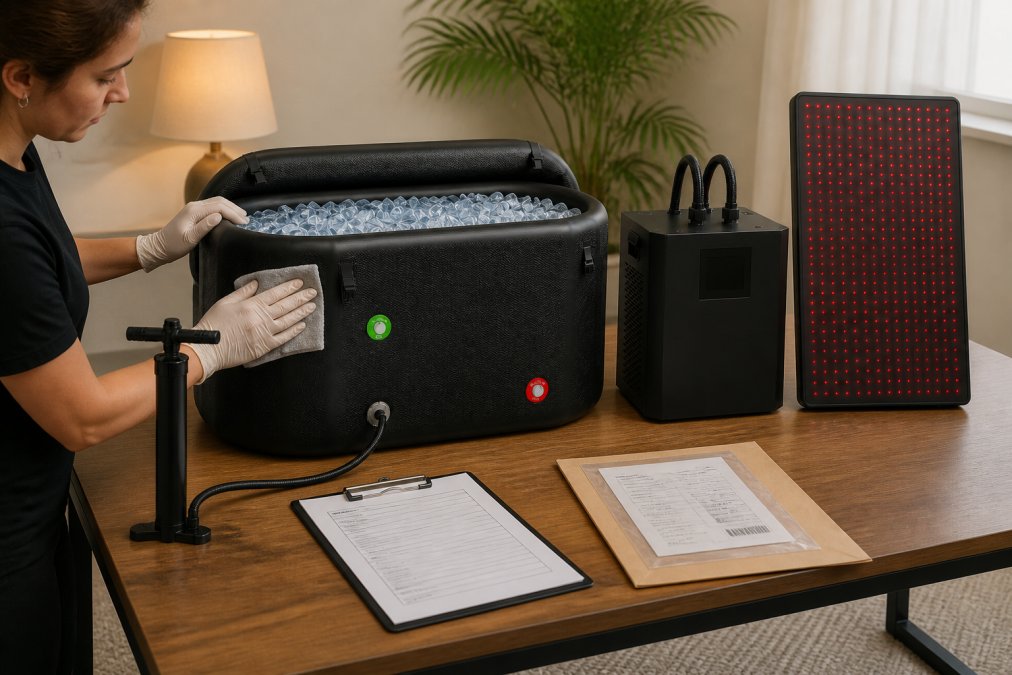
Document your return with photographs. Take clear images of the equipment before packing, showing its condition from multiple angles. These images create a record that protects you if any dispute arises about the equipment's state upon arrival.
Prepare a packing slip to include inside the box with your return authorisation number, name, order number, and a brief note explaining why you're returning the equipment. Include a copy of your return authorisation confirmation and a checklist of everything you're returning, including all accessories and cables.
Step 4: Ship Your Equipment and Track Your Return
With your package prepared and documented, you're ready to ship. Use the prepaid label provided by the provider. Obtain a receipt that includes the tracking number and retain it until your refund has been fully processed.
Track your shipment regularly using the carrier's online system. Once the package arrives at the provider's facility, you'll typically receive a confirmation email acknowledging receipt of your return and providing an estimated timeline for inspection and refund processing. Refunds typically take 5-10 business days after the provider receives and inspects the equipment (the FTC).
Monitor your bank account for the refund. If 10 business days pass without a refund appearing, contact the provider's customer support to inquire about the status.
How to Recover Faster From Workouts While Awaiting Your Refund
The period between initiating your return and receiving your refund doesn't mean you're without recovery options. Many athletes transition to alternative recovery strategies during this waiting period.
Cold water immersion doesn't require expensive equipment. A standard bathtub filled with cold water and ice provides similar physiological benefits to a dedicated ice bath, though less conveniently.
Contrast therapy, alternating between hot and cold exposure, can be achieved using your shower (peer-reviewed research). Start with three minutes of hot water, transition to 30 seconds of cold water, and repeat this cycle 3-5 times.
Foam rolling using a standard foam roller addresses myofascial release needs effectively. Target major muscle groups for 60-90 seconds each, focusing on areas of greatest tension.
Active recovery, light movement like walking, swimming, or gentle yoga, remains one of the most effective recovery strategies regardless of equipment availability. Dedicating 20-30 minutes daily to low-intensity movement often produces better results than passive recovery methods.
Sleep optimisation deserves emphasis during this transition period. Prioritising 7-9 hours of quality sleep accelerates muscle repair and reduces inflammation more effectively than most active recovery methods (the NIH).
Nutrition becomes particularly important when your equipment-based recovery options are limited. Ensure adequate protein intake to support muscle repair, and include anti-inflammatory foods like fatty fish, berries, and leafy greens in your diet.
Common Mistakes to Avoid When Returning Recovery Equipment
Understanding what not to do prevents complications that could jeopardise your refund.
Waiting until the last day of your return window creates unnecessary risk. If you decide to return equipment, initiate the process immediately. Unexpected delays could push your return past the deadline if you wait until day 29 of a 30-day window.
Discarding original packaging before you're certain you're keeping the equipment is a costly mistake. Original boxes are specifically designed to protect equipment during shipping and demonstrate careful maintenance to the provider.
Ignoring the provider's packing instructions creates unnecessary risk. If specific instructions are provided, follow them exactly.
Failing to document the equipment's condition before packing removes your protection if the provider claims damage occurred during your ownership rather than in transit. Photographs taken before packing establish the baseline condition and protect your refund eligibility.
Shipping without tracking and insurance leaves you vulnerable if the package is lost or damaged in transit. Always choose a shipping method that provides proof of delivery.
Assuming your refund will be automatic is a mistake. Monitor your account actively and follow up if the refund doesn't appear within the stated timeframe.
Returning equipment that shows signs of heavy use or damage beyond normal testing typically results in a denied return or reduced refund. Treat the equipment as if it still belongs to the provider throughout your trial period.
Returning home recovery equipment doesn't have to be stressful when you understand the process and follow each step carefully. Thermo Plunge Recovery Systems makes this experience straightforward with clear return authorisation procedures, free shipping, and responsive customer support available 24/7. Our 30-day guarantee protects your investment while giving you adequate time to determine whether our equipment integrates into your recovery routine. If you decide that a Thermo Plunge system isn't the right fit, we've designed our return process to be hassle-free. Ready to experience professional-grade recovery equipment with confidence? Shop the Ultimate Recovery & Wellness Bundle or explore our full collection of ice baths, saunas, and red light therapy tools today.

Frequently Asked Questions
What is the standard return policy for home recovery equipment?
Thermo Plunge Recovery Systems offers a 30-day guarantee on all equipment. If you're not satisfied, you can initiate a return within 30 days of purchase by contacting 24/7 support. The process includes obtaining a return authorisation number, packing the equipment securely, and shipping it back. Refunds are processed after the equipment arrives and is inspected for damage or excessive wear. Check your original receipt for the exact purchase date to confirm eligibility.
Do I need the original packaging to return recovery gear?
Original packaging is ideal but not always required. If you still have it, use it for maximum protection during return shipping. If not, use sturdy cardboard boxes with at least 3 inches of protective padding on all sides. For large equipment like ice baths or saunas, wrap each component separately in bubble wrap. Include all accessories and documentation. Proper packing protects your refund, damaged equipment during return shipment may affect your refund amount.
How do I pack heavy recovery equipment like ice baths or saunas for return?
For ice baths: drain completely, allow to dry, and wrap in plastic sheeting to prevent moisture damage. Use a sturdy box with reinforced bottom and at least 4 inches of foam or packing peanuts. For saunas: disconnect all electrical components, wrap the unit in moving blankets, and secure with tape. Place in a reinforced box with padding on all sides. Include the thermal lid and any removable parts in separate compartments. Label the box clearly with your return authorisation number and track the shipment.
Who pays for return shipping on home recovery systems?
Return shipping costs depend on your specific situation and the reason for return. Contact Thermo Plunge Recovery Systems' 24/7 support team with your return authorisation number to confirm shipping responsibility. In many cases, return shipping is covered for defective equipment or if the item doesn't meet your needs within the 30-day guarantee period. Always obtain confirmation in writing before shipping to avoid unexpected costs.
This article was written using GrandRanker