

Infrared Saunas for Sleep: Science-Backed Benefits
Table of Contents
- How Infrared Saunas Affect Core Body Temperature and Sleep Onset
- The Cooling Effect: Why Temperature Drop Triggers Better Sleep
- Infrared Sauna Session Duration and Sleep Impact
- Best Time of Day for Infrared Sauna Use
- Stress Reduction, Cortisol, and Sleep Architecture
- Safety Precautions for Infrared Sauna Use
- Building Your Infrared Sauna Protocol for Better Sleep
Last Updated: August 12, 2026
How Infrared Saunas Affect Core Body Temperature and Sleep Onset
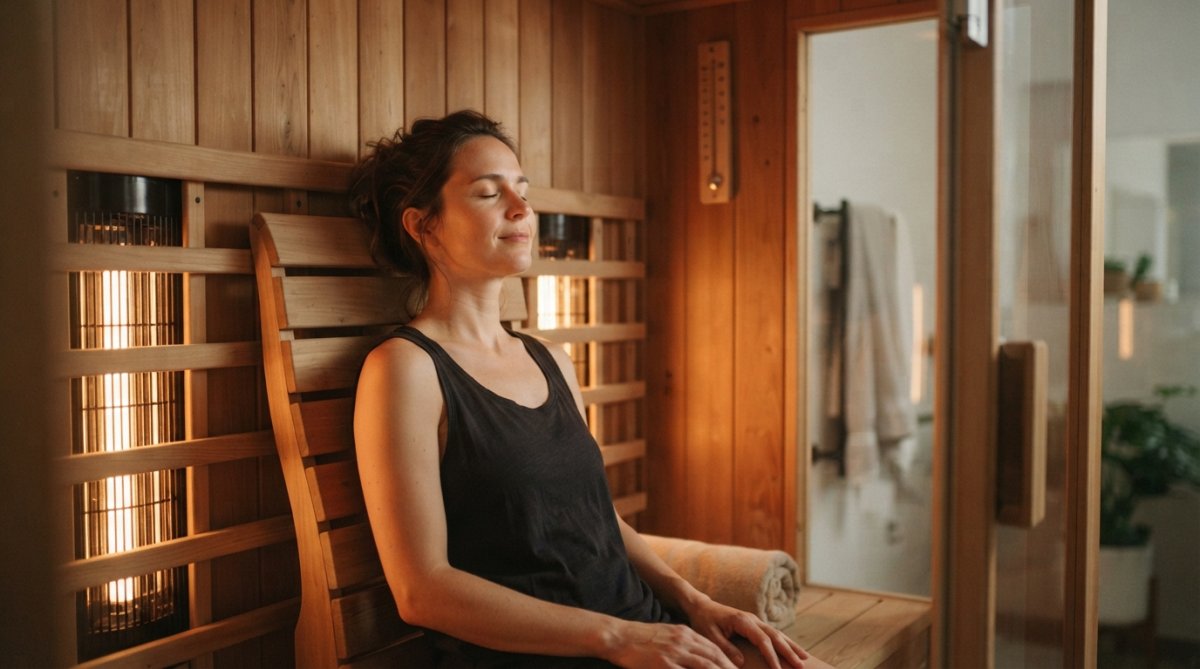
Infrared saunas raise your core body temperature through radiant heat that penetrates deep into tissue, triggering thermoregulatory responses that improve sleep quality. When you exit the sauna, your body temperature drops significantly, and that cooling effect drives better sleep. Your body naturally wants to cool down after heat exposure, and this cooling process mimics the natural temperature drop that occurs before sleep, signalling your circadian rhythm that it's time to rest.
Research shows that a drop in core body temperature is one of the strongest biological cues for sleep onset. The infrared wavelengths (typically 700-1,400 nanometers) penetrate the skin and subcutaneous tissue without excessively heating the air around you, unlike traditional saunas. This targeted heat exposure produces more consistent sleep improvements than conventional heat therapy.
The key is timing. Your body's thermoregulation system is exquisitely sensitive to temperature shifts. A well-timed infrared sauna session creates ideal conditions for sleep by using your body's natural cooling response.
The Cooling Effect: Why Temperature Drop Triggers Better Sleep
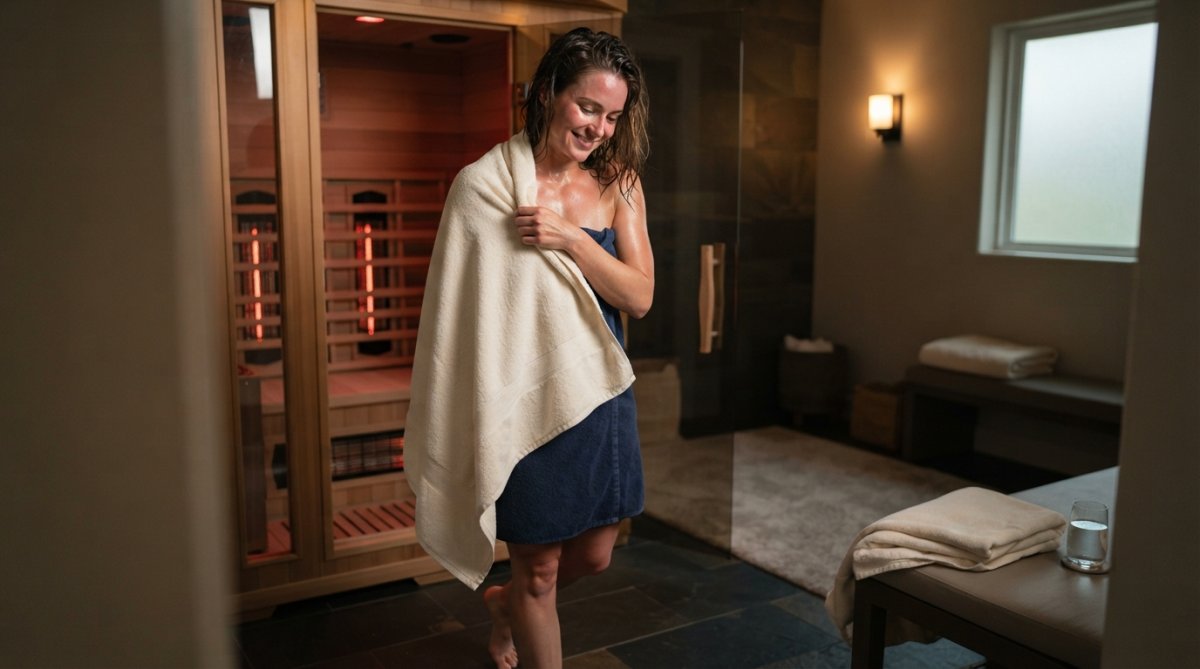
The cooling effect following infrared sauna use is the primary mechanism driving sleep improvement. After leaving the sauna, your body initiates active cooling through vasodilation, the widening of blood vessels near the skin's surface to release heat. When blood vessels dilate, more blood flows to the skin, and heat dissipates into the environment.

This cooling process activates your parasympathetic nervous system, the "rest and digest" branch of your autonomic nervous system. Parasympathetic activation is essential for sleep onset, it lowers heart rate, reduces blood pressure, and promotes the relaxation response needed to transition from wakefulness to sleep. A significant temperature drop, typically 1-2 degrees Fahrenheit from your elevated sauna state, creates a strong signal to your sleep-wake system.
Sleep architecture improves when core body temperature drops effectively before bed. Deep sleep and REM sleep stages are more readily accessible when your body temperature is lower. The cooling effect also influences melatonin production. Melatonin, the hormone that regulates your sleep-wake cycle, is suppressed by heat and promoted by cooling. By creating a sharp temperature transition, you're optimising the biochemical conditions for melatonin release.
Infrared Sauna Session Duration and Sleep Impact
Session duration directly affects sleep quality outcomes. Most people find that 20-30 minute sessions produce optimal results without causing excessive physiological stress. The ideal infrared sauna session duration for sleep improvement sits in the 25-30 minute range, allowing your core temperature to rise sufficiently (typically 1.5-2 degrees Fahrenheit) while remaining sustainable for regular use.
Temperature settings also influence duration. Most infrared saunas operate between 120-150°F. Higher temperatures (140-150°F) require shorter sessions; lower temperatures (120-130°F) can be sustained longer. Beginners should start at lower temperatures and shorter durations, gradually increasing as their body adapts.
Session timing relative to bedtime is equally important. A session 2-3 hours before bed allows sufficient time for the cooling effect to develop while maintaining strong sleep promotion. Sessions closer to bedtime (30-60 minutes before) can work but may leave some residual arousal.
Best Time of Day for Infrared Sauna Use
Timing your infrared sauna session strategically amplifies its sleep benefits. Late afternoon to early evening (4-6 PM) represents the optimal window for most people. At this time, your core body temperature is naturally elevated, and using a sauna compounds this effect. The subsequent cooling phase extends into the evening hours, perfectly aligning with your body's natural temperature drop before sleep.
Morning or midday sauna sessions can improve sleep but are less efficient. Your body temperature is lower in the morning, requiring longer or hotter sessions to achieve the same effect. Additionally, the cooling phase occurs during your active daytime hours when your body naturally maintains higher temperatures.
Avoid sauna sessions immediately after waking or during your peak activity hours (10 AM-2 PM). These times coincide with naturally elevated core temperature and high cortisol levels. Individual circadian types matter, if you're an early riser, a 3-4 PM session may be optimal; night owls might benefit from a 6-7 PM session. The principle remains constant: session timing should position the cooling effect to occur 2-3 hours before your typical bedtime.
Stress Reduction, Cortisol, and Sleep Architecture
Infrared sauna use reduces cortisol, the primary stress hormone, which directly improves sleep quality. Chronic stress and elevated cortisol suppress deep sleep and REM sleep, fragmenting your sleep architecture. Heat exposure triggers a controlled stress response that your body adapts to, strengthening your stress resilience. Over time, regular sauna users show lower baseline cortisol levels and faster cortisol recovery after stress.
The relaxation response activated during and after sauna sessions contributes to cortisol reduction. As your parasympathetic nervous system engages, your body shifts away from the sympathetic "fight or flight" state. This shift reduces cortisol production and increases parasympathetic tone. Sleep architecture improves when cortisol is well-regulated, deep sleep requires low cortisol levels, and REM sleep is suppressed by high cortisol. By using infrared saunas to reduce cortisol, you're directly supporting the sleep stages that matter most for recovery and wellbeing.
An afternoon sauna session that reduces cortisol in the late afternoon creates ideal conditions for the evening hours when cortisol should be lowest, amplifying the sleep benefit.
Safety Precautions for Infrared Sauna Use
Infrared sauna use is generally safe for most people, but certain precautions protect against adverse effects. Dehydration is the primary risk. Heat exposure increases fluid loss through perspiration, and inadequate hydration can lead to dizziness, headaches, and impaired thermoregulation. Always drink water before, during, and after sauna sessions, a general guideline is 16-24 ounces of water before the session and additional fluids afterward.
Cardiovascular stress is a consideration for people with existing heart conditions. Heat causes vasodilation and increases heart rate, temporarily increasing cardiac workload. If you have hypertension, arrhythmias, or a history of cardiac events, consult your healthcare provider before regular sauna use.
Certain medications affect thermoregulation or increase sensitivity to heat. Antihistamines, anticholinergics, and some psychiatric medications can impair your body's cooling response. If you take regular medications, discuss sauna safety with your doctor.
Overheating is avoidable through session duration and temperature management. Limiting sessions to 20-30 minutes at moderate temperatures (120-140°F) prevents excessive core temperature elevation. Listen to your body; if you feel dizzy, nauseated, or excessively hot, exit the sauna immediately.
Pregnancy represents a special consideration. Elevated core body temperature during early pregnancy carries theoretical risks. Pregnant individuals should consult their obstetrician before sauna use. Age-related precautions apply to very young children and older adults, who should start conservatively and adjust based on individual heat tolerance.
Building Your Infrared Sauna Protocol for Better Sleep
An effective infrared sauna protocol for sleep improvement requires consistency, timing, and personalisation. Start by establishing a baseline: note your current sleep quality, latency, and morning alertness. Then implement sauna sessions for 4-6 weeks and reassess.
Basic Protocol for Sleep Improvement:
-
Frequency: Begin with 3 sessions per week. This frequency provides enough stimulus for adaptation without excessive recovery demands.
-
Duration: Start with 20-25 minute sessions at 130-140°F. As you adapt, you can increase to 25-30 minutes or adjust temperature based on preference.
-
Timing: Schedule sessions for 4-6 PM, ideally 2-3 hours before your target bedtime.
-
Post-Sauna Cooldown: Allow 30-60 minutes of natural cooling before bed. Avoid reheating and let your body cool gradually while doing light, relaxing activities.
-
Hydration: Drink 16-24 ounces of water before the session and 8-16 ounces after.
Personalisation and Progression:
Individual responses vary. Some people see sleep improvements within 1-2 weeks; others require 4-6 weeks of consistent use. Track your sleep using a simple log or sleep-tracking app. If you're not seeing results after 4 weeks, adjust one variable at a time. For people with limited space or time, sauna blankets offer an alternative, providing similar heat exposure in a portable format.

Advanced users may eventually shift to 4-5 sessions per week or extend duration to 30-35 minutes. However, more is not always better. Find the minimum effective dose that produces your desired sleep improvement, then maintain that protocol.
Infrared saunas represent a science-backed approach to improving sleep through thermoregulation and stress reduction. The cooling effect that follows sauna use triggers powerful sleep-promoting mechanisms: parasympathetic activation, cortisol reduction, and circadian alignment. Consistency and proper timing matter far more than intensity. If you're serious about optimising your sleep through heat therapy, the Infrared Sauna - 2-Person Premium Home Spa from Thermo Plunge Recovery Systems delivers professional-grade results with low-EMF construction and colour light therapy to support your recovery goals. With free shipping and a 30-day guarantee, you can test whether infrared heat transforms your sleep without financial risk.
Frequently Asked Questions
Does an infrared sauna really make you sleep better?
Yes. Infrared saunas improve sleep by triggering a post-session temperature drop that signals your body it's time to rest. The heat exposure increases core body temperature, then the subsequent cooling activates your parasympathetic nervous system and promotes melatonin production. Regular use also reduces cortisol levels and muscle tension, both barriers to quality sleep. Effects typically appear within 2-3 weeks of consistent use.
How long before bed should you use an infrared sauna?
Use your infrared sauna 2-3 hours before bedtime. This timing allows your core body temperature to drop naturally post-session, aligning with your circadian rhythm and sleep onset latency. Using a sauna too close to bed can cause physiological arousal that interferes with falling asleep. If you use a sauna blanket, 90 minutes before bed is the minimum window for optimal results.
What happens if you use an infrared sauna every day?
Daily infrared sauna use is safe for most people and can accelerate sleep benefits through consistent thermoregulation and stress reduction. However, limit sessions to 20-30 minutes daily to avoid thermal stress and dehydration. Daily use optimises circadian rhythm alignment and cortisol regulation, but allow at least one rest day per week to prevent autonomic nervous system fatigue. Those with cardiovascular conditions should consult a healthcare provider first.
Are there safety risks or contraindications for infrared sauna use?
Infrared saunas are contraindicated for people with uncontrolled hypertension, acute heart conditions, or those taking certain medications that impair heat regulation. Avoid use if pregnant, acutely ill, or dehydrated. Do not use within 2 hours of alcohol consumption. Always stay hydrated, start with shorter sessions (10-15 minutes), and exit immediately if you feel dizzy or unwell. Consult your doctor if you take blood pressure or sleep medications.
This article was written using GrandRanker