

Integrating Recovery Modalities into Sports Physiotherapy
Table of Contents
- Step 1: Assess the Athlete and Set Recovery Goals
- Step 2: Build the Foundation with a Sports Injury Rehabilitation Program
- Step 3: Prescribe Active Recovery Exercises for Athletes
- Step 4: Add Cold Water Immersion for Muscle Recovery
- Step 5: Layer in Heat, Compression, and Manual Therapy
- Step 6: Sequence Recovery Modalities Across the Week
- Step 7: Track Outcomes and Adjust Recovery Strategies for Athletes
- Common Mistakes When Integrating Recovery Modalities
- Frequently Asked Questions
Last Updated: October 17, 2026
Step 1: Assess the Athlete and Set Recovery Goals
Recovery planning starts with a real assessment, not a generic protocol. At Thermo Plunge Recovery Systems, we see the difference between athletes who recover with purpose and those who just rest and hope. A proper assessment looks at training load, injury history, sleep, soreness patterns, and the specific demands of the sport.
Set goals you can measure. Instead of "feel better," aim for targets like full range of motion, pain-free walking, or completing a training block without setbacks. These goals shape which recovery modalities you choose and when you use them.
A common mistake is copying someone else's routine. A sprinter and a CrossFit athlete need different recovery strategies for athletes. Match the plan to the person, not the trend.
Step 2: Build the Foundation with a Sports Injury Rehabilitation Program
No recovery tool replaces a solid rehabilitation plan. A sports injury rehabilitation program builds strength, restores movement, and prepares tissue for load. Skip this foundation and the fancy gadgets won't save you.
Here's how we structure the base layer:
- Confirm the diagnosis with a qualified clinician
- Set criteria-based milestones for each phase
- Progress load gradually, never by guesswork
- Re-test function before adding intensity
The American Physical Therapy Association offers guidance on how physical therapy supports injury recovery. The key point: recovery modalities sit on top of rehab, not instead of it.
Step 3: Prescribe Active Recovery Exercises for Athletes
Active recovery exercises for athletes keep blood moving without adding stress. Think easy cycling, walking, swimming, or mobility work on rest days. Low-intensity movement helps muscle recovery and reduces stiffness.
The rule we follow: if it feels like training, it's too hard. Keep the effort easy and the duration short. A 20-minute easy spin beats an hour of grinding.
Guidelines from the American College of Sports Medicine support light activity between hard sessions. Pair active recovery with stretching and mobility work to maintain range of motion.
- Easy bike or walk: 15-30 minutes
- Mobility flow: 10 minutes
- Light stretching after activity, not before
Step 4: Add Cold Water Immersion for Muscle Recovery
Cold water immersion for muscle recovery is one of the most popular tools, and for good reason. A cold plunge can ease soreness and help athletes feel refreshed after hard efforts. The catch is timing and dose.
Keep sessions short and controlled. Don't plunge right before strength work, since cold can blunt training adaptations. Use it after competition or on heavy training days instead.
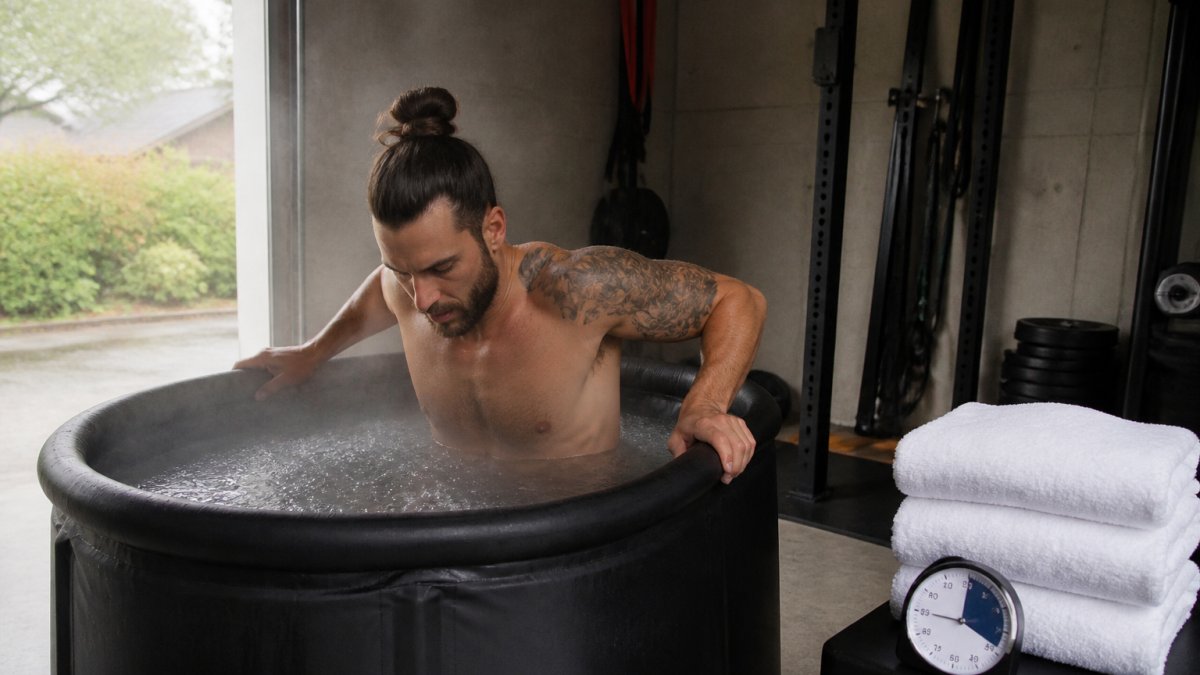
Our Ice Bath Tub is a foldable, multi-layered option that stores easily. For athletes who want consistent temperatures, the Water Chiller cools water down to 39°F with a built-in filter and timer.


Step 5: Layer in Heat, Compression, and Manual Therapy
Heat, compression, and manual therapy are adjuncts, not substitutes for loading and rehab. Their value depends on the healing stage, the tissue involved, and what you are trying to achieve that day. A common mistake is using them because they feel good rather than because they solve a specific problem.
Heat therapy. Superficial heat increases local blood flow and tissue extensibility, which can make stretching and mobility work more comfortable before activity. It is most useful for chronic stiffness, pre-activity preparation, and muscle guarding. Avoid heat on acute injuries, swollen joints, or areas with impaired sensation. A practical rule: if the area is still warm, red, and swollen, skip heat.
Compression. Compression garments and sleeves help manage swelling and support circulation, especially after heavy loading or travel. They are low-risk for most athletes, but they are not a substitute for elevation and active recovery. Avoid excessive pressure if there is known peripheral vascular disease or uncontrolled swelling that has not been assessed.
Manual therapy. Massage and manual therapy can reduce perceived tightness and improve short-term range of motion. Evidence supports short-term symptom relief and patient satisfaction more than long-term structural change. Use it to unlock a restriction so the athlete can train or move better, not as a standalone fix.
Ice Bath Tub – Portable Cold Plunge for Recovery →
Evidence and limits. These modalities are best described as comfort and preparation tools. They can help an athlete feel better and move more freely, but they do not replace strength work, load management, or sleep. If an athlete needs heat, compression, and manual therapy every day just to function, that is a sign the training load or rehab plan needs review.
Sequencing logic. Use heat before activity to prepare tissue, compression during and after activity to manage swelling, and manual therapy on restricted areas when it helps the athlete move better. Do not stack all three every day. Pick the one that matches the day's goal.
Step 6: Sequence Recovery Modalities Across the Week
Sequencing is where most programs fall apart. Stacking every modality every day leads to burnout and wasted effort. A better approach is to match the modality to the day's goal, the athlete's response, and the stage of healing. The table below is a starting point, not a prescription.
| Day Type | Primary Modality | Secondary | Safety Check |
|---|---|---|---|
| Hard training day | Cold water immersion | Compression | Avoid cold before strength work; keep sessions short (10-15 min) |
| Easy day | Active recovery | Stretching | Keep effort easy; stop if pain increases |
| Rest day | Manual therapy | Heat | No heat on swollen or acute areas |
| Competition day | Cold plunge after | Light mobility | Recover, don't train; monitor fatigue |
Individualize the plan. A sprinter and a CrossFit athlete need different recovery strategies. Consider sport demands, injury severity, schedule, access to equipment, and the athlete's preference. Some athletes respond well to cold water immersion; others find it blunts their training adaptation if used too close to strength sessions. Track responses and adjust.
Criteria-based progression. Do not progress modalities by calendar alone. Use outcome measures: soreness scores, sleep quality, range of motion, strength, and training performance. If soreness stays high or performance drops, scale back. If the athlete recovers well, you can progress. This feedback loop is the difference between a plan that works and one that just looks good on paper.
Safety and precautions. Cold water immersion is generally safe for healthy athletes but should be avoided by those with cardiovascular conditions or cold sensitivity unless cleared. Heat is contraindicated on acute inflammation. Compression should not be used over areas with known circulation problems. Aquatic therapy requires supervision if the athlete is not a confident swimmer.
A sample integrated week. Monday (hard training): cold plunge after session, compression in the evening. Tuesday (easy day): 20-minute easy bike and 10-minute mobility flow. Wednesday (rest day): manual therapy on tight areas, heat before stretching. Thursday (hard training): cold plunge after session. Friday (easy day): active recovery and light stretching. Saturday (competition or hard session): cold plunge after, light mobility. Sunday (rest): sleep, nutrition, and a review of the week's data.
Step 7: Track Outcomes and Adjust Recovery Strategies for Athletes
Tracking turns guesswork into progress. Measure what matters: soreness scores, sleep quality, range of motion, and training performance. Review the data weekly and adjust.
If soreness stays high or performance drops, scale back. If the athlete recovers well, you can progress. This feedback loop is the difference between a plan that works and one that just looks good on paper.
Common Mistakes When Integrating Recovery Modalities
The biggest mistake is treating recovery as an afterthought. Athletes who plan recovery with the same care as training see better results. Here's what to avoid:
- Using cold plunge right before strength sessions
- Skipping the rehab foundation for quick fixes
- Doing too many modalities at once
- Ignoring sleep and nutrition
- Never tracking outcomes
Another trap: buying gear without a plan. Equipment helps, but only when it fits a structured program. Start with the basics, then add tools as your needs grow.
Frequently Asked Questions
What recovery modalities are commonly used in sports physiotherapy?
The most common recovery modalities include active recovery exercises, cold water immersion, heat therapy, compression garments, manual therapy and massage, and electrical stimulation. Each serves a different purpose: cold water immersion for muscle recovery targets soreness and inflammation, active recovery keeps blood moving, and manual therapy addresses tissue restriction. A well-built sports injury rehabilitation program sequences these rather than stacking them randomly, so each modality supports the phase of healing the athlete is in.
How do you choose recovery methods for an athlete?
Start with the assessment: injury type, training load, sleep, soreness patterns, and the phase of the sports injury rehabilitation program. Then match the modality to the goal. If the athlete needs to reduce acute soreness, cold water immersion for muscle recovery fits. If they need to restore range of motion, active recovery exercises for athletes and manual therapy come first. Recovery strategies for athletes work best when they are individualized and reviewed weekly, not copied from a teammate.
Can cold-water immersion affect strength or muscle growth?
Cold water immersion is effective for reducing soreness and perceived fatigue, but timing matters. Placing cold water immersion for muscle recovery immediately after strength sessions may blunt some of the adaptive signalling that drives muscle growth. Many practitioners schedule cold exposure away from hypertrophy-focused training or use it on competition days and high-soreness days instead. Keep it as one tool in your recovery strategies for athletes, not the default after every session.
How can physiotherapists measure whether a recovery strategy is working?
Use outcome measures that reflect function, not just feeling. Track range of motion, pain scores, soreness ratings, jump or sprint performance, and readiness questionnaires across the week. Pair those with criteria-based progression: an athlete returns to sport when specific movement and strength benchmarks are met, not when they simply feel better. Reviewing these numbers weekly lets you adjust recovery modalities and keep the sports injury rehabilitation program on track.
Recovery is not a luxury, it's part of training. If you're ready to build a smarter recovery setup at home, Thermo Plunge Recovery Systems offers free shipping, a 30-day guarantee, and 24/7 support. Our cold plunge tubs, water chillers, and red light therapy tools help you recover smarter and boost performance. Get started with Thermo Plunge Recovery Systems and train harder with confidence.