

Is Red Light Therapy Worth It in 2026?
Table of Contents
- How Red Light Therapy Works and What the Science Shows
- Red Light Therapy Benefits for Athletes and Active Individuals
- How Long Should You Use Red Light Therapy for Best Results
- Safety, Side Effects, and Who Should Avoid Red Light Therapy
- Comparing Wavelengths: Red (660nm) vs. Near-Infrared (850nm)
- Is Red Light Therapy Worth It? Cost-Benefit Analysis and ROI
- Choosing the Right Red Light Therapy Device for Your Needs
- Conclusion: Making Your Red Light Therapy Decision
Last Updated: August 29, 2026
How Red Light Therapy Works and What the Science Shows
Red light therapy, also known as photobiomodulation, uses specific wavelengths of light to stimulate cellular function and promote healing at the mitochondrial level. When red and near-infrared light penetrates the skin, it energises mitochondria by boosting adenosine triphosphate (ATP) production, the molecule responsible for cellular energy. This triggers biological responses that reduce inflammation, accelerate tissue repair, and improve circulation.
Red light (600-700 nanometers) works primarily at the skin's surface and upper layers, making it ideal for skin rejuvenation and collagen production. Near-infrared light (700-1100 nanometers) penetrates deeper into muscle and bone, reaching tissues requiring more substantial therapeutic intervention.
What separates legitimate red light therapy from marketing hype is understanding irradiance, the intensity of light measured in milliwatts per square centimetre. A device claiming therapeutic benefits must deliver sufficient irradiance over appropriate treatment duration. Many consumer devices fall short of clinical efficacy standards, delivering light too weak to trigger meaningful biological change.
At Thermo Plunge Recovery Systems, we've engineered our red light therapy devices to deliver clinically relevant irradiance levels. Our Red Light Therapy Pad uses dual wavelengths (660nm and 850nm) specifically calibrated to penetrate both surface and deep tissues, giving you combined benefits of red and near-infrared therapy in a single treatment.

Red Light Therapy Benefits for Athletes and Active Individuals
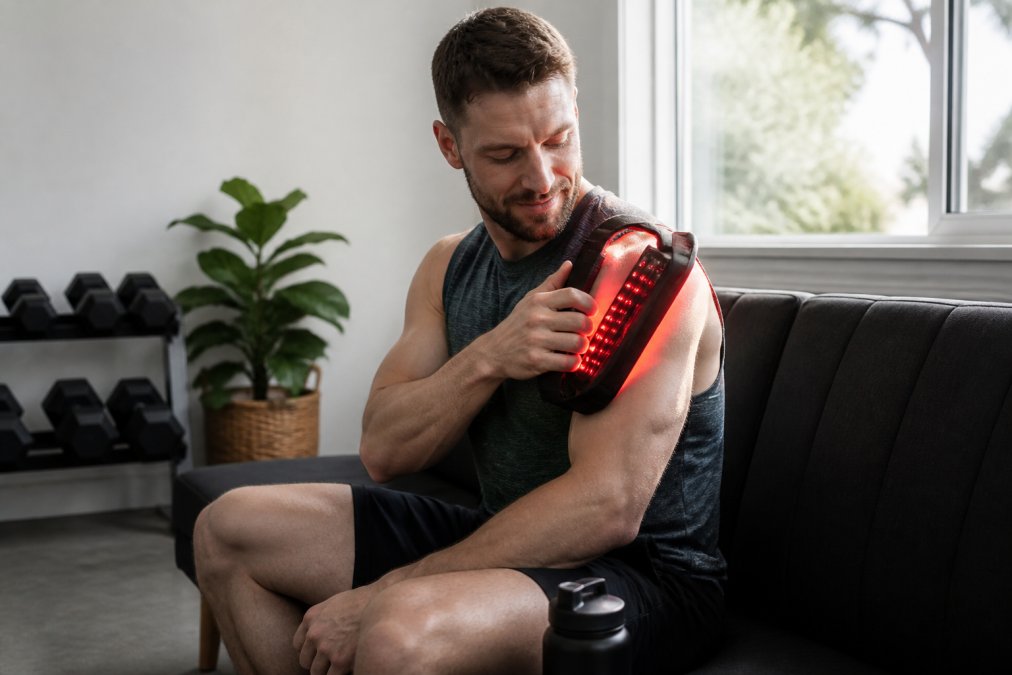
Athletes experience measurable recovery benefits from consistent red light therapy use. The therapy accelerates muscle repair by stimulating fibroblasts, the cells responsible for collagen synthesis, while reducing exercise-induced inflammation. This shortens recovery windows between training sessions and allows for more frequent, higher-quality workouts.
Delayed-onset muscle soreness (DOMS) peaks 24-48 hours after intense exercise. Red light therapy reduces this soreness by promoting blood flow to affected muscles and decreasing inflammatory markers. Many athletes report noticeable relief within 2-3 days of starting consistent treatment.
Red light therapy also supports athletic performance through improved circulation and oxidative stress management. Intense training generates reactive oxygen species that damage cellular structures. Near-infrared wavelengths help neutralise oxidative stress, protecting muscle tissue from excessive breakdown.
Joint health represents another significant benefit. Red light therapy reduces inflammation in knees, shoulders, and lower backs while supporting collagen remodelling in connective tissue. Consistent use over weeks creates measurable improvements in joint function and pain reduction.
How Long Should You Use Red Light Therapy for Best Results
Treatment duration depends on device irradiance, wavelength, and your specific goals. Most clinical research used sessions ranging from 10 to 30 minutes, delivered 3-5 times weekly. Shorter sessions with high irradiance often outperform longer sessions with weak output.
For muscle recovery and soreness reduction, 15-20 minute sessions targeting affected areas work well for most active individuals. Consistency matters more than session length. Three 15-minute sessions per week beats one 60-minute marathon session.
For skin benefits like collagen production and hyperpigmentation reduction, 10-15 minute sessions on facial areas suffice. Skin tissue doesn't require deep penetration that muscle does, so shorter, more frequent treatments prove more effective.
Once you've delivered enough photons to stimulate mitochondrial function, additional time provides diminishing returns. Most practitioners find their sweet spot within 2-3 weeks of consistent use.
A common mistake is expecting results from sporadic treatment. Red light therapy works through cumulative cellular adaptation. Your mitochondria need regular stimulation to upregulate ATP production and maintain inflammatory benefits. Think of it like training: consistency beats intensity when intensity is already adequate.
Safety, Side Effects, and Who Should Avoid Red Light Therapy
Red light therapy carries an excellent safety profile when used as directed. The wavelengths employed (600-1100 nanometers) don't damage DNA or cause cellular harm associated with ultraviolet radiation. Thousands of clinical studies document minimal adverse effects.
The most common side effect is temporary skin irritation or mild redness immediately following treatment, particularly for individuals with sensitive skin or those using high irradiance devices. This typically resolves within hours and reflects increased blood flow to the treated area. Reducing session duration or irradiance intensity resolves the issue quickly.
Some users report mild headaches or eye discomfort when treating areas near the face without eye protection. Wearing protective eyewear or positioning the device to avoid direct eye exposure prevents this entirely.
Certain conditions warrant caution. Individuals taking photosensitising medications should consult their healthcare provider before starting red light therapy. Those with a history of skin cancer or suspicious skin lesions should get medical clearance first. Pregnancy doesn't contraindicate red light therapy, but pregnant individuals should discuss it with their obstetrician.
If you're using tretinoin, retinoids, or other vitamin A derivatives, red light therapy can amplify irritation and sensitivity. Space treatments 24-48 hours apart or pause red light therapy during intense retinoid phases.
Those with thyroid conditions should monitor how they feel during the first 2-3 weeks of use and adjust as needed, as increased circulation and metabolic activity could theoretically impact medication absorption or hormone levels.
Comparing Wavelengths: Red (660nm) vs. Near-Infrared (850nm)
Red light (660 nanometers) penetrates approximately 8-10 millimetres into tissue, reaching the epidermis and dermis effectively. This makes it ideal for skin-focused benefits: collagen stimulation, hyperpigmentation reduction, fine line improvement, and surface inflammation reduction.
Near-infrared light (850 nanometers) penetrates 30-40 millimetres or deeper, reaching muscle tissue, tendons, ligaments, and bone. This deeper penetration makes it the wavelength of choice for athletes targeting muscle recovery, joint health, and chronic pain management.
The ideal approach combines both wavelengths. Dual-wavelength devices deliver surface benefits of red light simultaneously with deep-tissue benefits of near-infrared. The Thermo Plunge Recovery Systems Red Light Therapy Pad uses this dual-wavelength approach, giving you comprehensive coverage rather than forcing you to choose between surface and deep benefits.
Treatment duration differs between wavelengths. Red light's shallower penetration means shorter sessions often suffice, 10-15 minutes typically delivers adequate dosing. Near-infrared requires longer sessions (15-30 minutes) to achieve therapeutic dosing at depth. A 20-minute session with both wavelengths balances both effectively.
Is Red Light Therapy Worth It? Cost-Benefit Analysis and ROI
Determining whether red light therapy offers genuine value requires honest assessment of your specific situation. The therapy works, clinical evidence supports that, but whether it's worth your investment depends on your goals, training intensity, and available alternatives.
The return calculation depends on what you're replacing. If you currently spend money on massage therapy, physical therapy sessions, or recovery supplements, red light therapy offers clear financial advantage. If you're not currently spending money on recovery, you're adding a new expense rather than replacing an existing one.
Performance gains matter more than cost for serious athletes. If red light therapy reduces your recovery time by even one day per week, you gain roughly 50 additional high-quality training sessions annually. For competitive athletes where marginal gains compound into results, that's worth significant investment. For casual fitness enthusiasts, the performance benefit may feel less compelling.
Time investment also factors into ROI. Red light therapy requires 15-30 minutes daily or every other day. Only you can decide if the recovery benefits justify that time investment.
The honest assessment: red light therapy works best for individuals who already prioritise recovery and have the budget for quality equipment. If you're underfunding recovery elsewhere, invest in sleep, nutrition, or stress management first. If you're already doing the fundamentals well and want to optimise further, red light therapy delivers measurable returns.

Choosing the Right Red Light Therapy Device for Your Needs
Device selection matters enormously because not all red light therapy equipment delivers clinical efficacy. Marketing claims often exceed actual irradiance specifications.
Start by identifying your primary goal. Are you targeting muscle recovery? Joint health? Skin improvement? Chronic pain management? Each goal benefits from different wavelength combinations and treatment areas.
Next, evaluate device specifications, specifically irradiance measured in milliwatts per square centimetre (mW/cm²). Clinical studies typically use devices delivering 50-100+ mW/cm² for therapeutic effect. Many consumer devices claim high wattage but deliver weak irradiance because they spread power over large areas.
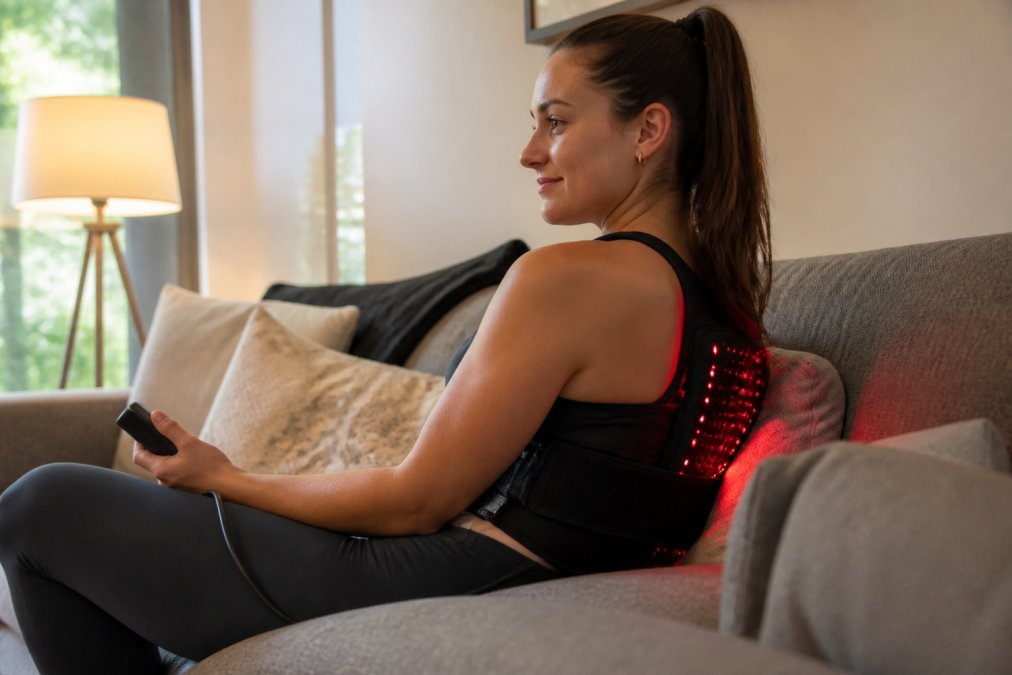
Treatment area size determines practical usability. Handheld devices work for targeted areas like knees or shoulders but require 20-30 minutes to treat full-body regions. Panel devices cover larger areas efficiently. Wearable wraps like the Thermo Plunge Recovery Systems Red Light Therapy Pad allow hands-free treatment while reading or working, improving compliance.
Wavelength selection matters based on your goals. Single-wavelength devices cost less but require you to choose. Dual-wavelength devices cost more but eliminate the choice, you get both benefits simultaneously. For most users, dual-wavelength justifies the premium.
Build quality and warranty reflect long-term reliability. The Thermo Plunge Recovery Systems commitment includes a 30-day guarantee and 24/7 support.
Ease of use directly impacts whether you'll actually use the device consistently. Wearable designs with remote controls and timers encourage regular use. Consider your lifestyle; if you travel frequently, portable devices make sense. If you have dedicated home space, larger panel systems work better.
| Consideration | Handheld Devices | Panel Devices | Wearable Wraps |
|---|---|---|---|
| Treatment Area | 100-300 cm² | 1,000-2,000 cm² | 2,000-5,000 cm² |
| Session Time | 20-30 minutes | 10-20 minutes | 10-20 minutes |
| Portability | Excellent | Poor | Good |
| Hands-Free Use | No | No | Yes |
| Best For | Targeted areas | Large surface areas | Full-body treatment |
Conclusion: Making Your Red Light Therapy Decision
Red light therapy delivers genuine physiological benefits when you use quality equipment consistently. The science supports its effectiveness for muscle recovery, inflammation reduction, collagen production, and tissue repair. Whether it's worth your investment depends on your current recovery practices, training intensity, and available budget.
If you're already investing in sleep optimisation, nutrition, and stress management, red light therapy represents a logical next step. If you're neglecting these fundamentals, address those first.
Quality matters significantly. Cheap devices with inadequate irradiance waste your time and money. Professional-grade equipment from established manufacturers delivers the specifications necessary for clinical efficacy. At Thermo Plunge Recovery Systems, our red light therapy devices are engineered for serious athletes and wellness enthusiasts who refuse to compromise on quality. Our Red Light Therapy Pad combines dual wavelengths, large treatment area, and clinical-grade irradiance, backed by free shipping, a 30-day guarantee, and 24/7 support.
Red light therapy works best as part of a comprehensive recovery strategy, not as a standalone solution. Combine it with proper sleep, nutrition, stress management, and training structure. That integrated approach delivers results that justify the investment.
National Institutes of Health research on photobiomodulation
Frontiers in Physiology study on red light therapy and athletic recovery
Journal of Photochemistry and Photobiology clinical efficacy review
Frequently Asked Questions
Q: What does the research actually say about red light therapy's effectiveness?
A: Clinical studies show red light therapy can improve cellular function by stimulating mitochondria and increasing ATP production. Research demonstrates measurable benefits for muscle recovery, wound healing, and reducing inflammation. However, results depend heavily on wavelength (660nm vs. 850nm), irradiance levels, treatment duration, and consistency. Most clinical efficacy studies use therapeutic doses delivered by professional-grade devices, not all consumer products deliver equivalent results. Look for devices with published irradiance specifications and evidence-based treatment protocols.
Q: How long should you use red light therapy to see real results?
A: Most clinical protocols recommend 10-20 minutes per session, 3-5 times weekly, for 4-12 weeks to observe measurable changes. For muscle recovery after workouts, 10-15 minutes on affected areas shows benefits within 2-3 weeks. Consistency matters more than duration; short daily sessions outperform sporadic longer treatments. Chronic conditions like pain or skin rejuvenation may require 8-12 weeks of regular use before significant improvement. Always follow your device's specific guidelines, as irradiance levels vary and affect optimal treatment time.
Q: Are there any side effects or people who shouldn't use red light therapy?
A: Red light therapy is generally safe for most people, but certain groups should exercise caution. Those with a history of skin cancer, photosensitivity, or taking photosensitising medications should consult a healthcare provider first. Eye safety is important; avoid direct eye exposure without approved eyewear. Contraindications exist with certain skincare actives like retinoids and vitamin C serums, which can increase photosensitivity. Pregnant women should seek medical guidance before starting treatment. If you have thyroid conditions or take thyroid medication, discuss timing and placement with your doctor.
Q: Is red light therapy worth the investment compared to cheaper alternatives?
A: Higher-quality devices deliver superior irradiance, wavelength precision, and durability, which directly impact therapeutic outcomes. Cheaper options often lack specifications, produce lower irradiance, and fail within 1-2 years. For athletes and wellness enthusiasts committing to long-term recovery, the return on investment through reduced injury downtime, faster muscle repair, and improved sleep quality justifies the upfront cost. Budget devices rarely deliver measurable results, making them poor value despite lower price tags.
Q: What wavelengths should I look for in a red light therapy device?
A: Red light (660nm) penetrates shallow tissue and excels at skin rejuvenation, collagen production, and surface inflammation. Near-infrared (850nm) penetrates deeper into muscle and bone, making it ideal for muscle recovery, joint pain, and chronic pain management. The best devices combine both wavelengths to address multiple tissue layers. Check that your device specifies exact wavelengths and irradiance (measured in mW/cm²); therapeutic effectiveness depends on these technical specifications. Devices lacking published wavelength and irradiance data cannot deliver predictable clinical results.
Q: How does red light therapy compare to professional clinical treatments?
A: Professional clinical treatments (laser therapy, LED panels in dermatology clinics) deliver higher irradiance and more precise wavelengths than most home devices, producing faster results. However, professional sessions require ongoing appointments. Home-use devices offer convenience, long-term cost savings, and consistent maintenance of results once achieved. For chronic conditions, home devices provide better long-term value; for acute issues or skin conditions requiring professional oversight, clinical treatments may be faster. Many people combine both approaches: professional treatment followed by home-device maintenance.
Q: What maintenance do red light therapy devices require?
A: Most home red light therapy devices require minimal maintenance. Wipe the LED surface with a dry cloth monthly to remove dust and maintain light output. Check power cords and connections quarterly for wear. Store in a cool, dry place away from extreme temperatures. Unlike ice baths or saunas, red light therapy pads and panels have no filtration systems, water, or moving parts to service. Proper storage and occasional cleaning ensure reliable use. Always follow the manufacturer's specific care instructions to maintain warranty coverage.
Q: Will red light therapy actually tighten saggy skin or reduce fine lines?
A: Red light therapy stimulates collagen production and fibroblast activity, which can improve skin texture, reduce fine lines, and provide modest skin tightening over time. Results are gradual and most noticeable for fine lines and superficial skin quality rather than severe sagging. Consistent use over 8-12 weeks shows measurable improvements in skin elasticity and appearance. However, red light therapy alone cannot replace professional treatments for significant sagging; it works best as a preventive measure or to enhance results from other therapies. Combining red light with other recovery practices (sleep, hydration, sun protection) amplifies skin benefits.
This article was written using GrandRanker