

Why Professional Ice Baths Cost More
Table of Contents
- The Real Cost of Cold: Professional Ice Baths vs. Budget Options
- Cooling Technology: Compressor vs. Ice and Thermoelectric Systems
- Cold Plunge Chiller Maintenance: Hidden Labour and Recurring Costs
- How Long to Stay in an Ice Bath: Safety Systems and Temperature Precision
- DIY Ice Bath vs. Professional Cold Plunge: The Durability Factor
- Water Filtration and Sanitation: Why Professional Systems Demand Premium Materials
- Long-Term ROI: Why Professional Ice Baths Save Money Over Time
- Conclusion
Last Updated: August 11, 2026
The Real Cost of Cold: Professional Ice Baths vs. Budget Options
When athletes and wellness enthusiasts first encounter professional ice baths, the sticker shock is real. A quality cold plunge system can cost several thousand dollars, while a basic inflatable tub runs under $200. The question that follows is almost always the same: what exactly justifies the price difference? The answer goes far beyond aesthetics or brand prestige. Professional ice baths cost more because they're engineered to deliver consistent, safe cold therapy day after day without the hidden expenses that budget alternatives rack up over time.
At Thermo Plunge Recovery Systems, we've spent years helping athletes understand why professional ice baths cost more, and why that investment often pays for itself. The difference between a cheap setup and a professional one isn't just about initial purchase price. It's about cooling technology, durability, maintenance burden, and the long-term economics of ownership. Most people don't realise that a $200 ice bath and a $3,000 system aren't competing in the same category. They're solving fundamentally different problems.

The real story unfolds across several factors that most budget-conscious buyers overlook until they're already stuck with a failing system.
Cooling Technology: Compressor vs. Ice and Thermoelectric Systems
Professional ice baths cost more primarily because they use advanced cooling technology that budget options simply don't employ. The fundamental difference comes down to how the water gets cold and stays cold.
Budget ice baths rely on one of two approaches: manual ice addition or cheap thermoelectric cooling. Manual ice means you're buying bags of ice repeatedly, filling the tub multiple times per week, and managing water temperature by guesswork. Thermoelectric coolers, found in some mid-range systems, use the Peltier effect to transfer heat but consume enormous amounts of electricity relative to the cooling they produce. Neither method delivers reliable temperature control.
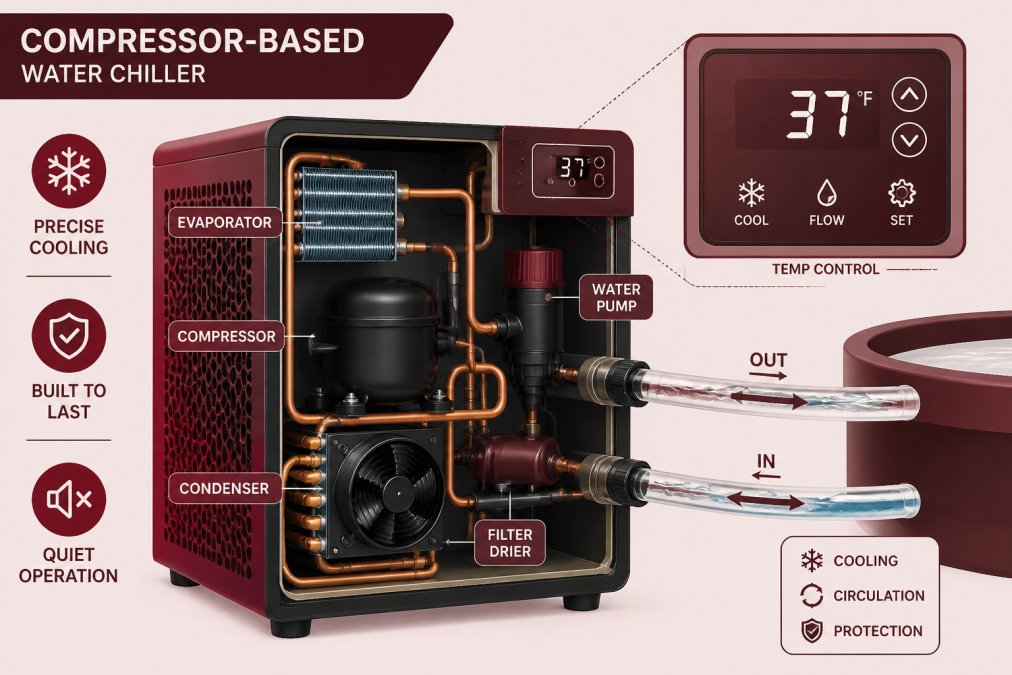
Professional systems use compressor-based water chillers, the same technology found in commercial refrigeration and industrial cooling. A compressor actively circulates refrigerant through a heat exchanger, removing thermal energy from the water with remarkable efficiency. This approach maintains precise temperature control, typically holding water at a target temperature within a few degrees. The Thermo Plunge Recovery Systems Water Chiller, for example, cools water down to 39°F and maintains that temperature automatically, eliminating the need for constant ice replenishment or manual adjustment.

The compressor itself is the expensive component. A quality compressor with proper heat exchange capacity, durable materials, and reliable controls costs hundreds of dollars. Thermoelectric systems cost less upfront but fail faster and consume 3-5 times more electricity to achieve the same cooling effect. When you factor in the electricity cost of running a thermoelectric cooler daily, the professional compressor-based system becomes economically superior within the first year.
Temperature precision matters for safety and effectiveness. Cold therapy works best within a specific range, typically 50-59°F for general recovery, colder for serious athletes. A system that fluctuates wildly between 45°F and 65°F doesn't deliver consistent results. Professional systems maintain tight temperature bands, which requires strong compressor technology and proper insulation.
Cold Plunge Chiller Maintenance: Hidden Labour and Recurring Costs
This is where professional ice baths cost more becomes a deceptive phrase. Yes, they cost more upfront. But the total cost of ownership, purchase price plus maintenance, repairs, and labour, often favours the professional system because budget alternatives demand constant attention and recurring expenses.
Budget ice baths require manual ice replenishment. A typical athlete using an ice bath 4-5 times per week will need 10-20 pounds of ice per session. At current prices, that's roughly $5-10 per session, or $100-200 per month just in ice costs. Over a year, that's $1,200-2,400 spent on ice alone. Over five years, a $200 ice bath has cost $6,200-12,200 in ice purchases.
Water filtration in budget systems is minimal or nonexistent. Athletes typically change the water every few days to avoid bacterial growth, algae, and visible contamination. Each water change requires draining, refilling, and waiting for temperature stabilisation. That's 30-45 minutes of labour per change, 2-3 times per week. Over a month, that's 4-6 hours of active maintenance. Over a year, it's 50-70 hours, the equivalent of a full work week spent just managing water.
Professional systems include filtration and sanitation technology that extends water life to weeks or months. A quality filtration system removes particles, bacteria, and organic matter continuously. Ozone generation or UV sterilisation kills pathogens without chemicals. The Thermo Plunge Recovery Systems approach includes integrated filtration that keeps water clean and safe for extended periods. The labour savings alone, avoiding constant water changes, is worth hundreds of dollars annually.
Repair costs for budget systems are another hidden expense. Cheap pumps fail. Thermoelectric cooling units burn out. Inflatable tubs develop leaks. Once these components fail, replacement often costs $100-400, and the system is down for days or weeks. Professional systems are built with commercial-grade components designed for thousands of hours of operation. Warranty coverage and parts availability are far superior.
How Long to Stay in an Ice Bath: Safety Systems and Temperature Precision
Professional ice baths cost more partly because they include safety features that budget systems lack entirely. Understanding how long to stay in an ice bath safely requires precise temperature control and monitoring, features that add cost but prevent injury.
Cold water immersion carries real risks. Prolonged exposure below 50°F can trigger dangerous physiological responses: uncontrolled breathing, loss of motor control, and in extreme cases, cold-water shock. Athletes need to know the exact water temperature and have systems that prevent accidental overcooling. Budget ice baths often lack reliable thermometers. Athletes guess or use cheap dial gauges that drift out of calibration. A professional system displays precise water temperature in real time, allowing safe, repeatable sessions.
Safety also includes electrical protection. Professional ice baths include GFCI (ground-fault circuit interrupter) protection, which instantly cuts power if water contacts electrical components. Budget systems often lack this protection entirely. A person in water conducting electricity is at serious risk of injury or death. This single feature, proper electrical safety, is non-negotiable in professional systems and adds measurable cost.
Temperature stability during use matters too. A professional chiller maintains water temperature even as a warm human body enters the tub. A budget system's temperature may rise 5-10°F during a session, which changes the physiological response and makes it impossible to replicate results. This is why professional athletes rely on professional systems: they deliver consistent conditions session after session.
Most recovery protocols recommend 3-5 minutes for general athletes, with elite performers sometimes extending to 10-15 minutes. The exact duration depends on water temperature. At 50°F, 10 minutes is aggressive. At 55°F, 10 minutes is moderate. Professional systems allow athletes to dial in the exact temperature and know they're getting the intended stimulus. Budget systems introduce so much variability that safe, repeatable protocols become impossible.
DIY Ice Bath vs. Professional Cold Plunge: The Durability Factor
The DIY ice bath vs. professional cold plunge comparison reveals why professional ice baths cost more: they're engineered for longevity. A budget tub might last 2-3 seasons. A professional system is built to deliver 10+ years of reliable service.
Budget inflatable tubs use thin PVC or vinyl. These materials degrade under UV exposure, temperature cycling, and constant water contact. Seams fail. The material becomes brittle. Most budget tubs are unusable after 18-36 months of regular use. The cost per year of ownership becomes surprisingly high when you factor in replacement.
Professional systems use multi-layered construction with high-grade insulation, durable exterior materials, and reinforced seams. The Thermo Plunge Recovery Systems Upgrade XL Ice Bath Tub, for example, is designed to withstand years of daily use without degradation. The materials resist UV damage, temperature extremes, and chemical exposure. This durability justifies the higher initial cost.
Internal components also differ dramatically. Budget systems use plastic fittings and low-grade pumps. Professional systems use stainless steel or corrosion-resistant materials throughout. Plumbing connections are rated for continuous water circulation. Compressors are industrial-grade, not repurposed consumer appliances. These choices cost more but ensure the system works reliably for a decade.
Resale value is another durability factor. A used professional ice bath retains 40-60% of its original value because buyers know it's built to last. A used budget tub is nearly worthless because the next owner knows it will fail soon. This depreciation difference is worth considering in the total cost equation.
Water Filtration and Sanitation: Why Professional Systems Demand Premium Materials
Professional ice baths cost more because water quality requires sophisticated filtration and sanitation systems. This is where the difference between budget and professional becomes most obvious.
Budget ice baths have no filtration. Water becomes cloudy within days as bacteria, algae, and organic matter accumulate. Athletes either tolerate murky water or drain and refill constantly. Neither option is acceptable for serious recovery work. Cloudy water indicates bacterial growth, which poses health risks. Athletes immersing open cuts or abrasions in contaminated water risk infection.
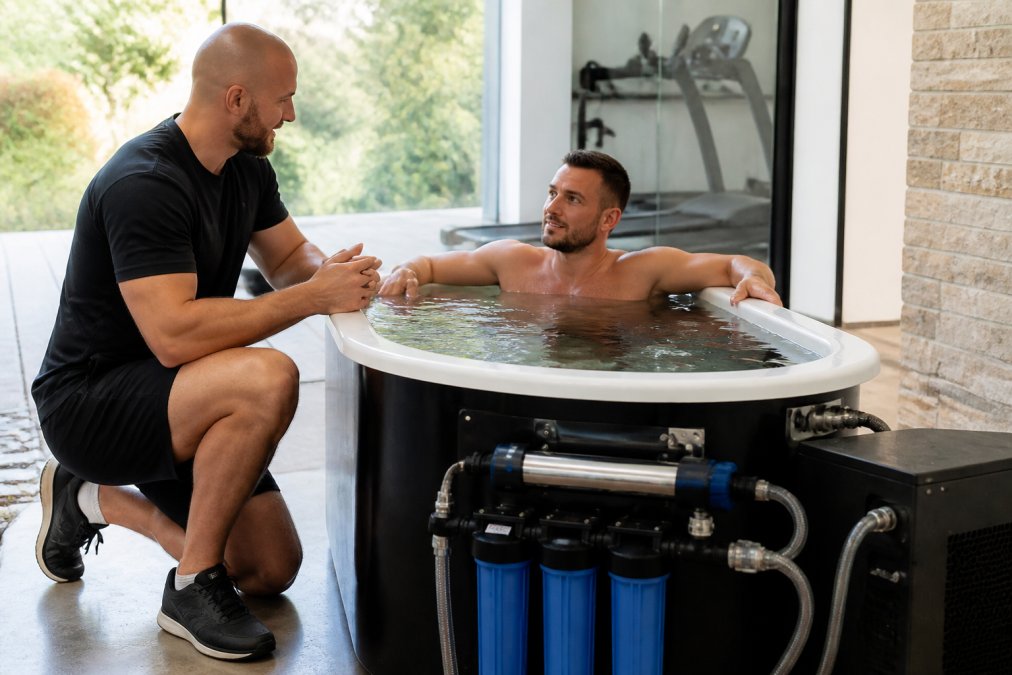
Professional systems include multi-stage filtration. Mechanical filters remove particles down to 5-20 microns. Activated carbon removes odours and organic compounds. Some systems add UV sterilisation, which kills pathogens without chemicals. Others use ozone generation, which oxidises contaminants and keeps water fresh for weeks. These technologies cost $300-800 to implement but eliminate the labour of constant water changes.
Water chemistry also differs. Professional systems allow precise control of pH and sanitiser levels. Budget systems have no way to monitor or adjust these parameters. Over time, pH drift encourages bacterial and algal growth. Professional systems keep water chemistry stable, which extends water life and ensures safety.
The filtration system itself demands premium materials. Filters must withstand constant water circulation and resist clogging. Tubing must be food-grade or medical-grade to avoid leaching chemicals into water. Pump components must handle continuous operation without cavitation or seal failure. These material choices add cost but ensure the system works reliably.
Long-Term ROI: Why Professional Ice Baths Save Money Over Time
The real answer to why professional ice baths cost more emerges when you calculate total cost of ownership over five years. The economics favour professional systems decisively.
A budget ice bath costs $150-300 initially. Ice costs $1,500-2,400 annually. Water change labour costs roughly $2,000 annually (50-70 hours at $40/hour). Replacement due to degradation: $150-300 every 2-3 years. Five-year total: $9,000-14,000.
A professional system like the Thermo Plunge Recovery Systems Ultimate Recovery & Wellness Bundle costs $2,199.95 initially. Electricity for the compressor-based chiller runs roughly $30-50 monthly, or $360-600 annually. Water change labour: minimal, perhaps $200 annually for occasional maintenance. Replacement: unlikely within five years. Five-year total: $4,199-5,199.

The professional system saves $4,000-10,000 over five years while delivering superior results. Temperature consistency, water quality, and safety are dramatically better. The athlete gets reliable recovery instead of variable results from an unreliable system.
This ROI calculation assumes the professional system is used regularly. For athletes doing 3-5 cold plunge sessions weekly, the professional system pays for itself within 12-18 months through ice and labour savings alone. Everything after that is pure advantage.
Resale value further improves the economics. A professional system sold after five years might fetch $1,200-1,500. A budget tub is worthless. This narrows the net cost difference even more.
The final consideration is effectiveness. A professional system delivers consistent cold stimulus, which produces measurable improvements in recovery, sleep, and inflammation. A budget system's variable temperature and water quality produce inconsistent results. Athletes can't build reliable protocols or track progress. Over time, the professional system becomes not just more economical but more effective, the combination that serious athletes demand.
Professional ice baths cost more because they solve a different problem than budget alternatives. They're not just cold tubs; they're reliable recovery systems engineered for safety, durability, and consistent results. The initial investment is higher, but the total cost of ownership, factoring in ice, water maintenance, labour, and longevity, favours professional systems decisively. Thermo Plunge Recovery Systems delivers exactly this: professional-grade equipment with integrated filtration, precise temperature control, and the durability to support years of daily use. Our systems come with free shipping, a 30-day guarantee, and 24/7 support, ensuring you're investing in recovery that actually works. Shop our collection and experience the difference professional cold therapy delivers.
Frequently Asked Questions
Are professional ice baths actually worth the money?
Professional ice baths eliminate the recurring cost of buying ice (which can exceed $50 per week) and provide precise temperature control, superior filtration, and durability that budget options cannot match. For athletes using cold therapy 3-4 times weekly, a professional system pays for itself within 2-3 years while delivering consistent recovery benefits that DIY setups cannot guarantee.
What's the main difference between a professional cold plunge chiller and a standard freezer approach?
Professional water chillers use compressor-based cooling to maintain exact temperatures (typically 39°F-55°F) continuously, while freezers or ice-based systems lose temperature stability within hours. Professional chillers also circulate and filter water automatically, preventing bacterial growth and maintaining water chemistry without daily intervention. This consistency is essential for effective cold therapy and recovery protocols.
How often does a professional ice bath require maintenance?
Professional systems require filter changes every 4-8 weeks (depending on usage), monthly water chemistry checks, and annual deep cleaning. However, this routine maintenance is far simpler than daily ice purchases and water replacement. Most professional ice baths include automated filtration cycles, meaning you spend minutes per month on upkeep rather than hours managing ice inventory and water quality.
Will a cheap ice bath setup work just as well for casual recovery?
Budget ice baths (portable tubs with ice) can provide initial cold exposure, but they lack temperature precision, water sanitation, and durability for regular use. Water quality degrades rapidly, ice melts unpredictably, and the tub itself often fails within one season. For anyone using cold therapy more than twice weekly, the recurring labour and replacement costs of budget options quickly exceed the upfront investment in a professional system.
This article was written using GrandRanker