

7 Active Recovery Strategies for Weightlifters
Last Updated: October 24, 2026
Quick Summary
Active recovery for weightlifting is low-intensity movement done on rest days or after intense training to speed up muscle repair without adding fatigue. It boosts blood flow to damaged muscles, delivering oxygen and nutrients faster to reduce soreness and prevent joint stiffness.
- Keep active recovery sessions to 20-40 minutes at 3-4 out of 10 perceived effort.
- Match your recovery activity to the previous day's lift: walking after leg day, light band work after upper-body pressing.
- Use the talk test, you should speak in full sentences without gasping during active recovery.
- Stay below 60-70% of maximum heart rate, typically under 120 beats per minute for most lifters.
- Choose complete rest instead when dealing with high training volume, poor sleep, or pain that worsens with movement.
Table of Contents
- What Active Recovery Is and Why Weightlifters Need It
- Active Recovery Exercises That Work for Strength Training
- How Long Should Active Recovery Last for Optimal Results
- Active Recovery vs Rest Day: When to Choose Each
- Low-Intensity Cardio for Recovery Between Lifting Sessions
- Structuring Active Recovery Into Your Lifting Schedule
- Combining Active Recovery With Cold Therapy for Maximum Results
- Building Your First Active Recovery Week
- Frequently Asked Questions
What Active Recovery Is and Why Weightlifters Need It
Active recovery for weightlifting is low-intensity movement done on rest days or after intense training to speed up muscle repair without adding fatigue.
Heavy lifting creates micro-tears in muscle fibres, which your body repairs during recovery. Active recovery boosts blood flow to damaged muscles, delivering oxygen and nutrients faster to reduce soreness and speed repair.
Light movement clears metabolic waste and prevents joints from stiffening after intense sessions, making active recovery for weightlifting essential for joint health.
Active Recovery Exercises That Work for Strength Training
The best active recovery exercises are low-impact movements that don't stress your muscles further. For weightlifters, match the movement to the muscle groups you trained the day before, a generic list won't cut it.
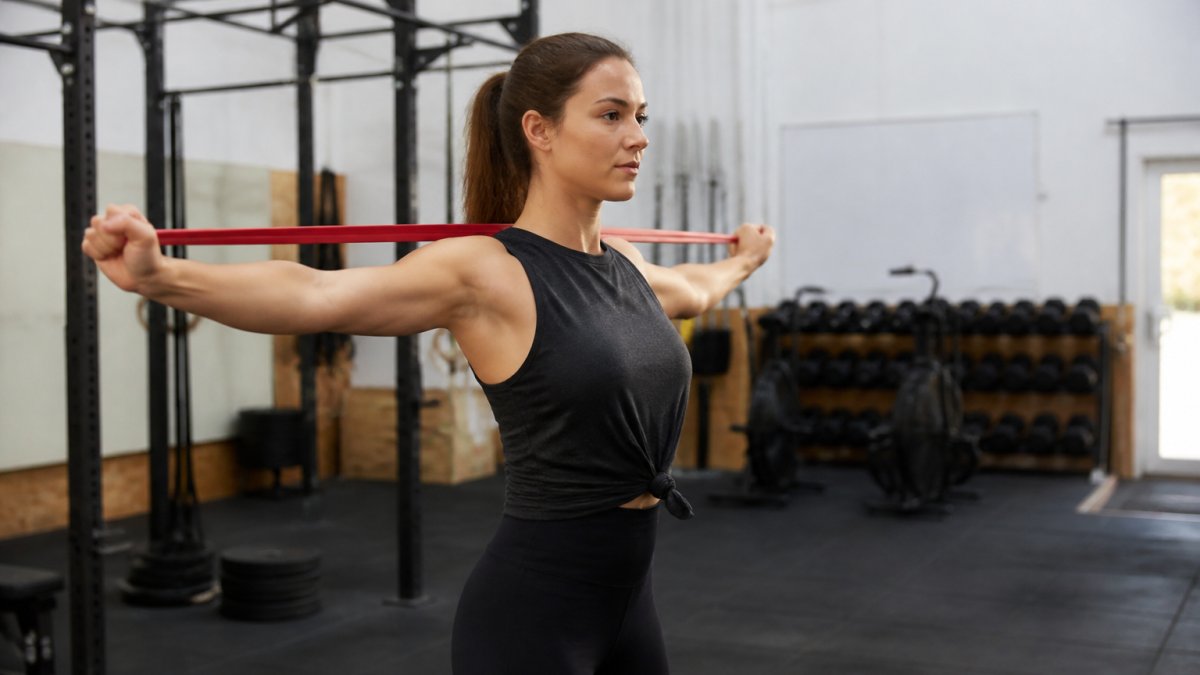
How to Choose Recovery Activity Based on Your Last Lift
After a heavy lower-body session (squats, deadlifts, leg press), your quads, hamstrings, and glutes are primed for gentle circulation. Avoid any loaded lower-body work.
After an upper-body pressing day (bench press, overhead press), your shoulders and triceps need blood flow without further strain.
After a full-body or Olympic lifting session, your entire system is taxed. Keep active recovery global and low-intensity: a walk, a swim, or a gentle yoga flow.
Upper Body Recovery Movements
Face pulls work well for shoulder health. Use a light weight or resistance band, pulling the rope toward your face with control to squeeze your rear delts.
Arm circles and shoulder rolls require no equipment.
Light yoga poses like child's pose and cat-cow release tension in your upper back and shoulders.
Foam rolling your upper back, shoulders, and chest releases tightness.
Lower Body Recovery Movements
After leg day, your quads, hamstrings, and glutes need attention.
Walking is the simplest lower-body active recovery tool.
Bodyweight squats done slowly help your knees and hips. Lower over 3 seconds, pause 1 second, then stand over 3 seconds.
Glute bridges activate your posterior chain gently.
Light stretching of your hip flexors, hamstrings, and calves reduces stiffness. Hold each stretch for 30 seconds without bouncing.
Intensity Limits and Measurable Effort Targets
Active recovery should never feel like a workout. Use these guardrails to stay in the recovery zone:
- Perceived exertion: Keep effort at 3-4 out of 10 (where 10 is an all-out sprint).
- Talk test: You should be able to speak in full sentences without gasping.
- Heart rate: Stay below 60-70% of your estimated maximum heart rate. For most lifters, that's under 120 beats per minute.
- Duration: 20-40 minutes total is sufficient. Longer sessions are fine only if effort stays very low.
- Load: If using weights or bands, choose a resistance you could do 20+ reps with. Never go to failure.
If you finish your active recovery session feeling tired or sore, you went too hard. Dial back the intensity or shorten the duration next time.
How Long Should Active Recovery Last for Optimal Results
Most active recovery sessions should last 20-40 minutes, long enough to boost blood flow without creating new fatigue.
Shorter sessions (15-20 minutes) work if you're busy, and longer ones (45-60 minutes) are fine as long as effort stays low.
The key is effort level, not duration.
Track how you feel the next day. If you're sore or fatigued after your session, it was too intense, dial back the effort or shorten the duration.
Active Recovery vs Rest Day: When to Choose Each
Complete rest means zero structured activity, you move around your home or office but do no planned exercise. Rest days are necessary and shouldn't feel like laziness.
Active recovery is planned, low-intensity movement done deliberately to aid recovery, not just going about your day.
Both have a place in your programme. Use complete rest when:
- You've completed a brutal training week with high volume
- You're feeling mentally fatigued and need a psychological break
- You're dealing with minor aches that light movement makes worse
- Your sleep has been poor and your body needs extra recovery time
Use active recovery when:
- You want to stay mobile between intense sessions
- You're feeling stiff but not injured
- You're tracking your progress and want measurable movement
- You have the energy and motivation to move
Many weightlifters rotate both, one complete rest day per week plus active recovery on 1-2 other days, to stay fresh without losing momentum.
Low-Intensity Cardio for Recovery Between Lifting Sessions
Low-intensity cardio improves circulation without interfering with muscle growth or strength gains.
Walking is the gold standard.
Cycling on a stationary bike or outdoors works well too.
Swimming or water walking offers low-impact movement, with the water supporting your joints through a full range of motion.
Rowing at a very light pace can work, but many weightlifters find it too demanding for true active recovery.
Structuring Active Recovery Into Your Lifting Schedule
A one-size-fits-all week doesn't work for weightlifters. Your active recovery schedule should match your lifting split, training volume, and how you feel. Here's how to build it for common splits, plus clear rules for when to choose complete rest instead.
Sample Schedules for Different Lifting Splits
Full-Body Split (3 days per week)
| Day | Activity |
|---|---|
| Monday | Heavy full-body lift |
| Tuesday | Active recovery: 20-30 minute walk or light yoga |
| Wednesday | Complete rest |
| Thursday | Heavy full-body lift |
| Friday | Active recovery: mobility work or easy cycling |
| Saturday | Heavy full-body lift |
| Sunday | Complete rest |
This gives you two active recovery days and two complete rest days. The active recovery days fall immediately after the hardest sessions, when blood flow is most beneficial.
Upper/Lower Split (4 days per week)
| Day | Activity |
|---|---|
| Monday | Heavy lower body |
| Tuesday | Active recovery: 20-30 minute walk, focus on hips and ankles |
| Wednesday | Heavy upper body |
| Thursday | Active recovery: light band work for shoulders, easy cycling |
| Friday | Lower body (moderate) |
| Saturday | Upper body (moderate) |
| Sunday | Complete rest |
Here, active recovery is tailored to the previous day's lift: lower-body recovery after lower-body day, upper-body recovery after upper-body day. The weekend is for complete rest to consolidate recovery.
Push-Pull-Legs Split (6 days per week)
| Day | Activity |
|---|---|
| Monday | Push (chest, shoulders, triceps) |
| Tuesday | Pull (back, biceps) |
| Wednesday | Active recovery: 20-30 minute walk or light yoga |
| Thursday | Legs |
| Friday | Push |
| Saturday | Pull |
| Sunday | Complete rest |
With six training days, active recovery is limited to one day mid-week and complete rest on Sunday. If you feel beat up, swap one training day for an extra active recovery day, listen to your body.
When to Choose Complete Rest or Seek Medical Advice
Active recovery isn't always the answer. Use complete rest when:
- You've completed a brutal training week with high volume or heavy loads.
- You're feeling mentally fatigued and need a psychological break.
- You're dealing with minor aches that light movement makes worse.
- Your sleep has been poor for several nights and your body needs extra recovery time.
Seek medical advice if you experience:
Ice Bath Tub – Portable Cold Plunge for Recovery →
- Sharp or persistent pain that doesn't improve with rest.
- Swelling, redness, or warmth in a joint or muscle.
- Fatigue that lasts more than a few days and interferes with daily life.
- Any symptom that feels like more than normal soreness.
Normal soreness is a dull, diffuse ache that improves with gentle movement. Warning signs are sharp, localized, or worsening, those warrant a professional opinion.
Managing Training Volume and Intensity
Active recovery should never add to your total training load. If your lifting volume is already high, keep active recovery to the lower end of the duration range (15-20 minutes) and stick to walking or gentle mobility. If you're in a deload week, you can extend active recovery to 30-40 minutes. The key is to keep the effort easy enough that you could do it again the next day without fatigue.
Combining Active Recovery With Cold Therapy for Maximum Results
Cold therapy reduces inflammation and speeds up recovery. When paired with active recovery, it addresses both movement and inflammation at the cellular level.
Here's how to combine them:
Step 1: Do your active recovery session first. Walk, stretch, or do mobility work for 20-30 minutes. This boosts blood flow to your muscles.
Step 2: Follow with cold exposure. Spend 3-5 minutes in cold water (around 50-59°F) or use an ice bath. The cold constricts blood vessels, which reduces inflammation.
Step 3: Warm up gradually afterward. Let your body temperature return to normal naturally. Don't jump into a hot shower immediately, give yourself 15-20 minutes.
This sequence works because active recovery primes your muscles for recovery, and cold therapy locks in the anti-inflammatory benefits. Learn the science behind why hot and cold exposure works for optimizing your recovery.
The Ice Bath Tub - Portable Cold Plunge for Recovery makes this process simple. It's designed for athletes who want professional-grade cold therapy at home.

Building Your First Active Recovery Week
Start simple. You don't need a complicated plan. Learn how to design a home recovery room so you have a dedicated space for your active recovery sessions.
Days 1-2: Pick two days this week for active recovery. Choose days after your hardest training sessions.
Choose one activity: Pick walking, light yoga, or mobility work.
Set a duration: Aim for 20-30 minutes. Don't overthink it. Consistency matters more than perfection.
Track how you feel: Write down your soreness level, energy, and sleep quality for the next three days. This gives you data on whether active recovery is working for you.
Add one more session next week: If the first week goes well, add a second active recovery day the following week.
Combine with cold therapy: Once you're comfortable with active recovery alone, add 3-5 minutes of cold exposure after one session. You can maximize infrared sauna benefits for recovery by incorporating heat therapy into your routine as well. Notice how your recovery improves.
Active recovery isn't laziness, it's a training tool. At Thermo Plunge Recovery Systems, we've built products that make this process effortless. Shop our ice bath systems to speed up your recovery and train harder next week.
Frequently Asked Questions
What's the difference between active recovery and a complete rest day?
Active recovery involves light, low-intensity movement that promotes circulation and muscle recovery without causing fatigue. A complete rest day means no structured exercise at all. For weightlifters, active recovery is useful on days between intense training sessions to maintain mobility and reduce soreness, while complete rest days allow your nervous system to recover fully. Most lifters benefit from both: 2-3 active recovery days and 1-2 full rest days per week, depending on training volume and intensity.
How long should active recovery last for weightlifters?
Active recovery sessions typically last 15-30 minutes. This duration is long enough to improve circulation and mobility without triggering muscle fatigue or interfering with your main training. Shorter sessions (10-15 minutes) work if time is limited; longer sessions (30-45 minutes) are fine for easy walking or gentle yoga. The key is keeping intensity low enough that you could hold a conversation throughout.
Can you do light weight training on an active recovery day?
Yes, but only with very light weights and high repetitions. Active recovery lifting means using 30-50% of your normal working weight for 12-15 reps with minimal rest. Movements like face pulls, rear delt flyes, and light upper back work are ideal. Avoid heavy compound lifts or anything that causes muscle fatigue. The goal is movement and circulation, not strength stimulus.
What's the best low-intensity cardio for recovery between lifting sessions?
Walking, cycling at an easy pace, and swimming are excellent options. Aim for 15-30 minutes at a conversational intensity where you could speak in full sentences. These activities improve blood flow to muscles without creating additional training stress. Avoid high-intensity cardio on active recovery days, as it competes with your lifting recovery.
