

Cost-Benefit Analysis of Gym Recovery Equipment
Table of Contents
- Understanding Gym Recovery Equipment Investment
- Cold Plunge for Gym: Equipment Options and Pricing
- Gym Equipment Buy or Lease Comparison
- Gym Equipment ROI Calculation Framework
- Gym Recovery Room Equipment: Long-Term Operating Costs
- Total Cost of Ownership: What Actually Matters
- Tax Deductions, Depreciation, and Financial Benefits
- Decision Framework: Is Recovery Equipment Right for Your Gym?
- Frequently Asked Questions
Last Updated: October 10, 2026
Understanding Gym Recovery Equipment Investment
Investing in gym recovery equipment requires balancing upfront costs against member retention, revenue, and operational sustainability.
Recovery equipment has shifted from luxury amenity to competitive necessity. The question is which equipment delivers genuine ROI for your business model.
Cold Plunge for Gym: Equipment Options and Pricing
Understanding how cold plunges compare operationally and financially to alternatives is essential for a true cost-benefit analysis of gym recovery equipment.
Cold Plunge Systems: Configurations and Costs
Portable cold plunge systems ($150-$400) offer the lowest entry point but require manual ice management and last only 2-3 years with heavy use, ideal for testing demand.
Integrated chiller systems ($1,650-$2,300) combine a water chiller with an XL ice bath tub, support multiple daily sessions, and last 5-7 years. Daily operating cost: approximately $2-$3 in electricity per session.

Commercial-grade plunge systems ($4,000-$8,000+) include larger capacity tubs, redundant chillers, and advanced filtration. Installation and infrastructure add $2,000-$4,000. These justify their cost only in facilities with 10+ daily cold plunge sessions.
Operational Requirements: Space, Power, Water, and Drainage
Space footprint: A standard cold plunge occupies 60-80 square feet; a commercial system requires 120-150 square feet.
Electrical requirements: Integrated chillers demand 110V or 220V with 20-30 amp capacity. Commercial systems require dedicated 220V with 50+ amp capacity.
Water and drainage: All chiller-equipped systems require drainage access and consume approximately 50-100 gallons weekly for filter backflush.
Cleaning and sanitation: Cold plunges require weekly water testing and monthly filter replacement, plus 2-4 hours weekly labour.
Recovery Equipment Category Comparison
| Equipment Type | Purchase Price | Monthly Operating Cost | Space Required | Electrical Demand | Typical Daily Sessions | Revenue per Session |
|---|---|---|---|---|---|---|
| Cold Plunge (integrated chiller) | $1,650-$2,300 | $60-$120 | 60-80 sq ft | 110V/220V, 20-30A | 8-15 | $15-$25 |
| Infrared Sauna (2-person) | $3,500-$5,000 | $150-$200 | 50-70 sq ft | 110V, 15A | 6-12 | $20-$30 |
| Compression Therapy System | $2,500-$6,000 | $50-$80 | 40-60 sq ft | 110V, 15A | 10-20 | $25-$40 |
| Massage Chair/Device | $800-$3,000 | $30-$50 | 20-40 sq ft | 110V, 15A | 15-25 | $10-$20 |
| Contrast Therapy (hot/cold) | $4,000-$8,000 | $200-$300 | 100-150 sq ft | 220V, 40-50A | 8-12 | $30-$50 |
Gym Equipment Buy or Lease Comparison
The buy-versus-lease decision fundamentally shapes your financial picture. Each approach carries distinct cash flow, tax, and flexibility implications.
Upfront Purchase Costs and Financing
A complete cold plunge setup with chiller runs $999.95 for the chiller and $648.95 for an XL ice bath tub. A full recovery room with multiple modalities can exceed $3,999.95 for an infrared sauna.

Equipment loans spread payments across 36-60 months but increase total cost through interest.
Purchase advantages: ownership, control, and tax depreciation. Disadvantages: locked-in equipment and full repair responsibility.
Monthly Lease and Rental Models
Leasing shifts capital expenditure to operating expense. Monthly lease payments for gym recovery equipment are not offered by Thermo Plunge Recovery Systems.
Leasing advantages: lower upfront cost and built-in maintenance. Disadvantages: higher total cost over time (30-50% more than purchasing) and no ownership equity.
| Equipment Type | Purchase Price | Monthly Lease Cost | 5-Year Purchase Total | 5-Year Lease Total |
|---|---|---|---|---|
| Cold Plunge System (with chiller) | $1,650 | $45-$65 | $1,650 + maintenance | $2,700-$3,900 |
| Infrared Sauna (2-person) | $3,999.95 | $100-$150 | $3,999.95 + maintenance | $6,000-$9,000 |
| Complete Recovery Room (3+ units) | $6,500-$8,000 | $200-$300 | $6,500-$8,000 + maintenance | $12,000-$18,000 |
Gym Equipment ROI Calculation Framework
If your average member pays $100 monthly and stays 18 months, lifetime value is $1,800. Recovery amenities that increase retention by one month add $100 per member.
Many gyms charge $15-$25 per cold plunge session or bundle recovery into premium tiers (+$30-$50 monthly). At $20 per session with 10 daily users, you generate $200 daily ($73,000 annually).
Ice Bath Tub – Portable Cold Plunge for Recovery →
Payback Period and Break-Even Analysis
Payback period measures how many months until cumulative revenue covers equipment cost. For a cold plunge system generating $200 daily revenue, payback occurs in approximately 8-9 months.
Cold plunge systems consume 500-800 kWh monthly plus $50-$100 monthly maintenance.
Member Retention and Revenue Impact
Recovery equipment's strongest benefit is member retention. Facilities offering premium recovery amenities report 15-25% higher retention among regular users.
Recovery amenities that reduce churn from 5% to 3% for engaged members generate significant value. On a 500-member gym, that's 10 fewer cancellations monthly, or $1,000 in preserved revenue annually.
Gym Recovery Room Equipment: Long-Term Operating Costs
True total cost of ownership requires budgeting for maintenance, utilities, space, staffing, compliance, and replacement across 5-7 years.
Maintenance, Repairs, and Replacement Schedule
Recovery equipment demands predictable and sometimes unexpected maintenance costs.
Cold plunge systems: Weekly water testing and monthly filter replacement ($20-$40). Annual chiller servicing ($150-$300). Over five years, budget $2,000-$3,500 in maintenance.
Infrared saunas: Bulb replacement ($100-$200 per bulb every 2-3 years) and annual wood conditioning ($200-$300). Over five years, budget $1,500-$2,500.
Contrast therapy systems (hot/cold combined): Highest maintenance burden with annual servicing and twice-yearly inspections. Over five years, budget $3,000-$5,000.
Utilities, Space, and Infrastructure Costs
Electricity: The largest ongoing utility expense. A complete recovery room with multiple modalities consumes 2,000-2,500 kWh monthly.
Water and sewer: Cold plunges require 50-100 gallons weekly.
Space allocation: A complete recovery room with multiple modalities needs 300-500 square feet.
Installation and infrastructure: Electrical upgrades, plumbing, and ventilation are typically required upfront. Some facilities require HVAC modifications.
Staffing, Training, and Compliance Costs
Recovery equipment requires trained staff and ongoing compliance oversight.
Staff training: Initial certification and refresher training for staff are typically required.
Sanitation and cleaning protocols: Allocate 4-8 hours weekly of staff time or contract cleaning services.
Liability and insurance: Recovery equipment increases facility liability exposure.
Compliance and safety: Some jurisdictions require permits and health department compliance.
Ice Bath Tub – Portable Cold Plunge for Recovery →
Transparent Five-Year Total Cost of Ownership Model
Here's a realistic total-cost model for a mid-sized recovery room (cold plunge + infrared sauna + compression system):
| Cost Category | Year 1 | Year 2 | Year 3 | Year 4 | Year 5 | 5-Year Total |
|---|---|---|---|---|---|---|
| Equipment purchase & installation | $8,500 | , | , | , | , | $8,500 |
| Electricity | $3,600 | $3,600 | $3,600 | $3,600 | $3,600 | $18,000 |
| Water & sewer | $1,200 | $1,200 | $1,200 | $1,200 | $1,200 | $6,000 |
| Space allocation (allocated rent) | $12,000 | $12,000 | $12,000 | $12,000 | $12,000 | $60,000 |
| Maintenance & repairs | $800 | $1,000 | $1,500 | $1,200 | $1,500 | $6,000 |
| Staffing & sanitation labour | $3,600 | $3,600 | $3,600 | $3,600 | $3,600 | $18,000 |
| Liability insurance premium increase | $1,000 | $1,000 | $1,000 | $1,000 | $1,000 | $5,000 |
| Compliance & permits | $300 | $300 | $300 | $300 | $300 | $1,500 |
| Total 5-Year Cost | $30,800 | $22,700 | $23,200 | $22,900 | $23,200 | $123,000 |
The largest cost drivers are space allocation (49% of total) and electricity (15%). Many gym owners underestimate space cost because it's an opportunity cost rather than a direct cash outlay.
Equipment Lifespan and Replacement Cycles
Recovery equipment doesn't last indefinitely. Plan for replacement:
- Cold plunge chillers: 5-7 years (compressor degradation)
- Infrared sauna heater elements: 7-10 years (bulb lifespan)
- Compression therapy compressors: 5-8 years
- Contrast therapy systems: 5-7 years (dual heating/cooling complexity)
At year 5-6, budget for major component replacement or full equipment replacement. This is a critical planning point: if your recovery equipment hasn't generated sufficient member retention or direct revenue by year 5, replacement investment becomes harder to justify.
Total Cost of Ownership: What Actually Matters
A cold plunge system with monthly operating costs totals over five years. If it generates daily revenue, net benefit can be significant.
The decision hinges on your facility's growth trajectory and capital constraints. Established gyms with stable membership favour purchase. Growing facilities or those with limited capital favour leasing.
Tax Deductions, Depreciation, and Financial Benefits
Under Section 179, businesses can deduct the full cost of qualifying equipment purchases in the year of purchase. Recovery equipment typically qualifies, potentially lowering tax liability significantly.
Alternatively, depreciation spreads deductions over the asset's useful life (5-7 years using MACRS).
Consult a tax professional to determine which approach maximises your facility's tax benefit.
Decision Framework: Is Recovery Equipment Right for Your Gym?
Survey your membership: if 30%+ express interest in recovery amenities, demand justifies investment. If fewer than 15% show interest, test demand with a low-cost portable option first.
Model revenue conservatively: assume 40-60% of interested members will actually use recovery services. If 50 members use cold plunge at $20 per session twice monthly, that's $2,000 monthly recurring revenue.
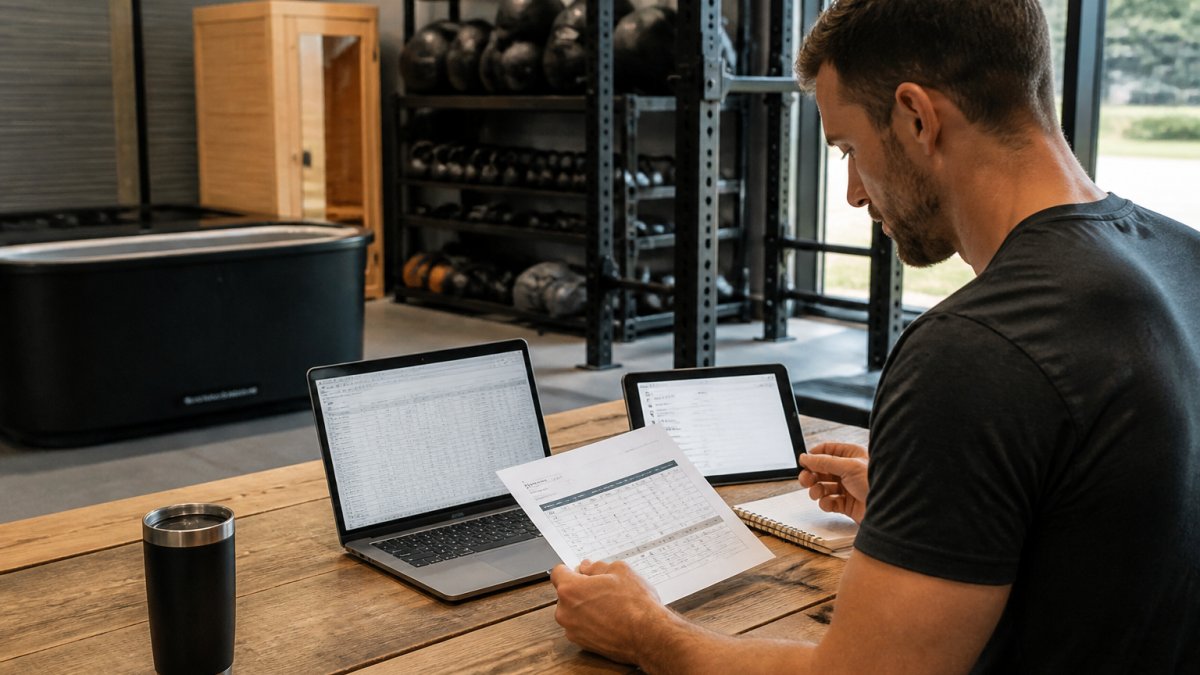
Assess your facility's operational capacity. Recovery equipment requires staff training, member education, and consistent maintenance. If you have bandwidth and genuine interest in member wellness, recovery equipment becomes a competitive differentiator.
For most established gyms with 200+ members and stable cash flow, investing in a cold plunge system and infrared sauna can deliver positive ROI.
Recovery equipment represents a meaningful capital investment, but the financial case is solid when you approach it strategically. The real question isn't whether you can afford recovery equipment, it's whether you can afford to ignore member demand for it. At Thermo Plunge Recovery Systems, we provide the professional-grade cold plunge and sauna systems that deliver measurable member outcomes. Our equipment comes with a 30-day guarantee, free shipping, and 24/7 support, ensuring your investment is protected from day one. Explore our Upgrade XL Ice Bath Tub and Infrared Sauna to see how professional recovery equipment transforms member experience and facility profitability.
Frequently Asked Questions
Is recovery equipment worth the investment for a gym?
Recovery equipment can drive significant ROI if your members actively use it. Gyms that add cold plunge or infrared sauna systems typically see increased member retention through higher renewal rates and premium membership tiers. The payback depends on facility size, member demographics, and pricing strategy.
How do you calculate the ROI of gym equipment?
Start with total cost of ownership: equipment purchase price, installation, monthly utilities, maintenance, and expected replacement timeline. Divide this by annual revenue generated (membership upgrades, premium recovery packages, or increased retention). Track member usage rates and correlate recovery amenities to renewal decisions.
Should a gym buy or lease recovery equipment?
Buying makes sense if you plan to operate the equipment for 5+ years and have capital available. Consider your facility's growth plans, member commitment to recovery services, and cash flow before deciding.
What are the typical total costs for gym recovery equipment?
Entry-level cold plunge systems start at $169.95 for portable tubs; professional-grade chillers are $999.95. Infrared saunas are $3,999.95 for 2-person models. Annual operating costs (utilities, filters, maintenance) and installation, freight, and warranty coverage are additional considerations.