

Creating a Meditation Corner at Home: 7-Step Guide
Table of Contents
- Step 1: Choose a Quiet Spot for Your Meditation Corner
- Small Meditation Corner Ideas for Apartments and Tight Rooms
- What to Put in a Meditation Corner: Seating, Scents, and Simple Decor
- The Best Lighting for a Meditation Space
- How to Start Meditating at Home: A Simple Daily Routine
- Renter-Friendly and Low-Cost Ways to Personalize Your Meditation Corner
- Common Mistakes to Avoid When Creating a Meditation Corner
- Conclusion
- Frequently Asked Questions
Last Updated: October 21, 2026
Step 1: Choose a Quiet Spot for Your Meditation Corner
Creating a meditation corner at home starts with one decision: where it goes. The best spot is a low-traffic area you can reach without crossing the busiest room in the house. At Thermo Plunge Recovery Systems, we build recovery tools for home wellness spaces, and we've learned that location sets the tone for everything that follows.
A meditation corner is a small, dedicated area reserved for stillness and mindfulness practice. It does not need its own room. It needs consistency.
Pick a spot with three traits:
- Low foot traffic, away from the TV and front door
- A door you can close, or a wall that blocks sightlines
- Enough room for a cushion plus a little breathing space
Bedrooms and home offices usually win. Corners near kitchens lose, because noise and smell travel.
Small Meditation Corner Ideas for Apartments and Tight Rooms
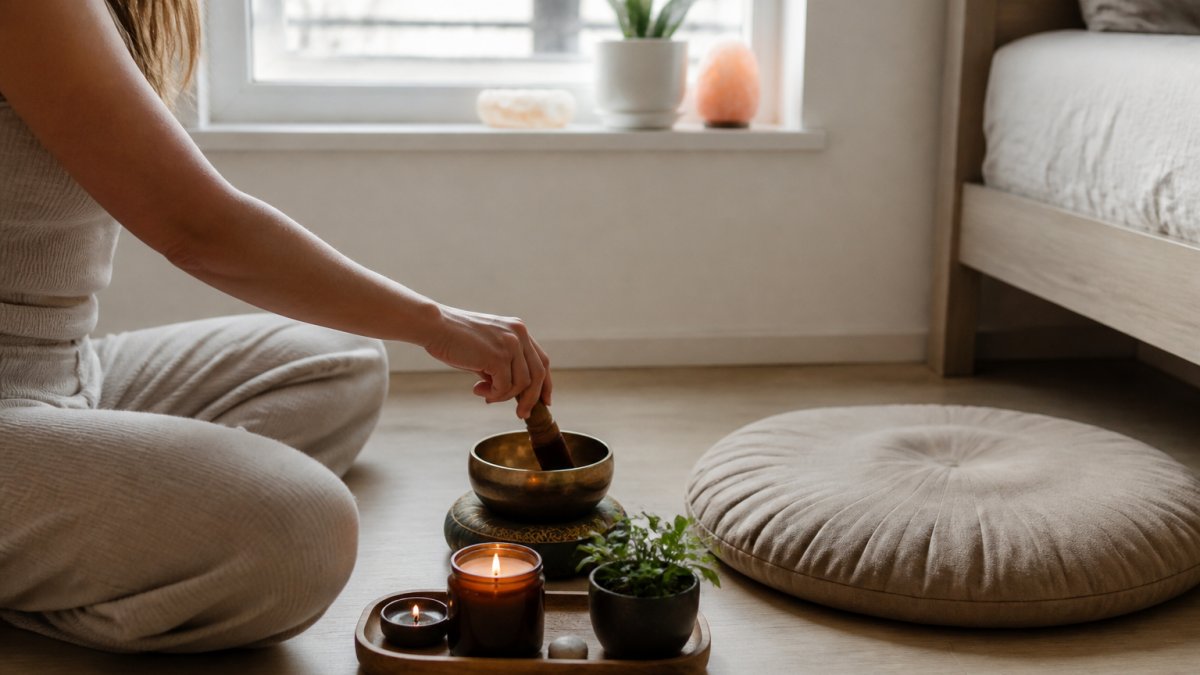
Small meditation corner ideas work best when they claim vertical space and stay visually light. A tight apartment does not rule out a real practice space. The key is to define the area with clear boundaries and keep the footprint minimal.
A functional meditation corner needs about 3 feet by 3 feet of floor space for a cushion or mat, plus enough clearance to stand up without hitting a wall or furniture. If you sit on a chair, allow 2 feet of depth behind the chair for safe rising. These dimensions fit into most bedrooms, studio apartments, and even large closets.
Try these layouts:
- The closet nook: Clear a shelf, add a cushion on the floor below, and leave the door open. A 2-foot-deep closet works if you remove the door or use a curtain.
- The window wedge: A corner beside a window, with a mat rolled against the wall when not in use. Use a sheer curtain to soften glare.
- The under-stairs pocket: A low stool and one plant turn dead space into a quiet space. Measure head clearance first; you need at least 4 feet of height to sit comfortably.
- The bed-end strip: A folded blanket and a small tray of meaningful objects at the foot of the bed. Keep a 2-foot walkway clear.
- The wall-adjacent chair: A small armless chair facing a blank wall, with a side table for a candle or timer. This suits renters who cannot modify walls.
For shared rooms, use a folding screen or a tension rod with a curtain to create a visual boundary without permanent changes. A room divider can also block sightlines and reduce distractions.
Measure your candidate spot with painter's tape before buying anything. Mark a 3x3-foot square and sit inside it for five minutes to test comfort and clearance.
What to Put in a Meditation Corner: Seating, Scents, and Simple Decor
What to put in a meditation corner comes down to three layers: something to sit on, something to look at, and something to smell. Skip the rest.
Seating. A meditation cushion or floor cushion supports the hips and keeps the spine tall. A folded blanket works if you prefer kneeling. A small bench suits anyone with knee discomfort. Comfort matters more than style, because a fidgeting body cannot settle.
Scents. A single soothing scent, such as cedar, lavender, or sandalwood, signals practice time. Keep it light. Strong fragrance distracts more than it calms.
Decor. Choose one focal point: a plant, a stone, a small bowl, or a framed photo with meaning. Add a simple mat underneath to define the edge of the space.
Less really is more here. A corner with three objects reads as calm. A corner with fifteen reads as clutter.
The Best Lighting for a Meditation Space
The best lighting for a meditation space is soft, adjustable, and never overhead-bright. Light shapes mood more than any other element.
A calm setup usually combines:
- Natural light from a window, softened with a sheer curtain
- One warm-white lamp on a dimmer, placed below eye level
- A candle or small lantern for evening practice
Avoid harsh overhead fixtures and cool blue light, which keep the brain alert. If you meditate in the morning, face the window. If you practice at night, keep the room dim and let the lamp do the work.
Never leave a burning candle unattended, and keep it clear of curtains, cushions, and pets. A fire risk undoes every benefit of a peaceful atmosphere.
How to Start Meditating at Home: A Simple Daily Routine
How to start meditating at home is simpler than most guides suggest: sit, breathe, and repeat at the same time each day. The routine matters more than the technique.
Here is a starter plan you can follow:
- Pick a time. Morning before the house wakes, or evening after dinner. Same time daily.
- Set a timer. Start with five minutes. Add one minute each week.
- Sit in your corner. Cushion, tall spine, hands resting on your knees.
- Follow your breath. Count each exhale from one to ten, then start over.
- Notice and return. When your mind wanders, bring it back without judgment.
- Close with one sentence. Note how you feel, then stand and leave the space.
The first week feels awkward. That is normal and it passes. Consistency builds the habit faster than longer sessions.
Renter-Friendly and Low-Cost Ways to Personalize Your Meditation Corner
Renter-friendly setups prove that a sacred space does not require renovation. You can build a real corner with no nails, no paint, and a small budget. The goal is to create a calm atmosphere using removable, repurposed, or inexpensive items.
Start with a budget of $20 to $50. Most of what you need can be found secondhand or already in your home.
Try these moves:
- Use removable adhesive hooks for a small hanging plant or fabric backdrop. Command strips hold up to 5 pounds and remove without damage.
- Layer a rug over rental carpet to define the area without fixing anything down. A 3x5-foot rug is enough for a cushion and a small tray.
- Choose non-toxic paint only if your lease allows it; otherwise use fabric and light to change the mood. A tension rod with a sheer curtain can soften a wall.
- Shop secondhand for cushions, trays, and small stools. Thrift stores often have meditation cushions for under $15.
- Repurpose what you own: a scarf as a wall hanging, a wooden board as a tray, a small box as a focal point.
- Use a floor lamp with a dimmer instead of overhead lighting. A warm-white bulb (2700K) creates a calming glow.
For sensory sensitivities, skip scented candles and incense. Instead, use a fragrance-free beeswax candle or a small essential oil diffuser with a mild scent like lavender. If you use candles, never leave them unattended and keep them away from curtains and cushions.
Accessibility matters too. If you cannot sit on the floor, use a firm chair with back support or a meditation bench. A folded blanket under the knees can relieve joint pressure. For those with mobility issues, place the corner near a wall or sturdy furniture for support when standing up.
Personalize with sound too. A small speaker or a phone on airplane mode playing soft ambient noise creates a peaceful atmosphere without any installation. Keep the volume low and choose sounds that do not startle.
Photograph your corner once it feels right. When you move, the photo becomes a template for rebuilding the same calm in a new space.
Check your lease before using adhesive hooks or tension rods. Some landlords prohibit any wall attachments, even removable ones.
Common Mistakes to Avoid When Creating a Meditation Corner
The biggest mistake with a meditation corner is treating it as storage that occasionally hosts a cushion. A dedicated area only works if it stays dedicated.
Watch for these pitfalls:
- Choosing a high-traffic spot. The hallway or living room keeps your brain in "go" mode.
- Over-decorating. Too many objects create visual noise and mental clutter.
- Ignoring comfort. A numb foot ends a session faster than a wandering mind.
- Skipping the routine. A beautiful corner you visit twice a month changes nothing.
- Harsh lighting. Bright overhead light fights the relaxation you are trying to build.
Fix these and the space starts doing half the work for you.
Conclusion
Building a meditation corner at home asks for a quiet spot, simple seating, soft light, and a routine you repeat. The space does not need to be large or expensive. It needs to be yours.
Once your corner is set, recovery and relaxation can share the same calm. At Thermo Plunge Recovery Systems, we offer infrared saunas, ice baths, sauna blankets, and red light therapy tools designed for home wellness spaces, all backed by free shipping, a 30-day guarantee, and 24/7 support. Shop with us and turn your calm corner into a full recovery routine.
Frequently Asked Questions
Where should I put a meditation corner in my home?
Pick a spot you can reach without crossing busy rooms. A bedroom corner, a quiet end of the living room, or a nook near a window works well. Avoid high-traffic areas and places facing a television or computer. The space does not need to be large; a patch of floor about the size of a yoga mat is enough. Once you choose the spot, use it only for meditation so your brain starts to associate that location with calm.
What should I put in a meditation corner?
Keep it simple. Start with a comfortable cushion or mat, one or two meaningful objects, and a plant if you like greenery. Soft, warm lighting helps, and a small speaker for ambient sound is optional. Avoid clutter and anything that reminds you of work. A blanket for cooler rooms and a timer or app for sessions rounds out the setup. The goal is a space that feels inviting without requiring a lot of stuff.
How do I start meditating at home if I have never done it before?
Sit in your corner for two minutes a day and focus on your breath. When your mind wanders, return to the breath without judging yourself. Pick the same time each day, such as right after waking or before bed. A timer helps you avoid checking the clock. Once two minutes feels easy, add a minute each week. Short, consistent sessions build the habit faster than long, occasional ones.
What is the best lighting for a meditation space?
Soft, warm light works best. Natural daylight from a window is ideal during the day, but avoid direct sun in your eyes. In the evening, use a lamp with a warm bulb or a small salt lamp instead of overhead lights. Dimmable options let you adjust the mood. Avoid harsh fluorescent lighting and screens. If your corner has no window, a single warm floor lamp pointed at the wall gives a gentle glow.
A quick word on sources: The guidance above reflects widely accepted mindfulness and home-design practice, not clinical claims. For general information on meditation and safety, see the NCCIH meditation resource and the American Psychological Association's mindfulness research summary. For lighting and indoor air guidance, the U.S. Department of Energy's home lighting basics is a useful starting point.