

How to Clean Home Recovery Equipment: A 2026 Guide
Table of Contents
- Why Cleaning Home Recovery Equipment Matters
- Supplies You Need to Clean Recovery Gear
- How Often to Clean Workout Equipment and Recovery Tools
- How to Clean an Ice Bath Between Uses
- How to Clean an Infrared Sauna Safely
- How to Clean a Sauna Blanket Without Damage
- Cleaning vs. Disinfecting: What's the Difference?
- Conclusion: Build a Simple Cleaning Routine
- Frequently Asked Questions
Last Updated: October 13, 2026
Why Cleaning Home Recovery Equipment Matters
Learning how to clean home recovery equipment properly is the difference between a tool that helps you recover and one that makes you sick. Sweat, skin cells, and body oils linger on every surface you touch. In shared spaces, that residue becomes a highway for bacteria and fungal infections.
At Thermo Plunge Recovery Systems, we hear the same question from customers: how much work is it really to keep this gear clean? Less than you think, if you build the right habits.
Cleaning home recovery equipment is the routine practice of removing sweat, dirt, and residue from ice baths, saunas, blankets, and weights before and after each session. It keeps materials in good shape and protects everyone who uses them.
A common mistake is treating a quick rinse as enough. It isn't. Residue builds up in seams, folds, and textured surfaces where a rinse never reaches. Once that layer forms, it traps moisture and odour, and it can damage rubber and plastic over time.
The five-step routine below covers every major piece of gear in a typical home gym.
Supplies You Need to Clean Recovery Gear
Gather your supplies before you start, so you never leave a wet surface sitting while you hunt for a cloth. Most of what you need is already in your kitchen.
- Mild soap or dish liquid
- Two clean cloths or microfiber towels
- A soft scrubbing brush
- A spray bottle
- White vinegar
- Water
- Disinfectant wipes or an equipment-safe cleaner
- Gloves for shared gear
Skip harsh chemicals like bleach on rubber and plastic unless the maker says otherwise. Bleach can dry out rubber, crack plastic, and strip finishes. A mild soap and water mix handles most daily jobs.
How Often to Clean Workout Equipment and Recovery Tools
Wipe down every piece of gear after each use, and deep clean once a week. That single rule covers most home setups, but recovery devices need more nuance because their materials and electronics vary widely.
Here is a schedule by equipment type, with notes on what to check:
| Equipment | After Each Use | Deep Clean | Special Notes |
|---|---|---|---|
| Dumbbells and hand weights | Wipe down | Weekly | Check knurling for residue buildup |
| Benches and racks | Wipe down | Weekly | Pay attention to seams and bolt holes |
| Ice bath tub | Rinse and wipe | Weekly | Drain and dry fully between uses |
| Infrared sauna | Wipe benches | Monthly | Vacuum floor weekly; never wet the heater |
| Sauna blanket | Wipe liner | After 3-5 uses | Air-dry completely before folding |
| Foam roller | Wipe down | Weekly | Check for cracks; replace if surface breaks down |
| Massage gun | Wipe housing and head | Weekly | Remove battery before cleaning; never submerge |
| Compression boots | Wipe liners | After 3-5 uses | Check hoses and ports for moisture |
| Heating pad | Wipe cover | Monthly | Unplug before cleaning; check cord for damage |
| Recovery mat | Wipe down | Weekly | Air-dry both sides; roll loosely for storage |
Shared household gear needs more attention. If two or more people train in the same space, wipe handles and benches between users, not just at the end of the day. For recovery devices that contact skin directly, foam rollers, massage gun heads, compression boot liners, clean between users every time, especially during cold and flu season.

The CDC guidance on cleaning and disinfecting surfaces makes a useful point: cleaning removes germs, while disinfecting kills them. Daily wiping handles the first job. Disinfecting matters most when someone in the house is sick or when gear is shared.
For electronics like massage guns, compression boots, and heating pads, unplug or remove batteries before cleaning. Never spray liquid directly onto ports, motors, or control panels. Spray your cloth first, then wipe.
Ice Bath Tub – Portable Cold Plunge for Recovery →
How to Clean an Ice Bath Between Uses
Rinse the tub, wipe the inside with mild soap and water, then dry it fully before you refill. That takes about five minutes.
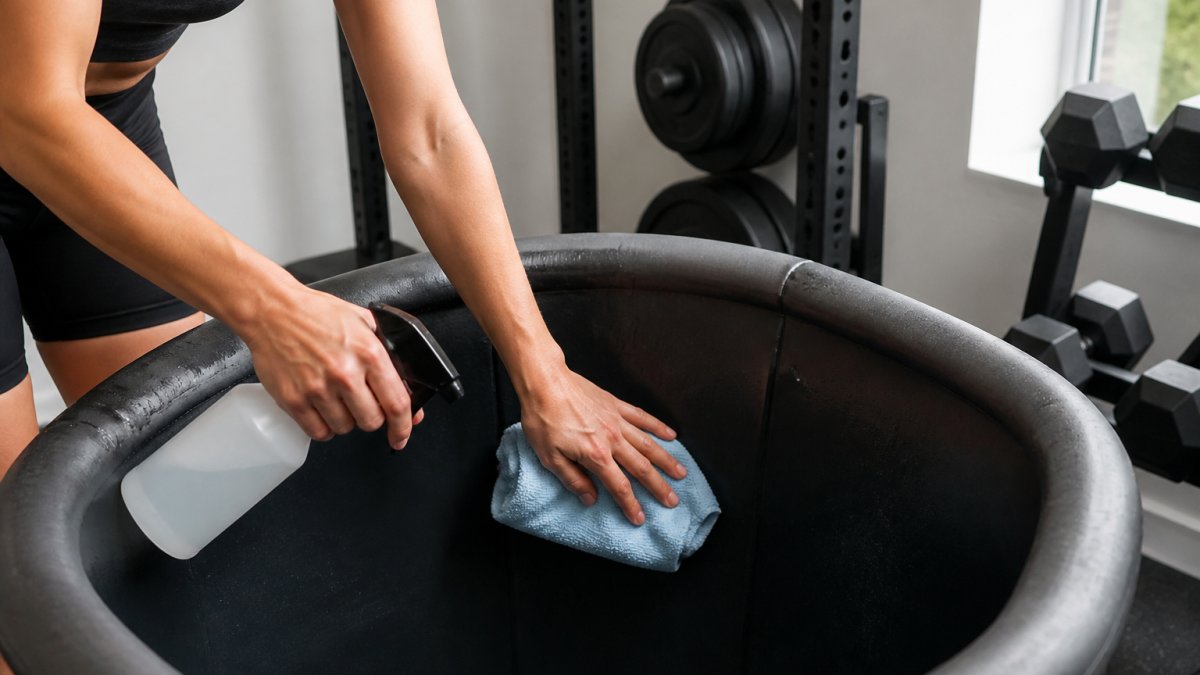
Here is how to clean an ice bath step by step:
- Drain the tub completely.
- Rinse the interior to lift loose residue.
- Mix a few drops of mild soap with warm water.
- Wipe every surface with a clean cloth.
- Rinse again so no soap film remains.
- Dry with a second cloth.
- Leave the tub open to air-dry before refilling.
Watch the seams and the base. Water pools there, and that is where odour starts.
If you run a chiller, check its filter on the schedule the maker gives you. A clogged filter means cloudy water and more cleaning work later. Our Ice Bath Tub folds down for storage, which makes draining and drying far easier between sessions.
How to Clean an Infrared Sauna Safely
Wipe the benches with a damp cloth and mild soap, then dry them right away. Never pour water on the heater or the control panel.
Heat and moisture are hard on electronics. Keep liquid away from every electrical part, and unplug the unit before you clean near it.
A simple routine:
- Wipe benches and backrests after each session
- Sweep or vacuum the floor weekly
- Wipe the exterior with a dry cloth
- Check the maker's manual for heater care
For how to clean an infrared sauna, the manual beats any general guide. Makers list the cleaners that void your warranty, and those lists vary by model.
How to Clean a Sauna Blanket Without Damage
Wipe the liner with a damp cloth and mild soap, then let it air-dry fully before folding. Never soak a sauna blanket or put it in a washing machine.
The heating elements sit inside the layers. Water that reaches them can ruin the blanket and create a shock risk.
Steps for how to clean a sauna blanket:
- Unplug the blanket and let it cool.
- Dampen a cloth with mild soap and water.
- Wipe the inner liner from top to bottom.
- Wipe again with a clean, damp cloth to remove soap.
- Lay it flat and let it air-dry.
- Fold only once it is completely dry.
Sweat often reaches the outer fabric too. Wipe that surface as well, and store the blanket flat or loosely rolled.
Ice Bath Tub – Portable Cold Plunge for Recovery →
Cleaning vs. Disinfecting: What's the Difference?
Cleaning removes dirt, sweat, and germs from a surface. Disinfecting kills germs that remain after cleaning. You need both, but not at the same frequency, and the method depends on what the equipment is made of.
Clean after every session. Disinfect when gear is shared, when someone is sick, or when you notice odour that soap does not fix.
The EPA's guidance on choosing a disinfectant explains that disinfectants only work on surfaces that are already clean. Dirt blocks the active ingredients from doing their job. Check the product label for contact time, the surface must stay wet for the listed time, often 30 seconds to 10 minutes, for the disinfectant to work.
Match the method to the material:
- Foam (rollers, mats): Wipe with a damp cloth and mild soap. Avoid soaking, which breaks down foam cells. Air-dry completely before storage. Replace foam rollers when the surface cracks or crumbles.
- Fabric and upholstery (compression boot liners, sauna blanket liners): Wipe only, never soak. Use a damp cloth with mild soap, then wipe again with a clean damp cloth. For removable covers, check the care label, some are machine washable on gentle cycles.
- Silicone and rubber (massage gun heads, grips): Wipe with mild soap and water or an equipment-safe cleaner. Silicone can tolerate more scrubbing than foam. Avoid bleach, which degrades rubber over time.
- Hard plastic (massage gun housing, heating pad controls, ice bath rims): Wipe with a damp cloth. Spray cleaner onto the cloth, not the device, to keep liquid out of seams and ports.
- Metal frames (benches, racks): Damp cloth, then dry immediately to prevent rust.
- Wood (sauna benches): Dry cloth with minimal moisture. Too much water raises the grain and can warp the wood.
After cleaning, always air-dry completely before storing. Moisture trapped in folds, seams, or between stacked items grows bacteria and mildew. Store recovery gear in a dry, ventilated space. Roll mats loosely rather than folding them tightly, and hang compression boots or lay them flat.
Conclusion: Build a Simple Cleaning Routine
The gear you own only works as well as you maintain it. A five-minute wipe-down after each session prevents most of the problems that shorten equipment life and spread infection in shared homes.
Thermo Plunge Recovery Systems builds recovery tools for people who train hard and want gear that lasts. Our range includes infrared saunas, ice baths, sauna blankets, and red light therapy tools, all backed by free shipping, a 30-day guarantee, and 24/7 support.
Start with the ice bath and the weights you use most. Add the sauna and blanket to your weekly deep clean. Get started with Thermo Plunge Recovery Systems and keep your recovery space clean, safe, and ready for the next session.
Frequently Asked Questions
How do I clean home recovery equipment after using it?
Wipe down surfaces with a damp cloth and mild soap right after each session. For ice baths, rinse and dry the tub interior. For sauna blankets, wipe the interior with a soft cloth and let it air-dry completely before folding. Always check the manufacturer's instructions first, since some materials, like rubber and plastic, can be damaged by harsh chemicals.
How often should I clean recovery equipment?
Clean high-touch surfaces like handles and benches after every use. Do a deeper clean weekly for items like ice baths and sauna blankets, and monthly for infrared saunas. If you share equipment with family members or train in a home gym with others, increase frequency to reduce the spread of bacteria and sweat buildup.
What cleaner is safe for recovery equipment?
Mild soap and water works for most surfaces. For disinfecting, use an equipment-safe cleaner. Avoid bleach on rubber, plastic, or sauna blanket interiors unless the manufacturer approves it. Always test a small area first and never mix cleaning products.
Can you use disinfectant wipes on sauna blankets?
Only if the manufacturer says they are safe. Many sauna blankets have sensitive interior materials that can be damaged by alcohol or bleach-based wipes. A soft cloth with mild soap and water is usually the safest option. Let the blanket air-dry fully before folding or storing to prevent residue and odour.