

How to Keep Ice Bath Water Cold Without Ice?
Last Updated: November 5, 2026
Quick Summary
The most reliable way to keep ice bath water cold without ice is a water chiller that cycles water through a refrigeration unit and holds it near your target temperature. Pair it with a fitted lid and a shaded spot, since sunlight, an open surface and warm air all push heat into the tub. Insulated tub walls help too, so the chiller has less work to do.
- A water chiller pulls water out of the tub, cools it and sends it back continuously.
- The Water Chiller - 1/3 HP cools ice bath water to 39°F and includes a filter and timer.
- A fitted lid stops heat entering through the open water surface.
- Place the tub out of direct sun, since sunlight gains heat quickly.
- Choose a chiller sized to your tub's volume, because undersizing is the most common mistake.
Table of Contents
- Why Ice Bath Water Warms Up and What Actually Slows It Down
- Water Chiller for Ice Bath Setups: How It Works Without Ice
- Insulating the Tub, Using a Lid and Blocking Sunlight
- How to Keep Ice Bath Cold in Summer and Overnight Without Ice
- Choosing a Method by Budget, Tub Size and Target Temperature
- How to Keep Ice Bath Water Clean Between Sessions
- Setting Up Your Cold Plunge to Hold Temperature Next Session
- Frequently Asked Questions
Why Ice Bath Water Warms Up and What Actually Slows It Down
Ice bath water warms up for a simple reason: the room is warmer than the water. Heat moves from the air, the tub walls, and direct sunlight into the water until both reach the same temperature. Your body adds heat too, with each person who gets in.
Knowing this makes the fix clear. You need to slow heat gain, remove heat, or do both. Most people only think about the second part, and that is where they run into trouble.
- Air temperature: A hot room or summer day pulls heat into the tub.
- Sun exposure: A tub in direct sunlight gains heat fast.
- Open water surface: Heat escapes and enters through an uncovered top.
- Thin tub walls: Single-layer tubs lose their cold quickly.
- Body heat: Every session adds warmth to the water.
Water Chiller for Ice Bath Setups: How It Works Without Ice
A water chiller is the most reliable way to keep ice bath water cold without ice. It pulls water out of the tub, cools it with a refrigeration cycle, and sends it back. The process runs continuously, so the water stays near your target temperature instead of slowly warming.
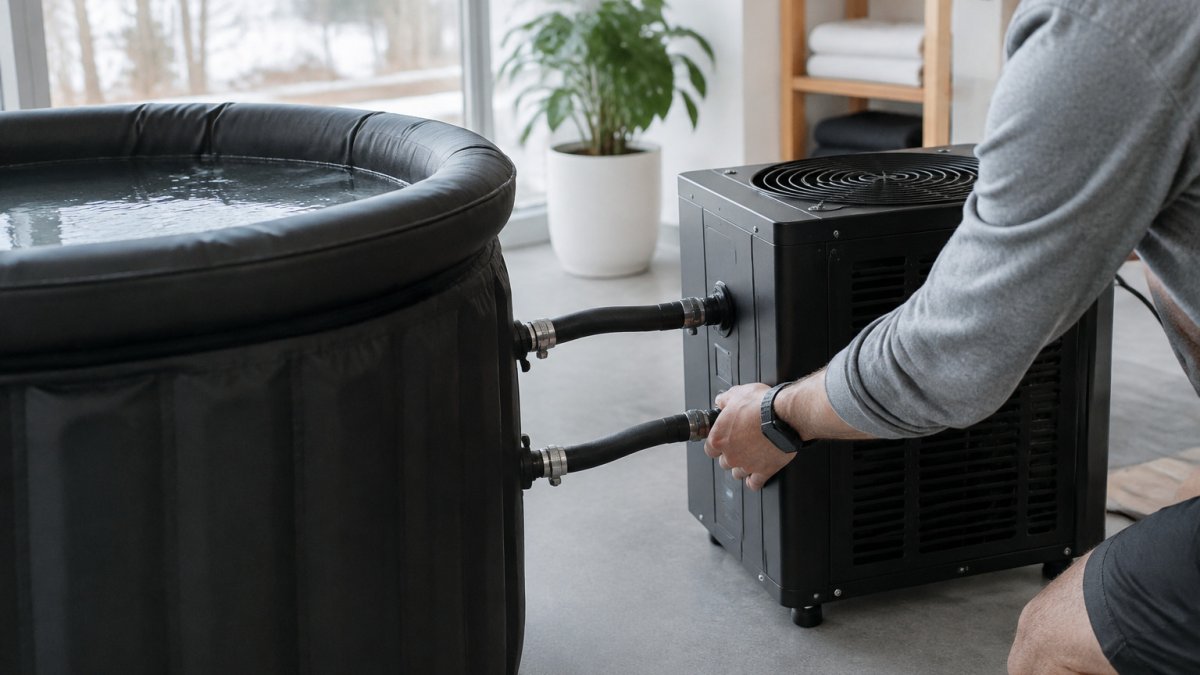
The Water Chiller - 1/3 HP Ice Bath Cold Plunge is built for this job. It cools water to 39°F, works with any tub, and includes a filter and timer. You can get a water chiller that holds 39°F without bags of ice.

Watch out: Check that your tub and chiller hoses fit before you buy.
Insulating the Tub, Using a Lid and Blocking Sunlight
Insulation and covers can reduce heat gain, so the chiller has less work to do. A fitted lid over the tub stops heat from entering through the open surface. Placing the tub out of direct sun helps even more. A shaded spot can make a noticeable difference on a hot afternoon.
A tub with multiple insulated layers holds its temperature longer than a single-wall tub. The Portable Bathtub - Foldable Adult Spa & Ice Bath uses a 7-layer insulation construction that helps maintain water temperature longer.
How to Keep Ice Bath Cold in Summer and Overnight Without Ice
Summer and overnight are the two scenarios where ice bath water warms fastest, and most guides offer only vague tips. This section gives you a diagnostic checklist to find where heat is entering your tub and specific fixes for each source.
Diagnose the heat gain. Before you change anything, check these five common heat sources in order of impact:
- Direct sunlight on the tub surface. Even an hour of direct sun can raise water temperature significantly. Fix: move the tub to full shade or build a simple shade structure. A reflective cover helps when the tub is idle.
- Uncovered water surface. An open top allows heat transfer and evaporation. Fix: use a fitted lid whenever the tub is not in use. A lid also keeps debris out.
- Thin or uninsulated tub walls. Single-wall inflatable tubs lose cold quickly. Fix: choose a tub with insulated walls, or wrap the tub with a reflective insulation blanket (available at hardware stores) secured with straps.
- Warm ambient air in an enclosed space. A garage or sunroom can trap heat. Fix: ventilate the space or run the chiller during cooler hours.
- Chiller undersizing or poor airflow. A chiller that can't keep up will run constantly and still lose ground. Fix: ensure the chiller has clearance for airflow and is rated for your tub volume.
Overnight strategy. Overnight cooling is easier because ambient temperatures drop. Use a timer to run the chiller for a few hours before you wake up, and keep the lid on. Test your setup once and note the actual time, it will vary with ambient temperature and insulation.
Summer strategy. In hot weather, combine methods: shade, lid, and chiller. Start with the coldest tap water available (early morning water is often cooler). Pre-chill the tub before your session rather than trying to cool it during. If your chiller struggles, add a second layer of insulation or move the tub indoors.
Watch out: Running a chiller in a hot, unventilated space can cause it to overheat or trip a breaker. Always follow the manufacturer's clearance requirements and never block the vents.
Temperature monitoring. Check water temperature with a separate thermometer before each session rather than relying on the chiller's display alone.
Safe temperature ranges. Many people choose a temperature range that feels safe and repeatable for their experience level. If you are new to cold plunging, start at a milder temperature and adjust downward as you adapt.
By treating heat gain as a problem to diagnose rather than a season to endure, you can keep your water cold without ice even in summer.
Choosing a Method by Budget, Tub Size and Target Temperature
Most guides tell you to pick a method based on budget, but they rarely show you how to match a chiller to your tub or estimate how long cooling will take. This section gives you a practical decision framework so you can choose a method that actually holds your target temperature.
Water Chiller – 1/3 HP Ice Bath Cold Plunge →
Start with three numbers: your tub's water volume in gallons, your starting water temperature, and your target temperature. If you don't know your tub volume, measure it: length × width × average depth in inches, then divide by 231 to get gallons. For example, a tub that is 48 inches long, 24 inches wide, and 18 inches deep holds about 90 gallons.
Next, estimate the cooling load. Cooling speed depends on tub volume, insulation, starting water temperature and room temperature, so test your own setup to estimate run time before a session.
Here is how the main methods compare on the criteria that matter:
- Cold tap water + lid + shade (lowest upfront cost): Works for short sessions if your tap water is already below 60°F. Not reliable in summer or for targets below 60°F. No electricity use beyond normal household rates.
- Water chiller (medium upfront cost, ongoing electricity): The only method that holds a steady temperature near 39-50°F without ice. Choose a chiller rated for your tub volume; undersizing is the most common mistake. A 1/3 HP unit suits most portable tubs up to 100 gallons. Running cost depends on local electricity rates and run time, expect the chiller to cycle on and off to maintain temperature, using more energy in hot weather.
- Chest freezer conversion (medium upfront cost, DIY risk): A small chest freezer can hold a tub-sized liner and cool water effectively, but requires waterproofing, temperature control, and safety precautions. Not a plug-and-play solution.
- Ice (highest ongoing cost, labor-intensive): Bagged ice is the least efficient way to hold a target temperature. It works for one-off sessions but becomes expensive and inconvenient for regular use.
Use this decision path:
- If your target is above 60°F and you plunge occasionally, start with cold tap water, a lid, and shade.
- If you plunge regularly or want a target below 60°F, choose a chiller sized to your tub volume.
- If you have a large tub (over 100 gallons) or multiple users, step up to a larger chiller or a dual-chiller setup.
- If you are handy and want a project, consider a chest freezer conversion, but only with proper waterproofing and a temperature controller.
Watch out: Chiller ratings are often given at specific water temperatures and ambient conditions. A unit that claims 39°F may struggle to reach that in a hot garage or with an uninsulated tub. Always derate the chiller's capacity for your real-world conditions.
For a single user with a portable tub, a chiller like the Water Chiller - 1/3 HP Ice Bath Cold Plunge is a practical match. For larger tubs, the Upgrade XL Ice Bath Tub - Portable Cold Plunge for Athletes is compatible with water chillers and includes an insulated thermal lid. You can browse portable ice bath tubs by size to find the right fit for your volume.

How to Keep Ice Bath Water Clean Between Sessions
Clean water matters as much as cold water. Every session adds skin oils, sweat, and dirt. Over time, that buildup can cloud the water and reduce chiller performance.
Follow these steps after each session:
- Remove debris from the surface with a net.
- Run the filter, if your chiller has one.
- Cover the tub until the next session.
- Drain and refill on a regular schedule.
- Clean the chiller pipes and hoses as directed.
For a full walkthrough, read the guide to cleaning ice bath chiller pipes step by step. Regular cleaning keeps the water fresh and the chiller running well.
Setting Up Your Cold Plunge to Hold Temperature Next Session
A good setup makes cold water easy to hold from one session to the next. Place the tub in shade, connect the chiller, and fit the lid. Set the timer so the water reaches your target before your session starts.
Check the water temperature before you get in. If it has drifted, let the chiller run longer. Consistent setup habits are what keep the water cold without ice, week after week.
If you are building a full setup for the first time, read the guide on setting up a home cold plunge station for layout and placement tips.
Frequently Asked Questions
How do you keep an ice bath cold without ice?
The most reliable way is a water chiller, which runs a refrigeration loop through the water and can bring it down to about 39°F. Without one, you can slow warming by insulating the tub, keeping a fitted lid on between sessions, and shielding the tub from direct sun. Starting with the coldest tap water you can get also shortens the time needed to reach your target. Passive methods help hold temperature but cannot lower it much on their own, so a plunge in a warm room or in summer will still drift upward over time.
Does an ice bath water chiller work without ice?
Yes. A chiller cools water mechanically, so no bagged ice or frozen jugs are needed. The 1/3 HP Water Chiller from Thermo Plunge is rated to cool water to 39°F and works with any tub, including the Upgrade XL Ice Bath Tub. Cooling time depends on starting water temperature, tub volume and room temperature.
How do you keep an ice bath cold overnight?
Fill the tub with cold water shortly before bed, cover it with a fitted lid or insulated thermal cover, and place it away from windows and heat sources. If you use a chiller, set the timer so it runs during the night to offset heat gain. Overnight heat gain is usually slower than daytime heat gain, so a covered tub often needs only modest top-up cooling by morning.
How do you keep cold plunge water clean?
Use a filter on the water circuit, drain and wipe the tub after each use, and replace the water on a regular schedule rather than letting it sit for weeks. Keep the lid closed between sessions to limit dust and debris, and avoid placing the tub where it collects outdoor contaminants. Clean the filter according to the chiller manual, since a clogged filter reduces circulation and can let residue build up in the cooling system.
Ice bath water warms up because heat keeps flowing in from the air, sun, and your body. A chiller, a fitted lid, shade, and regular cleaning keep the water cold without ice. Choose your method based on budget, tub size, and target temperature, and your cold plunge will be ready when you need it.
