

How to Use Red Light Therapy for Sun-Damaged Skin
Last Updated: November 2, 2026
Quick Summary
Red light therapy may help improve the texture, firmness and overall tone of sun-damaged skin over time, particularly fine lines and loss of elasticity. It is a supportive option rather than a replacement for daily sun protection or a dermatologist's treatment plan, and evidence for pigmentation is thinner.
- Red light therapy is most discussed for texture, fine lines and firmness linked to collagen changes.
- Evidence for sun spots and uneven pigmentation is thinner than for photoaging.
- Use eye protection during sessions and follow the device manufacturer's instructions.
- Daily sun protection remains the most important step in preventing further damage.
- Any new, changing, bleeding or non-healing spot should be evaluated by a dermatologist first.
Table of Contents
- What Red Light Therapy Is and How It Works on the Skin
- Sun Damage Types and Which Ones May Respond to Red Light
- Red Light Therapy Benefits for Sun-Damaged Skin
- What the Research Shows and Where It Falls Short
- Red Light Therapy Before and After Sun Damage Treatment: Realistic Results
- Treatment Frequency, Session Length and Device Choice
- Red Light Therapy Dangers, Side Effects and Who Should Check With a Dermatologist
- Deciding Whether to Start Red Light Therapy for Your Sun-Damaged Skin
- Frequently Asked Questions
Red light therapy is one of the more talked-about ways to address sun-damaged skin, but the claims around it vary widely. Thermo Plunge Recovery Systems has put together this guide to separate what the evidence suggests from what is still uncertain, so you can decide whether it deserves a place in your routine. The short version: red light therapy is a supportive option that may help with texture and tone over time, not a replacement for sun protection or a dermatologist's treatment plan.
What Red Light Therapy Is and How It Works on the Skin
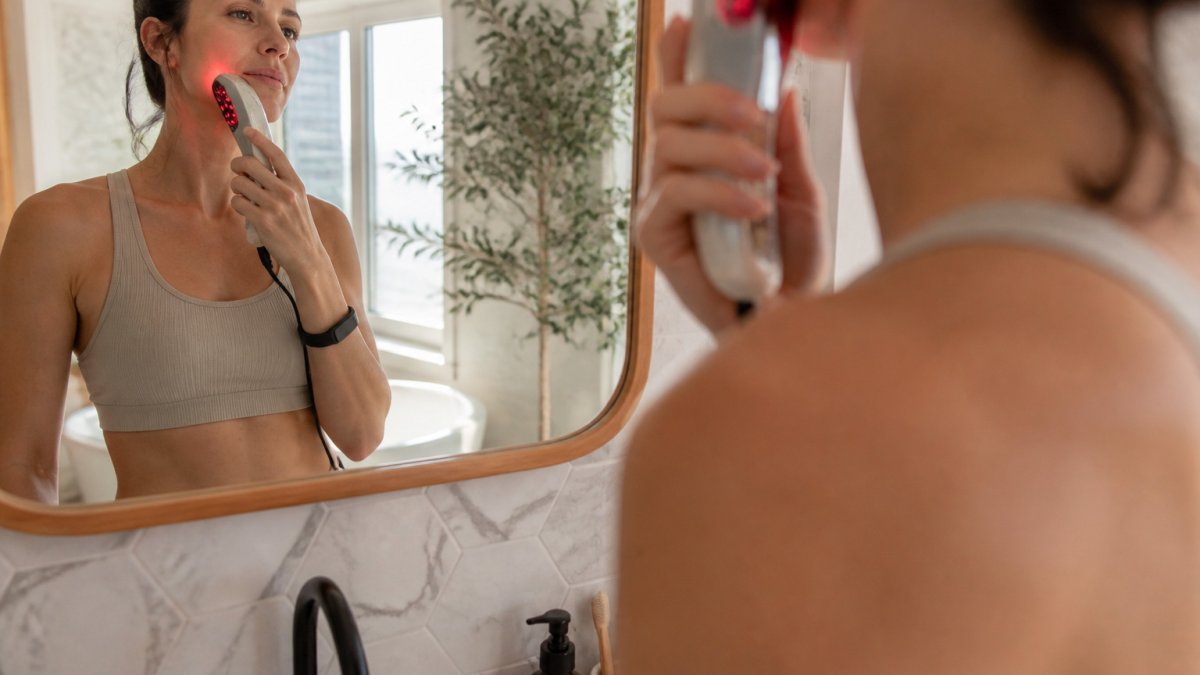
Red light therapy, also called photobiomodulation or low-level light therapy, uses red and near-infrared wavelengths delivered by light-emitting diode (LED) devices. Home devices range from handheld wands to full-body wearable pads, and their output depends heavily on wavelength, power and treatment time.
Sun Damage Types and Which Ones May Respond to Red Light
Sun damage is not a single condition, and red light therapy does not act on all of it the same way. Sun damage is commonly grouped into several categories, each with a different underlying mechanism.
Photoaging (fine lines, roughness, loss of elasticity). This is the category most often linked to collagen and elastin changes in the dermis.
Pigmentation (sun spots, age spots, uneven tone). Dark spots are driven by melanin overproduction and clustering, a different process from collagen loss. Red light does not directly remove pigment, Treat pigmentation as a category where red light may support overall tone indirectly through reduced inflammation, not as a pigment-removal treatment.
Visible vessels and redness (telangiectasia, diffuse redness). Sun-damaged skin often shows dilated superficial vessels.
Red Light Therapy Pad – Full-Body Infrared Healing Wrap →
Precancerous lesions (actinic keratoses). These rough, scaly patches are a medical condition, not a cosmetic one. Cosmetic red light therapy is not a substitute for diagnosis or treatment of actinic keratoses or any suspicious spot. A lesion that is new, changing, bleeding, or not healing should be evaluated by a dermatologist before any device is used over it.
Watch out: If you cannot tell whether a spot is pigmentation or something that needs medical attention, have it looked at first, no at-home device should be used on an undiagnosed lesion.
Matching the category to the therapy is the single most useful step in setting expectations.
Red Light Therapy Benefits for Sun-Damaged Skin
Pairing red light sessions with your existing routine is a practical way to start, and our guide on 5 Steps to Combine Red Light Therapy With Your Skincare walks through how to layer it in. If you are weighing wavelengths, Which Red Light Wavelength Is Best for Collagen? explains which settings are most often discussed for firmness.
Texture, Fine Lines and Firmness
Collagen and elastin support skin firmness, and this is where red light therapy has the most-discussed potential. Our article on whether sauna blanket heat can help skin elasticity covers a related approach to firmness.
Uneven Pigmentation and Dark Spots
For sun spots and uneven tone, the evidence is thinner. Treat any dark spot that changes in size, shape or colour as a reason to see a dermatologist.
What the Research Shows and Where It Falls Short
Most of what is claimed about red light therapy and sun-damaged skin rests on two separate bodies of evidence that are often blurred together: general studies of red light for skin aging and wound healing, and a much smaller set of studies that look specifically at photodamaged skin.
Why the gaps matter. Device claims are not interchangeable. A study using one wavelength, dose, and device does not automatically validate a different at-home product. When a product cites "clinical studies," it is worth checking whether the study used the same parameters and whether it included people with photodamage specifically.
Red Light Therapy Before and After Sun Damage Treatment: Realistic Results
Taking dated photos in the same lighting can help you judge progress honestly, and a dermatologist can compare your results against established options such as topical retinoids or in-office procedures.
Red Light Therapy Pad – Full-Body Infrared Healing Wrap →
Treatment Frequency, Session Length and Device Choice
Exact session protocols depend on the device and its output. Check the manufacturer's instructions, and avoid stacking sessions to speed results. Our Red Light Therapy Pad - Full-Body Infrared Healing Wrap offers dual 660nm and 850nm wavelengths, an adjustable timer and a remote control, and a large 71" × 31" coverage area. For guidance on safe use with sensitive skin, see 7 Steps to Safe Red Light Therapy for Sensitive Skin.

The article's device and session guidance can be scanned at a glance in the table below.
| Item | Detail | Note |
|---|---|---|
| Device type | Handheld wands to full-body wearable pads | Output depends on wavelength, power and time |
| Wavelengths | Red and near-infrared (LED) | Compare studies only at matching settings |
| Session protocol | Set by device and manufacturer | Check instructions; don't stack sessions |
| Eye protection | Required during sessions | Use goggles or shields |
| Consult a dermatologist | If photosensitive or on photosensitizing drugs | Also if history of skin cancer |
Red Light Therapy Dangers, Side Effects and Who Should Check With a Dermatologist
Use eye protection during sessions. People who are photosensitive, take photosensitizing medications, have a history of skin cancer, or have an active skin condition should speak with a dermatologist before starting.
Deciding Whether to Start Red Light Therapy for Your Sun-Damaged Skin
It works best alongside daily sun protection, which remains the most important step in preventing further damage. If your concern is significant pigmentation or deeper lines, a dermatologist can help you weigh red light against other treatments.
Frequently Asked Questions
Can red light therapy repair sun-damaged skin?
Have any changing spot evaluated by a dermatologist, and treat red light therapy as a supportive option alongside sun protection.
How often should you use red light therapy on your face?
Follow the manufacturer's instructions for your specific device, and avoid using it more often than the labelling suggests.
Is at-home red light therapy safe for sun-damaged skin?
Protect your eyes during use, and stop if irritation develops. People who take photosensitizing medications, have a history of skin cancer, or have lupus or other photosensitive conditions should consult a dermatologist first. Light therapy does not replace evaluation of suspicious lesions.
Should you see a dermatologist before trying red light therapy?
Seeing a dermatologist is a sensible first step, especially if you have many sun spots, a history of skin cancer, or a spot that is bleeding, growing or changing. A dermatologist can distinguish sun damage from skin cancer and recommend established treatments such as topical retinoids, chemical peels or procedures. They can also advise on your medical history.
