

How to Use Sauna Blankets Safely: A Step-by-Step Guide
Table of Contents
- What You'll Need Before Using a Sauna Blanket
- How to Use Sauna Blankets Safely: Step-by-Step Instructions
- How Long to Stay in a Sauna Blanket: Session Duration Guidelines
- Infrared Sauna Blanket Contraindications: Who Should Avoid Use
- Sauna Blanket Hydration Tips: Preventing Dehydration and Heat Exhaustion
- Common Mistakes to Avoid When Using Sauna Blankets
- Post-Session Cooling Protocols and Recovery
- Conclusion
Last Updated: August 15, 2026
What You'll Need Before Using a Sauna Blanket
Before you zip yourself into an infrared sauna blanket, take 10 minutes to prepare properly. The difference between a safe, restorative session and a risky one often comes down to what you do before you start.

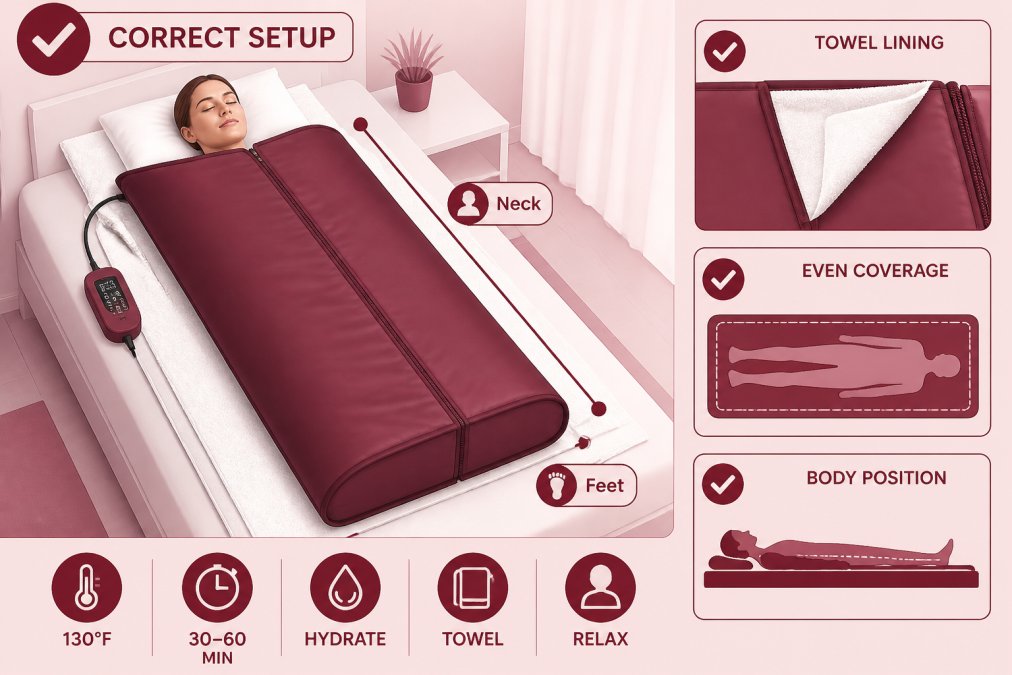
Choose a stable, heat-resistant surface like a yoga mat, towel, or dedicated blanket pad on a bed or floor. Avoid placing the blanket directly on carpet. Check the manufacturer's specifications for your model's temperature thresholds.
Gather your hydration supplies and keep water within arm's reach before entering the blanket. Pre-session and during-session hydration prevents dehydration and heat exhaustion.
Wear light clothing or swimwear in cotton or moisture-wicking materials. Avoid synthetic fabrics that trap moisture.
Clear your schedule to allow time for proper cool-down afterward. Inspect your sauna blanket for damage to heating elements or the zipper before use. A quick pre-use inspection takes seconds and prevents problems.
How to Use Sauna Blankets Safely: Step-by-Step Instructions
Using a sauna blanket safely requires attention to detail and awareness of your body's response.
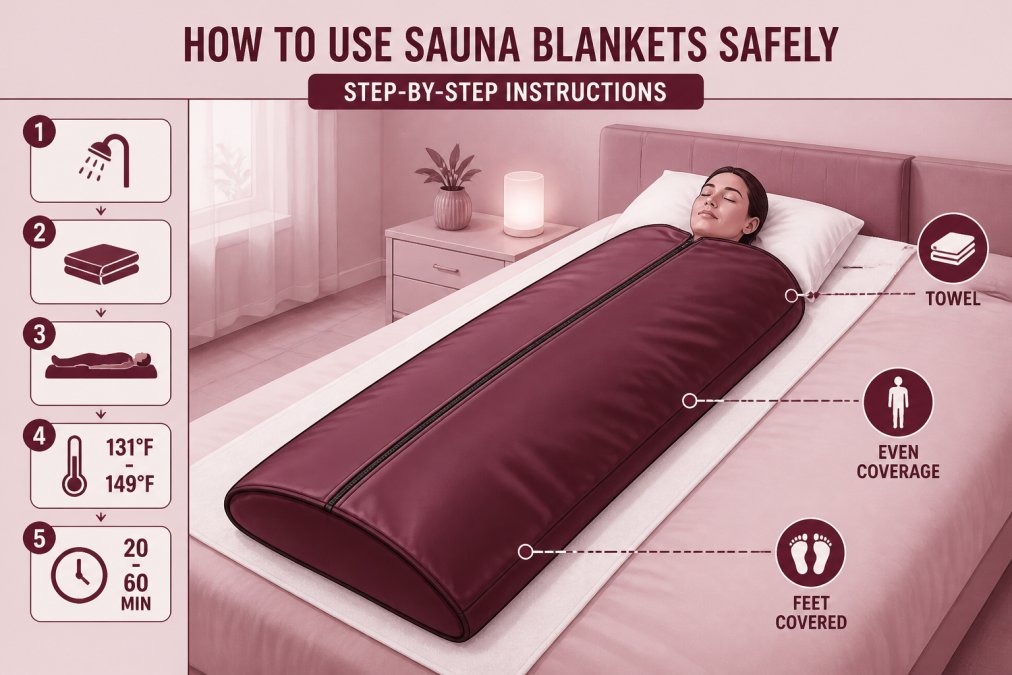
Step 1: Prepare Your Surface and Check Heat-Resistant Materials
Lay your sauna blanket on a clean, dry, heat-resistant surface. If using it on a bed, ensure the mattress can tolerate sustained infrared heat. Place a protective layer underneath if concerned about direct contact.
Inspect the blanket's interior lining for tears or separation from heating elements. Check the zipper mechanism, it should move smoothly and seal completely. Never force a stuck zipper; contact customer support instead.
Ensure the blanket is completely dry before use. Moisture inside can damage heating elements or create unsafe electrical conditions.
Step 2: Set Your Initial Temperature and Session Duration
Start conservatively, especially if new to sauna blankets. Begin at 104°F to 122°F for your first few sessions. Your core body temperature will rise gradually as blood vessels dilate and increase blood flow to your skin.
Set your session duration to 20-30 minutes for beginners. As you become accustomed to infrared heat, extend sessions to 40-60 minutes, though most users find 30-45 minutes optimal. Use the auto-shutoff timer if your model includes one. Most infrared sauna blankets operate safely up to 176°F, but individual comfort varies. Your first session should feel warm and relaxing, not uncomfortably hot. If you feel dizzy or anxious, lower the temperature immediately.
Step 3: Position Yourself and Begin Your Session
Lie on your back with your head supported by a pillow. Position your body so heating elements make even contact with your torso, legs, and arms. Avoid bunching the blanket unevenly, as this creates hot spots.
Keep your head outside the blanket or use minimal coverage around your head and neck. Some users place a cool cloth on their forehead for comfort. Zip the blanket closed slowly and deliberately, ensuring it seals completely without pinching your skin. If you feel claustrophobic, keep the zipper slightly open or use an open configuration.
Step 4: Monitor Your Body's Response During the Session
Pay attention to how you feel throughout your session. Mild sweating and warmth are positive signs. Your skin may turn slightly pink as blood vessels dilate, this is normal vasodilation.
Watch for warning signs requiring immediate exit: dizziness, nausea, severe headache, or chest discomfort. These suggest heat exhaustion or heat-related illness. Drink water during your session if thirsty, sipping slowly. Avoid falling asleep, especially during your first sessions. If you experience chills, exit the blanket and cool down.
Step 5: Exit Safely and Cool Down
When your session ends, unzip slowly and sit up gradually. Your blood pressure may have shifted, and standing too quickly can cause dizziness. Take 30 seconds to sit before standing.
Move to a cooler environment and dry off sweat with a clean towel. Drink water immediately after your session. You've lost fluids through sweat, and rehydrating within 15 minutes helps your body recover. Many users add electrolyte powder for better mineral replenishment.
Avoid jumping into cold water or ice baths immediately after. Your cardiovascular system needs time to adjust. Wait at least 30 minutes before extreme cold exposure if planning contrast therapy.
How Long to Stay in a Sauna Blanket: Session Duration Guidelines
The ideal session duration is 30-45 minutes for most users, balancing therapeutic benefits with safety and comfort. Beginners should start with 20-30 minute sessions and gradually extend duration as their body adapts.
The relationship between session duration and benefits isn't linear. A 60-minute session doesn't deliver twice the benefit of a 30-minute session. Most research suggests 30-45 minutes captures the sweet spot for muscle relaxation, improved circulation, and recovery support without unnecessary risk.
Temperature and duration work together. Lower temperatures support longer sessions, while higher temperatures are better kept shorter. Pay attention to how your body feels rather than rigidly following time guidelines.
Never exceed 60 minutes in a single session. If you want additional heat exposure, take a break of at least 2 hours, rehydrate fully, and do a second shorter session.
| Session Type | Duration | Frequency | Best For |
|---|---|---|---|
| Beginner | 20-30 minutes | 2-3 times weekly | New users adapting to infrared heat |
| Standard | 30-45 minutes | 3-5 times weekly | Routine recovery and relaxation |
| Extended | 45-60 minutes | 2-3 times weekly | Experienced users with high heat tolerance |
| Maintenance | 20-30 minutes | 1-2 times weekly | Ongoing wellness without intensive use |
Infrared Sauna Blanket Contraindications: Who Should Avoid Use
Certain medical conditions make sauna blanket use unsafe. Avoid sauna blankets if you have uncontrolled high blood pressure or severe hypertension. Infrared heat causes vasodilation and increases cardiac workload. Consult your doctor before using a sauna blanket if you have any cardiovascular condition.
Pregnancy is a contraindication for sauna blanket use. Elevated core body temperature during pregnancy, particularly in the first trimester, carries risks for fetal development. Pregnant individuals should avoid sauna blankets entirely unless explicitly cleared by their obstetrician.
Recent surgery or open wounds require caution. Wait at least 6 weeks post-surgery before using a sauna blanket, and get clearance from your surgeon first. Acute fever or active infection makes sauna blanket use dangerous, your body is already fighting infection and managing elevated temperature.
Certain medications interact poorly with sauna heat, including blood pressure medications, antihistamines, and some psychiatric medications. Review your medication list with your doctor before starting sauna blanket use.
Skin conditions like severe eczema, psoriasis, or active dermatitis may worsen with heat exposure. If you have sensitive skin conditions, start with very short, cool sessions and monitor closely.
Diabetes requires special caution. Infrared heat affects blood glucose levels and circulation. Consult your endocrinologist before using a sauna blanket and monitor blood sugar carefully during and after sessions.
Heat sensitivity or a history of heat exhaustion suggests you should avoid sauna blankets or use them extremely conservatively.
Sauna Blanket Hydration Tips: Preventing Dehydration and Heat Exhaustion
Dehydration is the most common safety issue with sauna blanket use. Drink 16-24 ounces of water before your session begins. Pre-session hydration ensures your body has adequate fluid reserves before you start sweating.
Have water within arm's reach during your session. Sip slowly and deliberately, small, frequent sips work better than gulping. Aim for 4-8 ounces during a 30-minute session.
Post-session hydration is critical. Drink 16-24 ounces of water within 30 minutes of exiting the blanket. Consider electrolyte replacement, not just water. Sweat contains sodium, potassium, and magnesium. Add an electrolyte powder or drink a small amount of coconut water or sports drink alongside plain water for better mineral replenishment.
Monitor your urine colour as a hydration indicator. Clear or pale yellow urine suggests good hydration; dark yellow or amber indicates dehydration. Avoid alcohol before and after sauna blanket sessions, alcohol is a diuretic and increases fluid loss. Limit caffeine before sessions as well. Listen to your thirst cues; if you feel thirsty, drink water.
Common Mistakes to Avoid When Using Sauna Blankets
Starting too hot is the most common beginner mistake. New users often set the temperature to maximum, but your body needs time to adapt. Start at 104°F and increase gradually over several sessions.
Using the blanket without proper hydration beforehand creates unnecessary risk. Pre-hydrate every single time, even if you don't feel thirsty.
Staying in too long, especially early on, stresses your cardiovascular system and increases dehydration risk. Respect the recommended 30-45 minute window.
Ignoring warning signs like dizziness, nausea, or chest discomfort is dangerous. Exit the blanket immediately, don't try to push through. Using a sauna blanket while sick or feverish overloads your immune system.
Failing to inspect your blanket before use can lead to unsafe conditions. Spend 30 seconds checking your equipment every session. Wearing synthetic fabrics that trap moisture creates an uncomfortable, potentially unsafe environment. Wear cotton or moisture-wicking materials instead.
Jumping into cold water immediately after a sauna blanket session shocks your cardiovascular system. Give yourself at least 30 minutes to cool down naturally before contrast therapy.
Not allowing adequate recovery time between sessions exhausts your body. Most users benefit from 2-3 sessions weekly, not daily use.
Post-Session Cooling Protocols and Recovery
What you do after your sauna blanket session matters as much as what you do during it. Proper cooling and recovery prevent complications and maximise the benefits of your session.
Exit the blanket gradually. Sit up slowly and give your cardiovascular system 30-60 seconds to adjust before standing. Move to a cool environment with normal room temperature. Gradual cooling is safer and more comfortable than sudden temperature changes.
Dry off completely with a towel and change into dry clothing if sweaty. Hydrate immediately, drink 16-24 ounces of water or electrolyte-containing fluid within 30 minutes of exiting the blanket.
Avoid strenuous activity for at least 2 hours post-session. Light movement like walking is fine; intense workouts should wait. If planning contrast therapy, wait at least 30 minutes before cold exposure.
Eat a light meal or snack within 1-2 hours. Your body has expended energy during the session and needs nutrient replenishment. A balanced snack with protein and carbohydrates supports recovery.
Monitor how you feel over the next few hours. Most people feel relaxed and energised after a sauna blanket session. If you experience lingering dizziness, headache, or unusual fatigue, you may have pushed too hard. Reduce temperature or duration in your next session.
Sleep quality often improves the night after a sauna blanket session. Infrared heat promotes relaxation and can support deeper sleep. Avoid stimulating activities before bed and prioritise sleep the evening after your session.
Conclusion
Using sauna blankets safely requires preparation, attention during your session, and proper recovery afterward. Start conservatively with lower temperatures and shorter durations, stay hydrated before and after, and listen to your body's warning signs. The Infrared Sauna Blanket from Thermo Plunge Recovery Systems features multi-stage heating from 104°F to 176°F with a reliable auto-shutoff timer and non-toxic, heat-resistant materials designed for safe, consistent performance. Whether you're seeking muscle relaxation, improved circulation, or better sleep, following these safety protocols ensures you get the therapeutic benefits without unnecessary risk. Get started with Thermo Plunge Recovery Systems and experience the difference quality equipment and proper technique make in your recovery.
Frequently Asked Questions
How long should I stay in a sauna blanket as a beginner?
Start with 15-20 minute sessions at lower temperatures (104-122°F) to allow your body to acclimate to the infrared heat. Once comfortable, gradually increase to 30-40 minutes as your thermal regulation improves. Never exceed 45 minutes in a single session, as extended exposure increases dehydration and heat exhaustion risk. Listen to your body, dizziness, excessive sweating, or discomfort are signals to exit immediately.
What are the main contraindications for using an infrared sauna blanket?
Avoid sauna blanket use if you have cardiovascular conditions, uncontrolled hypertension, pregnancy, fever, or acute inflammation. Those taking medications affecting vasodilation or heat sensitivity should consult a healthcare provider first. People with electromagnetic field sensitivity, skin conditions aggravated by heat, or a history of heat exhaustion should exercise caution. Always check with your physician before starting, especially if you have pre-existing health concerns.
How much water should I drink before and after using a sauna blanket?
Drink 16-20 ounces of water 2-3 hours before your session for pre-session hydration. During the session, have water available if it lasts over 30 minutes. After exiting, drink 16-24 ounces immediately and continue hydrating over the next 2 hours. For sessions longer than 40 minutes, consider an electrolyte beverage to replace minerals lost through sweat. Monitor urine colour, pale yellow indicates adequate hydration; dark yellow suggests dehydration.
Can sauna blankets cause overheating or heat exhaustion?
Yes, if used incorrectly. Excessive session duration, high temperatures without acclimation, or inadequate hydration increase heat exhaustion risk. Symptoms include dizziness, nausea, rapid heartbeat, and confusion. Prevent this by starting at lower temperatures, limiting sessions to 30-40 minutes, drinking water beforehand, and using the auto-shutoff timer. If symptoms occur, exit immediately, cool your body with cool (not cold) water, and drink fluids. Seek medical attention if symptoms persist.
This article was written using GrandRanker