

Infrared Sauna Post-Workout Recovery Routine
Table of Contents
- Why Infrared Sauna Matters for Post-Workout Recovery
- How Long to Sauna After Workout: Timing Your Session
- Infrared Sauna Before or After Workout: What the Evidence Shows
- Post-Workout Sauna Temperature: Finding Your Optimal Heat
- Sauna Hydration After Exercise: Preventing Dehydration
- Your Complete Post-Workout Sauna Routine: Step-by-Step
- Common Mistakes to Avoid in Your Recovery Routine
- Frequently Asked Questions
Last Updated: October 6, 2026
Why Infrared Sauna Matters for Post-Workout Recovery
An infrared sauna post-workout recovery routine helps your body bounce back faster after intense exercise. The heat from infrared saunas penetrates deep into muscle tissue, promoting circulation and supporting your body's natural healing process.

After a tough workout, your muscles need help recovering. Delayed-onset muscle soreness can linger for days. An infrared sauna session accelerates blood flow to fatigued muscles, delivering oxygen and nutrients where they're needed most. This isn't just comfort, it's a strategic recovery tool that serious athletes use to train harder without sacrificing performance.
The key difference with infrared heat is how it works. Unlike traditional saunas that heat the air around you, infrared technology warms your body directly. This deeper penetration supports muscle recovery, reduces inflammation, and helps restore your autonomic function, the body's natural ability to shift from fight-or-flight stress into rest-and-repair mode.
How Long to Sauna After Workout: Timing Your Session
The ideal wait before entering an infrared sauna depends on what type of workout you just finished.

After strength training: Wait 15-20 minutes. Your nervous system needs time to shift out of sympathetic drive. Entering too soon can keep cortisol elevated and blunt the parasympathetic rebound that supports tissue repair.
After endurance work (running, cycling, rowing): Wait 20-30 minutes. Your core temperature is already elevated from sustained cardiovascular effort. Adding sauna heat too soon can push you toward heat exhaustion.
After high-heat training (hot yoga, outdoor summer sessions): Skip the sauna entirely or wait at least 60 minutes and reassess. You have already accumulated heat stress.
After low-intensity or mobility work: Wait 10-15 minutes. Your body is not deeply fatigued, and the sauna can serve as a gentle circulation booster. This is the scenario where the standard advice applies.
Session duration also shifts with workout type. After strength training, 20-25 minutes at a moderate temperature supports blood flow to worked muscles. After endurance work, start with 15 minutes and extend only if you feel stable.
A practical pattern many athletes follow: finish your workout, complete a 10-minute cooldown, drink 16-20 ounces of water, then reassess how you feel. If your heart rate is still elevated or you feel lightheaded, wait longer.
Infrared Sauna Before or After Workout: What the Evidence Shows
An infrared sauna before or after workout timing depends on your training goals. Post-workout sauna use is the more common and practical choice for most athletes.
Post-workout is better for recovery because your muscles are already warm and blood is actively circulating to repair tissue. Heat amplifies this natural healing response. Your body can tolerate higher temperatures and benefit more fully when muscles are fatigued and primed for recovery.
Pre-workout sauna use exists but serves a different purpose, warming muscles and increasing flexibility before training. Most athletes skip this approach because sauna heat can leave you dehydrated before you even start exercising. That's a liability, not an asset.
The evidence leans heavily toward post-workout timing:
- Muscles absorb heat more effectively when they're already active
- You avoid dehydration before training
- Recovery benefits align with your body's natural repair window
- Relaxation after sauna complements the cooldown phase
Bottom line: Use your sauna after workouts, not before. This timing maximizes recovery benefits while minimizing dehydration risk.
Post-Workout Sauna Temperature: Finding Your Optimal Heat
Infrared saunas typically operate between 120°F and 150°F, but the right temperature for you depends on more than a number on a dial. Training intensity, heat tolerance, experience level, and even the type of infrared sauna all affect how your body responds.
Start with a baseline, then adjust. New users should begin at 120-125°F for 15 minutes. After five sessions, if you feel comfortable and recover well, increase by 5°F.
Adjust for training intensity. After a light or moderate workout, a lower temperature (120-130°F) is sufficient. Your body is not deeply fatigued, and the goal is gentle circulation support.
Infrared Sauna – 2-Person Premium Home Spa →
Adjust for heat tolerance. Heat tolerance varies widely. Factors include fitness level, body composition, age, medications, and acclimation history. If you sweat heavily at low temperatures or feel dizzy quickly, stay at the lower end.
Adjust for experience level. First-time sauna users should not exceed 130°F regardless of how they feel. The body's ability to regulate heat improves with repeated exposure, but that adaptation takes weeks, not days.
Adjust for sauna type. Far-infrared saunas often feel cooler at the same air temperature because they heat the body directly rather than the air. A 130°F far-infrared session may feel as intense as a 150°F traditional sauna.
Watch for stop signs. Exit immediately if you experience dizziness, nausea, chest discomfort, headache, or a sudden chill. These are signs of heat stress, not signs to push through. Mild sweating and a relaxed feeling are normal.
Sauna Hydration After Exercise: Preventing Dehydration
Hydration before, during, and after sauna use is non-negotiable. Sweat loss during a sauna session can be significant, typically 0.5-1.5 litres over 20-30 minutes depending on heat and individual factors.
Drink water before entering the sauna. Aim for 16-20 ounces of plain water 30 minutes before your session. This primes your body for fluid loss without overwhelming your system.
During your session, you cannot drink inside most saunas. Accept that you'll lose fluids and plan to rehydrate immediately after.
Rehydrate aggressively after exiting. Drink 16-24 ounces of water in the first 15 minutes post-sauna. If your session was intense or lasted 25+ minutes, drink even more. Your goal is to replace lost fluids before they affect performance or recovery.
Consider electrolyte replacement if your sauna session follows a long or intense workout. Sweat contains sodium and potassium, minerals your body needs for muscle function and hydration balance. Plain water works for most short sessions, but electrolyte drinks help if you're doing extended recovery work or training in heat.
Monitor your hydration status by checking urine color. Pale yellow means you're well-hydrated. Dark yellow signals dehydration, drink more water and adjust your next session.
Your Complete Post-Workout Sauna Routine: Step-by-Step
Follow this structured routine to maximize recovery benefits while staying safe and comfortable.
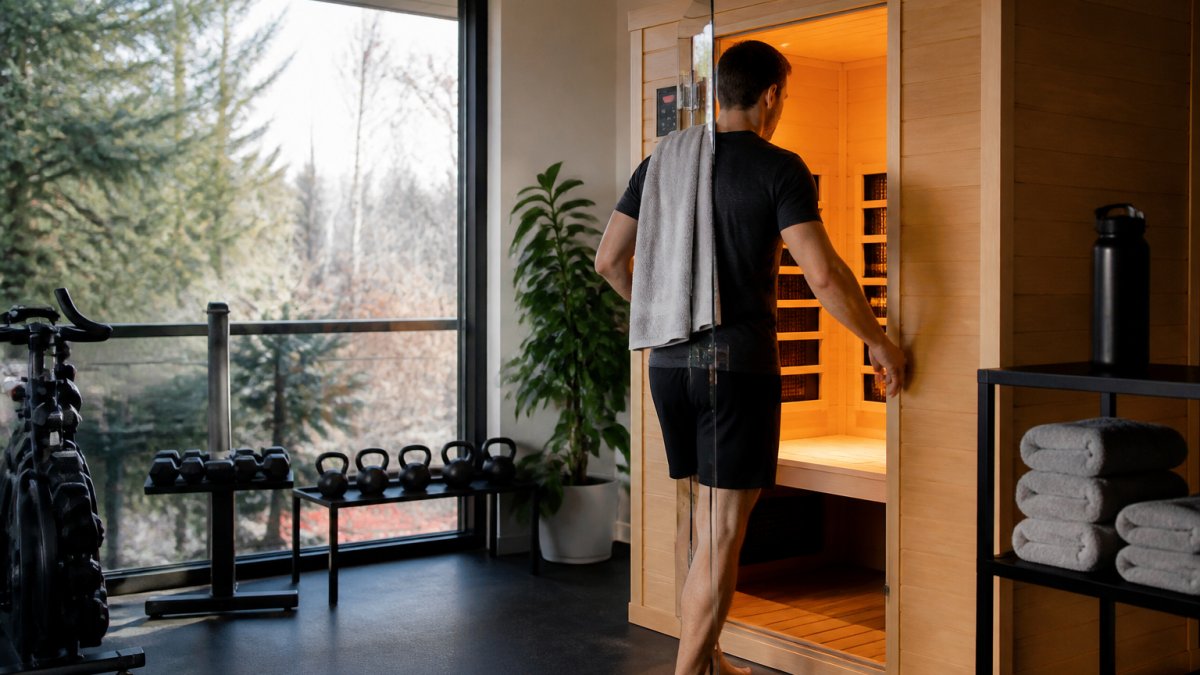
Step 1: Cool Down Before Entering the Sauna
Spend 10-15 minutes cooling down after your workout. Walk slowly, do light stretching, or sit quietly. Let your heart rate drop from peak exertion to near resting levels.
This cooldown period prevents thermal shock when you enter the sauna. Your cardiovascular system needs a transition, not a sudden jump from intense exercise to intense heat. A brief cooldown also allows your muscles to begin their initial recovery phase before heat therapy amplifies it.
Step 2: Hydrate and Prepare Your Body
Drink 16-20 ounces of water 30 minutes before your sauna session. Use the bathroom if needed. Change into lightweight, breathable clothing or a sauna-appropriate wrap.
Dry your skin lightly before entering. Moisture on your skin can interfere with infrared heat penetration. A quick towel-down ensures the heat reaches your muscles effectively.
Step 3: Enter the Sauna at the Right Temperature
Set your sauna to your established temperature, 120-140°F depending on your experience level. Enter slowly and sit comfortably. Spend the first 2-3 minutes allowing your body to acclimate to the heat.
Breathe deeply and relax. Your goal is rest and recovery, not endurance. If you feel uncomfortable, exit and cool down before trying again.
Step 4: Monitor Duration and Comfort
Stay in the sauna for 15-30 minutes depending on your tolerance and recovery goals. Check in with yourself every 5 minutes. Mild sweating and warmth are expected. Dizziness, nausea, or chest pain mean you should exit immediately.
Infrared Sauna – 2-Person Premium Home Spa →
Most athletes find 20-25 minutes optimal for post-workout recovery. This duration provides circulation and recovery benefits without excessive fluid loss or thermal stress.
Step 5: Exit Safely and Rehydrate
Exit the sauna slowly. Sit or lie down for 2-3 minutes in a cool room before standing. This prevents dizziness or lightheadedness from rapid temperature change.
Drink 16-24 ounces of water immediately. If your session was intense or you trained hard beforehand, add an electrolyte drink to replace minerals lost through sweat.
Step 6: Recovery Practices After Your Session
Spend 10-15 minutes in gentle recovery activities. Light stretching, foam rolling, or relaxation work well here. Your muscles are warm and pliable, this is an ideal time to improve flexibility.
Eat a balanced meal with protein and carbohydrates within 60 minutes. Your body is primed to absorb nutrients for muscle repair. Protein supports tissue rebuilding, while carbohydrates replenish energy stores depleted during training.
Common Mistakes to Avoid in Your Recovery Routine
Skipping the cooldown. Jumping straight from hard training into a hot sauna stresses your cardiovascular system. Always cool down first.
Dehydrating before sauna use. Many athletes forget to drink water beforehand. This sets you up for excessive fluid loss and poor recovery. Hydrate consistently before, during the wait, and after.
Staying too long. More time in the sauna doesn't mean better recovery. Extended sessions increase dehydration risk and thermal stress without additional benefit. Stick to 15-30 minutes based on your tolerance.
Ignoring heat tolerance signals. Dizziness, nausea, or chest discomfort are stop signs. Your body is telling you to exit. Pushing through these signals risks heat illness.
Skipping electrolyte replacement. After intense training plus sauna use, plain water alone may not fully restore your mineral balance. Add electrolytes to your post-sauna hydration on heavy training days.
Using sauna as a weight-loss tool. Sauna sweat is temporary fluid loss, not fat loss. Relying on sauna for weight management is ineffective and risky. Use it for recovery, not calorie burning.
Building a consistent infrared sauna post-workout recovery routine takes planning, but the payoff is clear: faster muscle recovery, reduced soreness, and improved training performance.
Ready to bring professional-grade recovery home?
Frequently Asked Questions
How long should you use an infrared sauna after a workout?
Most athletes benefit from 15-30 minutes in an infrared sauna post-workout. Start with 15 minutes if you're new to sauna use, then gradually increase as your body adapts to the heat. Beginners should stay closer to 15 minutes, while experienced users may extend sessions to 20-30 minutes depending on their heat tolerance and recovery goals. Always prioritise how your body feels over a fixed duration.
Is it better to use an infrared sauna before or after a workout?
Post-workout sauna use is generally preferred for recovery. After exercise, infrared heat supports circulation, reduces muscle soreness, and aids relaxation while your body is primed for recovery. Using a sauna before a workout can increase core body temperature and fatigue, potentially limiting your performance. However, some athletes use brief pre-workout sauna sessions for warm-up; the key is avoiding prolonged pre-workout heat exposure that drains energy.
What temperature should an infrared sauna be set to after a workout?
A post-workout infrared sauna temperature of 120-140°F (49-60°C) is ideal for most athletes. Start at the lower end (120°F) if you're new to sauna use or have lower heat tolerance, then progress upward as your body adapts. Higher temperatures (140-160°F) can intensify circulation and recovery benefits but increase dehydration risk and fatigue. Always listen to your body; if you feel dizzy or overly fatigued, exit and cool down.
Should you drink water before using a sauna after exercise?
Yes, hydration before and during your sauna session is critical. Drink 8-16 ounces of water before entering the sauna to establish a hydrated baseline. During your session, sip water regularly to replace fluid loss through perspiration. After exiting, continue rehydrating with water and consider electrolyte beverages if you've had an intense workout. Proper hydration prevents dizziness, supports circulation, and maximises the recovery benefits of infrared heat exposure.