

Infrared vs Traditional Sauna for Stress Relief
Last Updated: October 22, 2026
Quick Summary
Infrared vs traditional sauna stress relief differs in heat delivery: traditional saunas heat the air around you at 150°F to 195°F, while infrared saunas use light waves to penetrate tissue directly at lower cabin temperatures of 120°F to 150°F. Both activate your parasympathetic nervous system and promote genuine relaxation, though infrared offers deeper heat penetration and traditional provides more intense acute heat.
- Traditional saunas require 20-45 minutes of preheating before sessions, while infrared saunas offer minimal setup time.
- A practical stress-relief protocol involves 2-3 sessions weekly for 20-30 minutes with consistent timing to build habit.
- Infrared heat penetrates deeper into tissues despite lower cabin temperatures, creating internal warmth many find more intense than traditional heat.
- The sauna you'll actually use consistently matters more for stress management than choosing the theoretically superior option.
- Both heat types trigger parasympathetic activation and relaxation responses, with no strong clinical evidence that one reduces stress hormones more effectively than the other.
Table of Contents
- How Infrared and Traditional Saunas Deliver Heat Differently
- Infrared Sauna Temperature and Heat Intensity
- Traditional Sauna Heat-Up Time and Session Duration
- Stress Relief and Relaxation: What the Evidence Shows
- Sauna for Stress and Anxiety: Practical Protocols
- Infrared Sauna Drawbacks and Limitations
- Which Option Fits Your Home and Lifestyle
- Conclusion
- Frequently Asked Questions
How Infrared and Traditional Saunas Deliver Heat Differently
Infrared saunas and traditional saunas represent two fundamentally different approaches to heat therapy, and understanding infrared vs traditional sauna stress relief mechanisms is essential for choosing the right option. Understanding how they deliver heat is essential when choosing between them for your wellness routine.
Traditional saunas operate by heating the air inside an enclosed space, typically reaching temperatures between 150°F and 195°F. The hot air warms your body from the outside in, creating the characteristic sauna experience of intense ambient heat. You feel the warmth immediately as you enter, and the heated air surrounds you completely.
Infrared saunas, by contrast, use infrared light waves to generate heat that penetrates deeper into your skin and tissues without heating the surrounding air to the same degree. The radiant heat travels directly to your body, warming you from within while the cabin temperature remains lower, typically between 120°F and 150°F.
At Thermo Plunge Recovery Systems, we've found that many people drawn to saunas for stress management are surprised by how different these two experiences feel. The choice between infrared and traditional heat isn't just about preference, it affects how your body responds to the session and, ultimately, how much stress relief you'll experience.
Infrared Sauna Temperature and Heat Intensity
The infrared sauna temperature range of 104°F to 176°F may seem cooler than traditional saunas, but perceived heat intensity tells a different story. Because infrared heat penetrates tissue directly rather than relying on heated air, you experience deep warmth even at lower cabin temperatures.

Many users report feeling more intensely heated in an infrared sauna at 140°F than in a traditional sauna at 170°F. This happens because infrared light reaches deeper layers of skin and muscle tissue, creating a sensation of internal warmth. Your body responds by sweating more efficiently, which supports the detoxification and relaxation processes many people seek from sauna sessions.
The temperature control in infrared saunas typically offers multi-stage heating options. Our Infrared Sauna Blanket, for example, features adjustable heat from 104°F to 176°F with a 20-60 minute timer, allowing you to customise your session based on your comfort level and stress-relief goals.
Individual heat tolerance varies considerably. Some people find the gentler temperature ramp of infrared saunas more conducive to relaxation, while others prefer the immediate intensity of traditional heat. Neither approach is objectively superior, your personal preference and stress-response patterns matter most.
Traditional Sauna Heat-Up Time and Session Duration
Traditional saunas require significant warm-up time before reaching therapeutic temperatures. Most units need 20-45 minutes to preheat to 160°F or higher, depending on size and construction. This delay can be frustrating when you're seeking immediate stress relief after a long day.
Session duration in traditional saunas typically ranges from 15-30 minutes once the sauna reaches temperature. Many wellness practitioners recommend starting with shorter sessions and gradually building tolerance. The high ambient heat means your body works harder to regulate core temperature, so extended sessions can feel more taxing than comparable infrared sessions.
The advantage of traditional saunas lies in their established ritual and the intensity of the experience. The wait for preheating becomes part of the wind-down process for some people, creating psychological preparation for relaxation. The acute heat stimulus also triggers strong cardiovascular responses that some find beneficial for stress recovery.
Infrared Sauna – 2-Person Premium Home Spa →
Portable alternatives like our Sauna Box offer faster setup, simply fill the steamer, plug in the unit, and you're ready within minutes. This accessibility makes it easier to maintain consistent sauna practice, which matters more for stress relief than occasional intense sessions.

Stress Relief and Relaxation: What the Evidence Shows
When evaluating infrared vs traditional sauna stress relief claims, both heat modalities deserve honest examination. Both heat modalities trigger relaxation responses, but the evidence for specific stress-hormone reduction is more limited than marketing often suggests.
Heat exposure does activate your parasympathetic nervous system, the biological system responsible for "rest and digest" responses. When you're in a warm sauna, your body shifts away from the fight-or-flight state associated with stress.
The cortisol question, whether saunas lower stress hormones, remains partly answered. Many sauna enthusiasts report feeling less stressed after sessions, which is real and measurable as subjective well-being.
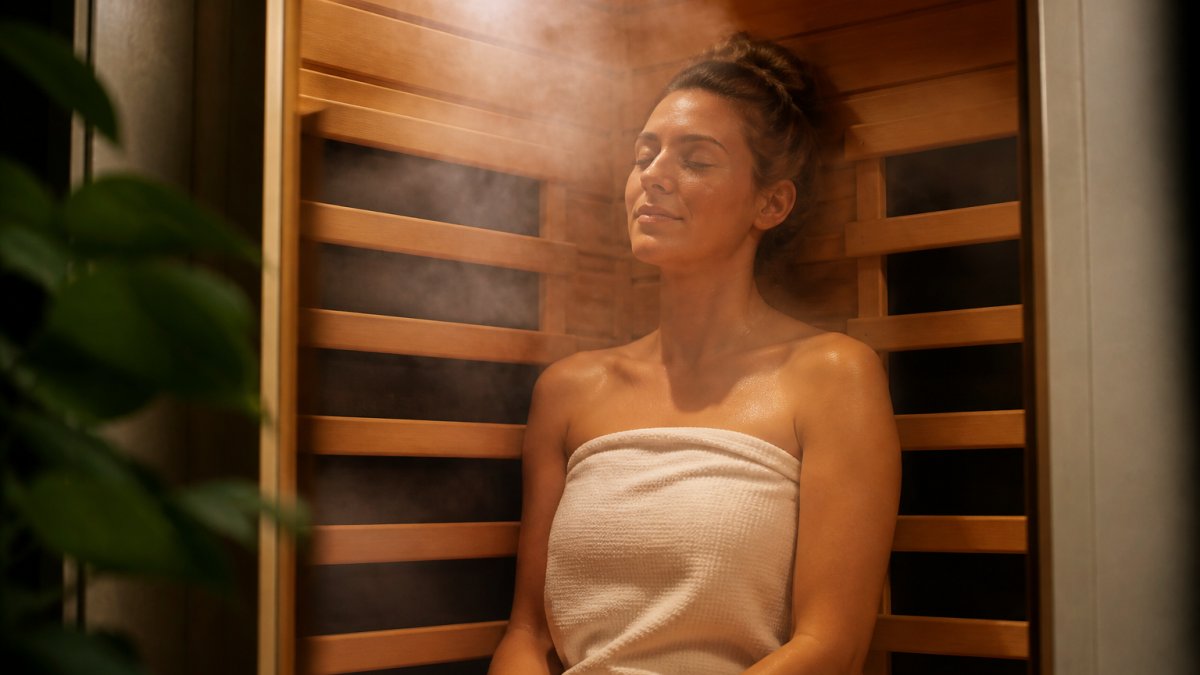
The practical difference emerges in consistency and accessibility. If you're more likely to use a sauna regularly because it's convenient and comfortable, that consistency matters far more for stress management than choosing the theoretically superior modality you rarely access.
Sauna for Stress and Anxiety: Practical Protocols
Building a sauna routine specifically for stress and anxiety requires intentional structure. Random occasional sessions produce minimal benefit; consistent practice creates measurable improvements in how you manage daily stress.
A practical protocol for stress relief involves:
- Frequency: 2-3 sessions per week, spaced at least one day apart, allows your body to adapt and respond
- Duration: 20-30 minutes per session balances therapeutic benefit with safety and comfort
- Temperature progression: Start at the lower end of your chosen sauna's range and increase gradually as your body acclimates
- Timing: Evening sessions often work better for stress relief, as they transition you into relaxation mode before sleep
- Consistency: The same time each week builds habit and psychological anticipation
The ritual matters as much as the physiology. Designating sauna time as non-negotiable self-care, phone away, no work thoughts, amplifies the stress-relief benefit. Many users find that the enforced stillness of a sauna session provides the mental break that modern life rarely offers.
Combining sauna use with other recovery practices strengthens the effect. Pairing your session with breathing exercises, gentle stretching afterward, or meditation deepens the parasympathetic activation. This integrated approach addresses stress more comprehensively than heat exposure alone.
Infrared Sauna Drawbacks and Limitations
Infrared saunas aren't universally superior, despite their growing popularity. Several legitimate limitations deserve consideration.
The lower cabin temperature, while comfortable for some, feels insufficiently intense for people accustomed to traditional saunas. If you're seeking that acute heat shock and the strong cardiovascular response it triggers, infrared heat may feel underwhelming. The gentler warmth appeals to those with heat sensitivity or cardiovascular concerns, but it's genuinely less intense.
Installation and space requirements vary. Our Infrared Sauna - 2-Person Premium Home Spa measures 47.2" L × 34.2" W × 70.9" H and requires 110V electrical connection, making it suitable for most homes but not tiny apartments.

Cost considerations matter. Infrared units typically cost more upfront than comparable portable traditional sauna tents, though the price range varies widely depending on features and construction quality. If budget is your primary constraint, a basic portable sauna tent offers entry-level access to sauna therapy at lower investment.
Infrared Sauna – 2-Person Premium Home Spa →
The "infrared is superior" narrative in wellness marketing often overstates the evidence. Both heat types work; neither is objectively better for stress relief. Your individual physiology, preferences, and lifestyle determine which serves you better.
Which Option Fits Your Home and Lifestyle
Selecting between infrared and traditional saunas requires honest assessment of your space, budget, and usage patterns.
Space availability is the primary constraint for most people. If you have a dedicated room or significant closet space, our Infrared Sauna - 2-Person Premium Home Spa fits comfortably and becomes a permanent fixture.
Your stress-relief goals matter. If you're seeking a ritual, a dedicated time and space to completely disconnect, a permanent infrared sauna creates that sanctuary more effectively. If you're adding sauna therapy to an already-packed schedule, a portable blanket like our Infrared Sauna Blanket offers flexibility to relax while reading or watching television.
Consistency predicts success more reliably than equipment choice. The sauna you'll actually use three times weekly beats the theoretically perfect sauna gathering dust. Portable options win this contest for many people because they eliminate friction.
Budget considerations affect the decision substantially. Portable saunas cost less upfront and require no installation, making them accessible for testing whether sauna therapy actually reduces your stress before committing to a permanent installation. As you develop your practice, upgrading to a premium infrared sauna becomes a natural progression.
| Factor | Infrared Sauna | Traditional Sauna | Winner |
|---|---|---|---|
| Space Required | Permanent installation needed | Portable options available | Traditional (if space-limited) |
| Setup Time | Minimal (already installed) | 20-45 minutes preheating | Infrared |
| Temperature Range | 104°F-176°F | 150°F-195°F | Depends on preference |
| Perceived Heat Intensity | Deep, penetrating warmth | Acute, ambient heat | Personal preference |
| Startup Cost | Higher | Lower (portable options) | Traditional |
| Consistency of Use | Easier (always available) | Requires planning | Infrared |
Conclusion
Infrared versus traditional sauna for stress relief isn't a matter of one being objectively superior, it's about matching the technology to your life. Both deliver genuine stress-relief benefits through heat exposure, relaxation, and parasympathetic activation. Infrared saunas offer convenience, deeper heat penetration, and lower operating temperatures. Traditional saunas provide intense acute heat, established safety data, and lower entry costs for portable options.
The decision ultimately hinges on three factors: your available space, your budget, and your commitment to consistency. If you have room for a permanent installation and want the most convenient access, our Infrared Sauna - 2-Person Premium Home Spa brings professional-grade stress relief directly into your home with low-EMF technology, chromotherapy lighting, and tourmaline foot warmers. If you're testing whether sauna therapy works for your stress management, our Infrared Sauna Blanket or Sauna Box let you start immediately without major investment or installation.
Get started with Thermo Plunge Recovery Systems and experience how consistent sauna practice transforms your stress response. Every unit includes free shipping, a 30-day guarantee, and 24/7 support, so you can recover smarter and stress less, backed by our commitment to your well-being.
Frequently Asked Questions
Which is better for stress relief: an infrared sauna or a traditional sauna?
Both can reduce stress through heat exposure and relaxation. Infrared saunas operate at lower temperatures (120-150°F) and penetrate tissue directly, while traditional saunas heat the air to 160-200°F. Traditional saunas may produce a more intense, immediate relaxation response; infrared saunas allow longer, gentler sessions. The choice depends on your comfort level and how you respond to each heat type. Start with whichever appeals to you and track your stress levels over 2-3 weeks.
How long do traditional saunas take to heat up?
Traditional saunas typically require 30-45 minutes to reach operating temperature (160-180°F), depending on size and insulation. Smaller home units may heat faster; larger commercial saunas take longer. Once heated, they maintain temperature efficiently. If you prefer minimal wait time, portable steam saunas reach full temperature in 5-10 minutes, though they operate differently than traditional dry heat saunas.
What are the downsides of infrared saunas?
Infrared saunas have several limitations. They produce less intense heat sensation than traditional saunas, which some users find less satisfying. Not all users experience the same stress-relief response.
Does sauna use actually reduce stress and anxiety?
Heat exposure activates the parasympathetic nervous system, promoting relaxation. However, individual results vary. The relaxation effect is often immediate (during the session), but long-term anxiety relief requires consistent use over weeks.