

Is Cold Therapy Good for Stress? What Science Says
Table of Contents
- What Happens to Your Body During Cold Water Immersion
- Cold Water Immersion Benefits for Mental Health
- How Long to Cold Plunge for Stress Relief
- Building Your Home Ice Bath Setup for Beginners
- Safety First: Who Should Skip Cold Therapy
- Making Cold Therapy a Habit That Lasts
- Conclusion: Is Cold Therapy Good for Stress?
- Frequently Asked Questions
Last Updated: September 6, 2026
When stress leaves you wound up at the end of the day, the idea of voluntarily stepping into freezing water sounds counterintuitive. Yet the question of whether cold therapy is good for stress has moved from locker-room chatter to serious scientific inquiry. Cold water immersion triggers a cascade of physiological responses that many people find genuinely calming once they get past the initial shock. At Thermo Plunge Recovery Systems, we build home recovery equipment. This guide breaks down what the science says, how to start safely, and how to build a cold therapy routine that you will actually maintain.
The short answer is yes, cold therapy can be good for stress, but the benefits depend heavily on how you approach it. The key is understanding that the stress-relief comes not from avoiding discomfort, but from training your nervous system to handle it. Below, we will show you exactly how the cold affects your brain and body, and how to use that response to build genuine psychological resilience.
What Happens to Your Body During Cold Water Immersion
Cold water immersion triggers what physiologists call the cold shock response, an immediate activation of your sympathetic nervous system. Your heart rate spikes, blood vessels constrict through vasoconstriction, and your breathing becomes rapid and shallow. This acute stress response is your body preparing for a threat, and it feels intense for the first 30 to 60 seconds.
Here is where the magic happens. As you stay in the water and your breathing steadies, your body shifts toward parasympathetic activation, the rest-and-digest state. Research on the physiological effects of cold water immersion shows that repeated exposure trains your autonomic nervous system to recover more quickly from stress. Over time, you become better at regulating your response to pressure, both in the tub and in daily life.
The hormonal response matters too. Cold exposure stimulates the release of norepinephrine, a neurotransmitter that sharpens focus and elevates mood. Endorphins follow, creating a sense of calm that can persist for hours after you dry off. This is why many practitioners describe cold plunging as a form of physiological stress inoculation: you practice being uncomfortable, and your body learns that discomfort is survivable.
Cold Water Immersion Benefits for Mental Health
The mental health benefits of cold water immersion extend beyond the immediate mood boost. Regular cold plunging has been associated with reductions in perceived stress and improvements in overall mental well-being. The mechanism appears to be habituation: by repeatedly exposing yourself to a controlled stressor, you dampen your brain's overreaction to stressful stimuli in general.
Cold water immersion benefits for mental health also include improved sleep quality, which is foundational for stress management. A cooler core body temperature signals your brain that it is time to rest, and many people report deeper, more restorative sleep on days they plunge. Better sleep means better mood regulation the next day, creating a positive feedback loop.
The practice also builds what psychologists call cognitive flexibility. When you choose to stay in cold water despite every instinct screaming at you to get out, you prove to yourself that you can tolerate discomfort. That sense of agency carries over into stressful work situations, difficult conversations, and anxious moments. Research on cold exposure and mental health outcomes suggests that this type of voluntary stress exposure may help some individuals manage symptoms of anxiety and low mood, though it is not a substitute for professional mental health care.
How Long to Cold Plunge for Stress Relief
For stress relief specifically, the sweet spot is 2 to 3 minutes at temperatures between 10 and 15 degrees Celsius. This duration is long enough to trigger the hormonal cascade that produces the calming afterglow, but short enough to keep the cold shock response manageable. Beginners should start with 30 to 60 seconds and add 15 seconds per session.
How long to cold plunge for stress relief depends on your experience level and tolerance. The table below outlines a sensible progression for most people.
| Experience Level | Water Temperature | Duration | Frequency | Primary Goal |
|---|---|---|---|---|
| Beginner | 15-18°C | 30-60 seconds | 2-3 times per week | Build tolerance |
| Intermediate | 10-15°C | 1-3 minutes | 3-4 times per week | Stress reduction |
| Advanced | 5-10°C | 3-5 minutes | Daily or near-daily | Deep physiological reset |
The most common mistake is staying in too long too soon. If you push past your limit, your body releases cortisol heavily, which works against the calming effect you are after. End your session while you still feel in control, not when you are shivering uncontrollably. A good rule of thumb: you should be able to breathe steadily and speak in short sentences by the time you get out.
Building Your Home Ice Bath Setup for Beginners
A home ice bath setup for beginners does not require a $10,000 renovation. You need three things: a tub that holds water, a way to cool it, and a plan for staying safe. A quality portable ice bath tub is the most accessible starting point, and it folds away when not in use.

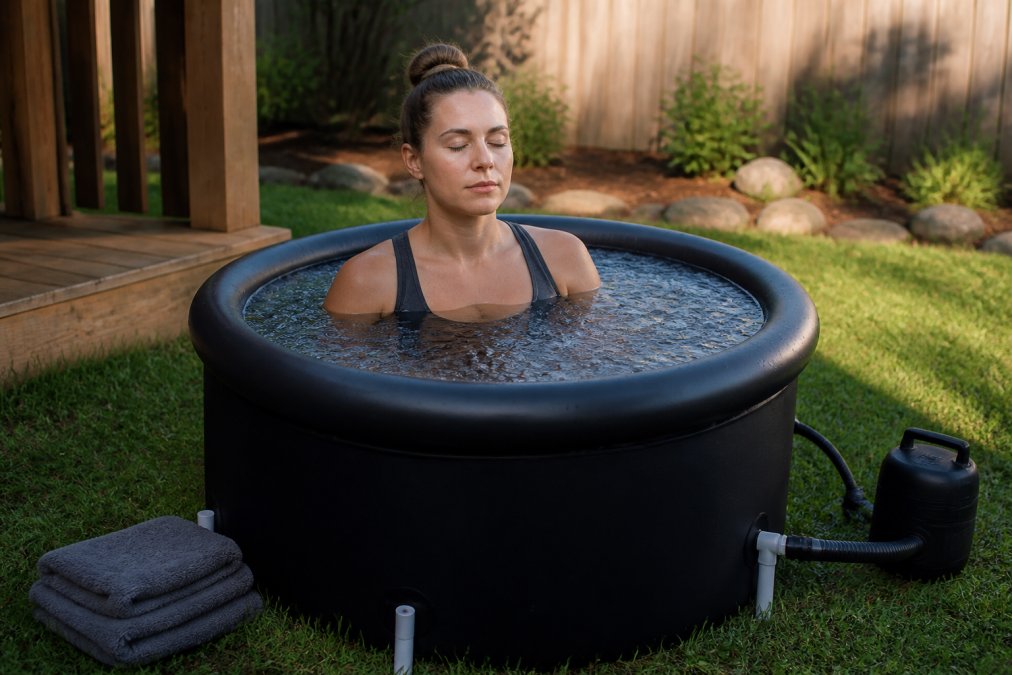
The Thermo Plunge portable ice bath tub is designed exactly for this purpose. It features multi-layered insulation to keep water cold longer and folds flat for storage in a closet or under a bed. At $169.95, it is an entry point that lets you test whether cold plunging fits your lifestyle before investing in more permanent equipment.
If you plan to plunge regularly, a water chiller removes the hassle of buying bags of ice every week. The Thermo Plunge 1/3 HP chiller cools water to 39 degrees Fahrenheit and works with any tub, maintaining a consistent temperature so you can plunge on demand. Chillers cost more upfront, but they offer convenience and consistency with regular use.
Safety First: Who Should Skip Cold Therapy
Cold therapy is not safe for everyone. Anyone with cardiovascular conditions, uncontrolled high blood pressure, or a history of heart arrhythmia should consult a physician before attempting cold water immersion. The cold shock response puts significant strain on the heart, and the risk of complications is real for vulnerable individuals.
Pregnant women and people with Raynaud's syndrome or other circulatory disorders should also exercise extreme caution. The same goes for anyone who has recently had surgery or is recovering from a significant injury. Clinical guidance on cold water immersion safety emphasises that the hypothermia risk increases when you plunge alone, so always have someone nearby who can help if you struggle.
If you have any doubt about whether cold therapy is appropriate for you, get medical clearance first. The stress-relief benefits are not worth a trip to the emergency room. Start with cooler-but-not-freezing water around 18 degrees Celsius and work your way down only if you tolerate it well.
The Post-Immersion Recovery: Maximising the Afterglow
What you do in the 30 minutes after you get out of the water is just as important as the plunge itself for stress relief. Many people make the mistake of rushing to a hot shower immediately, which can blunt the parasympathetic 'afterglow' effect you just worked to create. The goal is to let your body rewarm naturally while maintaining the calm, focused state you have induced.
Here is a practical post-immersion protocol used by many experienced plungers:
- Stay in the cold air for a few minutes. Do not rush inside. Let your body begin its natural rewarming process while you focus on slow, steady breathing. This extends the period of parasympathetic activation.
- Dry off and layer up, but skip the hot shower for at least 15 minutes. A hot shower will cause rapid vasodilation, which can trigger a sudden drop in blood pressure and make you feel lightheaded. It can also cut short the endorphin release. Instead, put on warm, dry clothing and let your body do the work.
- Do a gentle warm-up. Light movement, such as walking or gentle stretching, helps circulate blood and promotes comfortable rewarming without shocking your system.
- Consume something warm. A warm, non-caffeinated drink like herbal tea helps raise your core temperature gently and reinforces the feeling of comfort and safety, which is key for the psychological afterglow.
- Sit with the feeling. For a few minutes, simply notice the sensation of calm and clarity. This mindful reflection helps your brain associate the plunge with a positive outcome, which strengthens the habit loop and makes you more likely to return.
This recovery phase is not just about comfort; it is about consolidating the stress-relief benefits. By managing your rewarming carefully, you allow your nervous system to settle into the rest-and-digest state, which is the true reward of the practice.
Making Cold Therapy a Habit That Lasts
The hardest part of cold therapy is not the cold; it is the consistency. Most people try it a few times, miss a week, and never return. The key to long-term habit maintenance is removing as much friction as possible between you and the plunge, but that alone is rarely enough. The real differentiator is how you frame the experience in your mind before you even touch the water.
Reframe the Shock as a Signal, Not a Threat
The first 30 seconds of a plunge trigger your amygdala's threat detection, which is why your instinct screams at you to get out. If you interpret that feeling as 'danger,' your stress response will spike and you will be less likely to return. Instead, use a cognitive reappraisal technique: tell yourself, 'This is not danger; this is a signal that my system is waking up.' By labelling the sensation as a positive physiological event rather than a threat, you reduce the perceived intensity and make the experience more tolerable.
A common pattern among long-term practitioners is to use a simple mantra during the initial shock, such as 'I am safe, this is training.' This is not about denying discomfort; it is about redefining it. You are not enduring pain; you are actively building a skill. This mental shift is what separates people who plunge for a month from those who plunge for years.
Use Implementation Intentions to Automate the Decision
Motivation is unreliable; systems are not. Instead of relying on willpower each morning, use a psychological tool called an implementation intention. This means pre-deciding exactly when and where you will plunge. The formula is simple: 'When [situation], I will [behaviour].' For example: 'When I finish my first cup of coffee, I will walk to the tub and get in.' This removes the in-the-moment negotiation with yourself about whether you feel like doing it.
The Two-Minute Rule for Low-Motivation Days
On days when you feel resistance, lower the bar drastically. Tell yourself you only have to get in for 30 seconds. Once you are in, you will almost always stay longer, but the psychological barrier to entry is much lower when the commitment is tiny. This is a well-established behavioural technique for building habits: make the starting behaviour so easy that you cannot say no. The goal is to maintain the identity of being someone who plunges regularly, even if some sessions are shorter than others.
Prepare Your Environment the Night Before
Remove every possible decision from your morning. Have your towel, robe, and warm drink waiting before you get in. If you use ice, fill the tub the night before so you are not hauling bags at 6 a.m. For those using a chiller, set the temperature the night before so the water is ready when you are. This kind of preparation is what separates people who plunge for a month from those who plunge for years.
Conclusion: Is Cold Therapy Good for Stress?
So, is cold therapy good for stress? For most healthy adults, the answer is a qualified yes. Cold water immersion trains your nervous system to handle stress more gracefully, boosts mood-regulating neurotransmitters, and builds psychological resilience that transfers to daily life. The benefits are real, but they require consistency and a sensible approach to safety.
At Thermo Plunge Recovery Systems, we have designed our ice bath tubs and water chillers to make home cold plunging simple and reliable. Whether you are just starting with a foldable tub or ready for a chiller-equipped permanent setup, we have the equipment and the support to help you build a routine that lasts. Explore our cold plunge collection and take the first step toward calmer, more resilient nervous system.
Frequently Asked Questions
How does cold water immersion affect the nervous system?
Cold water immersion activates the sympathetic nervous system, triggering the cold shock response. This acute stressor causes a surge of norepinephrine and adrenaline. With regular practice, your body adapts, leading to stronger parasympathetic activation afterward. This shift helps lower your baseline physiological stress and improves your ability to handle daily anxiety triggers.
Does cold therapy help with cortisol levels?
Research suggests regular cold water immersion can help regulate cortisol, the primary stress hormone. The acute exposure briefly raises cortisol, but the adaptive response over weeks of consistent practice tends to lower resting cortisol levels. This hormonal regulation is one reason many people report feeling calmer and more resilient to stress after establishing a cold plunge routine.
How often should you practice cold exposure for mental health?
Most research on mental health benefits uses a protocol of two to three sessions per week, lasting one to three minutes each. Consistency matters more than duration or frequency. A sustainable schedule you can maintain for months will produce better results than intense daily sessions you abandon after two weeks. Start with two sessions weekly and adjust based on your response.
What is the best time of day for a cold plunge?
Morning cold plunges work well for many people because the cold water raises alertness and dopamine levels, setting a calm tone for the day. However, the best time is the one you will actually repeat. Evening plunges can also support stress relief by helping you unwind, though the stimulating effect may interfere with sleep for some individuals. Test both to find your preference.
Cold plunging is a challenge, but it is one you can master with the right preparation and equipment. Thermo Plunge Recovery Systems supports your journey with professional-grade ice baths, free shipping, a 30-day guarantee, and 24/7 support. Get started with Thermo Plunge Recovery Systems and discover a calmer, more resilient you.