

Best Ice Bath for Athletes 2026: Top Cold Plunges
Table of Contents
- Why Trust Our Ice Bath Testing
- The Cold Plunge Recovery Benefits Athletes Actually Feel
- Best Ice Bath for Athletes 2026: Our Top Picks
- How Long to Stay in an Ice Bath for Maximum Gain
- Portable vs Permanent Cold Plunge: Which Fits Your Training?
- Key Features to Compare Before You Buy
- Maintenance and Water Filtration Requirements
- Final Verdict: Which Ice Bath Should You Pick?
- Frequently Asked Questions
Last Updated: September 5, 2026
Cold water immersion has moved from elite sports science labs into home garages. At Thermo Plunge Recovery Systems, we build and test these systems daily, and this guide breaks down what separates a worthwhile investment from a frustrating purchase.
A cold plunge is a tub designed for cold water immersion, typically kept between 39°F and 59°F, to speed up recovery after intense training. Below, we rank the top options for 2026 and explain the recovery science, maintenance realities, and long-term costs most guides ignore.
Why Trust Our Ice Bath Testing
Most product roundups are written from spec sheets. Our team evaluates ice baths on real-world criteria: insulation efficiency, water circulation quality, setup time, and durability under repeated inflation and deflation cycles.
We also weigh the long-term cost of ownership, not just the sticker price. A cheaper tub that requires constant ice refills or fails after a season of outdoor use is no bargain.
The Cold Plunge Recovery Benefits Athletes Actually Feel
Cold plunge recovery benefits go beyond the temporary shock. Submersion causes vasoconstriction, which helps reduce inflammation and flush metabolic waste from muscles, leading to less delayed onset muscle soreness (DOMS).
The physiological response also includes a spike in heart rate variability during recovery periods. Over time, regular cold exposure therapy may support thermal regulation and metabolic recovery.
Best Ice Bath for Athletes 2026: Our Top Picks
Quick Picks:
- Best Overall: Upgrade XL Ice Bath Tub, professional-grade capacity with chiller compatibility
- Best Budget-Friendly: Ice Bath Tub Portable, multi-layered insulation at an entry-level price
- Best Full-Spectrum: Ultimate Recovery Bundle, combines cold therapy with red light therapy
Upgrade XL Ice Bath Tub: Best Overall for Serious Athletes
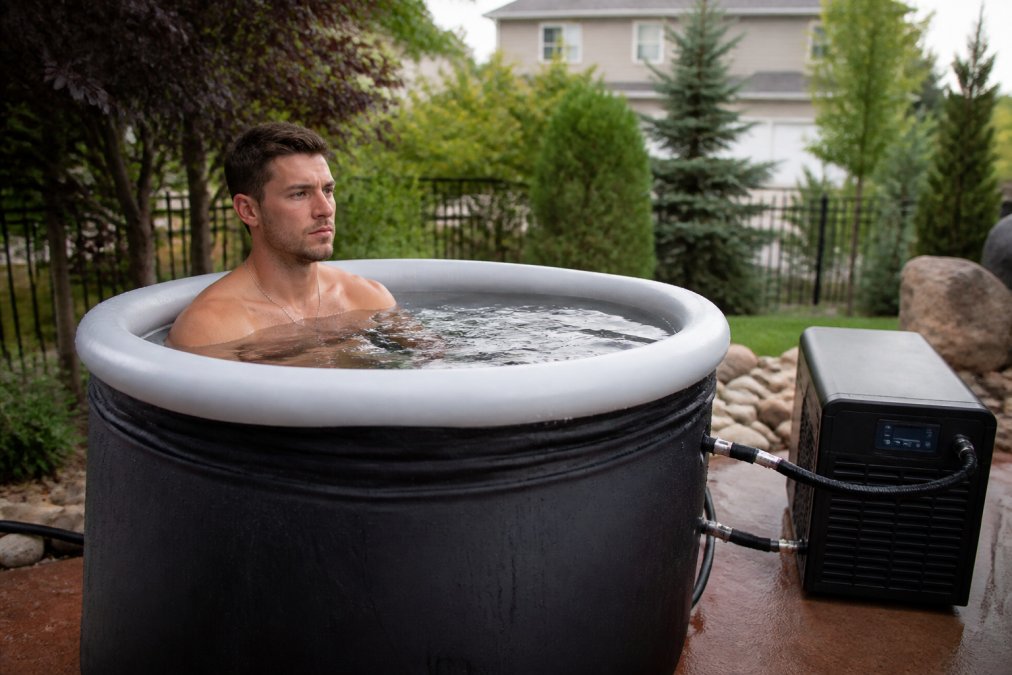
Our top pick is the Upgrade XL Ice Bath Tub, a 160-gallon inflatable unit designed for athletes who train hard daily. Its insulated thermal lid locks in cold temperatures, and the tub is fully compatible with water chillers for precise temperature control. At $648.95, it delivers professional-grade recovery at home without the installation costs of a permanent unit.

The XL capacity accommodates taller athletes comfortably, allowing full submersion to shoulder level. Setup is straightforward, and the durable materials hold up to outdoor conditions. For athletes who want consistent 39°F to 50°F water without hauling ice, pairing this tub with a chiller is the most effective combination we have tested.
Ice Bath Tub Portable: Best Budget-Friendly Choice
Not every athlete needs a 160-gallon setup. The Ice Bath Tub Portable offers a multi-layered, foldable design at $169.95, making it the most accessible entry point. It suits athletes who travel, train in small spaces, or want to test whether regular plunging fits their routine before committing to a larger system.
The tradeoff is temperature control. Without a chiller, you will rely on adding ice manually, and the smaller volume means water warms faster during longer sessions. For post-workout recovery on a budget, it performs admirably.
Ultimate Recovery Bundle: Best for Full-Spectrum Recovery
The Ultimate Recovery & Wellness Bundle combines the XL Ice Bath Tub, a 1/3 HP water chiller, and a full-body red light therapy pad for $2,199.95. This system addresses both cold plunge recovery benefits and the cellular repair mechanisms that red light therapy supports.
The included chiller maintains water at a consistent 39°F, eliminating the need for ice purchases entirely. The red light therapy pad uses 660nm and 850nm wavelengths to support muscle recovery, circulation, and relaxation.
How Long to Stay in an Ice Bath for Maximum Gain
The optimal plunge duration isn't a single number, it shifts with your training phase and sport. The most effective protocols periodize cold water immersion around your hardest training days.
Sport-Specific Cold Plunge Protocols
For Endurance Athletes (Running, Cycling, Triathlon):
Endurance training creates significant systemic inflammation and muscle micro-tears. The goal is to accelerate recovery without blunting mitochondrial adaptations. A typical protocol is:
- When: Within 30 minutes post-long-run or interval session.
- Temperature: 50°F to 55°F (slightly warmer to avoid over-suppressing the inflammatory response that signals adaptation).
- Duration: 10 to 12 minutes total, broken into two 5-6 minute intervals with a 1-minute break on the side of the tub.
- Frequency: 2-3 times per week, specifically after key sessions, not after every easy run.
For Strength and Power Athletes (Weightlifting, Sprinting, CrossFit):
There is ongoing debate about whether cold plunging immediately after strength training blunts the mTOR pathway and reduces muscle hypertrophy. Many practitioners advise a cautious approach.
- When: At least 4-6 hours after your lifting session, or on rest days. This allows the initial anabolic signaling to occur without interference.
- Temperature: 45°F to 50°F.
- Duration: 5 to 8 minutes.
- Frequency: 2-3 times per week, focusing on days after the most demanding lower-body or high-volume sessions.
For Team Sport Athletes (Football, Basketball, Soccer):
These sports involve repeated high-intensity efforts and frequent collisions or changes of direction. The priority is rapid return to play and managing general soreness.
- When: Within 1-2 hours post-game or post-practice.
- Temperature: 45°F to 50°F.
- Duration: 8 to 10 minutes.
- Frequency: 2-4 times per week, depending on the game schedule.
The General Duration and Temperature Table
For those without a sport-specific coach, the following table offers a safe and effective starting point.
| Experience Level | Water Temperature | Plunge Duration | Sessions per Week |
|---|---|---|---|
| Beginner | 50°F - 59°F | 1 - 2 minutes | 2 - 3 |
| Intermediate | 45°F - 50°F | 2 - 4 minutes | 3 - 4 |
| Advanced | 39°F - 45°F | 4 - 5 minutes | 4 - 5 |
How to Integrate Plunging with Wearable Tech
A unique way to refine your plunge duration is to use recovery metrics from your wearable instead of guessing.
- Heart Rate Variability (HRV): If your HRV is significantly lower than your 7-day baseline, it indicates high stress and poor recovery. A plunge session can help shift your autonomic nervous system toward a parasympathetic (rest-and-digest) state. Check your HRV the morning after a plunge; a return toward baseline is a good sign the protocol worked.
- Sleep Quality: Track your deep sleep and REM stages. Some athletes find that a late-evening plunge (at least 2 hours before bed) can improve sleep onset and depth. If your wearable shows poor sleep quality after a plunge, move the session to earlier in the day.
- Resting Heart Rate (RHR): A lower RHR upon waking is a general sign of recovery. If your RHR is elevated by 5+ beats per minute, a short, warmer plunge (55°F) might be more beneficial than a colder, longer one.
Portable vs Permanent Cold Plunge: Which Fits Your Training?
The portable vs permanent cold plunge decision comes down to space, budget, and training frequency. Portable inflatable models set up in minutes, store away when not in use, and cost considerably less than built-in units. They suit renters, outdoor spaces, and athletes who move locations.
Permanent cold plunges offer superior insulation and a premium aesthetic but require dedicated space, professional installation, and a significantly higher budget. For most home athletes, a portable tub paired with a water chiller delivers the same physiological benefits at a fraction of the cost and commitment.

Key Features to Compare Before You Buy
Several key features determine whether an ice bath works for your needs. Water filtration and sanitation sit at the top of the list. A quality system includes ozone sanitation or UV sterilization to keep water clean between uses.

Temperature control is the next priority. A chiller unit with a built-in filter and timer maintains consistent temperatures without manual ice additions. Insulation efficiency and the quality of the thermal lid determine how long your water stays cold and how much energy your chiller consumes.
Maintenance and Water Filtration Requirements
Daily maintenance for a chiller-equipped ice bath is modest but non-negotiable. The integrated filter captures debris, while ozone sanitation or UV sterilization keeps bacteria and algae in check. Expect to check water clarity weekly and add sanitizer as needed. A full water change every 4 to 8 weeks keeps the system clean and odour-free.
For tubs without a chiller or filter, the maintenance load is heavier. You will need to drain, clean, and refill after every few sessions. A consistent maintenance routine protects your investment and ensures every plunge is hygienic.
The Real Cost of Ownership: Electricity, Filters, and Chemicals
Most buying guides stop at the purchase price. To make a smart decision, you need to understand the ongoing operational costs.
Electricity Consumption (The Chiller Factor)
A 1/3 HP water chiller is the workhorse of a home cold plunge setup. Its energy draw depends on ambient temperature, water temperature set point, and insulation quality.
- Average Draw: A 1/3 HP chiller typically draws between 300 and 500 watts while running. In a temperate climate (e.g., 70°F ambient), a well-insulated tub with a thermal lid will cause the chiller to run roughly 30-40% of the time to maintain 45°F.
- Monthly Estimate: This translates to roughly 70-100 kWh per month. At the average U.S. residential electricity rate of approximately $0.17 per kWh, this adds $12 to $17 per month to your energy bill.
- The Insulation Variable: A tub with thick, multi-layered insulation and a sealed thermal lid will drastically reduce the chiller's run time. A poorly insulated tub in a hot garage could double that electricity cost. This is why the upfront investment in a quality tub like the Upgrade XL pays off over time.
Water and Chemical Maintenance
Keeping the water clean involves more than just the filter. You will need to budget for ongoing consumables.
- Sanitizer: For a 160-gallon tub, a standard dose of a non-foaming sanitizer (like a chlorine-free oxidizer or hydrogen peroxide-based product) is typically required after each use or every other day. A 1-liter bottle, costing roughly $25-$35, will typically last 2-3 months with regular use. That's an annual cost of $100-$175.
- pH Balancers: Fluctuations in pH can cause skin irritation and reduce sanitizer effectiveness. Testing strips and pH adjusters (up or down) add another $50-$100 per year.
- Filter Replacements: The integrated filter cartridge should be replaced every 4-6 weeks, depending on usage. A replacement cartridge costs between $15 and $25. This adds up to $180-$300 per year.
The Ice-Only Alternative: A Costly Trap
For tubs without a chiller, the cost of ice is the hidden killer. To bring a 100-gallon tub from 70°F down to 50°F, you need to remove 20°F of heat. This requires approximately 20-25 pounds of ice just for the initial cool-down, and more to maintain the temperature.
- Per Session Cost: At $3-$5 per 10-pound bag, a single plunge could cost $6-$15 in ice alone.
- Annual Cost: If you plunge 3 times per week, that's $936 to $2,340 per year, far exceeding the electricity cost of a chiller.
A Cost Comparison Table
| Cost Factor | Chiller-Equipped System (Upgrade XL + Chiller) | Ice-Only System (Portable Tub) |
|---|---|---|
| Upfront Cost | ~$1,500 - $2,200 | ~$170 |
| Monthly Electricity | $12 - $17 | $0 |
| Monthly Ice Cost | $0 | $78 - $195 |
| Annual Sanitizer & pH | $150 - $275 | $50 - $100 (less water volume) |
| Annual Filter Replacements | $180 - $300 | $0 (no filter) |
| Annual Water Change Cost | $10 - $20 (4-8 changes) | $30 - $60 (frequent changes) |
| Total First-Year Cost | ~$1,900 - $2,800 | ~$1,200 - $2,600 |
| Total Second-Year Cost | ~$350 - $600 | ~$1,100 - $2,500 |
Final Verdict: Which Ice Bath Should You Pick?
Choosing the right ice bath comes down to matching the system to your training volume, space, and willingness to manage maintenance. For serious athletes who plunge daily and want consistent temperatures without ice logistics, the Upgrade XL Ice Bath Tub paired with the 1/3 HP Water Chiller is the best choice. Budget-conscious beginners should start with the portable Ice Bath Tub to build the habit before scaling up.
The long-term cost of ownership favours investing in a chiller-equipped system from the start. Ice purchases add up quickly, and a tub without filtration demands constant water changes. Thermo Plunge Recovery Systems backs every purchase with free shipping, a 30-day guarantee, and 24/7 support.
Frequently Asked Questions
What is the best ice bath for athletes in 2026?
For most athletes, the Upgrade XL Ice Bath Tub offers the best balance of space, durability, and chiller compatibility for $648.95. Its 160-gallon capacity accommodates taller athletes comfortably, while the insulated thermal lid maintains consistent cold temperatures between sessions. If you are just starting with cold water immersion, the $169.95 portable Ice Bath Tub provides an affordable entry point. For a complete home recovery setup, the Ultimate Recovery & Wellness Bundle at $2,199.95 adds a water chiller and red light therapy pad.
How long should an athlete stay in an ice bath for maximum benefits?
For cold plunge recovery benefits, aim for 2 to 5 minutes per session at 50-59°F. Beginners should start with 1-2 minutes and gradually increase duration as tolerance builds. Sessions longer than 10 minutes offer little additional benefit and increase the risk of cold shock or skin damage. The most effective protocol is 3-4 sessions per week after intense training days. Your body's response matters more than the clock: if you start shivering uncontrollably or feel numb, end the session.
Are portable ice baths as effective as permanent installations?
Yes, when paired with a quality chiller, portable tubs match the recovery outcomes of permanent installations. The main difference is convenience and aesthetics rather than physiological effect. Portable vs permanent cold plunge decisions come down to your space and budget. Portable options like the Upgrade XL Ice Bath Tub deliver consistent 39°F water temperatures when connected to a 1/3 HP chiller. They fold down for storage and cost considerably less than built-in units, making them the smarter choice for most home athletes.
What features should athletes look for in a cold plunge tub?
Prioritize insulation efficiency to maintain water temperature without excessive energy use. Look for multi-layered construction and a thermal cover. Submersion depth matters: you want water deep enough to cover your torso when seated. A water filtration system with UV sterilization or ozone sanitation reduces maintenance frequency. If you plan daily use, a chiller unit with precise temperature control is essential. Space-saving design and a drainage system simplify setup and cleanup, particularly for indoor or apartment use.
Choosing a recovery system is a commitment to your performance. The right ice bath turns recovery from an afterthought into a consistent, measurable part of your training week. Explore the full range of cold plunge and recovery systems at Thermo Plunge Recovery Systems and find the setup that matches your goals. Get started today and feel the difference in your next session.
This article was written using GrandRanker