

Coldture vs BonCharge for Home Recovery: Which Wins?
Table of Contents
- Coldture vs BonCharge for Home Recovery: Quick Comparison
- Benefits of Cold Plunge Therapy: What the Research Shows
- How to Recover Faster from Workouts with Cold and Light Therapy
- Best Home Ice Bath for Athletes: Key Features to Compare
- Coldture vs BonCharge: Pricing and Long-Term Value
- Safety, Contraindications, and Space Requirements
- Frequently Asked Questions
Last Updated: September 28, 2026
Coldture vs BonCharge for Home Recovery: Quick Comparison
Choosing between Coldture and BonCharge for home recovery comes down to one question: do you want a modular system you build over time, or a single all-in-one setup? Coldture leans toward modular cold plunge hardware, while BonCharge spreads across red light, sauna, and cold therapy. At Thermo Plunge Recovery Systems, we see this exact comparison come up constantly, and the honest answer is that neither brand is the automatic winner. The right pick depends on your space, your budget, and whether you want cold therapy alone or a combined cold-and-light recovery protocol.
Here is the short version: for a complete home recovery setup that pairs an ice bath with a water chiller and full-body red light therapy, a bundled system usually beats buying piece by piece. We will break down the features, pricing, and safety details so you can decide with clear eyes.
Benefits of Cold Plunge Therapy: What the Research Shows
Cold plunge therapy is the practice of immersing your body in cold water, typically between 39°F and 50°F, for short sessions to support muscle recovery and circulation. The proposed benefits centre on reduced inflammation, less soreness, and a calmer nervous system after training.
Many athletes report faster post-workout recovery and less next-day stiffness. The mechanisms often cited include vasoconstriction during immersion and vasodilation afterward, which may help move metabolic waste out of tired tissue. Red light therapy works differently, using specific wavelengths to support cellular adaptation and tissue repair.
For a deeper look at how cold exposure affects recovery, the Cleveland Clinic overview of cold plunge benefits is a solid, plain-language starting point.
How to Recover Faster from Workouts with Cold and Light Therapy
Recovering faster from workouts means stacking a few simple habits, not chasing one miracle tool. Cold water immersion handles the inflammation side. Red light therapy and sleep hygiene handle the tissue repair and nervous system side.
A practical weekly protocol looks like this:
- Cold plunge 2-4 times per week, 2-3 minutes per session at roughly 39-50°F
- Red light therapy sessions of 10-20 minutes, ideally in the evening
- Prioritize sleep, aiming for 7-9 hours to support circadian rhythm
- Hydrate and eat protein within a couple of hours of training
- Keep hard sessions spaced so tissue repair can actually happen
The thing nobody tells you about cold therapy is that consistency matters more than intensity. A short plunge you actually do beats a brutal one you dread.
Ultimate Recovery & Wellness Bundle →
Best Home Ice Bath for Athletes: Key Features to Compare
The best home ice bath for athletes needs three things: a tub big enough to submerge your shoulders, a way to hold temperature, and a setup that fits your space. Everything else is preference.
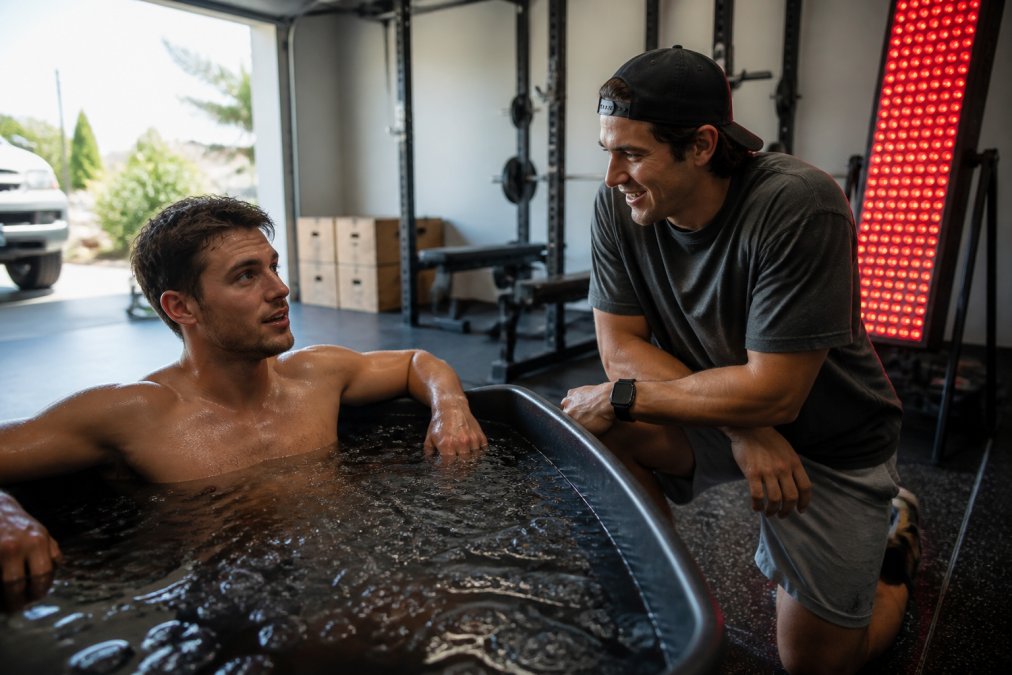
When comparing Coldture and BonCharge, look past the marketing and check these specs:
| Feature | What to Look For | Why It Matters |
|---|---|---|
| Tub capacity | 100-160 gallons | Shoulder-deep immersion for full benefit |
| Cooling method | Built-in chiller vs. ice | Chillers hold temperature without daily ice runs |
| Temperature range | Down to ~39°F | Consistent cold for effective sessions |
| Filtration | Built-in filter | Less water changes, less maintenance |
| Footprint | Foldable or inflatable | Fits apartments and small home gyms |
| Light therapy | Separate or bundled | Combined cold and light protocols |
A common mistake is buying a tub with no chiller and then quitting because hauling ice every day gets old fast.
Coldture vs BonCharge: Pricing and Long-Term Value
Pricing is where the two brands diverge most, and it is also where most buyers get tripped up. Neither Coldture nor BonCharge sells a single cheap unit; both sit in the premium home recovery tier. The real cost question is not the sticker price but the total you spend building a full protocol.

Most comparison articles stop at the sticker price. The more useful calculation is cost per recovery session over the life of the gear. Here is how to run that math for yourself:
- Add up the total cost of every component you need for your protocol (tub, chiller, light panel, filtration, any accessories).
- Estimate how many sessions per week you will realistically do.
- Divide total cost by (sessions per week × 52 × expected years of service).
A common pattern we see: a buyer spends $2,000-$3,000 on a full setup, uses it three times a week, and keeps it for five years. That works out to roughly $2.50-$3.85 per session. Compare that to a single drop-in cryotherapy or contrast therapy session at a clinic, which often runs $40-$80 per visit. The home setup pays for itself within the first year for most consistent users.
Where the two brands differ is in how you get there. Coldture leans toward modular cold plunge hardware, so you may buy the tub first and add a chiller later. BonCharge spreads across red light, sauna, and cold therapy, which means you can build a multi-modality stack from one brand but may pay a premium for the convenience of a single ecosystem. Neither approach is inherently cheaper, it depends on whether you value incremental purchases or one-stop shopping.
If you buy a tub from one brand, a chiller separately, and a light panel from a third, you often pay more in total and lose the convenience of one warranty and one support line.
Ultimate Recovery & Wellness Bundle →
If you want a standalone chiller that works with any tub, Thermo Plunge Recovery Systems sells a 1/3 HP Water Chiller that cools to 39°F, with a built-in filter and timer.

Safety, Contraindications, and Space Requirements
Safety comes first with any thermal therapy, and this is the part most comparison articles skip. Cold water immersion is not right for everyone. If you have a heart condition, high blood pressure, or circulation problems, talk to a doctor before you start. Pregnant people and anyone with Raynaud's should be especially cautious.
- Cardiovascular conditions: heart disease, arrhythmia, uncontrolled hypertension, or a history of stroke
- Circulatory issues: Raynaud's phenomenon, peripheral vascular disease, or cold urticaria (allergic reaction to cold)
- Neurological conditions: seizure disorders or impaired cold sensation
- Pregnancy: cold immersion can affect blood flow and core temperature regulation
- Medications: beta-blockers, blood thinners, and some psychiatric medications can alter your cold response
Once you are cleared, follow these operational safety rules:
- Never plunge alone if you are new to cold therapy. Have someone within earshot who knows your session plan.
- Start with shorter sessions (60-90 seconds) and warmer water (around 50°F), then progress over several weeks.
- Keep the area non-slip and well lit. A rubber mat and a grab bar near the tub are cheap insurance.
- Skip alcohol and avoid plunging right after a heavy meal. Both affect thermoregulation and blood pressure.
- Set a timer. Most practitioners find that 2-3 minutes at 39-50°F is sufficient for recovery benefits; longer is not better.
- Know the signs of cold shock: gasping, hyperventilation, and a sudden spike in heart rate. If you feel faint or disoriented, get out immediately and warm up gradually.
Frequently Asked Questions
What are the main differences between Coldture and BonCharge for home recovery?
Coldture focuses on cold plunge tubs and chillers, while BonCharge offers red light therapy devices and sauna blankets. Coldture's systems target cold water immersion for muscle recovery and inflammation reduction. BonCharge specializes in photobiomodulation and infrared heat for skin health, joint pain management, and relaxation. Your choice depends on whether you prioritize cold therapy or light and heat therapy for your home recovery routine.
Is a dedicated ice bath better than portable recovery tools for home use?
A dedicated ice bath with a chiller holds consistent temperatures and supports daily use, which suits athletes who need reliable cold plunge therapy. Portable tubs cost less and store easily but require ice and offer less temperature control. For serious recovery protocols, a chiller-equipped tub like the Thermo Plunge Water Chiller (cools to 39°F) delivers professional-grade results without constant ice refills.
How do I choose the right home recovery equipment for my fitness goals?
Match the tool to your primary goal. For muscle soreness and inflammation after intense training, a cold plunge system is most effective. For sleep quality, stress relief, and skin health, red light therapy or infrared sauna blankets work well. Many athletes combine both. Consider your space, budget, and how often you will use the equipment. A bundle like the Ultimate Recovery & Wellness Bundle covers cold and light therapy in one setup.
What features should I look for in a home cold plunge system?
Prioritize temperature control (a chiller that maintains consistent cold), insulation (multi-layered or inflatable with thermal lid), filtration (built-in filter reduces maintenance), and size (XL tubs fit taller athletes). Timer functions help manage session length. Durability matters for daily use. The Upgrade XL Ice Bath Tub (160-gallon, chiller compatible) and the 1/3 HP Water Chiller are examples that meet these criteria.
How much space do I need for a home recovery setup?
A portable ice bath tub typically needs about 4 by 4 feet of floor space, plus room to move around it. A chiller adds a small footprint beside the tub. Red light therapy pads are flexible and can be used on a bed or floor, requiring no permanent space. Foldable tubs like the Portable Bathtub (25.9 by 31.5 inches) store in a closet when not in use, making them suitable for apartments.