

How Infrared Saunas Improve Sleep Quality
Table of Contents
- How Infrared Saunas Improve Sleep Quality: The Science Behind Heat Therapy
- Thermoregulation and Post-Sauna Cooling: Why Temperature Drop Matters for Sleep
- Using an Infrared Sauna Before Bed: Timing and Preparation
- How Long to Use an Infrared Sauna for Better Sleep
- Building Your Infrared Sauna Sleep Routine
- Infrared Sauna Safety and Hydration for Sleep Success
- Who May Not Benefit and When to Seek Medical Advice
- Frequently Asked Questions
Last Updated: October 4, 2026
How Infrared Saunas Improve Sleep Quality: The Science Behind Heat Therapy
Many people struggle with falling asleep or staying asleep through the night. How infrared saunas improve sleep quality involves heat exposure, nervous system response, and thermoregulation that your body uses to signal bedtime.

When you expose your body to infrared heat, your core temperature rises. As you cool down afterward, your body interprets this temperature drop as a signal to enter sleep mode, mimicking the natural cooling cycle that precedes sleep.
Your circadian rhythm responds strongly to temperature changes. Infrared saunas provide controlled heat exposure that jump-starts this process, making it easier to fall asleep and stay asleep longer.
Thermoregulation and Post-Sauna Cooling: Why Temperature Drop Matters for Sleep
The key to infrared heat for better sleep is the cooling phase. At night, a drop in core temperature signals your brain to release melatonin, the hormone that promotes sleep onset.
When you use an infrared sauna, you artificially raise your core temperature. The subsequent cooling period, especially if you cool down gradually in a comfortable room, creates the temperature signal your body needs for quality sleep. Many people see better results when they:

- Exit the sauna and allow their body to cool naturally for 30-60 minutes
- Avoid cold water immersion immediately after (save that for morning recovery)
- Spend time in a comfortable, cool bedroom to amplify the temperature contrast
- Dim the lights during the cooling phase to support melatonin production
People who experience a gradual temperature drop sleep more deeply than those with sudden temperature changes, which is why timing matters when using infrared saunas for sleep.
Your parasympathetic nervous system ("rest and digest" mode) activates as your body temperature drops, which is why post-sauna relaxation feels natural and sleep comes more easily.
Using an Infrared Sauna Before Bed: Timing and Preparation
Most people see the best results when they use a sauna 2-3 hours before bedtime, allowing core temperature to rise and then gradually cool down, aligning with your natural pre-sleep temperature drop.
Sauna use within 30-60 minutes of bedtime may leave your body too warm; use earlier in the day may lose its thermoregulatory effect on your evening sleep cycle.
Preparation matters as much as timing:
- Hydrate well before your session (drink water throughout the day)
- Avoid heavy meals 2-3 hours before sauna use
- Wear light, breathable clothing or nothing at all inside the sauna
- Have a cool room ready for your post-sauna cooldown
- Dim overhead lights and consider using warm, dim lighting instead
A cool, dark bedroom accelerates the temperature drop your body needs to trigger sleep hormones. Stepping out into a warm room or bright lights works against this effect.
How Long to Use an Infrared Sauna for Better Sleep
Session duration typically ranges from 20-40 minutes, with 30 minutes as a practical middle ground. The right duration depends on your heat tolerance, body composition, hydration status, and nervous system response to thermal stress.
Starting Out: The Gradual Approach
Beginners should start at 15-20 minutes and work up gradually. Your thermoregulatory system becomes more efficient with regular use, so what feels intense in week one becomes comfortable by week four.
Temperature and Duration Trade-Off
For sleep support, many people use infrared saunas set between 49-60°C (120-140°F). Lower temperatures (49-54°C) allow longer sessions (35-40 minutes) with a gentler rise, while higher temperatures (54-60°C) deliver faster elevation but require shorter durations (20-30 minutes).
Most guidance comes from practitioner experience rather than large randomised trials, so your own tracking matters more than following a universal prescription.
Measuring Your Response: What to Track
Infrared Sauna – 2-Person Premium Home Spa →
Instead of assuming a fixed protocol works for you, monitor how different durations and temperatures affect your sleep:
- Sleep onset latency: How many minutes does it take you to fall asleep after a sauna session? Track this for one week without sauna use, then compare to one week with sauna sessions.
- Sleep continuity: Do you wake fewer times during the night after sauna use? Note the number of awakenings and their duration.
- Subjective restfulness: Rate how rested you feel the next morning on a scale of 1-10. This is not a clinical measure, but consistency matters for your own pattern recognition.
- Next-day fatigue: Some people feel more alert after sauna use; others feel sluggish. A session that improves sleep but leaves you fatigued the next day may need adjustment.
Consumer wearables can provide rough estimates of sleep duration, but use them as trend indicators, not precise measurements.
Adjusting Based on Response
If you're not seeing sleep improvements after 2-3 weeks:
- Try a shorter session: Some respond better to 20 minutes than 30.
- Lower the temperature: Gentler heat (49-52°C) for 35 minutes may work better than intense heat for 25 minutes.
- Shift the timing: Try moving your session earlier (3.5-4 hours before bed) or later (2 hours).
- Check hydration: Increase water intake before and after the session.
If you feel lightheaded, nauseous, or excessively fatigued, exit the sauna. Sleep quality depends on safe, comfortable use.
The Research Caveat
Most recommendations for sauna duration and temperature come from traditional sauna research or general heat-therapy guidelines, not infrared-specific sleep studies.
Building Your Infrared Sauna Sleep Routine
A consistent routine amplifies sleep benefits. Using a sauna at the same time each evening signals your circadian rhythm to prepare for sleep.
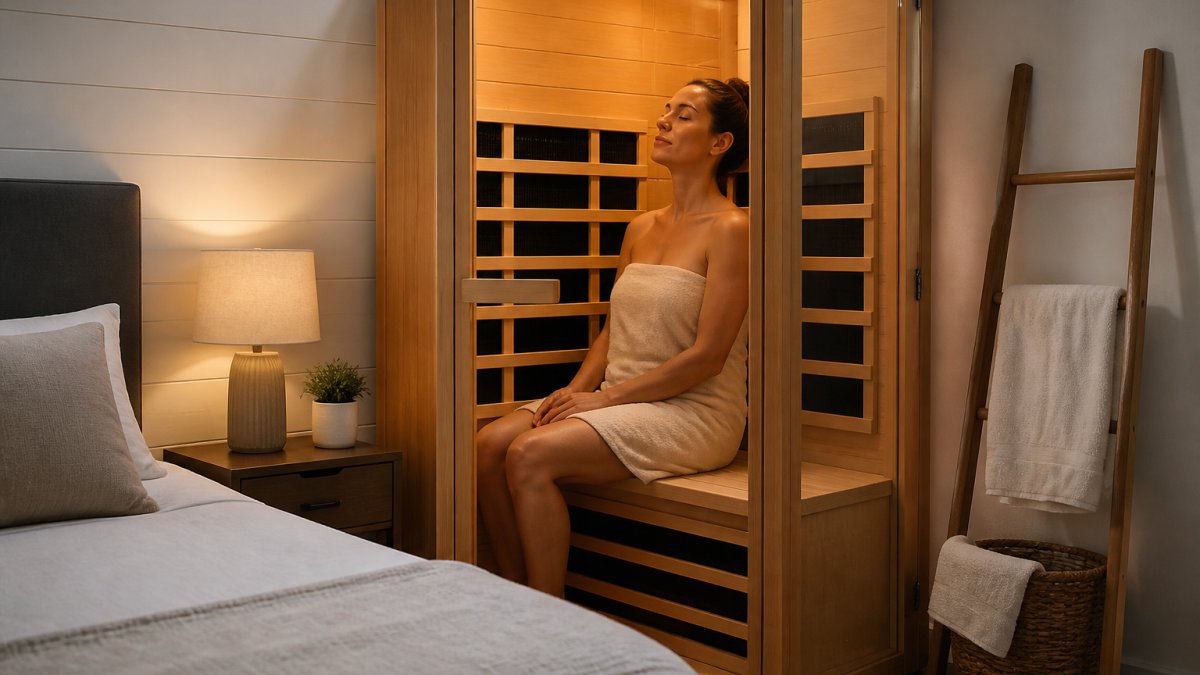
An effective infrared sauna sleep routine looks like this:
- 4-5 hours before bed: Drink 16-20 oz of water
- 2.5-3 hours before bed: Enter your sauna session for 25-35 minutes
- During session: Stay hydrated with sips of water if available
- After session: Cool down gradually in a comfortable, cool room
- 1-2 hours before bed: Dim lights, avoid screens, prepare your sleep space
- At bedtime: Your body temperature should be dropping naturally, supporting sleep onset
When combined with other recovery tools, sauna therapy becomes part of a comprehensive recovery system that supports both performance and sleep.
The key is consistency. Your nervous system and circadian rhythm respond to patterns. After 2-3 weeks of regular evening sauna use, most people notice measurable improvements in how quickly they fall asleep and how rested they feel in the morning.
Infrared Sauna Safety and Hydration for Sleep Success
Safe sauna use requires attention to hydration. Infrared saunas cause significant sweating, which depletes water and electrolyte stores. Dehydration impairs sleep quality and thermoregulation.
Hydration Protocol
Drink 16-20 oz of water about 30 minutes before entering the sauna. Sip water during your session if thirsty, and continue hydrating gradually afterward.
Weigh yourself before and after a session. A loss of 1-2% of body weight is normal; more than 3% suggests you need more pre-session hydration or a shorter duration.
Established Safety Contraindications
Certain conditions warrant caution or avoidance of sauna use. These are grounded in medical literature and apply to heat exposure generally:
- Uncontrolled high blood pressure: Heat causes vasodilation and temporary blood pressure changes. If your blood pressure is not managed, sauna use can pose cardiovascular stress. Consult your doctor if you have hypertension.
- Recent heart attack, unstable angina, or severe cardiac conditions: Heat stress increases cardiac workload. Medical clearance is essential.
- Fever or acute illness: Your body is already managing thermal stress. Adding sauna heat can worsen illness and delay recovery.
- Severe dehydration or electrolyte imbalance: Sauna use will worsen these conditions.
- Medications affecting heat tolerance: Beta-blockers, certain antihypertensives, anticholinergics, and some psychiatric medications can impair your body's ability to regulate temperature or sense overheating. Discuss sauna use with your healthcare provider if you take any of these.
Pregnancy and Sauna Use
Core temperature elevation above 38.9°C (102°F) in the first trimester has been associated with neural tube defects in animal studies. Most medical organisations recommend avoiding sauna use during pregnancy or seeking explicit medical clearance first.
Infrared Sauna – 2-Person Premium Home Spa →
Plausible but Less-Established Concerns
- Medication absorption: Heat exposure may alter drug absorption. If you take medications with narrow therapeutic windows, discuss sauna use with your pharmacist or doctor.
- Infrared-specific effects: Long-term safety data for regular infrared sauna use are limited. Most commercial saunas are designed to stay below harmful levels.
- Impaired temperature sensation: Individuals with neuropathy or spinal cord injury may not sense overheating effectively and require medical guidance.
When to Seek Medical Advice
Before starting sauna use for sleep, consult a healthcare provider if you have:
- Any cardiac condition or history of heart disease
- Uncontrolled high blood pressure
- Diabetes (especially if you have neuropathy)
- Kidney disease or electrolyte disorders
- A history of heat intolerance or heat stroke
- Pregnancy or plans to become pregnant
- Any neurological condition affecting temperature sensation
- Sleep disorders diagnosed by a sleep specialist (see next section)
Signs to Stop and Seek Help
During or after sauna use, stop immediately and seek medical attention if you experience:
- Chest pain, pressure, or tightness
- Severe dizziness or fainting
- Irregular or racing heartbeat
- Shortness of breath
- Confusion or difficulty thinking clearly
- Severe nausea or vomiting
- Muscle cramps or weakness
These may indicate heat exhaustion, heat stroke, or an underlying cardiac issue. Do not assume they will resolve on their own.
The Evidence Landscape
Most sauna safety guidance is based on traditional (convective) sauna research, not infrared-specific studies. Infrared saunas operate at lower air temperatures (49-60°C vs. 70-100°C for traditional saunas) but may deliver comparable or greater core temperature elevation due to direct tissue penetration. This means some traditional sauna safety data may not directly apply to infrared use.
Who May Not Benefit and When to Seek Medical Advice
Not everyone experiences improved sleep from infrared sauna use. If you have heat intolerance, claustrophobia, or anxiety triggered by enclosed spaces, start with very short sessions (10-15 minutes) or consider alternative heat therapies like sauna blankets.
People with certain sleep disorders, particularly those involving irregular body temperature regulation, may not see benefits from sauna therapy. If you have diagnosed sleep apnea, restless leg syndrome, or other sleep conditions, consult a sleep specialist before adding sauna sessions to your routine.
Additionally, if you're taking sleep medications or have psychiatric conditions treated with temperature-sensitive medications, sauna use requires medical clearance. Heat exposure can affect medication absorption and efficacy.
Signs that sauna use isn't supporting your sleep:
- You feel more alert or anxious after sessions
- Your sleep quality worsens despite consistent use
- You experience dizziness, chest discomfort, or irregular heartbeat
- You wake frequently during the night following sauna use
- You feel excessively fatigued the next day
If any of these occur, stop sauna sessions and consult a healthcare provider. Sleep quality depends on finding tools that work with your individual physiology, not against it.
Better sleep starts with understanding how your body responds to temperature changes. Infrared saunas offer a powerful, evidence-based approach to supporting your circadian rhythm and preparing your body for restorative rest. At Thermo Plunge Recovery Systems, we've designed our infrared saunas, including our 2-Person Premium Home Spa and portable Infrared Sauna Blankets, to deliver consistent, safe heat therapy that integrates seamlessly into your evening routine.
Frequently Asked Questions
How can an infrared sauna help improve sleep quality?
Infrared saunas improve sleep quality by promoting relaxation, reducing cortisol and stress hormones, and triggering a natural cooling phase after your session. The heat exposure increases blood circulation and oxygen delivery, while the subsequent temperature drop signals your body to prepare for sleep. This mimics your natural circadian rhythm, helping you fall asleep faster and experience deeper, more restful sleep patterns.
When should you use an infrared sauna before bed for best results?
Use your infrared sauna before bed 1-3 hours before sleep. This timing allows your core body temperature to drop naturally after the session, which signals melatonin production and aligns with your sleep-wake cycle. If you use a sauna too close to bedtime, residual heat may interfere with sleep onset. Allow adequate cooling time and avoid vigorous activity immediately after your session.
What is the downside to an infrared sauna for sleep?
Potential downsides include dehydration if you don't drink enough water before and after sessions, overheating if used too close to bedtime, and discomfort for people with certain health conditions like uncontrolled hypertension or cardiovascular issues. Some individuals may experience disrupted sleep if they use a sauna immediately before bed without allowing proper cooling time. Always consult a healthcare provider if you have existing health concerns.
Should you shower after an infrared sauna before bed?
A cool or lukewarm shower after your sauna session can enhance the natural cooling phase that promotes sleep. However, avoid hot showers, which re-warm your body and disrupt the temperature drop necessary for sleep onset. A brief cool rinse helps remove sweat and supports the thermoregulation process your body needs to transition into sleep. Pat dry gently and allow your body to cool naturally.